Last updated: June 2026 · Written by the Buenos Aires Tourism editorial team
Tango isn’t spread evenly across Buenos Aires — it pools in a handful of barrios where the music was born, where the legends lived, and where you can still stumble onto a couple dancing on the cobbles. After years of wandering this city with a notebook and sore feet, I’ve learned that knowing where to look matters as much as knowing what to look for.
The three essential tango neighborhoods buenos aires rewards you for visiting are San Telmo (cobblestone milongas and the Sunday street fair), La Boca with its photogenic but touristy Caminito, and Abasto, the barrio of Carlos Gardel himself. Each offers something genuinely different. This is your map to the city’s tango heart — what to actually do in each, what’s real versus a trap, and how to get there.
For the big-picture context on the dance, the music and the scene, start with our guide to tango in Buenos Aires, then come back here to plan which barrios to walk.
Tango Neighborhoods Buenos Aires: The Barrios at a Glance
Before we get into the streets, here’s how the main three compare for a visitor in 2026. Treat it as a quick orientation, not a ranking — you can easily do San Telmo and La Boca in a single Sunday, and save Abasto for an evening.
| Barrio | Tango draw | Authentic or touristy? | Best time |
|---|---|---|---|
| San Telmo | Sunday street tango, historic milongas, El Viejo Almacén | A genuine mix — real milongas plus busking | Sunday afternoon & evening |
| La Boca / Caminito | Street dancers, photo-ops, colourful conventillos | Mostly touristy — pay-per-photo tango | Daylight only (10am–4pm) |
| Abasto | Carlos Gardel museum, Esquina Carlos Gardel show | Heritage — the spiritual home of Gardel | Late morning (museum) or evening (show) |
| Almagro / Villa Crespo | Local milongas, La Catedral, dance schools | Authentic, low-tourist | Night, by day of week |
If your trip is short, prioritise San Telmo on a Sunday — it’s the one barrio where the dance still spills into the street for free. Our roundup of free and cheap tango in Buenos Aires covers exactly where to catch it without paying a peso.
San Telmo Tango: Cobblestones, the Sunday Fair & Historic Milongas
If one barrio embodies the romantic idea of tango, it’s San Telmo. The oldest neighbourhood in the city — all crumbling colonial facades, antique shops and uneven cobblestones — feels like the 1900s never quite ended. This is where the san telmo tango tradition is most alive for visitors, and where I send anyone with only one afternoon to spare.
The centrepiece is the Feria de San Telmo, the Sunday street fair that unspools for roughly ten blocks down Defensa Street, from around 10am to 5pm. Hundreds of antique and craft stalls line the route, but the tango is the real prize: buskers, organ-grinders and couples dancing on the paving stones, especially around Plaza Dorrego, the fair’s beating heart. The dancing here is partly for tips, but it’s skilled and atmospheric, and nobody is dragging you into it.
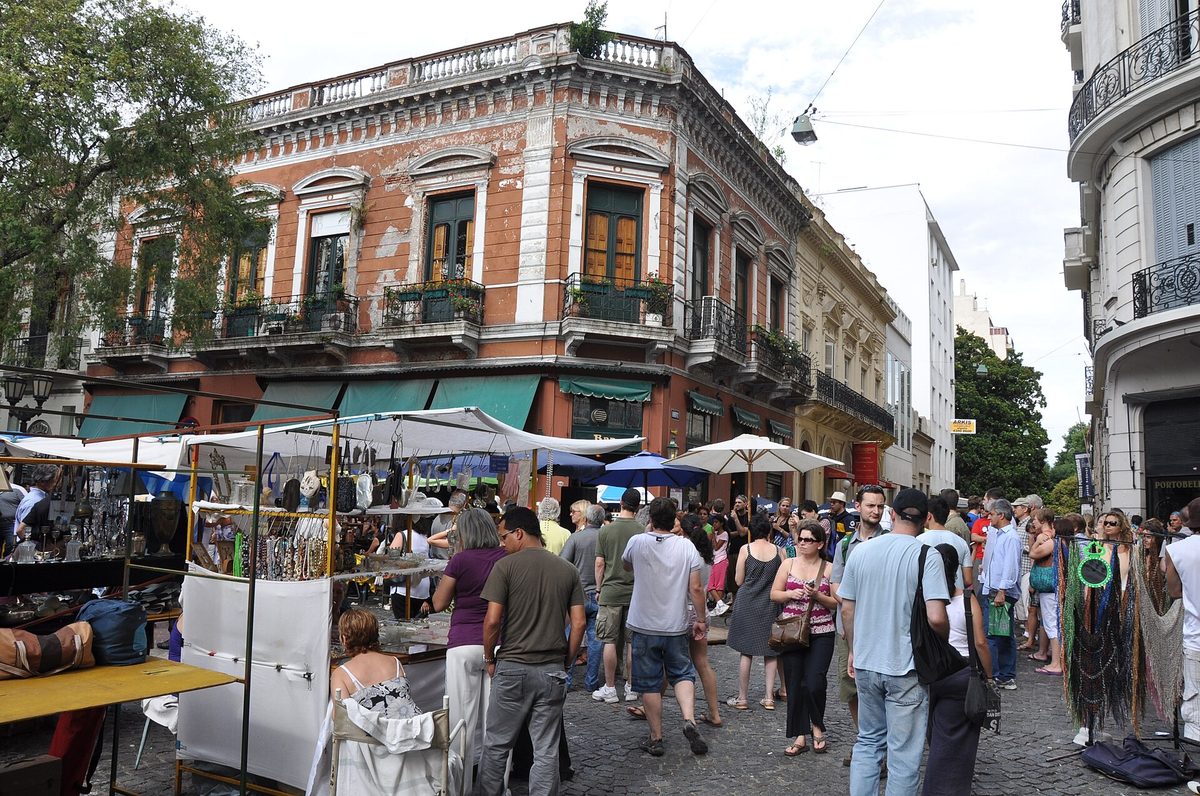
Here’s the insider move most day-trippers miss: stay past sunset. Once the antique vendors pack up, Plaza Dorrego transforms into La Milonga del Indio — an open-air milonga founded by Pedro Benavente (“El Indio”) that’s been running for over 25 years. From roughly 6pm to 9pm on Sundays, locals of every age dance under the streetlights for free. It is, hands down, one of the most magical free things you can do in this city.
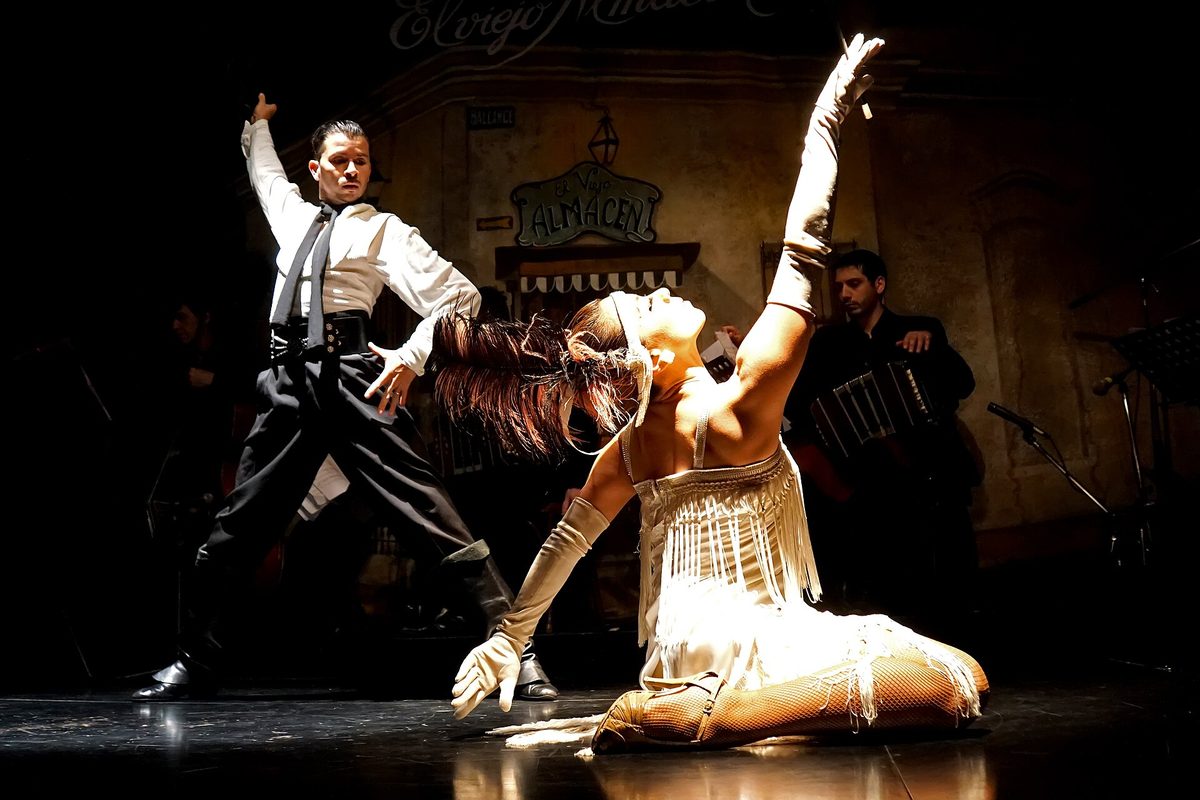
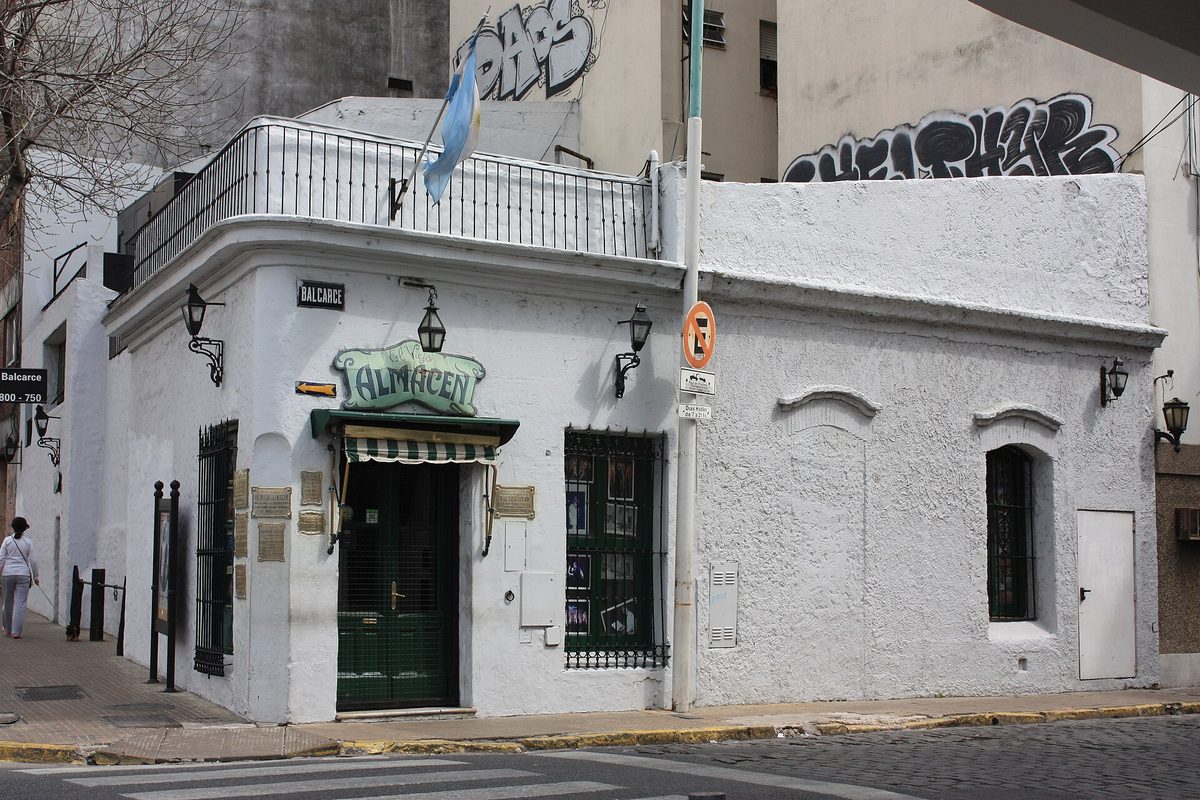
San Telmo is also home to El Viejo Almacén, the legendary tango house founded by singer Edmundo Rivero in 1969, on the corner of Balcarce and Independencia. It’s a polished dinner-show these days rather than a neighbourhood dive, but the building and the pedigree are the real thing. To find the milongas where porteños actually dance socially rather than watch, see our guide to the milongas of Buenos Aires; for staged productions, compare options in the best tango show in Buenos Aires.
Getting there: San Telmo has no Subte station of its own, but it’s a flat 10–15 minute walk south from Plaza de Mayo (Line A/D/E). On a Sunday, simply find Defensa Street and follow the crowd. For everything else the barrio offers beyond tango, see our dedicated San Telmo neighbourhood guide, and if you’re building a Sunday itinerary, our list of things to do in Buenos Aires on Sunday pairs perfectly with the fair.
La Boca & Caminito: The Photogenic, Touristy Side of Tango
Let me be candid, because the guidebooks rarely are: Caminito, the rainbow-painted pedestrian alley in La Boca, is the image most people carry of Buenos Aires tango — and it’s also the most touristy tango experience in the city. That doesn’t make it worthless. It just means you should arrive with clear eyes.
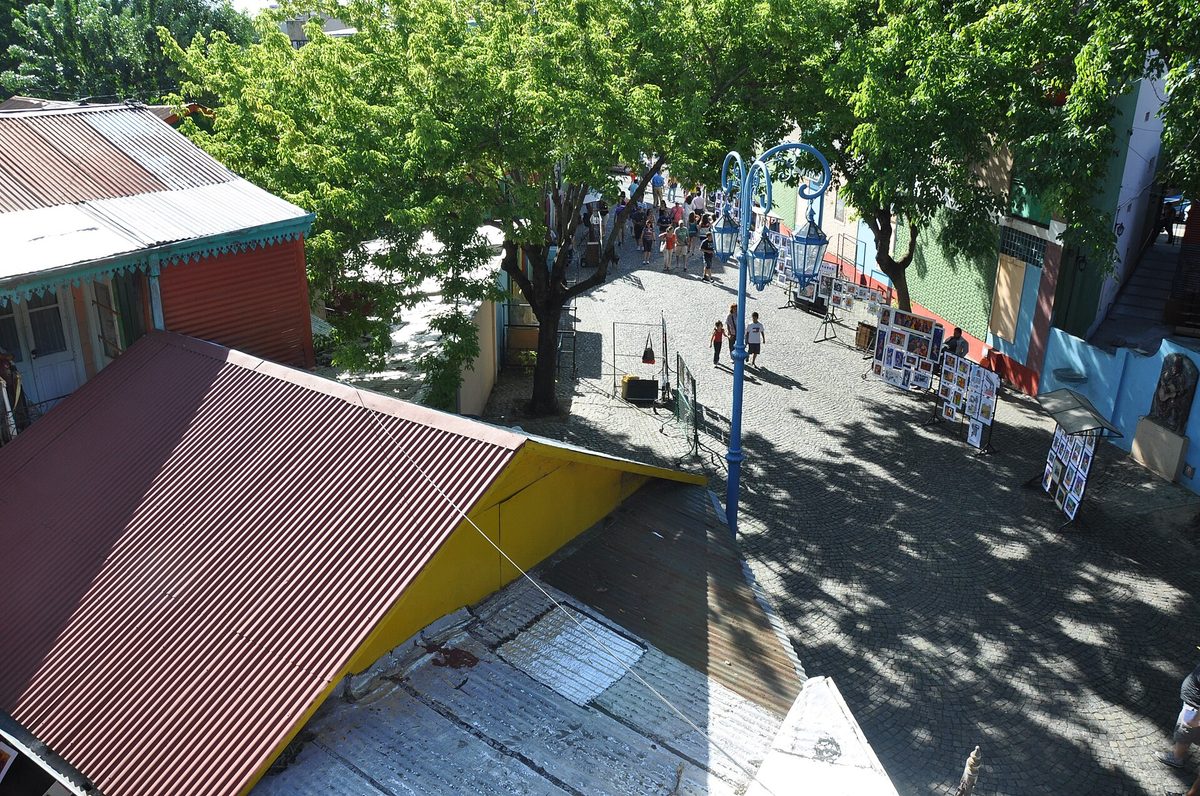
Caminito is a free, open-air pedestrian zone, lively daily from roughly 10am to early evening, lined with vividly coloured conventillos (old immigrant tenements), open-air art stalls and cafés where dancers perform for tips. Peak tango activity runs between about noon and 2pm, when the tour groups concentrate. The dancing is photogenic and the couples are often genuinely good — but they’re working for money.
The honest catch: the dancers can be insistent. They’ll invite you to pose mid-step, and you’re then expected to pay — agree the price before the camera comes out, or just smile and decline. The cafés charge a tourist premium for mediocre food, so watch a song or two, take your photos, and don’t plan a meal here.
One more thing I won’t sugar-coat: stay on the main tourist path and visit only in daylight. La Boca surrounds Caminito with streets that turn dodgy quickly, and the area is best left by mid-afternoon. Within those limits it’s a genuinely fun, colourful hour. For the wider context — the football, the history, the safety lines — read our La Boca neighbourhood guide and our focused walk-through of Caminito.
Getting there: La Boca has no Subte. The cleanest options are a short taxi or rideshare from the centre (10–15 minutes), or one of the hop-on tourist buses. I don’t recommend walking in from Constitución. If you want the dance without the hard sell, the street tango back in San Telmo is the better bet — again, our free tango guide maps where to find it.
Abasto Carlos Gardel: Tango’s Spiritual Home
If San Telmo is tango’s stage and La Boca its postcard, Abasto is its soul. This unglamorous, workaday barrio just off Avenida Corrientes was the childhood home of Carlos Gardel, the singer whose voice defined tango’s golden age and who remains, almost a century after his death in 1935, a genuine secular saint here. For anyone serious about the music, abasto carlos gardel is an essential pilgrimage.
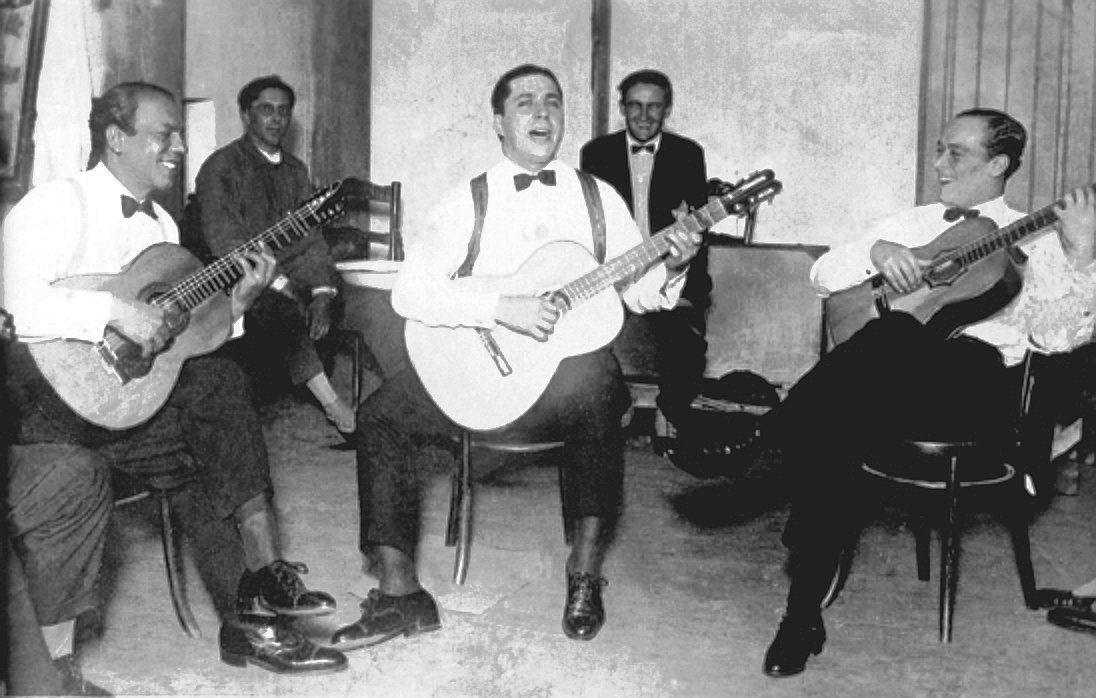
The must-visit is the Museo Casa Carlos Gardel (Museo Casa Carlos Gardel), the house where Gardel lived with his mother, at Jean Jaurés 735. It’s an intimate museum of photos, recordings, costumes and memorabilia rather than a blockbuster — budget 45 minutes. As of mid-2026 it opens Monday, Wednesday, Thursday and Friday 11am–7pm, and Saturday, Sunday and holidays 11am–8pm; it’s closed Tuesdays. Foreign-visitor admission runs around US$10 equivalent (a few thousand pesos — check current), with free entry on Wednesdays for residents and guided tours around midday. Always confirm hours before you go.
For an evening, Esquina Carlos Gardel sits beside the art-deco Abasto shopping mall, just off Corrientes, and is one of the grander tango dinner-shows in the city — a 1920s-styled theatre, a live orchestra and championship dancers. It’s firmly in the upscale, priced-in-dollars bracket (hedge the figure and book ahead), so weigh it against the alternatives in our rundown of the best tango shows in Buenos Aires. Around the barrio you’ll also spot the famous bronze statue of Gardel and streets named in his honour.
Getting there: Abasto is easy — the Subte Line B stops at Carlos Gardel station, which deposits you a block from both the museum and the mall. That makes it the most public-transport-friendly of the tango barrios.
Beyond the Big Three: Almagro, Villa Crespo & Boedo
The famous trio gets the headlines, but tango’s living, dancing pulse beats hardest in a cluster of less-touristed barrios just inland. These are where you go to dance, not to watch.
- Almagro — arguably the milonga capital of the modern city, packed with traditional dance halls and the bohemian La Catedral Club, a cavernous, candlelit former warehouse beloved by younger dancers and travellers.
- Villa Crespo — a relaxed, increasingly hip barrio with respected dance schools and milongas, and the place many visitors head to buy proper dance footwear; see our guide to where to buy tango shoes in Buenos Aires.
- Boedo — a deeply traditional, literary barrio woven into tango lyrics, low on tourists and high on neighbourhood-bar authenticity.
Because milonga schedules rotate by night of the week and shift seasonally, don’t trust a fixed calendar — check the “Hoy Milonga” listings to see what’s on tonight, and read our milonga guide for how to choose and behave at one. If you’d rather learn the basics first, beginners are welcome at the group classes covered in our complete tango in Buenos Aires guide.
Frequently Asked Questions
Which neighbourhood is best for tango in Buenos Aires?
For a first visit, San Telmo wins — especially on a Sunday, when free street tango fills Plaza Dorrego and the Defensa Street fair, followed by the open-air Milonga del Indio at night. Abasto is best for Gardel heritage and a grand dinner-show, while La Boca’s Caminito is the photogenic but touristy option, good for an hour in daylight.
Is the tango in La Boca’s Caminito authentic?
It’s real dancing but a staged, tourist-oriented experience — couples perform for tips and photos, and they expect payment. The dancers are often skilled, yet this isn’t where locals socially dance. Treat Caminito as a colourful photo stop in daylight, agree any photo price first, and seek authentic street tango in San Telmo instead.
What are the opening hours of the Carlos Gardel museum?
As of mid-2026, the Museo Casa Carlos Gardel at Jean Jaurés 735 in Abasto opens Monday, Wednesday, Thursday and Friday 11am–7pm, and Saturday, Sunday and holidays 11am–8pm. It’s closed on Tuesdays. Foreign admission is a few thousand pesos (around US$10), with guided tours near midday. Always confirm current hours before visiting.
Can you see tango in the streets of Buenos Aires for free?
Yes. The best free street tango is in San Telmo, around Plaza Dorrego during the Sunday fair and at the after-dark Milonga del Indio. Caminito in La Boca also has street performers, but they dance for tips. See our dedicated guide to free and cheap tango in Buenos Aires for a full map of where to watch without paying.
How do I get to the tango neighbourhoods on public transport?
Abasto is easiest — Subte Line B’s Carlos Gardel station is a block from the museum. San Telmo has no Subte but is a short walk south from Plaza de Mayo (Lines A/D/E). La Boca has no Subte and is best reached by taxi or rideshare; avoid walking in from surrounding areas.
Final Thoughts
Mapping tango by barrio works because each teaches you something the others can’t: San Telmo is the dance as living street culture, La Boca its commercial postcard, Abasto its mythology, and the inland barrios where it still happens night after night. Walk all four moods if you can — a Sunday in San Telmo, a daylight detour to Caminito, Line B to Gardel’s Abasto, and, if the music gets under your skin, a real milonga. For the full picture that ties these barrios together, our tango in Buenos Aires guide is your home base.
Photo Credits
- tango-neighborhoods-buenos-aires-san-telmo.jpg — Photo by Jrivell / CC BY-SA 3.0 via Wikimedia Commons
- tango-neighborhoods-buenos-aires-plaza-dorrego.jpg — Photo by Jorge Láscar / CC BY 2.0 via Wikimedia Commons
- tango-neighborhoods-buenos-aires-caminito.jpg — Photo by Jorge Láscar / CC BY 2.0 via Wikimedia Commons
- tango-neighborhoods-buenos-aires-abasto.jpg — Archivo General de la Nación Argentina, public domain via Wikimedia Commons
- tango-neighborhoods-buenos-aires-gardel.jpg — Unknown author, public domain via Wikimedia Commons