Last updated: June 2026 · Written by the Buenos Aires Tourism editorial team, who have haggled over a 1940s soda siphon on Plaza Dorrego and stayed for the street tango long after the stalls packed up.
San Telmo buenos aires: the short answer
San telmo buenos aires is the city’s oldest barrio — a compact grid of cobbled colonial streets just south of the centre, famous for its Sunday antiques market on Plaza Dorrego, its tango heritage and a bohemian, slightly faded charm. It rewards slow wandering, suits history and culture lovers, and is best seen on both a Sunday and a weekday.
I send first-time visitors here when they say they want to feel Buenos Aires rather than just photograph it. On a Sunday the place hums — antiques down Defensa, a bandoneon wheezing somewhere, grilled chorizo in the air — while a quiet Tuesday is all worn cobbles and cafes waking up. Both are the real thing, and most people only see one.
If you are still mapping out the city, start with our full guide to the Buenos Aires neighbourhoods and how they fit together. Below I go deep on San Telmo alone — what to see, when to come, where to eat, and how to stay safe.
The barrio and its vibe: a quick history
San Telmo is where the city began. By the mid-1800s this old port district was the address of choice for the city’s wealthy families, who built the grand Italianate mansions you still see along Defensa and around Plaza Dorrego. Then, in the 1870s, a yellow fever epidemic swept up from the riverside. The rich fled north to higher ground in Recoleta, abandoning their homes almost overnight.
Those mansions were carved up into conventillos — crowded tenements packed with European immigrants, mostly Italians and Spaniards. That mingling of poor, displaced newcomers in the late 19th century is the very crucible that produced tango. San Telmo never fully gentrified back, and that is its gift: peeling stucco, century-old bars and a working-class soul under the polish. It feels older and more authentic than almost anywhere else in the city.
What San Telmo feels like today
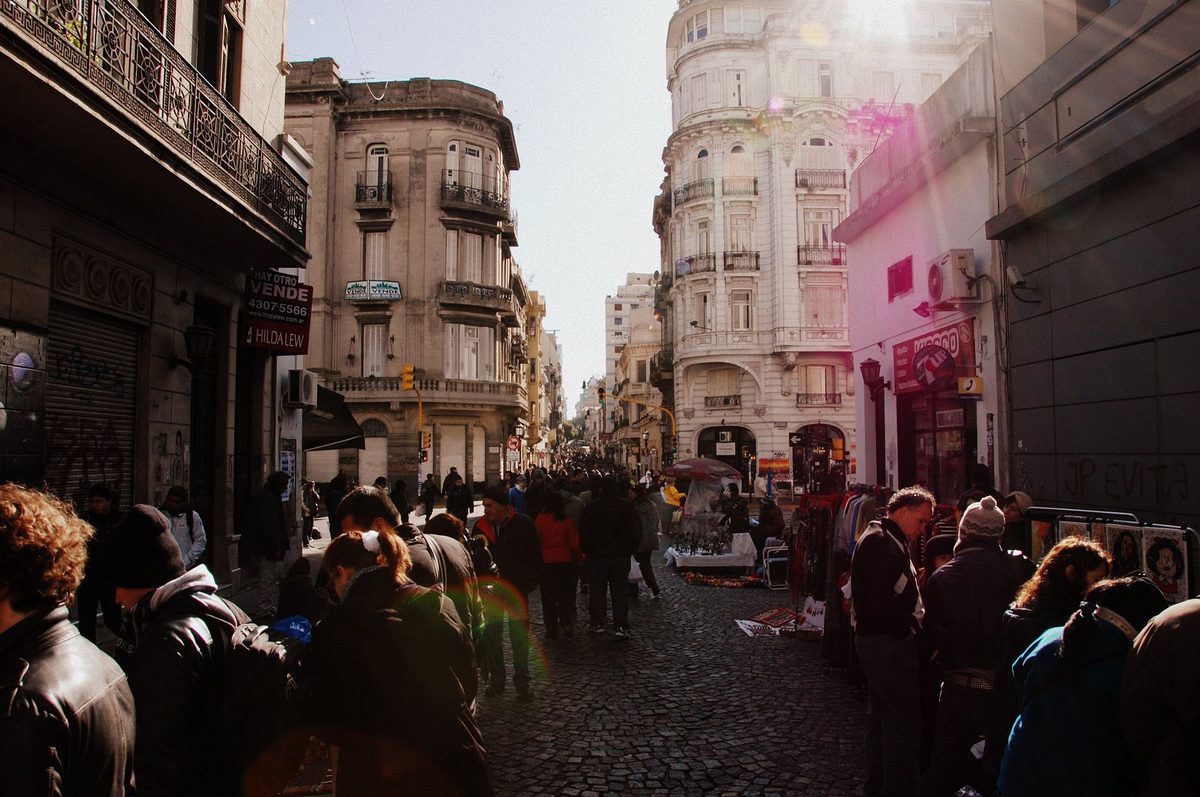
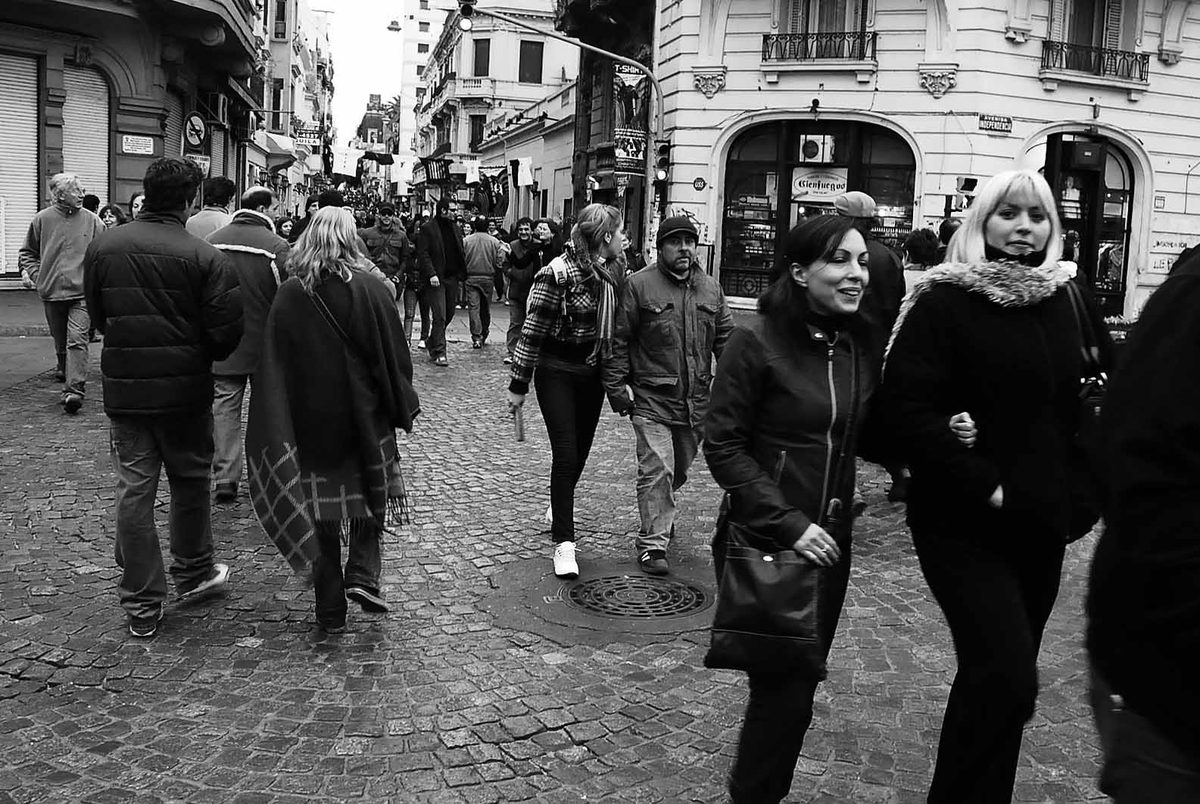
Expect uneven cobblestones (wear flat shoes, genuinely), low colonial facades, wrought-iron balconies, street art, and antique dealers, galleries, dive bars and parrillas packed in tightly. It is bohemian and a little scruffy in places — part of the appeal. This is not polished Palermo; it is the artsy, historic heart.
What to see and do in San Telmo
The sights cluster within an easy walk, mostly along or just off Defensa. Here are the ones I would not skip.
Plaza Dorrego
The barrio’s beating heart is Plaza Dorrego, a small square ringed by old cafes with tables sprawling onto the cobbles. Midweek it is sleepy and lovely for a coffee; on Sunday it becomes the dense core of the antiques fair; and on warm evenings it sometimes hosts open-air milongas. It is the best spot to simply sit and watch San Telmo go by.

Mercado de San Telmo
The covered Mercado de San Telmo, on Defensa near Carlos Calvo, opened in 1897 and is a beauty — a soaring wrought-iron-and-glass hall. Inside, antique stalls and produce vendors share the aisles with a new generation of excellent food stands. It is open most days, not just Sunday, and it is my favourite spot for a casual lunch.

El Zanjon de Granados
One of the city’s quietly astonishing sights, El Zanjon de Granados is a restored 1830s mansion built over brick tunnels that once channelled a stream through colonial Buenos Aires. The guided tour walks you through beautifully lit underground passages layered with five centuries of history. You must book a tour to enter; it is a perfect rainy-day option. Hours and prices shift, so check before you go.
Parque Lezama
At the southern edge of the barrio, leafy Parque Lezama is where, by tradition, Buenos Aires was first founded. It has shaded paths, weekend craft stalls and old men playing chess — a calm green counterpoint to the market crush. The Russian Orthodox church across the street, with its blue onion domes, is a surprising photo stop.
Churches, passages and Mafalda
Don’t rush past the smaller details. The Iglesia de San Pedro Telmo, the barrio’s namesake church, sits near Parque Lezama, and the Pasaje de la Defensa, an 1880s mansion-turned-conventillo, shelters antique shops around a pretty courtyard. At Defensa and Chile a bronze Mafalda — Argentina’s beloved cartoon girl — sits on a bench, usually with a queue waiting to pose. San Telmo is rich in murals, too; our Buenos Aires street art tour guide points you to the best.
The Sunday market and antiques
If you can only be in San Telmo once, make it Sunday. The Feria de San Telmo, running roughly 10am to 5pm, fills Plaza Dorrego and stretches the length of Defensa — close to ten blocks of stalls and hundreds of vendors. It has run since 1970 and is one of the great street spectacles of South America.
There is a logic to the layout. The genuine antiques — soda siphons, old advertising signs, watches, vinyl, jewellery — cluster around Plaza Dorrego itself. Heading up Defensa, the stalls shade into contemporary crafts, leather goods, mate gourds and souvenirs. Haggling is expected and half the fun. Bring cash in small notes, because few stalls take cards.
Sunday versus a weekday: which San Telmo?
The market is not the only reason to come. The two faces of the barrio are genuinely different experiences, so if your itinerary allows, see both.
| Sunday | Weekday | |
|---|---|---|
| Atmosphere | Packed, festive, loud, electric | Quiet, atmospheric, local |
| The market | Full Feria along all of Defensa | No street fair; antique shops open |
| Tango | Street performers and busy Plaza Dorrego | Evening milongas and tango houses |
| Crowds & pickpocket risk | High — stay alert | Low — relaxed wandering |
| Best for | The full spectacle and shopping | Photos, cafes, savouring the streets |
Market hours, vendor numbers and prices shift with the seasons and the economy — treat the above as a guide and confirm locally.
Tango in San Telmo
San Telmo has as strong a claim as anywhere to being tango’s birthplace, and the dance is woven through the barrio. On a Sunday you will catch street couples performing on Plaza Dorrego and along Defensa — staged for tips, but skilled, and a lovely first taste. Drop a few pesos in the hat if you stop.
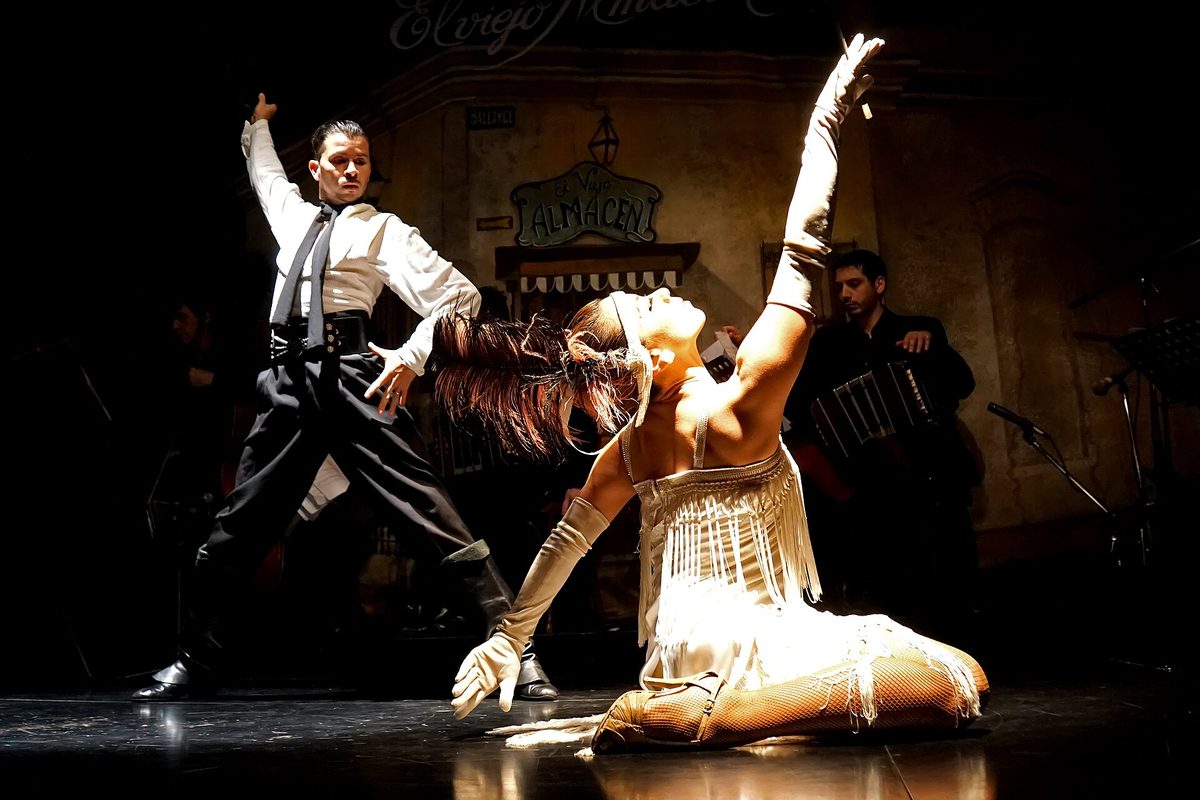
For something deeper, San Telmo has historic venues. El Viejo Almacen, founded in 1969, is a classic dinner-and-show tango house, while milongas such as the Centro Cultural Torquato Tasso are where locals actually dance. Whether you want a polished show or a late-night dance floor, our full guide to tango in Buenos Aires lays out the options.
Eating and drinking in San Telmo
San Telmo eats well. For classic Argentine steak, the parrillas here are a highlight. La Brigada is the famous one — a beloved (if pricier) institution where the bife de chorizo is cut with a spoon. Gran Parrilla del Plata and the always-buzzing El Desnivel on Defensa are more casual and easy on the wallet.
Inside the Mercado de San Telmo, the food stalls are a destination in their own right — superb choripan, empanadas, fresh pasta and craft beer in a gorgeous hall. For something more inventive, Cafe San Juan is a local favourite from a well-known chef. And the barrio’s old cafes and bars, all dark wood and tin ceilings, are perfect for an afternoon coffee. For the wider picture, see our Buenos Aires restaurants guide.
Nightlife
After dark San Telmo trades market bustle for milongas, jazz bars, speakeasies and bohemian pubs — one of the better barrios for an unpretentious night out. For a bigger evening, see our guide to Buenos Aires nightlife.
Where to stay in San Telmo
San Telmo is a popular base if you value character over polish. It skews towards boutique hotels, guesthouses and hostels, generally cheaper than Palermo or Recoleta, and it is central — an easy walk or short ride to Plaza de Mayo and Puerto Madero. The trade-offs: streets can be noisy and some blocks feel rough at night. Stay near Defensa or Plaza Dorrego to be in the thick of it. Compare areas in our where to stay in Buenos Aires guide before booking.
Getting there and around
San Telmo sits just south of Avenida de Mayo, very walkable from the centre — from Plaza de Mayo it is barely a ten-minute stroll down to Plaza Dorrego. By Subte (metro), Line C stops at Independencia and San Juan a few blocks west, leaving a short walk to Defensa. You will need a rechargeable SUBE card, sold at stations and kiosks.
Taxis and rideshare apps (Uber, Cabify, DiDi) are cheap, and on a busy Sunday a car to the edge of the fair saves your feet. Within San Telmo you simply walk. Many people pair it with neighbouring La Boca on the same day, or with the adjacent microcentro and Plaza de Mayo.
Is San Telmo safe?
Broadly, yes — San Telmo is heavily visited and most trips pass without incident — but it has one specific risk: pickpockets, especially in the Sunday market crush. San Telmo and neighbouring Montserrat are among the parts of the city where bag-dipping and phone-snatching are most common, simply because of the dense crowds.
The precautions are standard and effective:
- Guard valuables in the crowd. Wear a cross-body bag in front, keep your phone in a zipped pocket, and don’t flash cash while haggling.
- Mind your bag at cafes. Never hang it on the back of a chair; keep it on your lap.
- Stay on busy streets at night. Defensa and the lively blocks are fine in the evening; quiet side streets and the edges towards the railway are best avoided after dark, and take a taxi door to door late on.
Do that and a daytime visit is comfortable for the vast majority of travellers. Our Buenos Aires neighbourhoods guide puts San Telmo’s safety in context with the rest of the city.
Who San Telmo suits
San Telmo is made for history buffs, tango lovers, market hunters, photographers and independent travellers who want atmosphere over gloss. If you prize leafy calm, designer shopping and a polished restaurant scene, you may prefer Palermo or genteel Recoleta. But for the soul of old Buenos Aires — the cobbles, the tango, the wonderful clutter — nowhere does it better.
Frequently asked questions
Is San Telmo worth visiting?
Absolutely — for many travellers it is the most characterful barrio in Buenos Aires. It packs the city’s oldest streets, its best-known antiques market, deep tango heritage and a gorgeous covered market into a small, walkable area. If you can, see it on both a Sunday and a weekday.
What day is the San Telmo market?
The big street fair, the Feria de San Telmo, runs every Sunday, roughly 10am to 5pm, along Plaza Dorrego and Defensa. The separate indoor Mercado de San Telmo, the historic covered market on Defensa, is open most days of the week, not only Sundays, so you can browse and eat there midweek too. Hours can shift, so confirm locally.
Is San Telmo safe for tourists?
Generally yes, with sensible care. The main risk is pickpocketing in the dense Sunday crowds, so keep valuables in a front-worn bag and stay alert. By day the barrio is busy and comfortable; at night, stick to lively, well-lit streets like Defensa and take a taxi door to door late on. Most visits pass without any trouble.
San Telmo or Palermo — which is better?
They suit different travellers. San Telmo is historic, bohemian, tango-soaked and cheaper, with a slightly gritty edge. Palermo is greener, trendier and more polished, with designer shops, leafy parks and the city’s hottest restaurants. For atmospheric old Buenos Aires choose San Telmo; for upscale buzz choose Palermo — or split your stay.
How long should I spend in San Telmo?
Half a day covers the highlights — Plaza Dorrego, the Mercado de San Telmo, El Zanjon de Granados and a wander down Defensa. On a Sunday, give it most of the day to do the market justice and stay for the street tango.
Final thoughts
San Telmo is the barrio that turns a sightseeing trip into a love affair with Buenos Aires. Come on a Sunday for the glorious chaos of the Feria, then again on a slow weekday to have the cobbles almost to yourself — that contrast is the whole point. Eat at the market, watch a little tango, haggle for something you do not need, and mind your bag in the crowd. To see how it fits with the rest of the city, head back to our full guide to the Buenos Aires neighbourhoods.
Photo credits
- Crowds and antique stalls along cobbled Defensa street at the Sunday market in San Telmo buenos aires — photo by LWY, CC BY 2.0, via Wikimedia Commons.
- Antique stalls and crowds filling Plaza Dorrego during the Sunday market in San Telmo — photo by Jorge Láscar, CC BY 2.0, via Wikimedia Commons.
- Wrought-iron and glass interior of the historic Mercado de San Telmo covered market in Buenos Aires — photo by ProtoplasmaKid, CC BY-SA 4.0, via Wikimedia Commons.
- Pedestrians on cobblestone Defensa street lined with colonial buildings in San Telmo, Buenos Aires — photo by Gustavo Miñas, CC BY 2.0, via Wikimedia Commons.
- Tango dancers performing at El Viejo Almacén tango house in San Telmo, Buenos Aires — photo by Dennis G. Jarvis, CC BY-SA 2.0, via Wikimedia Commons.