Last updated: June 2026 · Written by the Buenos Aires Tourism editorial team, who have walked the few painted blocks of Caminito at opening time, taken a taxi straight back out, and still rate La Boca one of the city’s most photogenic mornings.
La Boca Buenos Aires neighborhood: the short answer
The la boca buenos aires neighborhood is a working-class former port barrio on the Riachuelo, world-famous for the rainbow-painted tin houses of Caminito and as the home of Boca Juniors. It is genuinely worth visiting, but only in daylight and only within the small marked tourist zone — arrive and leave by taxi or rideshare, and you will be fine.
I will be honest up front, because the guidebooks often are not. La Boca is two places at once: the joyful, colour-soaked tourist core around Caminito, full of police, painters and street tango, and the ordinary, sometimes rough barrio that surrounds it. The trick to a great visit is knowing where one ends and the other begins. Get that right and La Boca delivers some of the best photographs and history in the city.
If you are still piecing the city together, start with our full guide to the Buenos Aires neighbourhoods and how each barrio fits the puzzle. Below I go deep on La Boca alone — its history, what to see, the football, and a frank, practical safety section.
The barrio and its history: a port built by immigrants
La Boca takes its name from the boca, or mouth, of the Riachuelo — the sluggish river that meets the Río de la Plata here and marks the southern edge of the city. This was Buenos Aires’ first working port, and from the 1830s it filled with immigrants, overwhelmingly Genoese sailors and labourers from the Ligurian coast of Italy. They came for work in the shipyards, warehouses and meatpacking plants, and they built a barrio that still feels distinct from the rest of the capital.
With almost no money, the newcomers threw together houses from the materials around them: corrugated iron, scrap wood and sheets salvaged from the docks. Several families would share a single building — a conventillo, or tenement, with rooms opening onto a communal courtyard. The famous colours came from the same thrift: workers painted their walls with leftover marine paint scrounged from the shipyards, a different shade wherever a tin ran out, and that patchwork look became the barrio’s signature.
That crowded, multilingual, hard-up world is also one of the cradles of tango, which grew from exactly this mingling of immigrant cultures in the late 19th century. If the music pulls you in, our guide to tango in Buenos Aires explains where to find the real thing across the city. La Boca has never fully gentrified, and that is worth holding in mind: behind the bright facades it remains a poor, proud, fiercely local place.
What to see in La Boca
The sights worth your time sit within a compact, walkable cluster near the river. Here is what to prioritise, and how each piece fits together.
Caminito (the colourful core)
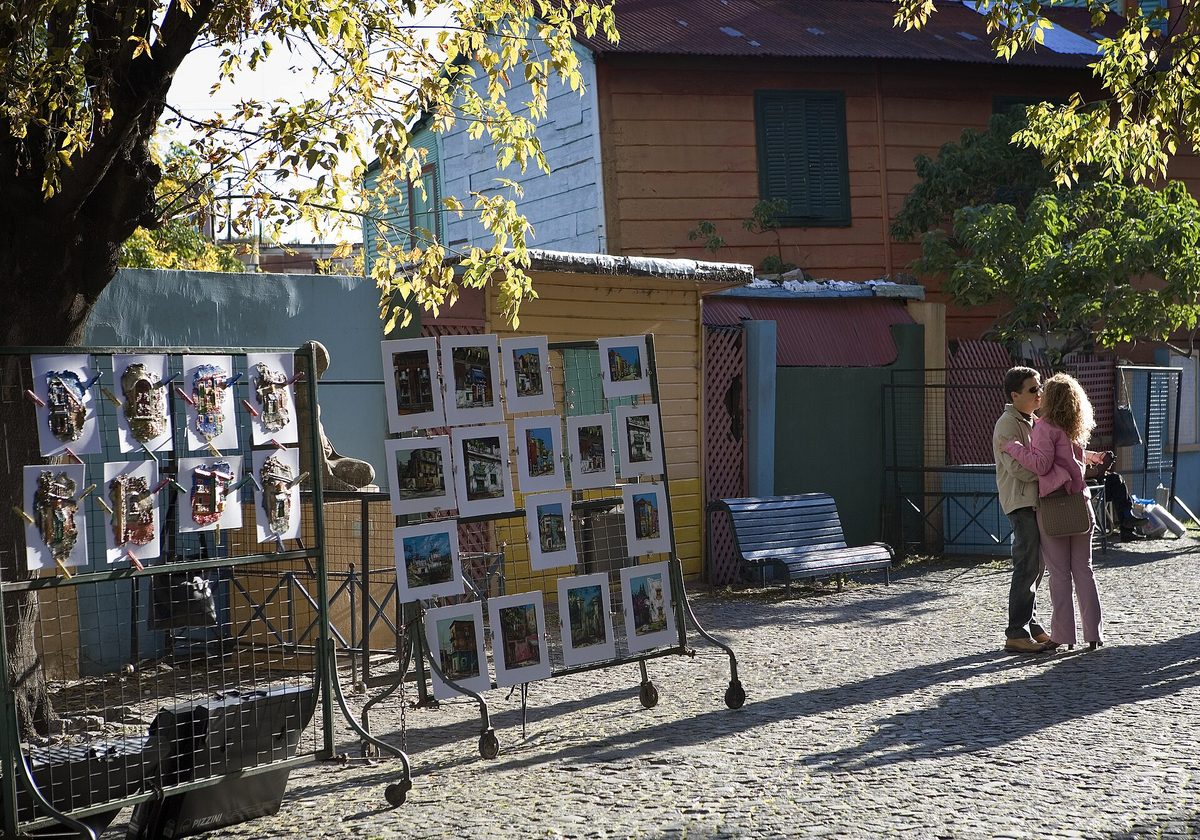
Caminito is the pedestrian street-museum everyone comes for: one short, curving lane lined with restored conventillos in saturated blues, reds and yellows, open-air art stalls and tango dancers who will happily pose with you for a tip. It is undeniably touristy and you only need around half an hour to walk it, but the colour is the real deal and the photographs are superb. Because it deserves its own deep dive, we cover the history, photo spots, dancers and prices in our dedicated Caminito guide. Treat this barrio article as the wider map around it.

The conventillos and street art
Step a few metres off Caminito’s main run and you find the conventillos that started it all, including the much-photographed Conventillo Histórico, with their painted balconies, papier-mâché figures of footballers and tango singers leaning from upper windows, and murals on nearly every surface. La Boca wears its art loudly. If you enjoy this side of the city, our things to do in Buenos Aires roundup points to more street-art barrios.

Fundación Proa and the Quinquela Martín Museum
For a calmer, indoor hour, two art stops anchor the barrio. Fundación Proa, on the waterfront, is a sleek contemporary art centre with rotating exhibitions and a rooftop café with river views. Nearby, the Museo Benito Quinquela Martín occupies the former home and studio of the painter who immortalised La Boca’s docks, holding the largest collection of his work plus a rooftop terrace. Both are excellent; both have hours and admission that shift, so check before you set out.
Vuelta de Rocha and the transporter bridge
Walk down to the Vuelta de Rocha, the wide bend in the Riachuelo that Quinquela Martín painted again and again. It is scruffy and the water is famously polluted, but it is the historic heart of the port and frames the barrio’s most dramatic landmark: the Puente Transbordador Nicolás Avellaneda, a hulking steel transporter bridge from the early 20th century that once ferried a gondola of carts and passengers across the river. It is one of very few such bridges left anywhere.

Football and La Bombonera
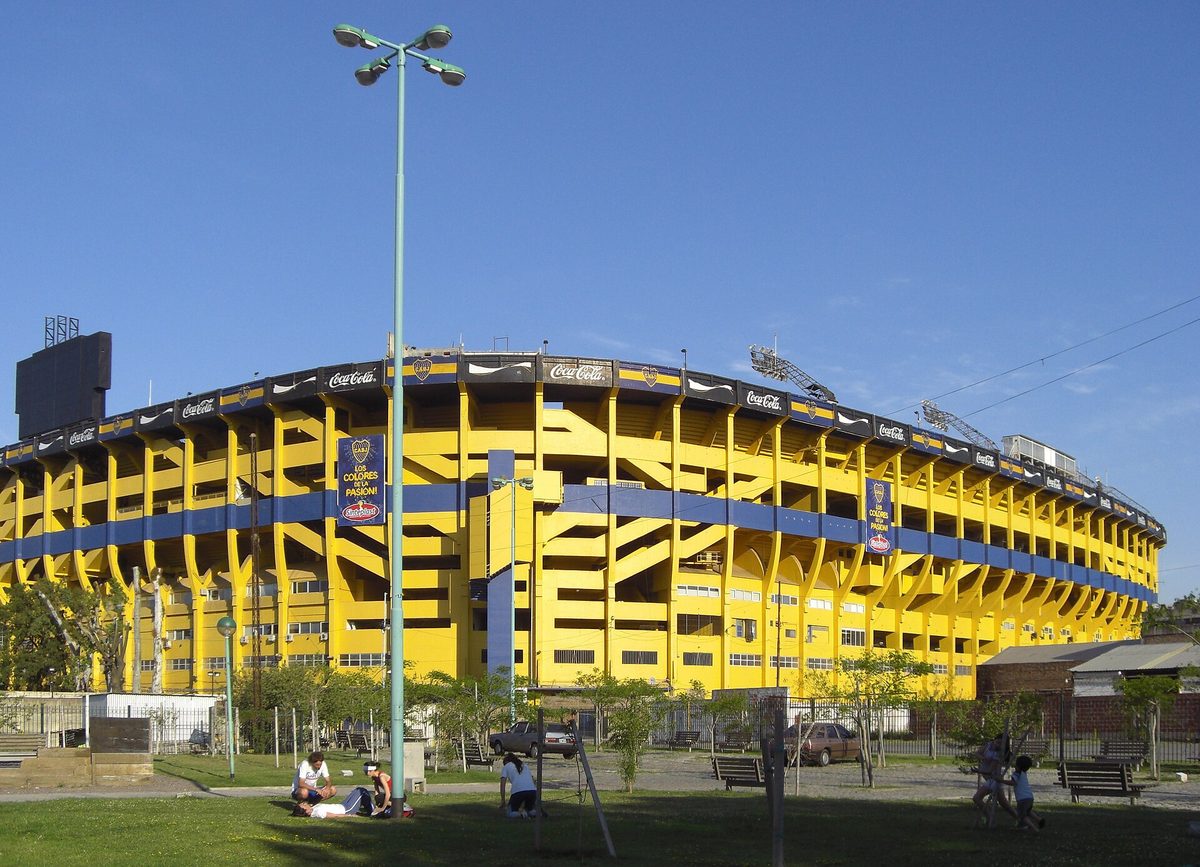
La Boca is sacred ground for football. This is the home of Boca Juniors, one of the most passionately supported clubs on earth, and their stadium, La Bombonera (the chocolate box), rises in blue and yellow just a few blocks from Caminito. Even on a non-match day you can tour the ground and visit the club museum, which walks you through the trophies, the legends and the Maradona mythology.
A live match here is one of the great sporting experiences anywhere, but it is not a casual drop-in: tickets are hard to get independently and the area is intense on game days, so most visitors go with an organised, hotel-pickup tour. We cover how to pull this off in our guide to Buenos Aires football. If you just want the stadium and museum, the daytime tour from the tourist zone is straightforward.
Is La Boca safe? An honest safety guide
This is the question everyone asks, and it deserves a straight answer. The tourist core of La Boca — Caminito, the waterfront and the streets around La Bombonera — is heavily policed and, in daylight, generally safe and busy with visitors. The surrounding barrio is poorer and has a real, not exaggerated, reputation for street crime. The good news is that staying safe here is mostly about discipline, not luck.
The golden rules
- Daytime only. Visit roughly between 10am and 5pm and be gone well before dusk. La Boca is not a place to linger after dark; the police presence thins out and the streets empty fast.
- Stay inside the tourist zone. Keep to Caminito, the riverside walk and the marked blocks toward the stadium. Do not wander down quiet residential side streets to “see the real barrio” — that is exactly where trouble starts, often just one or two blocks off the painted core.
- Taxi or rideshare in and out. Do not walk to La Boca from San Telmo or the centre, and do not walk out. Take a registered taxi, Uber or Cabify door to door. It is cheap, quick (around 15 minutes from downtown) and removes the single biggest risk.
- Carry light, look relaxed. Leave the good watch and jewellery at the hotel, keep your phone in a front pocket or a zipped bag, and photograph while standing still rather than wandering with a camera out. Bring only the cash you need.
Safe zone versus avoid
If you remember one image from this article, make it this one.
| Generally fine (daytime) | Avoid |
|---|---|
| Caminito and its painted lanes | Quiet residential side streets off the core |
| The Riachuelo waterfront walk | The barrio anywhere after dark |
| Blocks around La Bombonera | Walking in or out of La Boca on foot |
| Fundación Proa and the museum | Flashing phones, cameras or cash in the open |
None of this should scare you off. Treated sensibly, La Boca is a morning of pure colour that thousands enjoy without incident every week; the travellers who run into trouble are almost always those who wandered off the map or stayed too late. For citywide context, our neighbourhoods overview sets out which barrios are relaxed all day and which, like this one, reward caution.
Getting there and getting around
There is no Subte (metro) line to La Boca, which catches a lot of people out. Your realistic options are a taxi or rideshare — by far the easiest and what we recommend — or city buses such as the 29, 64 or 152, though these drop you at the edges. The hop-on hop-off tourist bus also stops near Caminito and is a reasonable, low-stress choice.
However you arrive, plan your exit before you need it: have the Uber or Cabify app ready, or ask a café or the stadium staff to call a registered taxi rather than flagging an unmarked car. For fares, apps and safe transport across the city, see our guide to getting around Buenos Aires. The barrio is small and flat, so once inside the tourist zone you explore on foot.
Is La Boca worth it, and who is it for?
Yes — with a clear-eyed view of what it is. La Boca is not a place to spend a whole day or to dine in the evening; it is a concentrated, two-to-three-hour hit of colour, history and football culture that you fold into a morning. It suits photographers, first-time visitors ticking off the icons, football fans and anyone curious about the immigrant roots of the city. It suits you less if you dislike crowds, tourist stalls or a slightly edgy atmosphere.
I usually suggest pairing it with a contrasting neighbourhood the same day. A morning in La Boca and an afternoon in the cobbled, antique-filled streets of San Telmo next door is a classic combination, while the polished waterfront of Puerto Madero or the leafy calm of Belgrano makes an easy, relaxed counterpoint. For nightlife and dining you will want the bars and parks of Palermo instead — not La Boca after dark.
Quick tips for a smooth visit
- Go early. The light is best for photos and the crowds and touts are thinnest before midday.
- Carry small notes for stalls, the museum and tips; many vendors do not take cards.
- Expect to be approached by restaurants and dancers on Caminito — a polite “no, gracias” is all you need.
- Wear flat shoes for the cobbles and uneven pavements.
- Combine Caminito, the museum and La Bombonera into one loop, then taxi out.
Frequently asked questions
Is La Boca safe?
In daylight, the tourist core around Caminito, the waterfront and La Bombonera is well policed and generally safe, with plenty of visitors and a visible police presence. The surrounding barrio is poorer and has a genuine reputation for street crime, so stay strictly within the marked tourist zone, visit only during the day, and take a taxi or rideshare in and out rather than walking.
How long should I spend in La Boca?
Most visitors need about two to three hours. Caminito itself takes only around half an hour to walk, but adding the conventillos, the riverside, an art museum or a La Bombonera tour fills a comfortable morning. It is a concentrated visit rather than a full day, and it pairs naturally with a second, calmer neighbourhood in the afternoon.
What is there to do in La Boca besides Caminito?
Plenty within a short walk: tour La Bombonera and the Boca Juniors museum, see contemporary art at Fundación Proa, visit the Benito Quinquela Martín museum, walk the Vuelta de Rocha riverbend, and photograph the old Nicolás Avellaneda transporter bridge. The painted conventillos and street murals just off Caminito are worth slow time too.
How do I get to La Boca, and can I walk there?
Do not walk in. There is no Subte line, so take a taxi, Uber or Cabify door to door — about 15 minutes and inexpensive from the centre — or the hop-on hop-off tourist bus. City buses 29, 64 and 152 also serve the area but leave you at the edges. Always pre-arrange your ride back rather than walking out.
Is La Boca worth visiting?
Yes, if you go in with the right expectations. It offers some of the most colourful streetscapes in Buenos Aires, deep immigrant and football history, and easy photographs in a compact morning. Treat it as a short, daylight, tourist-zone visit rather than a place to linger, and you will come away glad you went.
Final thoughts
La Boca rewards visitors who respect its two faces: dazzling and welcoming inside the painted core, ordinary and best left alone beyond it. Come in the morning, stay on the marked streets, soak up the colour, the conventillos and the football, and taxi out before the light fades. Done that way, it is one of the most memorable couple of hours in the city. To slot it into the bigger picture and choose which barrios to pair it with, head back to our full guide to the Buenos Aires neighbourhoods.
Photo credits
- Brightly painted houses and street art on Caminito — Photo: Jorge Royan / CC BY-SA 3.0 via Wikimedia Commons
- Historic painted conventillo balcony in La Boca — Photo: Jorge Royan / CC BY-SA 3.0 via Wikimedia Commons
- La Bombonera, the Boca Juniors stadium — Photo: Diego Delso / CC BY-SA 3.0 via Wikimedia Commons
- Street tango outside a café on Caminito — Photo: padrei / CC BY 3.0 via Wikimedia Commons
- The Nicolás Avellaneda transporter bridge over the Riachuelo — Photo: Robert Cutts / CC BY-SA 2.0 via Wikimedia Commons