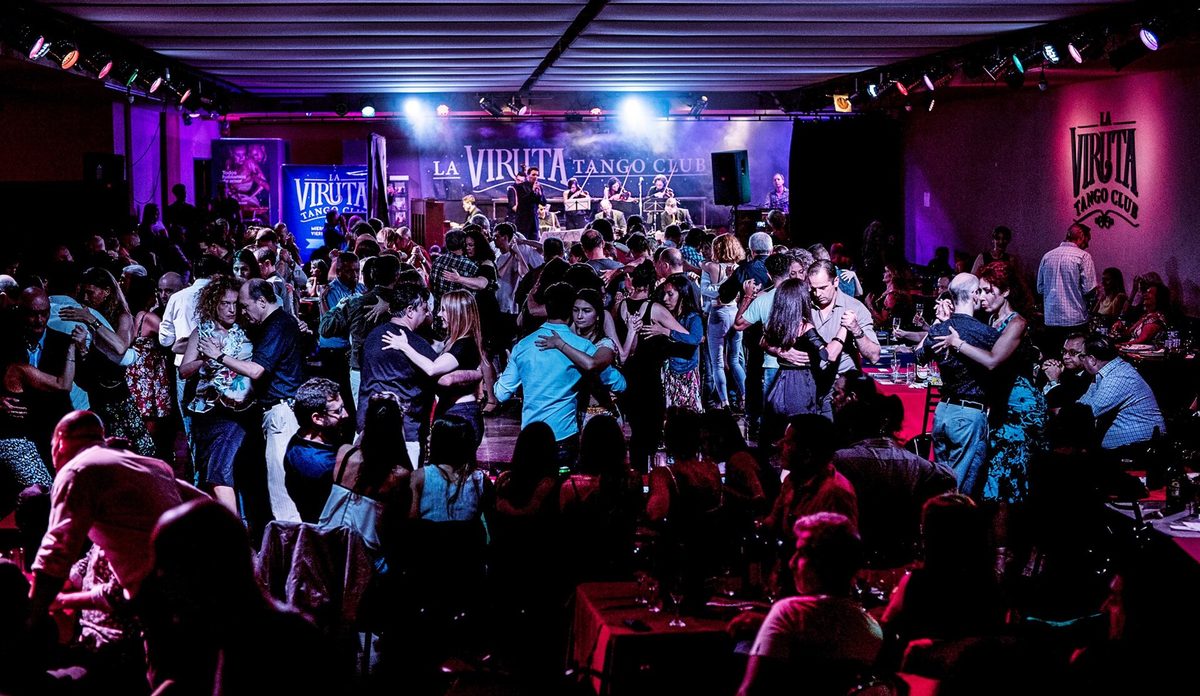
The first time tango really landed for me, I was not in a theatre. It was almost midnight on a Friday in Palermo, in a converted Armenian social club called La Viruta, and a man who must have been seventy was dancing with a woman half his age. Neither of them looked at their feet. They barely moved across the floor — just turns, pauses, a leg flicking through and back — and the whole crowded room seemed to breathe with them. I had come to experience tango in Buenos Aires expecting a polished show; what I found was something the city actually lives.
Tango in Buenos Aires comes in three forms: the polished stage shows built for visitors, the local social dances called milongas where porteños really dance, and free street tango in plazas like San Telmo’s Plaza Dorrego. This guide covers all three — plus classes, costs, the etiquette codes, the history, and exactly where to go — so you experience the real thing.
I have spent years sending friends to this city, and tango is the single thing they most often get wrong — not because they make a bad choice, but because no one told them there was a choice. Book the wrong experience and you come away thinking tango is a glossy tourist product. Book the right one and you understand why this music can stop a person mid-sentence. So I have organized this guide around that decision first, then gone deep on every piece: the best tango shows, the milongas where locals dance, classes for beginners, the history, and the unwritten rules that govern the dance floor.
One housekeeping note before we begin. Argentina’s economy moves fast, and 2025 brought big currency changes (more on that below), so every price here is a 2026 guide, not gospel — treat the numbers as ballpark and confirm the current rate when you book. With that said, let us talk tango.
Why Buenos Aires Is the Home of Tango
Tango was born here, on both banks of the Río de la Plata, in the 1880s — in the crowded immigrant tenements and port districts of Buenos Aires and Montevideo. It grew out of a collision of cultures: Italian and Spanish immigrants, the African-descended candombe rhythms of the Río de la Plata, the Argentine milonga, the Cuban-Spanish habanera. It was the music of dockworkers and newcomers and the lonely, and for decades it was considered disreputable. Then it conquered Paris, came home respectable, and never left. In 2009, UNESCO recognized tango as part of the Intangible Cultural Heritage of Humanity — a joint Argentine-Uruguayan treasure.
What makes Buenos Aires different from anywhere else you might see tango is that here it is not a museum piece. It is alive in a few hundred milongas a week, in the buskers of San Telmo, in the way a taxi driver will hum Pugliese. You can encounter tango here as theatre, as social ritual, as living history, or as something you yourself learn to do badly and joyfully. That range is the point of this guide — and it pairs naturally with the rest of your trip, whether you are mapping out things to do in Buenos Aires or sorting your day-by-day itinerary.
Tango Shows, Milongas or the Street? Which Experience Is Right for You
This is the decision that shapes your whole tango experience, so let me be blunt about the trade-offs. A tango show is choreographed theatre: professional dancers, a live orchestra, dramatic lighting, often a dinner. It is the most accessible option and genuinely dazzling, but it is a performance, not the social dance as locals do it. A milonga is the real thing — an ordinary social dance where porteños of all ages come to dance with each other — but it runs on subtle codes and you mostly watch unless you can dance a little. Street tango is free, spontaneous, and atmospheric, but it is buskers performing for tips, not the deep article.
None of these is “better.” They answer different questions. Here is how I steer people:
| Experience | Best for | What it costs | The catch |
|---|---|---|---|
| Tango show (dinner or show-only) | First-timers, couples, a special night out, anyone short on time | ~US$35–70 show-only; ~US$70–150 with dinner; US$200+ luxury | It’s a polished performance, not the social dance |
| Milonga (social dance) | Travelers who want the authentic scene; anyone who dances or wants to learn | ~US$4–8 entry (a class is often included) | Runs on etiquette; you’ll mostly watch unless you dance |
| Street tango | Budget travelers, daytime wandering, photos, families | Free (tip the dancers) | Buskers performing for tourists, not the real social dance |
| A class | The curious; couples who want to actually try it | ~US$10–20 group; ~US$30–80 private | You will be a beginner — lean into it |
My honest advice for a typical first visit: do two of these. See one good show for the spectacle, then go and watch a real milonga (sit at the back, order a drink, nurse it for two hours) for the soul. If you have an extra afternoon, take a beginner class — nothing teaches you to see tango like trying to do it. Now let’s go through each in detail.
The Best Tango Shows in Buenos Aires
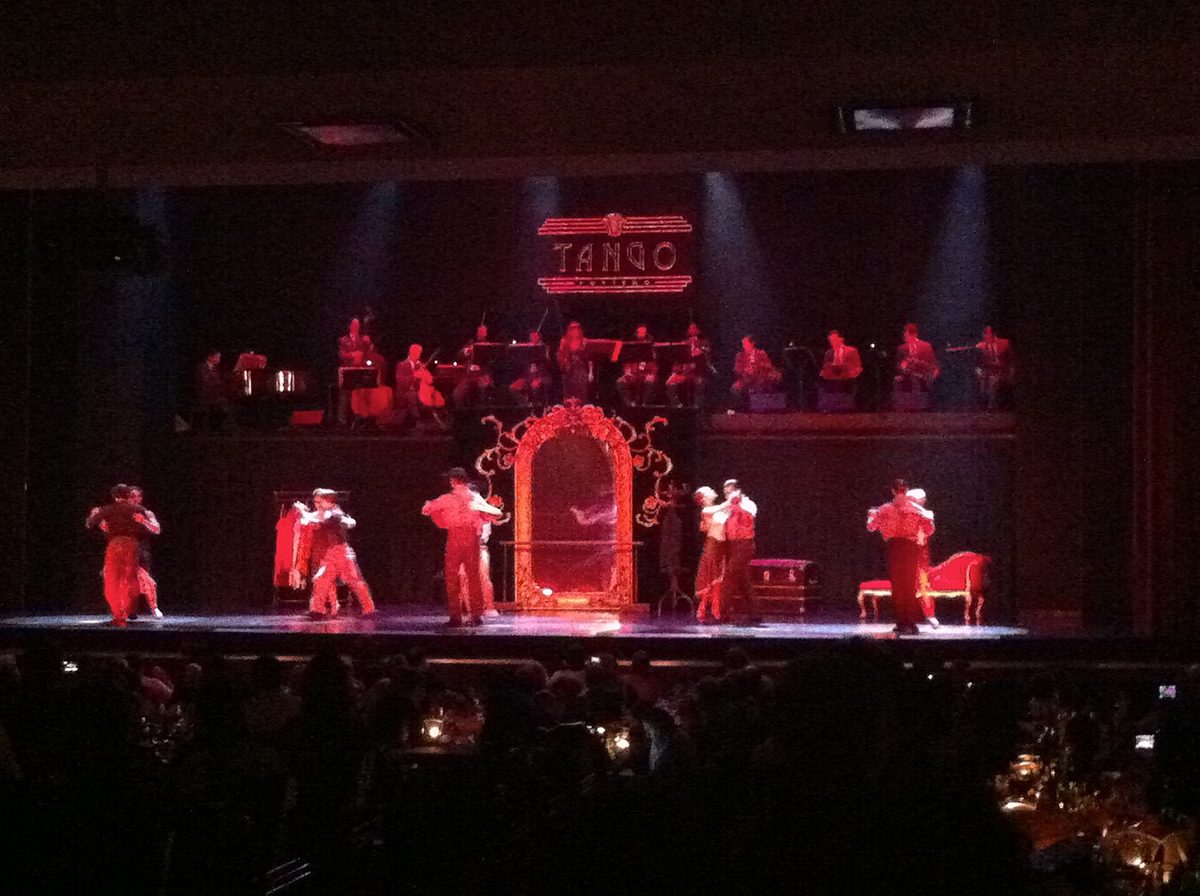
Let me start with the option most visitors come for. A tango show is the easy, dazzling, no-Spanish-required way to experience tango in Buenos Aires, and the city has dozens of them, from intimate historic bars to vast theatrical productions with special effects. The quality is generally high; the differences are about scale and vibe and how much you want to spend. I break them into three tiers.
Grand Spectacles (the big theatrical productions)
These are large, polished, high-production shows — think live orchestra, a cast of a dozen dancers, costume changes, and a sweep through tango’s history. Señor Tango in Barracas is the most theatrical of all, a cavernous room with a big stage and almost Vegas-like staging (it is far from the center, so take the included transfer). Café de los Angelitos, near Congreso, sets its show in a gorgeous restored 1890s bar notable that Carlos Gardel himself frequented. Esquina Carlos Gardel, in Gardel’s own barrio of Abasto, is the classic upscale dinner-show. Piazzolla Tango occupies a jaw-dropping Art Nouveau theatre inside the Galéria Güemes downtown. These run roughly US$85–150 with dinner, more for VIP seating — and they are crowd-pleasers for a reason.
Historic & Intimate Shows (my personal favorites)
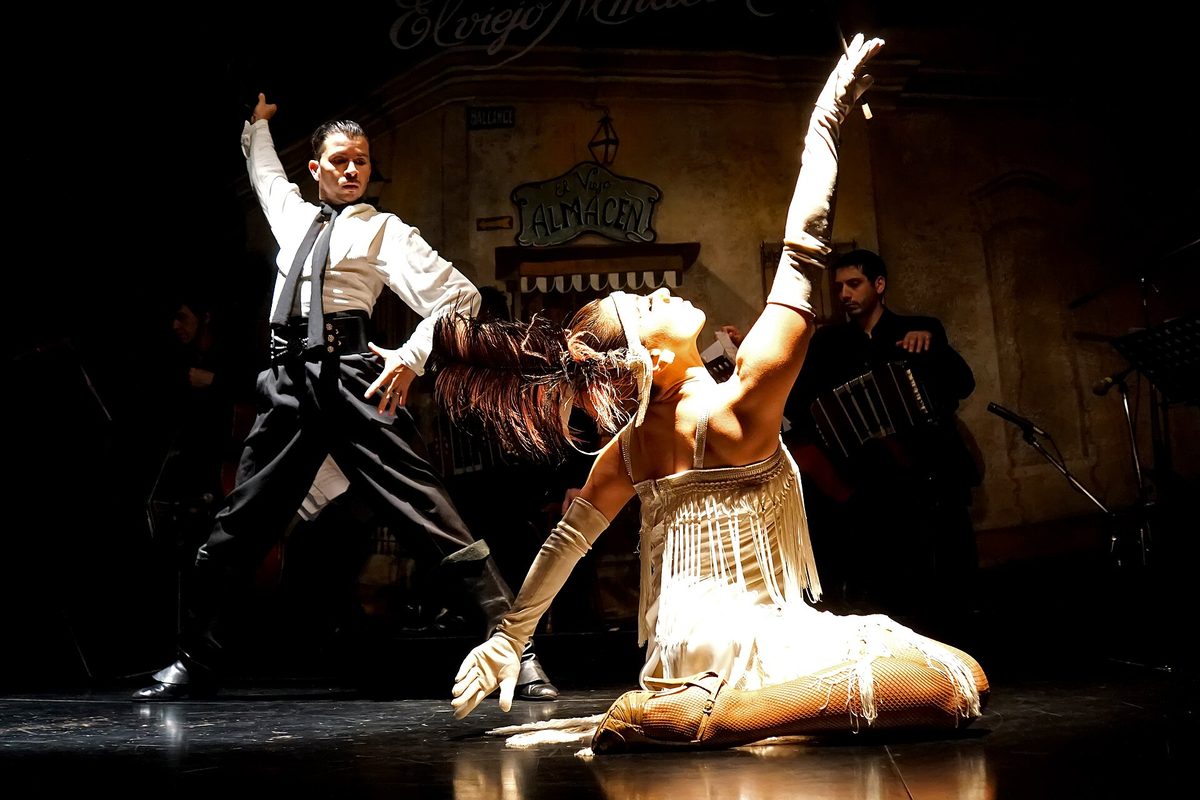
If you want atmosphere over spectacle, go smaller and older. El Viejo Almacén, founded in 1969 in a colonial building in San Telmo, is the one I send romantics to — tango and folklore at close range, in a room where the greats once played. El Querandí, also in San Telmo, stages a lovely narrative show that traces tango’s evolution decade by decade, inside an 1860s building. Bar Sur, a tiny San Telmo corner that has been going since 1967, is intimate to the point that the dancers are almost in your lap, and you can take a lesson there too. These intimate rooms typically run US$60–110 and, for my money, leave a deeper impression than the big productions. I dig into the differences in our guide to the best tango show in Buenos Aires.
Luxury & Boutique Options
At the top end, Rojo Tango at the Faena Hotel in Puerto Madero is the glamorous, intimate, expensive one — a red-velvet cabaret where dancers move among the tables and the price (often US$200 and well up, dinner included) matches the setting. At the other end of “boutique,” newer small-format shows in Palermo seat just a couple of dozen guests for an early-evening, wine-and-tango experience that leaves your night free for dinner afterward.
How to Choose — and the Dinner Question
A few things I wish someone had told me. First, the dinner is served before the show, not during, and while it is perfectly nice, it is rarely the best meal you will eat in Buenos Aires — this is, after all, a city of extraordinary restaurants and steakhouses. If you are watching your budget, book the show-only ticket and eat at a parrilla nearby. Second, shows start late (dinner around 8pm, the show around 9–10pm); if you cannot face a midnight finish, choose one of the handful of early shows. Third, most shows include hotel transfers — worth confirming, especially for far-flung Señor Tango. For the full breakdown of dinner-versus-show-only and which venues plate the best food, see our tango dinner show guide. And whatever you pick, you do not need to book months out — a few days is plenty, though the smaller intimate venues do sell out, so reserve those sooner.
Milongas: Where Porteños Actually Dance
If a show is tango as theatre, a milonga is tango as life. The word means both a style of music and, more usefully here, the social dance event itself: an ordinary evening where locals come to dance with one another. There are something like a few hundred milongas across Buenos Aires every week, from grand old salons to bohemian warehouses, and walking into one is the closest you will get to the real thing without dancing shoes of your own. You are welcome to come simply to watch — buy your entry, take a table, order a glass of wine or a beer, and soak it up. Just know that these are working dance floors with their own etiquette (the next section is essential reading), so the watching is a respectful, edge-of-the-room affair.
Milongas have personalities, and matching yours to the right one matters. Here is my shortlist, sorted by who they suit.
| Milonga / venue | Neighborhood | Character | Good for |
|---|---|---|---|
| La Catedral | Almagro | Bohemian, candle-lit warehouse with a Gardel mural; come as you are | Beginners & tourists |
| La Viruta | Palermo | 30-year institution in an Armenian club; class then dancing, sociable crowd | Beginners & night owls |
| Salón Canning | Palermo | One of the finest wooden floors in the city; serious, beautiful dancing | Watching the best |
| El Beso | Centro | Tiny, traditional, strict codes; the real tanguero crowd | Serious dancers |
| Maldita Milonga | San Telmo | Intimate, dim, with a live orchestra (often Orquesta El Afronte) | Live-music lovers |
| La Glorieta | Belgrano | Free, open-air gazebo milonga under the trees; weekends | Everyone (it’s free) |
For a first milonga, I almost always point people to La Catedral or La Viruta. La Catedral is a soaring, dimly lit former warehouse in Almagro with mismatched furniture, a vegetarian kitchen, and an unpretentious crowd — nobody will care what you are wearing, and there is usually a beginner class earlier in the evening. La Viruta, downstairs in a Palermo Armenian social club, has been running for three decades, draws a friendly mix of locals and visitors, and bundles a class with the milonga so you can learn a little and then stay to watch (or try). Both are forgiving places to dip a toe in.
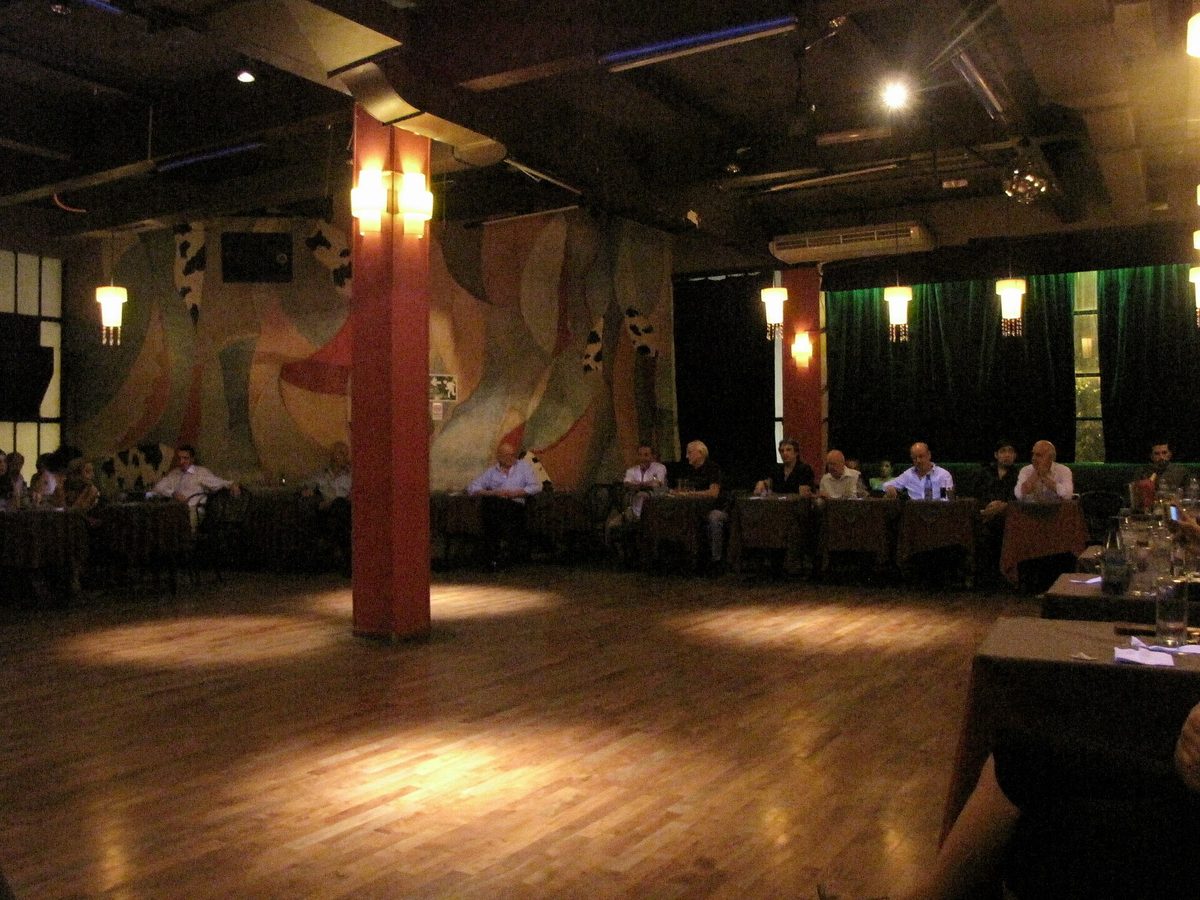
When you are ready to see how it is really done, go to Salón Canning in Palermo, which has one of the great wooden floors in the city and attracts seriously good dancers, or peek into El Beso downtown — small, traditional, and run on strict codes, it is not where you take your first steps, but it is mesmerizing to watch. And do not miss a live-orchestra milonga like Maldita Milonga in San Telmo, where a band like Orquesta El Afronte plays the music as it was meant to be heard, with couples circling beneath. One practical note: milonga nights and organizers rotate constantly — a venue that hosts a famous milonga on Tuesday may be dark or different on Friday — so check a live listing site like hoy-milonga.com or the venue’s Instagram before you head out. Our dedicated guide to milongas in Buenos Aires keeps a current rundown, and because the milonga belt overlaps with the city’s nightlife, our nightlife guide is a useful companion for the hours after the dancing.
Entry to a milonga is cheap — usually around US$4–8, often including the early class — which makes it one of the best-value nights in the city. The dancing rarely warms up before 11pm and can run until 3 or 4am, so pace yourself and lean into the late schedule, which is simply how Buenos Aires works.
The Códigos: Tango Etiquette You Actually Need to Know
Here is the part that separates people who “get” the milonga from people who accidentally annoy an entire room. Milongas are governed by los códigos — the codes — an unwritten etiquette that keeps a crowded floor working and lets people invite and decline one another without a flicker of embarrassment. You do not need to master them to watch, but understanding them transforms what you are seeing from “people dancing” into a subtle, centuries-old social choreography. Here are the essentials.
The mirada and the cabeceo (how dances begin)
Couples do not usually pair up by someone walking over and asking. Instead they use the mirada (“the look”) and the cabeceo (“the nod”). Across the room, you catch and hold someone’s gaze; if they hold it back, you give a small nod, and if they nod in return, you have agreed to dance — only then do you approach. The genius of it is that a declined invitation is invisible: if someone does not want to dance with you, they simply let their eyes slide away, and no one loses face. It also means that staring around the room is not idle — you may be unintentionally inviting half of it.
Tandas and cortinas (the rhythm of the night)
Music comes in tandas — sets of three or four songs by the same orchestra or in the same style. You dance an entire tanda with one partner; it is considered a snub to abandon someone halfway through, so a tanda is a small commitment. Between tandas comes the cortina (“curtain”), a short burst of decidedly non-tango music — pop, jazz, anything — that clears the floor. The cortina is the signal to thank your partner, walk them back, and return to your seat, freeing everyone to make eye contact and choose again. When you see the floor suddenly empty to a blast of something incongruous, that is the cortina doing its job.
The ronda and the line of dance
Couples move counter-clockwise around the floor in lanes called the ronda. You pick a lane and stay in it, following the line of dance — you do not overtake, weave between lanes, reverse into oncoming couples, or barrel across the center. Leaders are responsible for navigating courteously and not crowding the couple ahead. It looks like chaos from the door and is in fact a remarkably disciplined traffic system; once you notice it, you cannot unsee it.
A few more that mark you as someone who gets it
Chat happens during the cortina, not mid-tanda — talking through the dance is poor form. Saying “gracias” to your partner actually ends the dancing, so do not say it after a single song unless you mean to stop. And shoes matter: traditional floors expect real dance shoes (leather soles that pivot), though relaxed venues like La Catedral happily accept sneakers. We go deep on all of this — and what to do with your hands, eyes, and feet — in our tango etiquette guide, and on footwear specifically in our guide to buying tango shoes in Buenos Aires.
Learning to Dance: Tango Classes for Visitors
You do not need to arrive able to dance, and you do not need to commit to a course — Buenos Aires is set up for drop-in learners, and taking even one class is the single best way to understand what you are watching. There are two easy on-ramps.
The first and most fun is the group class held about an hour before many milongas. La Viruta, La Catedral, and the milongas at clubs like Gricel typically run a beginner lesson early in the evening; you pay a few dollars, learn the walk and a basic turn with a rotating set of partners, and then stay to watch the milonga unfold with new eyes. No partner required — the classes rotate everyone. The second is a proper tango school. DNI Tango in Almagro is the most traveler-friendly, with classes for every level (often taught in several languages) and a young, international crowd; the long-running Escuela Argentina de Tango runs group and private classes downtown. Expect to pay roughly US$10–20 for a group class and US$30–80 for a private lesson, depending on the teacher and your level. Many tango shows also bundle a pre-show beginner lesson, which is a gentle, low-stakes first taste. For schools, schedules, and what a first lesson is actually like, see our tango classes in Buenos Aires guide.
A Short History of Tango (So You Know What You’re Watching)
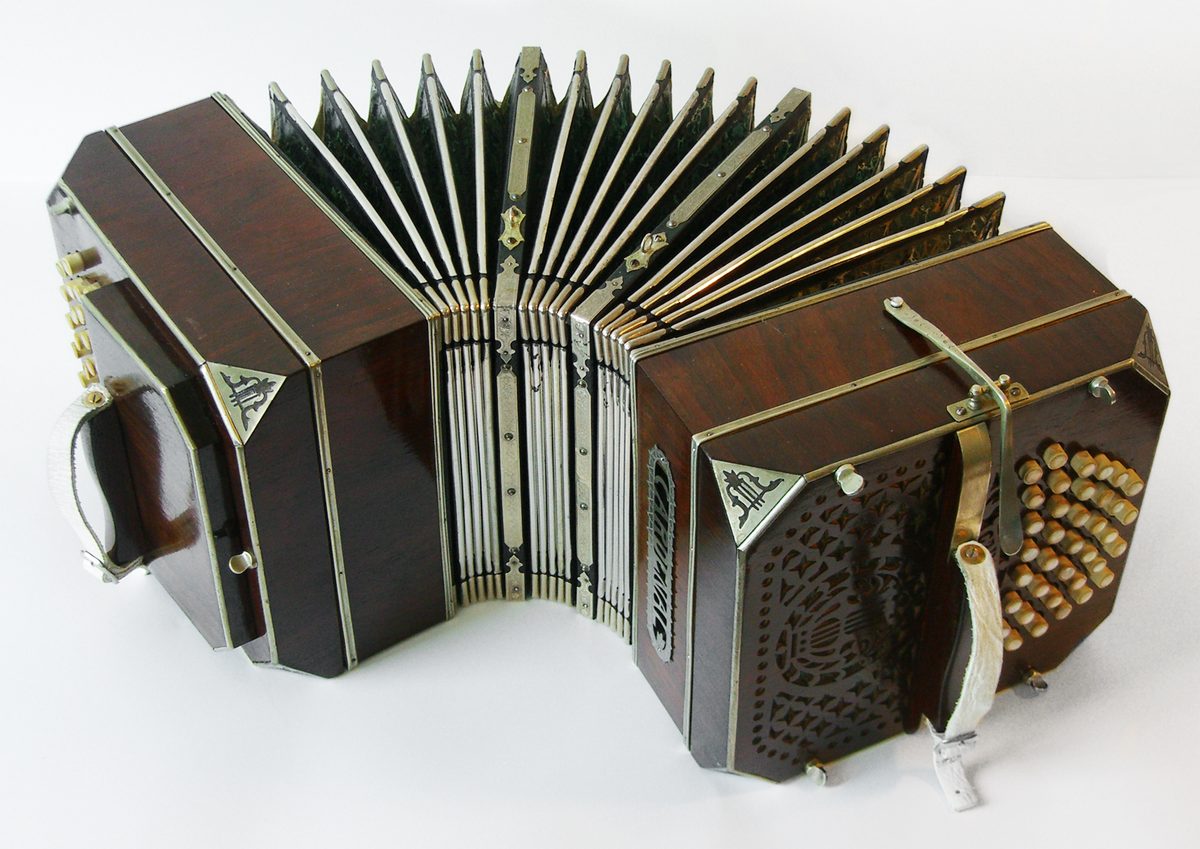
You can enjoy tango knowing none of this, but a little history makes every show and milonga richer — so here is the essential arc. Tango emerged in the 1880s in the working-class barrios and crowded tenements, the conventillos, of Buenos Aires and Montevideo, where waves of mostly European immigrants mixed with criollo and African-descended communities. Early tango was music of the margins — danced in courtyards and dance halls, looked down on by polite society — and its signature melancholy sound came from the bandoneón, a German concertina that found its true home in Argentine hands.
Everything changed with Carlos Gardel, the singer who became tango’s defining icon and a national saint. Through the 1920s and early ’30s his recordings and films carried tango around the world; he lived in the barrio of Abasto, where you can still visit his house, now a museum, and he died in a plane crash in 1935 at the height of his fame — an event Argentines still speak of with feeling. Then came the Golden Age, roughly 1935 to 1955, when the great orquestas típicas — Aníbal Troilo, Osvaldo Pugliese, Carlos Di Sarli, Juan D’Arienzo — filled enormous dance halls nightly. This is the music most milongas still play; when you hear a driving, danceable tango at Canning, the odds are it is a recording from this era.
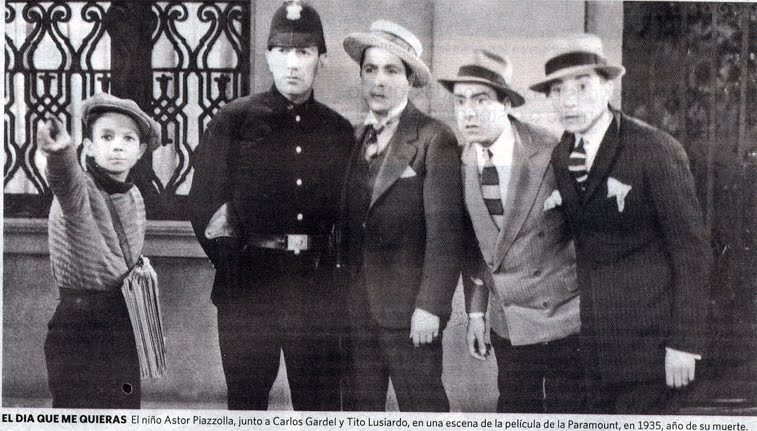
The last great revolution was Astor Piazzolla, who from the late 1950s fused tango with jazz and classical music to create nuevo tango — concert music to be listened to rather than danced. Purists were scandalized; the rest of the world fell in love with pieces like “Adiós Nonino” and “Libertango,” and Piazzolla is now probably the tango composer non-Argentines know best. That whole sweep — immigrant origins, Gardel, the Golden Age, Piazzolla, and the UNESCO recognition of 2009 — is the story a good narrative show like El Querandí dramatizes, and we tell it in full in our history of tango in Buenos Aires. If museums are your thing, pair it with our guide to the city’s museums, which includes the Casa Carlos Gardel.
The Best Neighborhoods for Tango in Buenos Aires
Tango is not spread evenly across the city; it pools in a handful of barrios, each with its own flavor. Knowing which is which helps you plan an evening — and choose where to base yourself, a question we tackle in full in our where to stay guide and our overview of the city’s neighborhoods.
San Telmo — the historic heart
Cobblestoned, atmospheric San Telmo is where most visitors meet tango. It holds the densest cluster of show venues (El Viejo Almacén, El Querandí, La Ventana, Bar Sur), the Sunday antiques fair around Plaza Dorrego with its street dancers, and an after-dark energy that makes it the obvious launchpad for a tango night.
Abasto — Gardel’s barrio
Inland and a little gritty, Abasto is sacred ground for tango fans: Carlos Gardel lived here, his house is now the Museo Casa Carlos Gardel, the streets carry his name and image, and the grand Esquina Carlos Gardel show sits steps away. It is also home to low-key live-music spots like El Boliche de Roberto, a tiny century-old bar where singers still gather.
La Boca — where it began
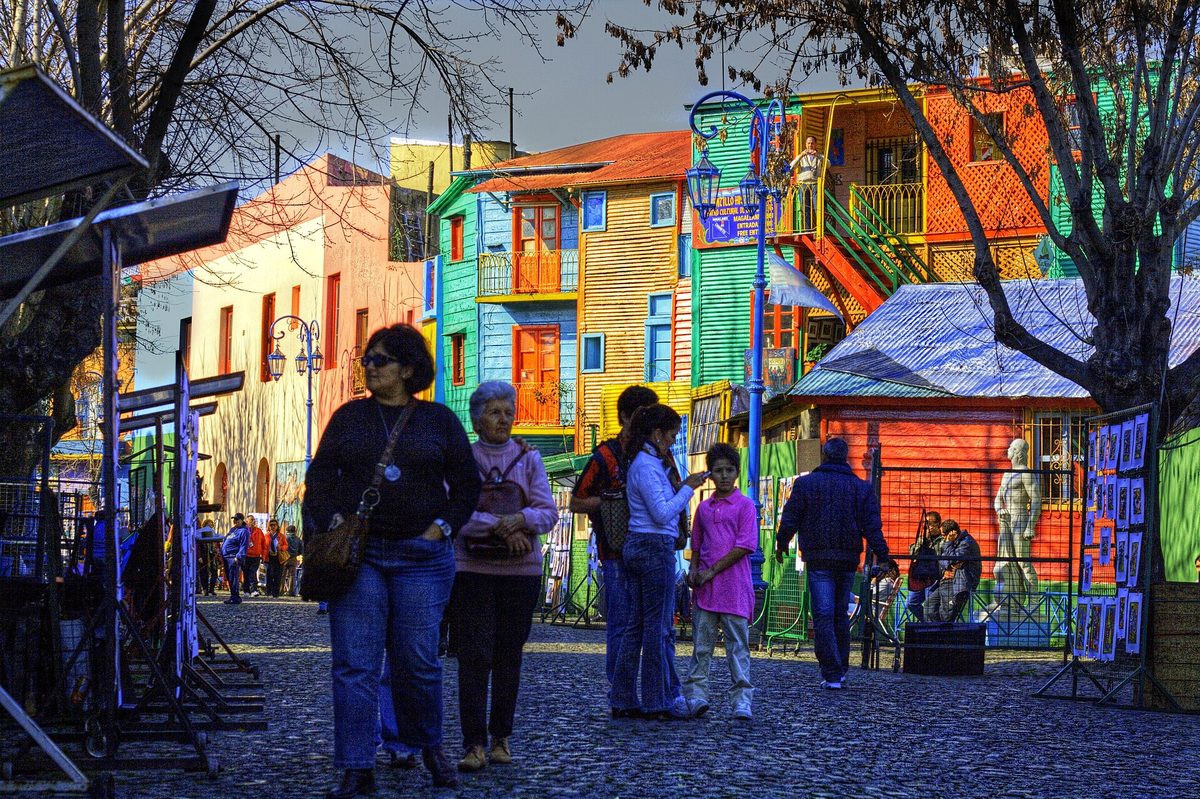
Down by the old port, working-class La Boca is part of tango’s origin story, and its famous Caminito — a short, intensely colorful street of corrugated-metal houses — draws daytime crowds and street-tango performers dancing for tips against the painted walls. It is touristy and best visited by day (stick to the main strip), but it is iconic for a reason.
Almagro, Villa Crespo & Palermo — the living scene
This is where tango is danced rather than performed. Almagro and neighboring Villa Crespo form the milonga belt (La Catedral, Club Gricel, DNI’s school), bohemian and unflashy, while leafier Palermo holds the polished floors of Salón Canning and the institution of La Viruta, plus a younger, more contemporary crowd. If you want to follow tango away from the tourist trail, point yourself here after dark. We map all of this in our tango neighborhoods guide.
Free & Street Tango: Seeing It Without Spending a Peso
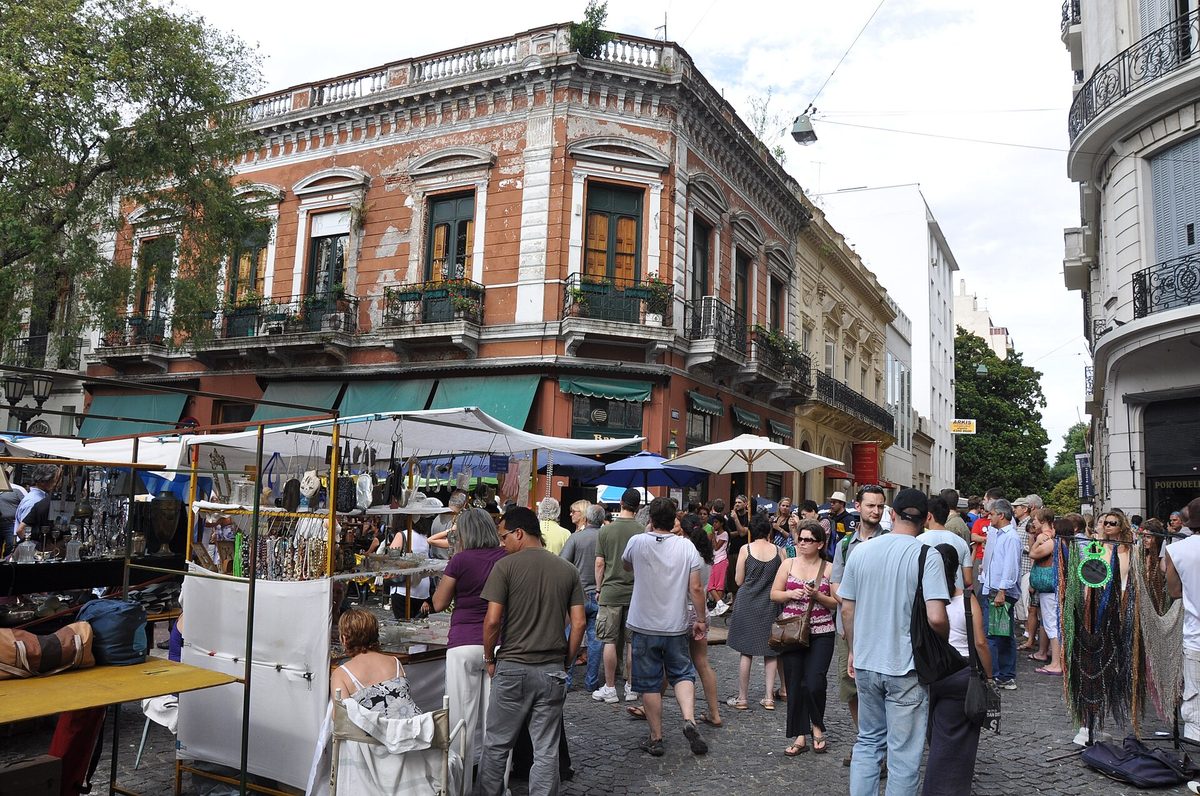
You can experience wonderful tango in Buenos Aires for nothing, which is a gift if you are watching your travel budget. The most atmospheric free tango happens at Plaza Dorrego in San Telmo on Sundays, when the weekly antiques market fills the square and couples — some performing for tips, some just dancing — turn the cobblestones into an impromptu stage into the evening.
My favorite free experience, though, is La Glorieta de Belgrano: an open-air milonga held under a grand old gazebo in the Barrancas de Belgrano park, running on weekend evenings (and some weeknights) since the 1990s. There is usually a class beforehand, then dozens — sometimes hundreds — of ordinary people of every age and ability dancing in the open air as the sun goes down. It is free, unpretentious, and genuinely moving, and anyone can join or simply sit on the grass and watch. Add the daytime street performers of Caminito and the singalong nights at tiny bars like El Boliche de Roberto, and you have a full, free tango itinerary. We round it all up in our free tango in Buenos Aires guide — and it slots neatly into a list of things to do that cost little or nothing.
The Tango BA Festival y Mundial
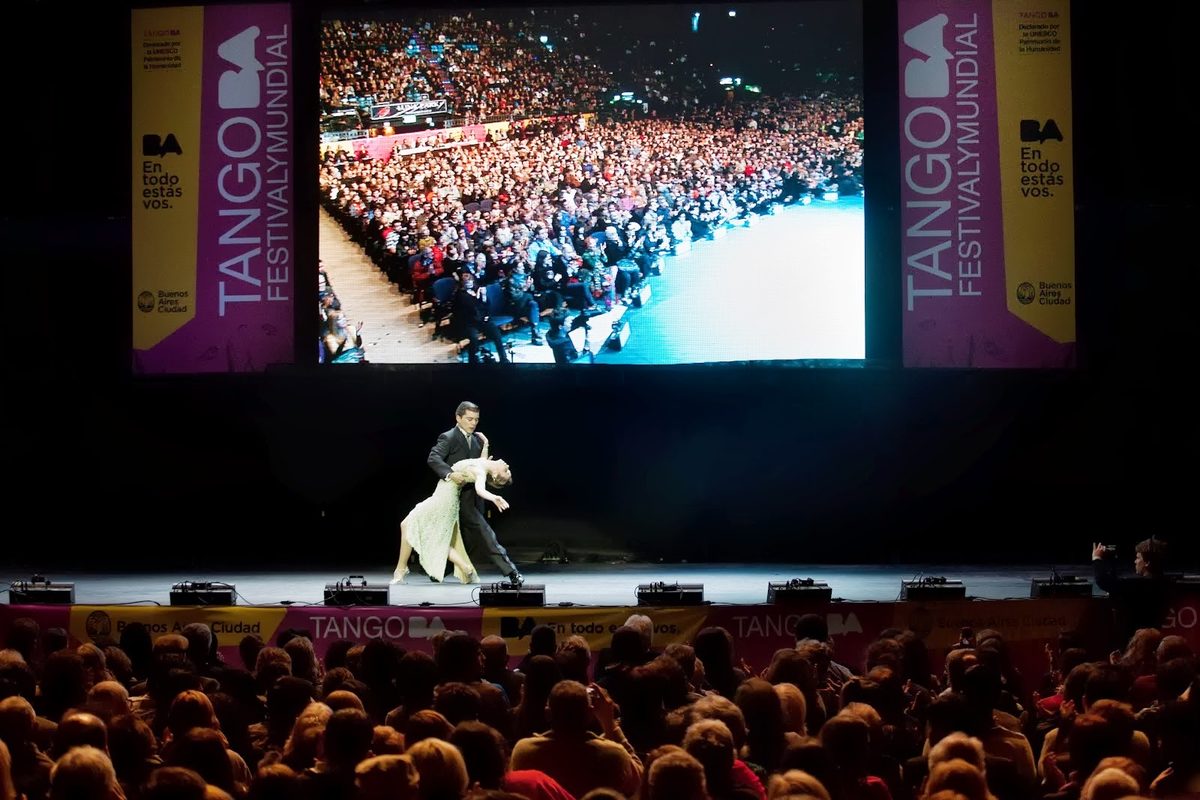
If you can time your visit for it, the Tango BA Festival y Mundial is the biggest tango event on earth — and, remarkably, it is free. Organized by the City of Buenos Aires, it packs a couple of weeks with hundreds of concerts, milongas, classes, and exhibitions across dozens of venues, and it culminates in the Mundial de Tango, the World Tango Championship, where couples from fifty-plus countries compete in two categories: Tango de Pista (the social, salon style) and Tango Escenario (the acrobatic stage style). Watching the world’s best dancers compete, for free, in the city that invented the dance is hard to beat.
The festival is typically held over roughly two weeks from mid-to-late August into early September (the 2025 edition ran from late August into the first days of September). The 2026 dates had not been officially confirmed at the time of writing, so check the official sites — tangoba.org and the city tourism site — for this year’s schedule before planning around it. Most events are first-come, first-served, with free reservations opening a few days ahead for the big competition rounds. We keep dates, venues, and tips current in our Tango BA Festival guide; for the wider question of when to come, see our best time to visit Buenos Aires guide (August is winter here, and pleasantly quiet besides the festival).
Practical Tips: Costs, What to Wear, When to Go & Booking
The craft is in the details, so here is the practical layer that makes a tango night go smoothly.
What it all costs (a 2026 snapshot)
Tango spans every budget, from a free gazebo milonga to a US$200 luxury cabaret. Here is the lay of the land, with the usual caveat that Argentine prices move — treat these as ballpark and confirm when you book.
| Experience | Typical 2026 price (per person) |
|---|---|
| Street / free tango (Plaza Dorrego, La Glorieta) | Free (tip the dancers) |
| Milonga entry (often includes a class) | ~US$4–8 |
| Group tango class | ~US$10–20 |
| Private tango lesson (per hour) | ~US$30–80 |
| Tango show, show-only ticket | ~US$35–70 |
| Tango dinner show | ~US$70–150 |
| Luxury show (e.g. Rojo Tango) | US$200+ |
A note on money in 2026: for years the advice was to bring US dollars and change them at the unofficial “blue” rate because cards gave a poor deal. After the 2025 currency reforms, that gap has largely closed, and foreign cards now generally settle at a fair rate — so you can book shows and pay for most things by card without losing out. Still carry some cash for milonga entries, tips, and taxis, and always check the current exchange rate before you travel. The full picture is in our Buenos Aires travel costs and money guide.
What to wear
For a show, think smart-casual — “a nice night out at the theatre.” Nobody expects black tie, but skip the shorts and flip-flops; dark jeans with a decent top and shoes are fine even at upscale venues. For a milonga, aim a notch neater and bring proper shoes if you intend to dance — traditional floors prefer leather soles that pivot, while casual venues like La Catedral are happy with sneakers. Porteños dress with care, and you will feel more comfortable matching them slightly. Our broader travel tips guide covers dressing for the city more generally.
When to go and how to get there
Tango runs year-round, nightly — you will never struggle to find a show or a milonga whatever week you visit, though August adds the festival. Remember the late schedule: shows from around 8–10pm, milongas warming up after 11pm. For getting home afterward, a Cabify or taxi is the easy, safe call late at night, especially from far-flung venues; our getting around guide explains the SUBE card, the Subte, and the ride-hailing apps. Tango is also a wonderfully easy thing to do with a partner or with kids in tow for an early street performance — see our Buenos Aires with kids guide for family-friendly options. And if you are extending your trip, several classic day trips from Buenos Aires pair beautifully with a tango night back in the city.
Frequently Asked Questions About Tango in Buenos Aires
What is the difference between a tango show and a milonga?
A tango show is a choreographed theatrical performance by professional dancers, staged for an audience — often with dinner. A milonga is a social dance event where ordinary porteños come to dance with each other for fun. Shows are for watching; milongas are for dancing (though you are welcome to watch quietly from a table).
What is the best tango show in Buenos Aires?
There is no single “best” — it depends what you want. For grand spectacle, Señor Tango or Café de los Angelitos; for historic intimacy, El Viejo Almacén or Bar Sur; for a narrative arc, El Querandí; for luxury, Rojo Tango. We compare them in detail in our best tango show guide.
How much does a tango show in Buenos Aires cost?
As a 2026 guide, show-only tickets run roughly US$35–70, dinner shows about US$70–150, and luxury experiences like Rojo Tango US$200 and up. Prices shift with Argentina’s economy, so confirm the current rate when booking. Booking show-only and eating elsewhere is the budget-friendly move.
Is a tango show in Buenos Aires worth it?
Yes, for most visitors — a good show is dazzling, accessible, and a memorable night out, especially as a first taste. Just go in knowing it is a polished performance, not the social dance locals do. For the fullest picture, pair one show with an evening watching a real milonga.
How far in advance should I book a tango show?
A few days is usually plenty, and same-day tickets often exist. The exception is the smaller, intimate venues — Rojo Tango, Bar Sur, El Querandí and boutique shows — which sell out faster, so reserve those a week or more ahead, particularly in peak season.
What should I wear to a tango show?
Smart-casual is the rule — treat it like a nice night at the theatre. Avoid shorts, beachwear, and flip-flops, but you do not need formal dress; dark jeans with a decent top and proper shoes are fine even at upscale venues. Porteños dress with care, so erring slightly neater feels right.
What time do tango shows start in Buenos Aires?
Late, by most visitors’ standards. Dinner service typically begins around 8pm and the performance around 9–10pm, running 90 minutes to two hours. If a midnight finish is too much, look for the handful of early shows that start around 6–8pm, which also leave your night free afterward.
Do tango shows include dinner and hotel transfers?
Many do both, but check when booking. Dinner is usually optional (show-only tickets are cheaper) and is served before the show, not during. Hotel transfers are commonly included, especially for venues far from the center like Señor Tango — a real convenience given the late hours.
Where can I see free or street tango in Buenos Aires?
The best free tango is at Plaza Dorrego in San Telmo on Sundays during the antiques market, and at La Glorieta de Belgrano, an open-air gazebo milonga on weekend evenings. You will also find street performers along Caminito in La Boca by day. Our free tango guide has more.
What exactly is a milonga?
Confusingly, “milonga” means three things: a style of upbeat tango music, an older dance, and — most usefully for visitors — the social dance event itself, where locals gather to dance tango. When someone says “let’s go to a milonga,” they mean the event. See our milonga guide.
What is the cabeceo?
The cabeceo is how dances are traditionally arranged at a milonga: a subtle nod across the room that follows eye contact (the mirada). If both people nod, they have agreed to dance and the leader approaches. Its beauty is that anyone can decline invisibly, just by looking away — no one is put on the spot.
What is a tanda and a cortina?
A tanda is a set of three or four songs you dance with one partner; leaving mid-tanda is a snub. A cortina is the short clip of non-tango music played between tandas to clear the floor, signaling everyone to return to their seats and choose new partners. Together they give the night its rhythm.
Where can tourists take tango classes in Buenos Aires?
The easiest options are the group classes held about an hour before many milongas (La Viruta, La Catedral) and traveler-friendly schools like DNI Tango in Almagro or the Escuela Argentina de Tango downtown. No partner or experience is needed — classes rotate everyone. Our classes guide lists schools and schedules.
How much do tango lessons cost in Buenos Aires?
Roughly US$10–20 for a group class and US$30–80 for a private lesson in 2026, depending on the teacher, level, and location. Many milongas bundle a class with the entry fee for just a few dollars, which is the best-value way to try it. Prices move with the exchange rate, so confirm locally.
Where was tango born?
Tango emerged in the 1880s in the working-class port neighborhoods and tenements on both sides of the Río de la Plata — in Buenos Aires and Montevideo — from a mix of immigrant, criollo, and African-descended cultures. Buenos Aires became its great capital, and the dance has been central to the city’s identity ever since.
When is the Tango BA Festival y Mundial?
The festival and World Tango Championship is typically held over about two weeks from mid-to-late August into early September, organized free by the City of Buenos Aires. The 2026 dates were not yet confirmed at the time of writing, so check tangoba.org and the city tourism site. Details are in our festival guide.
Which milongas are best for beginners?
La Catedral in Almagro and La Viruta in Palermo are the friendliest first milongas — relaxed, welcoming, with beginner classes beforehand and no pressure to be good. La Glorieta de Belgrano, the free open-air milonga, is also wonderfully unintimidating. Save the strict traditional floors like El Beso for once you have found your feet.
Final Thoughts
Here is what I most want you to take from all this: do not let anyone tell you that “real” tango is only the milonga and the shows are a tourist trap, or vice versa. They are different doors into the same extraordinary thing. See a show and let the spectacle knock you flat. Then go sit at the back of a milonga, order a glass of Malbec, and watch a roomful of strangers say everything they cannot say in words. Take a class and feel, for three clumsy minutes, what it asks of you. Tango in Buenos Aires is not one experience but a whole world, and the city hands it to you generously, at every price from free to lavish. Come with an open evening and a little curiosity, and it will give you a night you remember for the rest of your life. When you are ready to build the rest of the trip around it, our guides to things to do, where to stay, and the perfect itinerary are waiting.
Photo Credits
Every image is used under its respective Creative Commons or public-domain license, sourced from Wikimedia Commons:
- A couple dancing tango in a close embrace. Photo by Fuentes/Fernandez, released under CC0 — via Wikimedia Commons.
- A grand stage tango show in Buenos Aires. Photo by McKay Savage from London, UK, CC BY 2.0 — via Wikimedia Commons.
- The dance floor at El Beso, a traditional milonga. Photo by TangOblivion, CC BY 2.0 — via Wikimedia Commons.
- A young Astor Piazzolla with Carlos Gardel in the 1935 film El día que me quieras. Public domain — via Wikimedia Commons.
- A bandoneón, the soul of tango music. CC BY-SA 2.5 — via Wikimedia Commons.
- Caminito in La Boca, a tango landmark. Photo by Luis Argerich from Buenos Aires, Argentina, CC BY 2.0 — via Wikimedia Commons.
- The Sunday market at Plaza Dorrego in San Telmo. Photo by Jorge Láscar from Australia, CC BY 2.0 — via Wikimedia Commons.