I have a confession: when friends visit Buenos Aires and ask me where to spend their food budget, I tell them to skip one steak dinner and eat empanadas, pizza and medialunas instead. Those three are the everyday soul of how this city actually eats — cheap, ferociously good, and on every corner.
So where do you find the best empanadas in buenos aires? My honest answer: the regional empanaderias of Recoleta and the north, the century-old pizzerias around the Obelisco, and the neighborhood panaderia two doors from wherever you are sleeping. This guide walks you through all three, with the spots I send people to, what to order, and roughly what it costs in 2026.
Last updated: June 2026 · Written by the Buenos Aires Tourism editorial team
This is the carb-and-grill corner of our larger guide to restaurants in Buenos Aires. If you want the full picture — parrillas, wine bars, closed-door dinners — start there. If you just want to eat brilliantly for a few dollars, stay right here.
Why empanadas, pizza and medialunas matter here
Argentina is a country built by Italian and Spanish immigrants, and you taste that history every day. The empanada came down from the Andean northwest; pizza arrived in the suitcases of Neapolitan and Genoese migrants and mutated into something gloriously local; the medialuna is the Argentine cousin of the French croissant, smaller and sweeter. Together they form the trinity of comida diaria — the food locals eat without thinking, that costs a few coins and never disappoints.
Argentines reportedly eat something like ten million empanadas a day, which tells you how seriously this is taken. You will eat them standing at a counter, on a park bench, at midnight after a bar — the same goes for a porteno slice folded over a wedge of faina (chickpea flatbread), or a medialuna dunked into a morning cafe con leche. None of it is fancy. All of it is essential.

Where to find the best empanadas in Buenos Aires
Here is the thing nobody tells first-time visitors: there is no single “Argentine empanada.” Every province has its own recipe, and the great places in Buenos Aires are usually loyal to one region. Knowing the regional styles is how you order like you belong here.
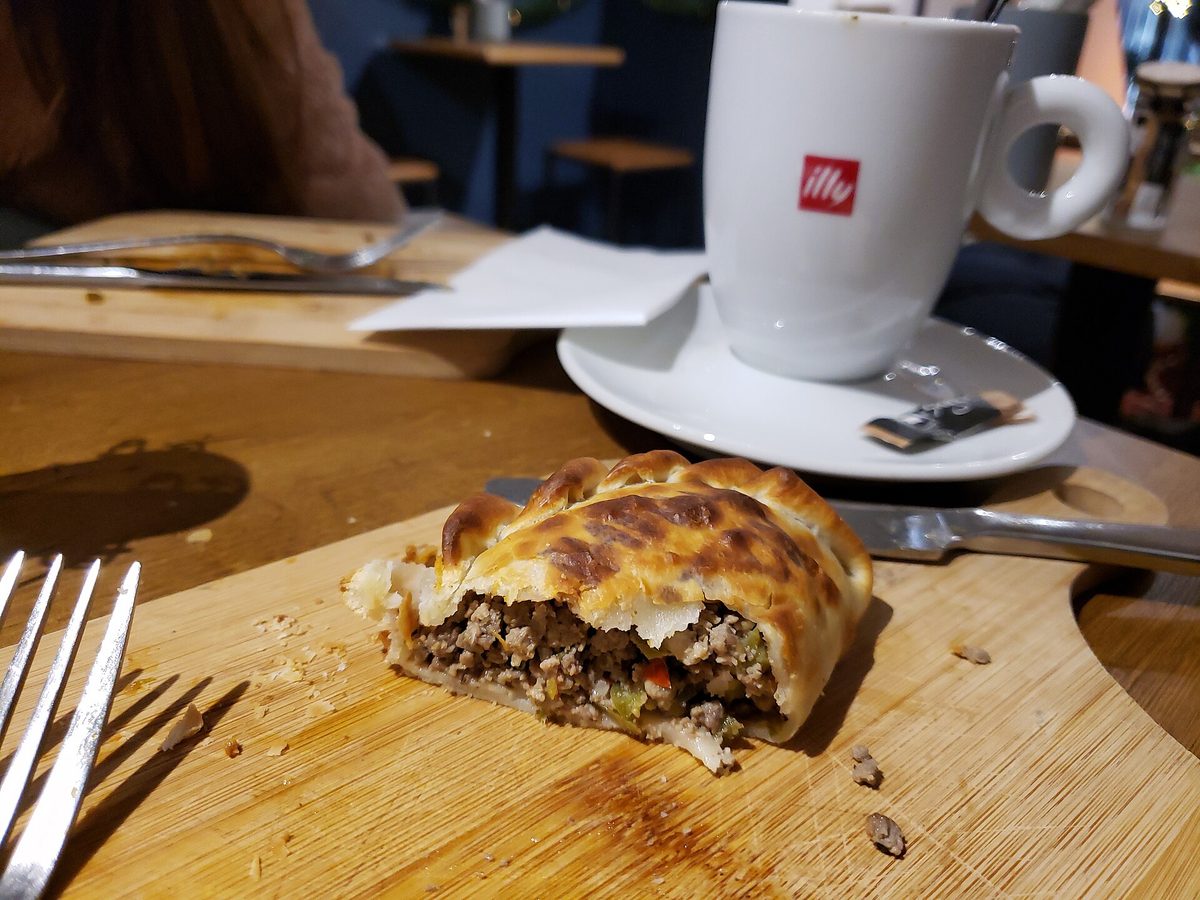
A few quick rules. Salteñas from Salta are small, juicy and lightly spiced, often with potato. Tucumanas from Tucuman are famous for hand-cut (not ground) beef — matambre cut with a knife — and they are gloriously messy. Cordobesas from Cordoba carry sugar and sometimes raisins, which divides the nation. Riojanas add egg, olive and a touch of raisin. And the porteno default is a clean, oniony carne suave (mild beef). Look at the repulgue — the crimped edge — because at a proper place the braid pattern tells you the filling without a label.
| Spot | Barrio | Order this | Roughly per empanada |
|---|---|---|---|
| La Cocina | Recoleta | The “pikachu” (sweet cheese & onion), Catamarca style | ~US$1.20–1.80 |
| El Gauchito | San Telmo / Centro | Fried riojana — beef, potato, egg, olive | ~US$1–1.50 |
| 1810 Cocina Regional | Palermo & others | Tucumana (knife-cut beef) | ~US$1.50–2.20 |
| El Sanjuanino | Recoleta | Carne, plus tamales and humita | ~US$1.20–1.80 |
| La Mezzetta | Villa Crespo | Empanada on the side of a fugazzeta | ~US$1–1.50 |
Prices are approximate for mid-2026 and move with the peso — treat them as a guide and check current menus. A half-dozen makes a light meal; a dozen feeds two hungry people.
My pick of the empanaderias
If I had one afternoon, I would start at La Cocina on Avenida Pueyrredon in Recoleta. It is tiny, it is Catamarca-style, and the spicy sweet-cheese “pikachu” is the empanada I daydream about. A few blocks away, El Sanjuanino has been doing northwestern empanadas, tamales and humita since the 1970s in a cosy cave of a room — old-school and reliable.
For fried empanadas, the move is El Gauchito, a hole-in-the-wall where the riojanas come out hot, crisp and somehow not greasy. In Palermo, the small chain 1810 nails the juicy Tucuman style if you want hand-cut beef. And for a only-in-Buenos-Aires combo, swing by La Mezzetta in Villa Crespo, order one empanada and then a slice of their legendary fugazzeta — which brings us neatly to pizza.
Empanadas are the perfect first bite of any Buenos Aires food tour, and they show up on nearly every list of essential Argentine dishes for good reason.
Buenos Aires pizza: thick, cheesy and unapologetic
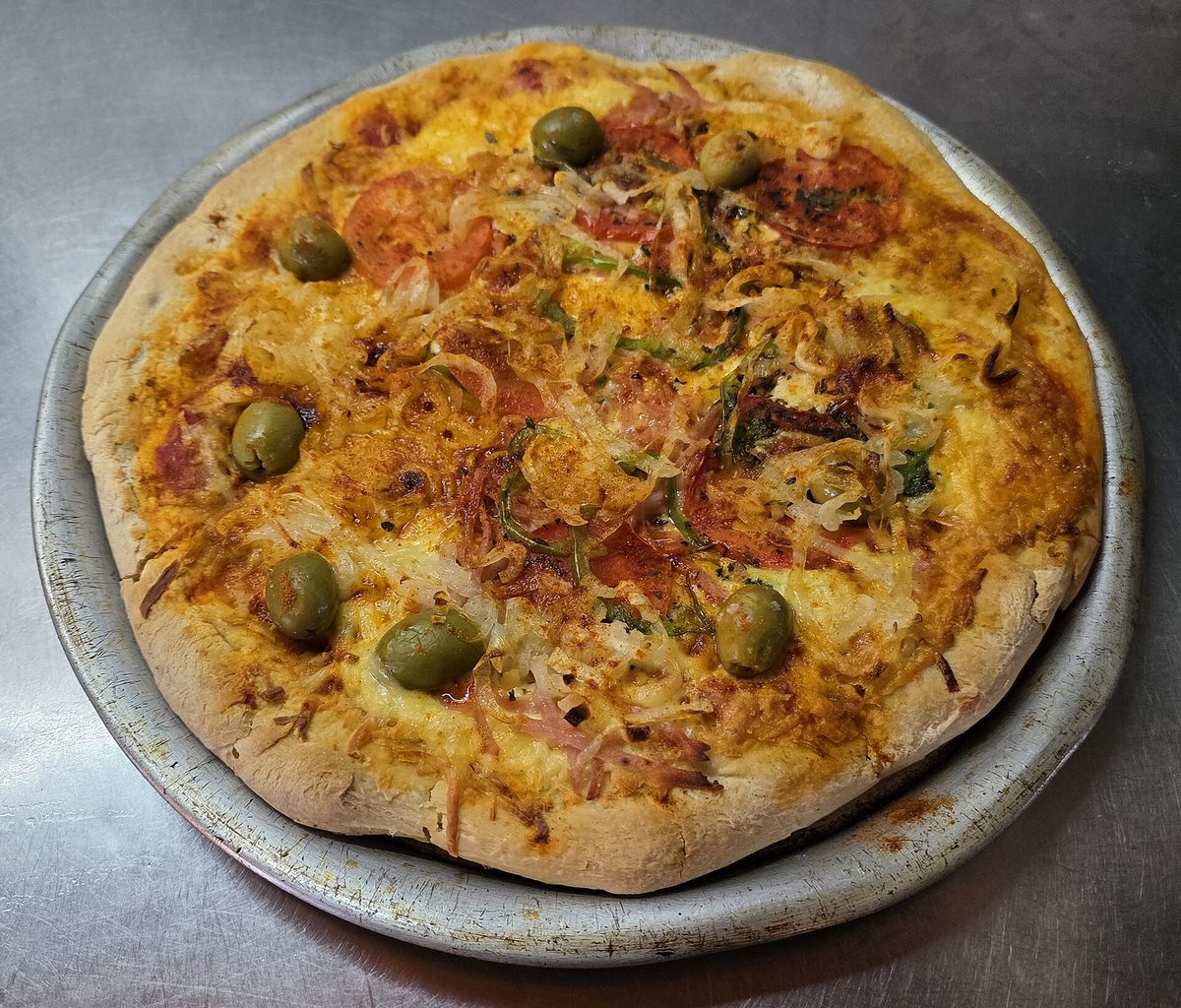
Forget everything you know about Naples. Buenos Aires pizza is its own animal — a thick, bready base (the famous media masa or the even taller al molde) under an avalanche of mozzarella, with a generous, almost reckless hand on the cheese. Purists abroad clutch their pearls; porteno pizza does not care. It is comfort food engineered for a city that eats late and shares everything.
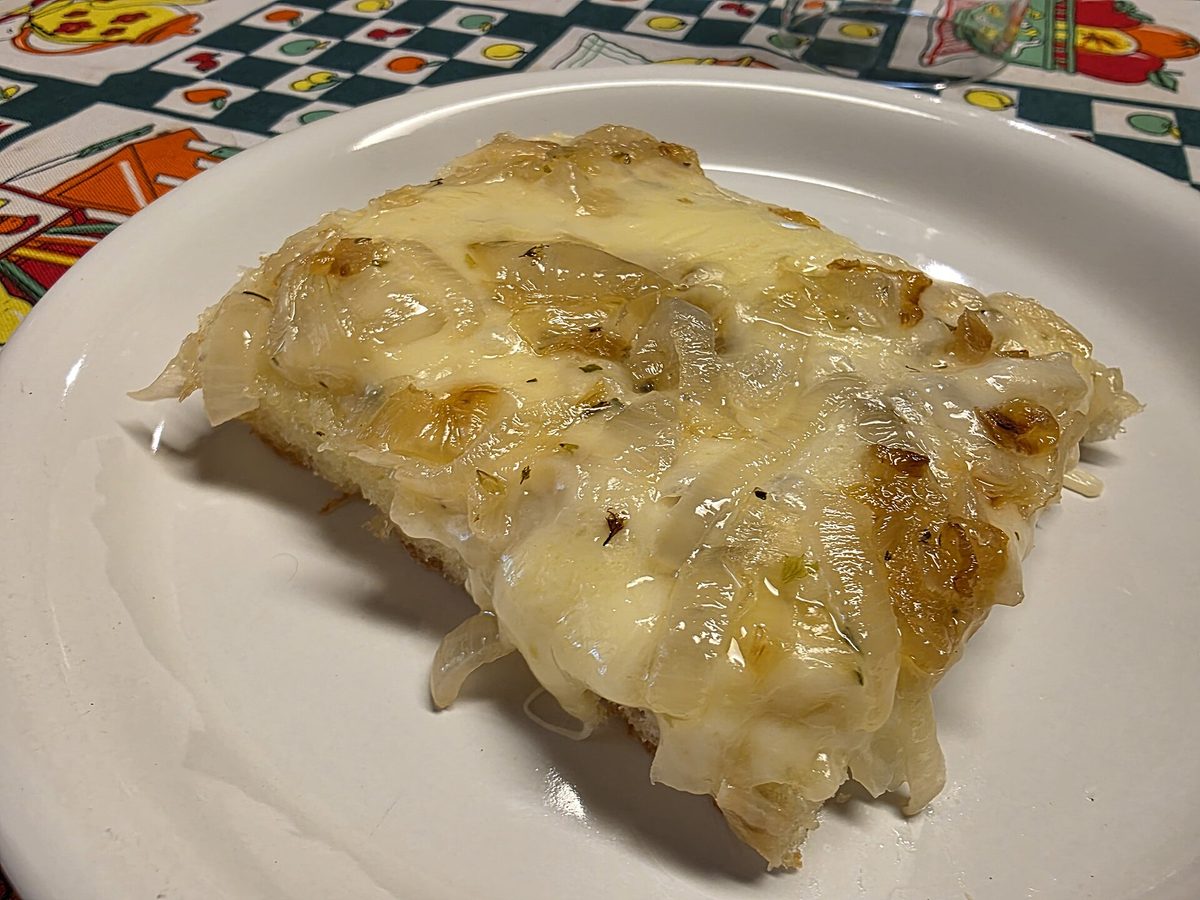
Two words you must learn. Fugazza is the onion pizza with no tomato, descended from Genoese focaccia. Fugazzeta adds a thick layer of melted cheese to that onion base, and fugazzeta rellena stuffs cheese inside the crust itself — it is as outrageous as it sounds. Order a slice with a wedge of faina on top (locals call it “a caballo,” on horseback) and a glass of moscato, and you are eating exactly like a 1950s porteno.
The classic pizzerias around the Obelisco
The pilgrimage starts on Avenida Corrientes. Guerrin, open since 1932, is the cathedral — stand at the counter, order a slice of muzzarella and a fugazzeta, eat it on your feet with the taxi drivers, and do not expect charm from the staff (that gruffness is part of the show). A short walk away, El Cuartito (1934) is its great rival, walls plastered with football and boxing memorabilia, arguably an even better fugazzeta. I genuinely cannot choose between them, so I usually do both in one greedy evening.
Las Cuartetas (also on Corrientes) and Pizzeria Banchero — which claims to have invented the fugazzeta rellena — lean classic, while out in Villa Crespo La Mezzetta is the local-favorite shrine to fugazzeta, with a line out the door at 9pm. Go right when they open at noon or early evening to dodge the worst crowds.
Corrientes at night is itself one of the great things to do in Buenos Aires — theatres, bookshops open past midnight, and pizza counters glowing under fluorescent light. For a proper sit-down crawl instead, our guide to the best restaurants in Buenos Aires maps out how to pace a long evening of eating.
Medialunas and the porteno panaderia
If empanadas and pizza are lunch and dinner, the medialunas buenos aires wakes up to are breakfast and merienda (the late-afternoon snack). A medialuna is a small crescent pastry, glossy with sugar syrup, denser and sweeter than a French croissant. You order them by the half-dozen, paired with a cafe con leche, and the whole ritual rarely costs more than a few dollars.
There are two kinds and you should know the difference. De manteca are made with butter — soft, sweet, glazed, the ones you actually want. De grasa are made with lard, smaller, drier and more savory, traditionally eaten with mate. Tell the counter “tres de manteca” and you will be fine.
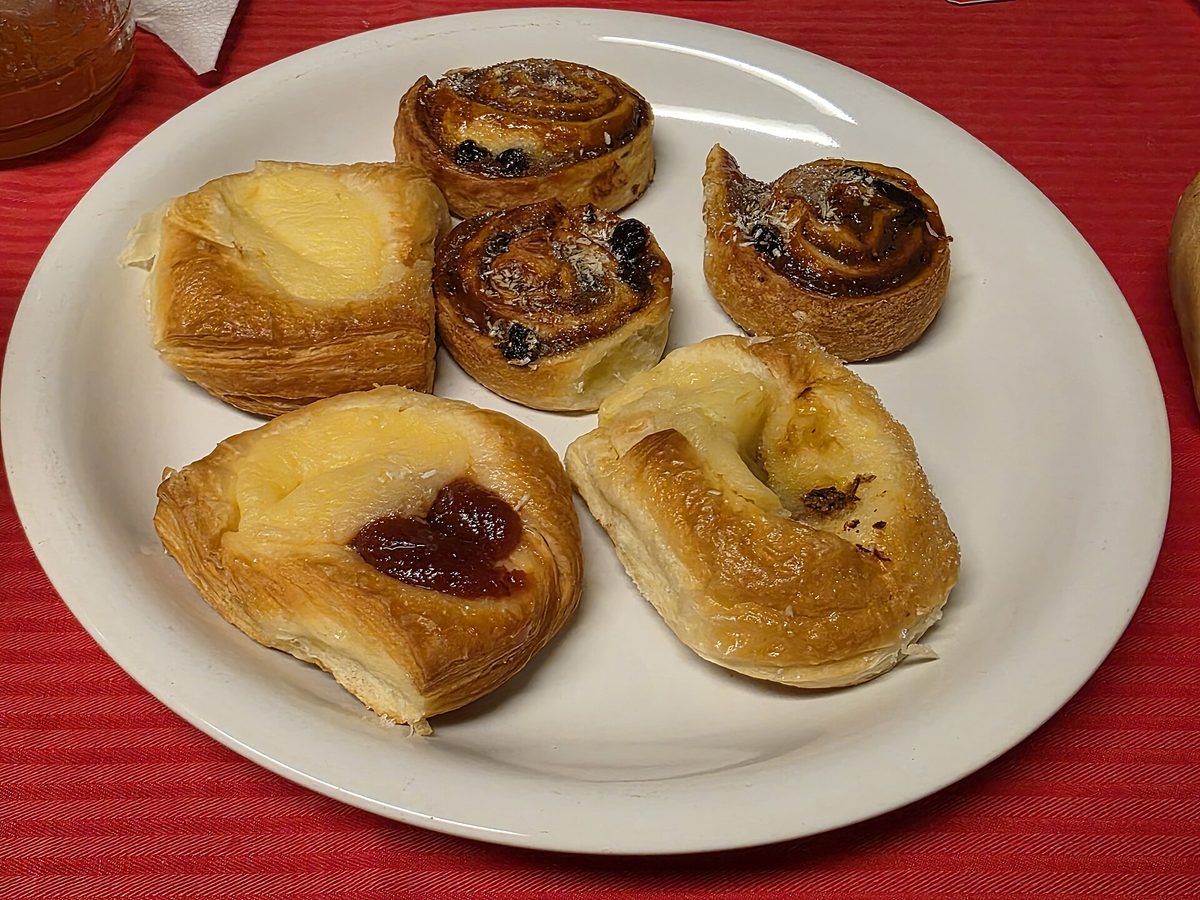
A porteno panaderia (bakery) sells far more than medialunas. The glass case is full of facturas — the umbrella term for the morning pastries: vigilantes, cañoncitos filled with dulce de leche, bolas de fraile, sugary palmeritas. Point and pile a paper bag; it is one of the cheapest pleasures in the city.
Bakeries worth a detour
For old-world atmosphere, Dos Escudos in Recoleta is a beloved institution — rich medialunas and dulce-de-leche-filled churros in a setting that has barely changed in decades. Downtown, La Piedad turns out soft, slightly citrusy medialunas that locals queue for. In Palermo, the modern, design-forward Ninina does an excellent croissant-style medialuna with serious coffee, and Hausbrot (a citywide mini-chain since 1988) is a reliable fallback for good bread, medialunas and even a few empanadas.
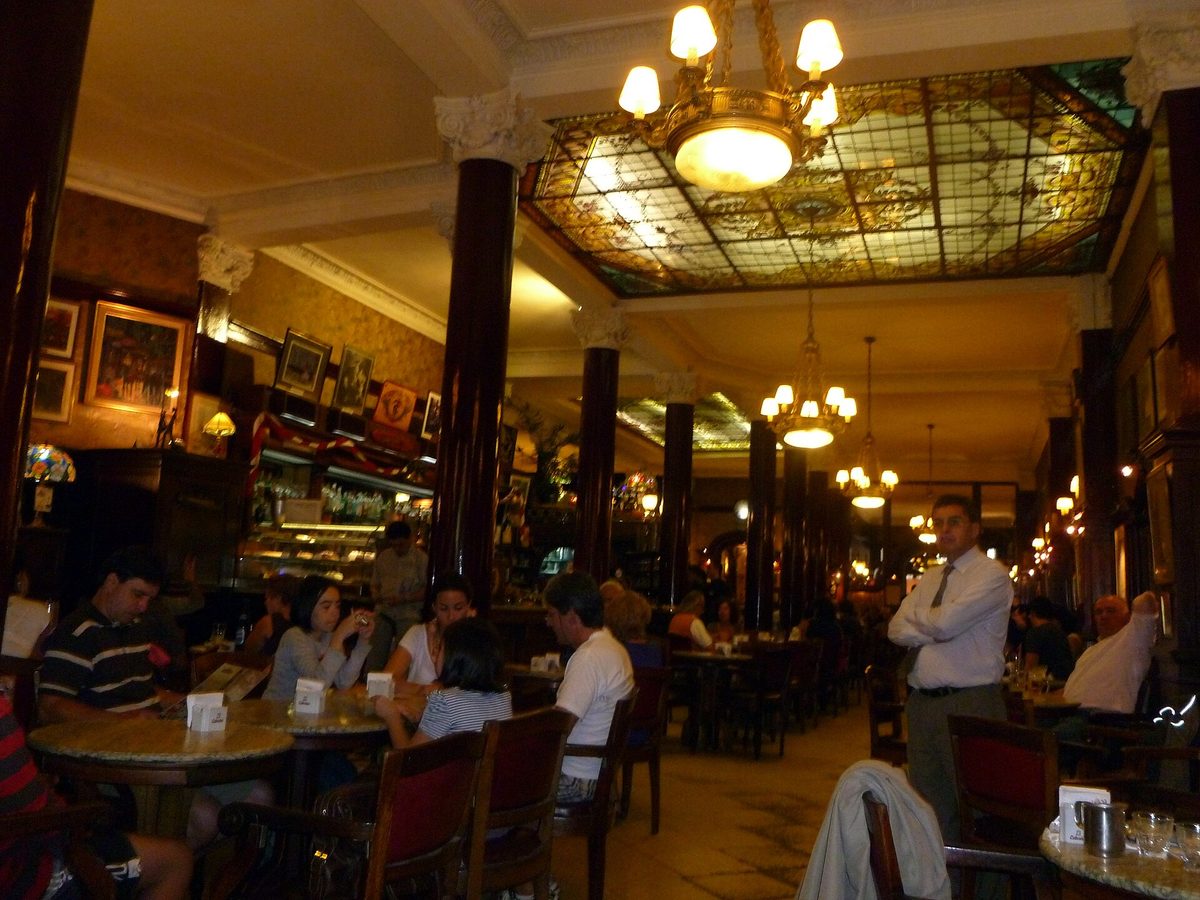
Many of the city’s grand cafes double as superb places for facturas. If a coffee-and-pastry ritual in a marble-and-mirror room sounds like your morning, our guide to the historic cafes notables of Buenos Aires is the next thing to read — places like Cafe Tortoni and Las Violetas serve medialunas with a side of belle-epoque grandeur.
Street food: choripan, faina and beyond
The fourth pillar of cheap eating here is the grill cart. Choripan — a split, grilled chorizo in a crusty roll, drowned in chimichurri — is the undisputed king of Argentine street food, eaten outside a football stadium or along the river. Head to the parrillas of Costanera Sur or Costanera Norte, order a choripan or a bondiola (pork) sandwich, add extra chimichurri, and eat it leaning on a railing over the Rio de la Plata.
You will also meet garrapiñada (caramelized peanuts from steaming carts) and sandwiches de miga (crustless tea sandwiches) at every kiosk. For a deeper steak fix, see our guide to the best steak in Buenos Aires — the same fire that makes a great choripan makes a great bife de chorizo. The city’s food markets, especially San Telmo on a Sunday, are another brilliant hunting ground where empanada stalls, pizza counters and bakeries share a roof.
Practical tips for eating your way through the trinity
A few things that make this easier. Carry small cash — empanaderias, slice counters and bakeries often prefer pesos and may give a better effective price; cards work in most sit-down spots but not every counter. Eat on local time: pizzerias fill up after 9pm, bakeries are busiest 8–10am and again around 5pm for merienda. Order to share — a dozen empanadas, a large pizza cut into eight, and a bottle of moscato is a classic feed for three or four. You need not do it all in one day; weave these casual bites between the bigger parrilla and closed-door dinners in our broader restaurants guide.
Frequently asked questions
What are the best empanadas in Buenos Aires for a first-timer?
Start with a regional empanaderia rather than a generic cafe. La Cocina in Recoleta (Catamarca style, try the sweet-cheese “pikachu”) and El Sanjuanino nearby are easy, central and excellent. For fried empanadas, El Gauchito delivers crisp riojanas. Order a couple of styles so you can taste the regional differences side by side.
What is the difference between fugazza and fugazzeta?
Both are onion pizzas with no tomato. Fugazza is the simpler version — bready base, onions, herbs. Fugazzeta adds a thick layer of melted mozzarella over (or around) the onions, and fugazzeta rellena stuffs cheese inside the crust itself. Guerrin and La Mezzetta serve some of the most famous fugazzeta in the city.
Are medialunas in Buenos Aires the same as croissants?
They are cousins, not twins. A medialuna is smaller, denser and noticeably sweeter than a French croissant, finished with a sugar-syrup glaze. Ask for “de manteca” (butter) rather than “de grasa” (lard) for the soft, sweet version most visitors prefer. They are best fresh in the morning with a cafe con leche.
How much does it cost to eat empanadas, pizza and medialunas?
It is some of the best value in the city. In mid-2026 an empanada runs roughly US$1–2, a generous pizza slice US$2–4, and a medialuna under a dollar — though the peso moves fast, so check current prices. A full meal of all three rarely tops US$10–15 per person, even less if you stand at the counter.
Where can I eat Argentine street food in Buenos Aires?
The riverside grill stands along Costanera Sur and Costanera Norte are the classic spot for choripan and bondiola sandwiches. Weekend fairs and food markets — San Telmo on Sundays especially — add empanada stalls, garrapiñada carts and more. Around football stadiums on match day, the choripan stands are an experience in themselves.
Final thoughts
You can eat extraordinarily well in Buenos Aires without ever booking a table. Chase the regional empanada that suits your palate, stand at a Corrientes counter for a cheese-heavy slice, and start a morning with medialunas and a milky coffee — do those three things and you will understand this city’s appetite better than any tasting menu could teach you. When you are ready to graduate to the grills and the wine, the rest of our Buenos Aires restaurants guide is waiting. Buen provecho.
Photo credits
- Empanadas with braided edges — Horacio Cambeiro, CC BY-SA 3.0, via Wikimedia Commons
- Beef empanada cross-section — Andy Li, CC0, via Wikimedia Commons
- Fugazzeta slice — Horacio Cambeiro, CC BY 3.0, via Wikimedia Commons
- Argentine pizza with olives and onion — Horacio Cambeiro, CC BY-SA 3.0, via Wikimedia Commons
- Assorted facturas — Horacio Cambeiro, CC BY 4.0, via Wikimedia Commons