Last updated: June 2026 · Written by the Buenos Aires Tourism editorial team
The first time I sat under the stained-glass ceiling of Cafe Tortoni with a flat little cortado and a plate of medialunas, I understood something about this city that no monument had taught me. Buenos Aires does coffee like it does tango — slowly, dramatically, and with a deep respect for the people who sat there before you.
The cafes notables buenos aires protects are roughly 90 historic bars and coffee houses that the city has legally declared cultural heritage, recognised for their architecture, their age, or the writers, musicians and politicians who made them famous. They are not museums — you order, you linger, you watch the bow-tied waiters — but they are the closest thing the city has to living history. This guide covers the ones worth your time, what to order, and how to visit without feeling like a tourist.
What exactly is a “cafe notable”?
In 1998 the city government created the Bares y Cafes Notables program to protect bars and cafes that, for their history, architecture or cultural relevance, count as heritage of Buenos Aires. To qualify, a place generally has to be old (many date to the late 1800s or early 1900s), keep its original character, and have a documented link to the city’s cultural life. There are now around 90 on the list, scattered from San Telmo to Recoleta.
What they share is a feeling: marble-topped tables, dark wood, cloudy old mirrors, a waiter who has worked there thirty years and is in no hurry. You go not for the coffee — usually good, not extraordinary — but for the sense of sitting inside the city’s memory. For the wider picture of how locals eat and drink, our complete Buenos Aires restaurants guide sets the historic cafes in context alongside parrillas, pizzerias and modern bistros.
The cafes notables buenos aires loves, at a glance
If you only have a few days, you cannot visit all 90. Here is how I’d rank the essential ones by what they do best, so you can pick the right one for your mood and your neighbourhood.
| Cafe | Barrio | Since | Best for |
|---|---|---|---|
| Cafe Tortoni | Monserrat / Av. de Mayo | 1858 | The icon — grandeur, history, tango shows |
| La Biela | Recoleta | 1850s | Sunny terrace, people-watching, literary ghosts |
| Las Violetas | Almagro | 1884 | Stained glass and a lavish afternoon tea |
| Cafe de los Angelitos | Balvanera | 1890 | Tango heritage and an evening dinner-show |
| El Federal | San Telmo | 1864 | Old-Buenos-Aires atmosphere, no frills |
| London City | Microcentro | 1954 | Literary history — Cortazar wrote here |
Prices are similar across all of them: as a rough mid-2026 guide, a coffee runs around US$2–4 and a coffee-with-medialunas breakfast around US$5–8. Argentina’s inflation moves fast, so check current prices when you arrive.
Cafe Tortoni: the one everybody means
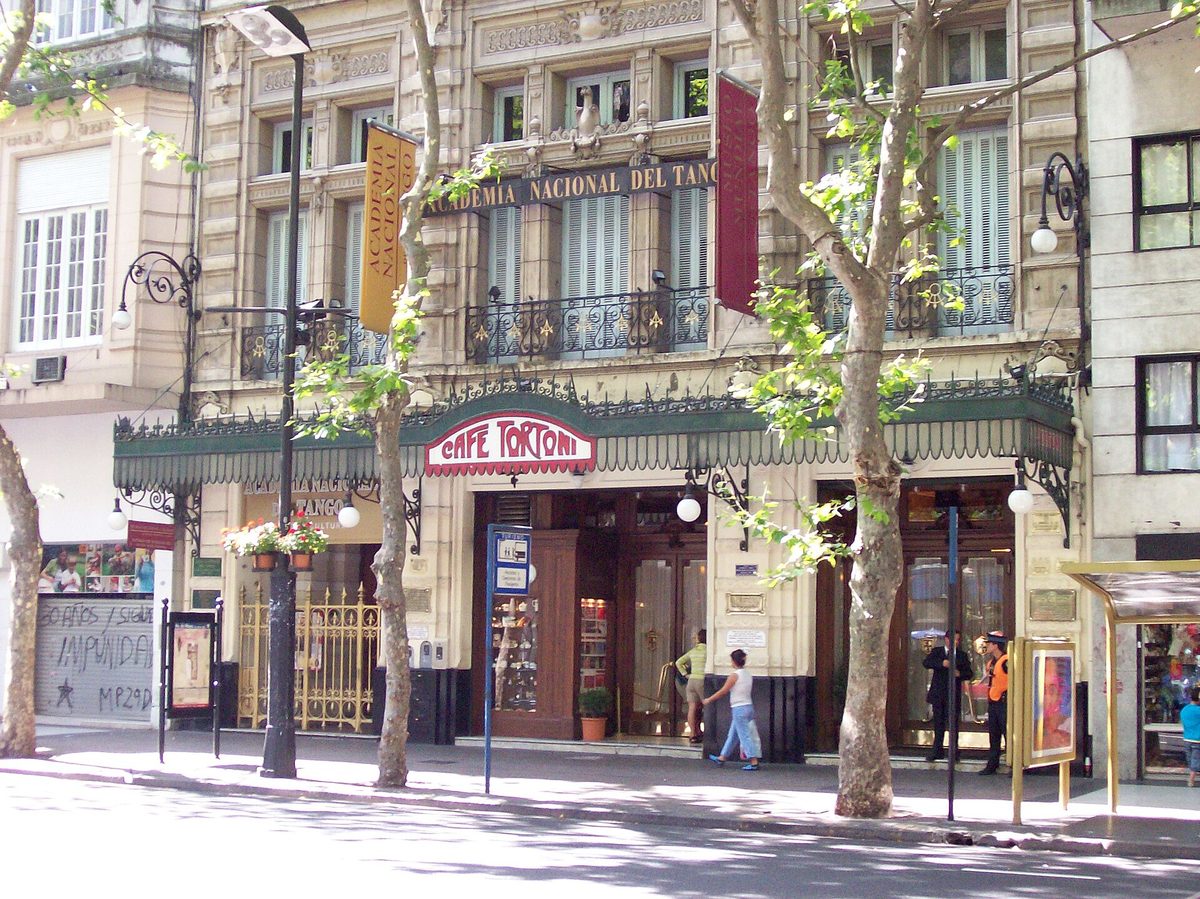
When people talk about cafe tortoni buenos aires, they are talking about the oldest cafe in the city and, fairly or not, its most famous. It opened in 1858, founded by a French immigrant who named it after a celebrated Paris cafe, and moved to its current spot on Avenida de Mayo 825 in 1880. The dramatic iron-and-glass facade you photograph today was added in 1918.
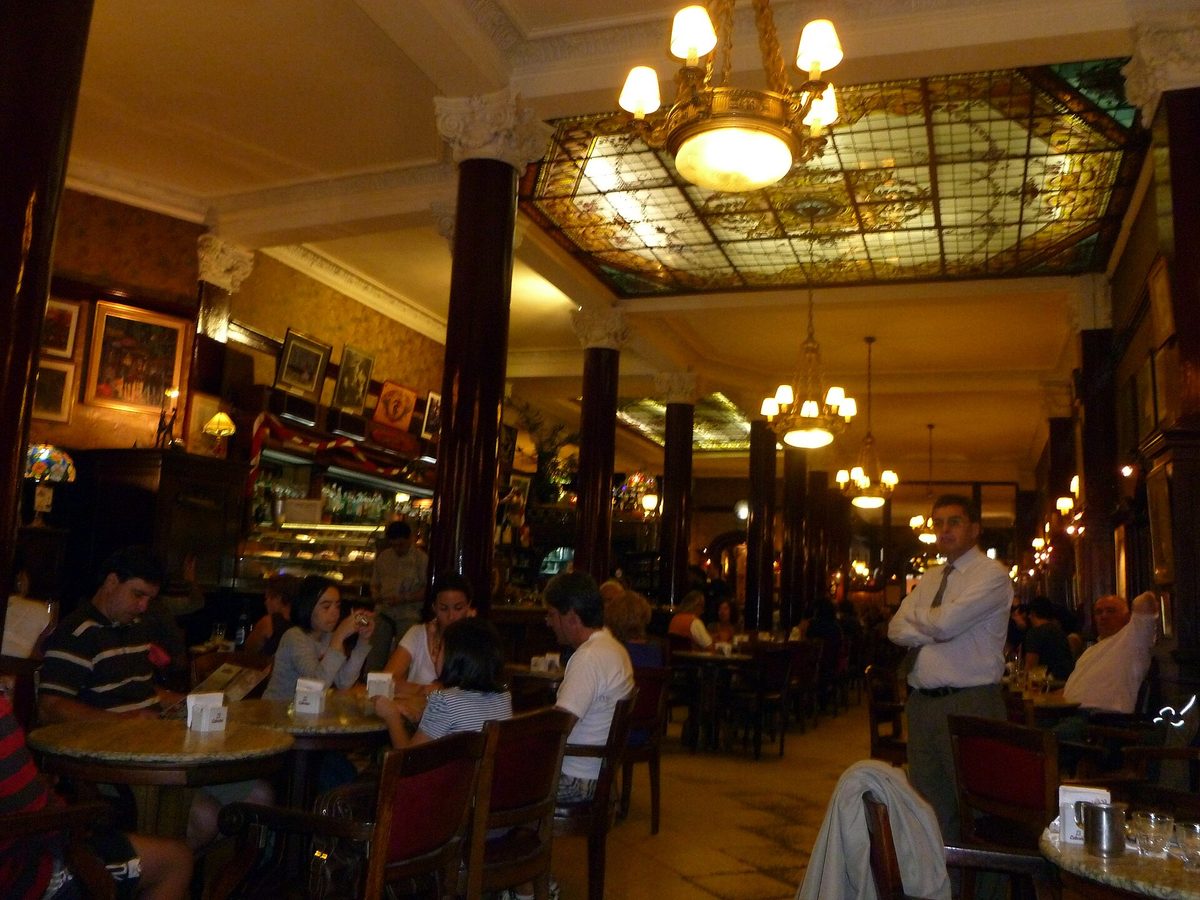
Step inside and the appeal is obvious: a coffered stained-glass ceiling, Tiffany-style lamps, marble tables, oil paintings, and a hush that survives even when the room is full. Carlos Gardel sang here; Borges and Cortazar wrote here; over the decades everyone from Albert Einstein to Federico Garcia Lorca passed through. The basement still hosts nightly tango and jazz.
My honest advice: go for the room, not a gourmet meal. The food is fine — order the churros con chocolate, thick enough to stand a spoon in — but you pay a premium for the setting and there is often a queue. Arrive early on a weekday, around the 8am opening, and you can have the place almost to yourself. For the evening tango show in the basement, book ahead; tickets sell out and are non-refundable, so reserve in the morning or via WhatsApp. The Tortoni sits on Avenida de Mayo, an easy ten-minute walk from Plaza de Mayo, so it folds neatly into a downtown day exploring the city’s grand civic core. It pairs well with the rest of our best things to do in Buenos Aires itinerary.
La Biela: Recoleta’s sunlit literary terrace
If the Tortoni is grand and theatrical, La Biela is where you actually want to spend an afternoon. It sits in Recoleta, beside the great rubber tree and a short stroll from the famous cemetery, and its huge shaded terrace is one of the best people-watching spots in the city. The name means “the connecting rod” — it became a hangout for racing drivers, and legends like Juan Manuel Fangio drank here.
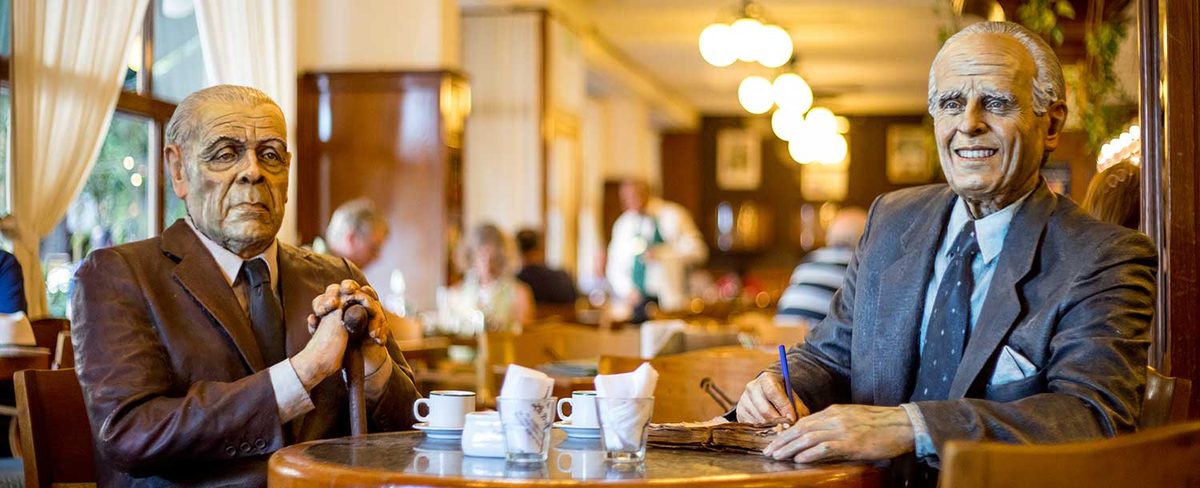
It was also a second home to writers: Borges and Adolfo Bioy Casares were regulars, and today life-size bronze statues of the two sit at one of the tables, so you can pull up a chair beside them. Coffee on the terrace costs a little more, but a cortado in the Recoleta sun, watching the city walk by, is worth every peso. It is the perfect break in a day spent exploring San Telmo and the historic barrios or wandering Recoleta itself.
Las Violetas: stained glass and a proper afternoon tea
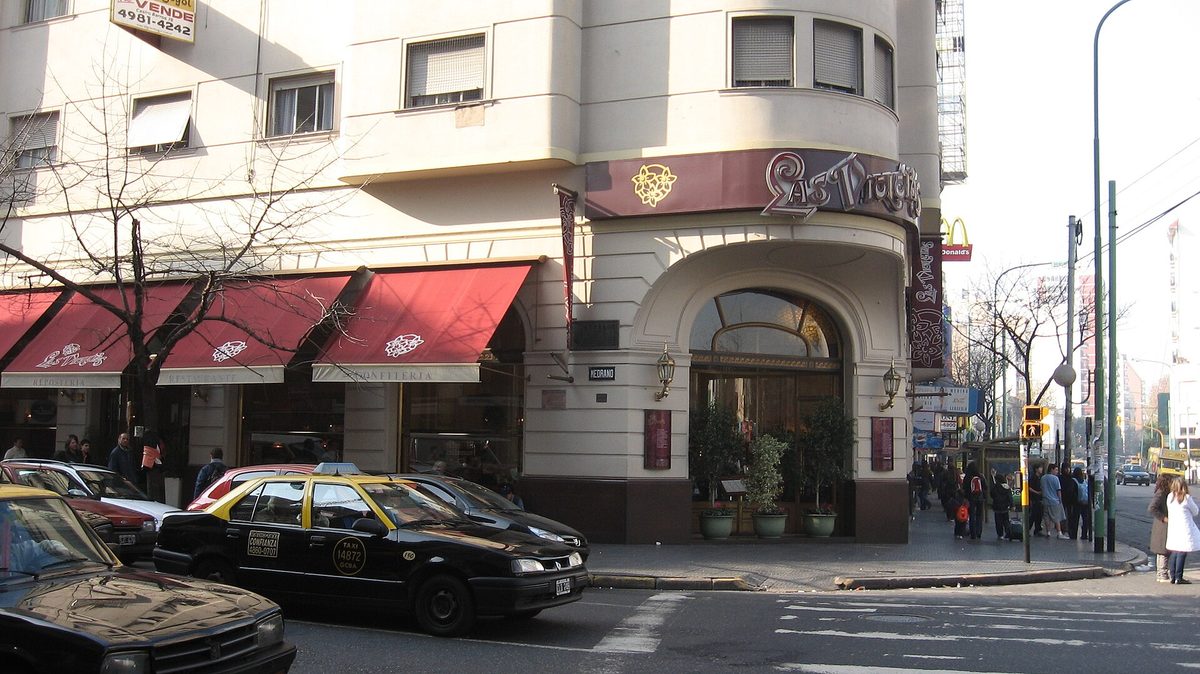
Out in Almagro, on the corner of Rivadavia and Medrano, Las Violetas has dazzled people since 1884. This is the one for sheer beauty: towering French stained-glass windows, marble columns, gilded mouldings and waiters gliding between tables with silver trays. It was declared a Historic Site of the City and is rated one of the finest notable cafes.
Las Violetas is famous for its merienda, the lavish Argentine afternoon tea: tiers of sandwiches de miga (crustless sandwiches), pastries, scones and the house cakes — the strawberry-and-cream cake is legendary. It is a wonderfully indulgent way to spend a late afternoon. To plan a whole day of eating around it, our guide to eating well across Buenos Aires maps out the best meals before and after.
Cafe de los Angelitos and the tango cafes
Some notable cafes lean hard into the city’s musical history. Cafe de los Angelitos, in Balvanera near the Congreso, has kept the soul of old Buenos Aires alive since 1890. Carlos Gardel was a regular, and the tango “Cafe de los Angelitos” was written in its honour. Today it doubles as one of the more intimate tango dinner-show venues — a polished evening rather than a casual coffee, but a beautiful room.
The thread running through so many of these places is tango, which was born in the cafes, bars and dance halls of exactly these neighbourhoods. If the music grabs you, follow it: our dedicated guide to exploring Buenos Aires on foot links the historic cafes to the milongas and tango halls nearby, so an afternoon coffee can roll naturally into an evening of dancing.
A few more gems for the curious
Once you start looking, the notable cafes are everywhere. El Federal, on a quiet San Telmo corner since 1864, is all dark wood and old bottles — the antithesis of the polished Tortoni. London City, in the Microcentro, is where a young Julio Cortazar wrote his first novel, and the grand Confiteria Ideal downtown is a faded-glamour milonga where you can take a tango lesson under the chandeliers.
What to order in a cafe notable
Ordering well is half the pleasure, and it is gloriously simple. The default coffee is a cortado — espresso cut with a little hot milk, usually served with a tiny glass of soda water. A cafe con leche is the bigger milky version, and a lagrima is mostly milk with just a “tear” of coffee. Whatever you choose, it almost always arrives with a small biscuit or alfajor.
Then come the medialunas — small, glossy, faintly sweet croissants that are the soul of the Buenos Aires breakfast. Order “cafe con leche con medialunas” and you have the city’s classic morning. To find the best ones, see our guide to the best empanadas, pizza and medialunas in Buenos Aires; for the full sweep of dishes a first-timer should try, our overview of what to eat in Buenos Aires is the place to start, and if you crave something cold afterwards, the city’s best ice cream parlours are never far away.
One more tip: these cafes are unhurried by design. Nobody will rush you out or bring the bill before you ask (“la cuenta, por favor”). Lingering for an hour over a single coffee is not just tolerated — it is the whole point.
How to weave the cafes into your trip
You do not need a special “cafe day.” Slot one into each day wherever you already are: the Tortoni near Plaza de Mayo, La Biela by the Recoleta cemetery, Las Violetas out in Almagro. If you would rather someone else handle the history, a guided Buenos Aires food tour usually stops at one or two, and our master guide to eating in Buenos Aires ties the food map together.
Frequently asked questions
What are the cafes notables of Buenos Aires?
They are around 90 historic bars and cafes legally protected by the city government since 1998 for their architecture, age and cultural importance. Many date to the late 1800s or early 1900s and were meeting places for writers, musicians and politicians. They remain working cafes, not museums, so anyone can walk in, order a coffee and soak up the atmosphere.
Is Cafe Tortoni worth visiting?
Yes, for the history and the room rather than the food, which is good but pricey. As the city’s oldest cafe (1858) with a stunning stained-glass interior, it is a genuine landmark. Go early on a weekday to skip the queue, order churros con chocolate, and consider the evening tango show in the basement if you book ahead.
What should I order in a historic Buenos Aires cafe?
Start with a cortado (espresso with a little milk) and a plate of medialunas, the small sweet croissants that define the local breakfast. For something richer, order churros con chocolate or, at Las Violetas, the full afternoon tea with sandwiches de miga and cakes. There is no need to rush — lingering is expected.
Are the cafes notables expensive?
They are slightly pricier than an ordinary corner cafe because you are paying for the setting, but they are still affordable. As a rough mid-2026 guide, a coffee is around US$2–4 and a coffee-with-medialunas breakfast around US$5–8. Argentina’s prices move quickly with inflation, so check the current menu when you arrive.
Which historic cafe is best in Recoleta?
La Biela, hands down. Set beside the giant rubber tree near the Recoleta cemetery, it has a huge sunny terrace that is perfect for people-watching, plus deep literary roots — Borges and Bioy Casares were regulars, and bronze statues of them now sit at one of the tables. It is the ideal pause during a Recoleta walking day.
Final thoughts
The cafes notables are, to me, the most painless way to feel the soul of Buenos Aires. You need no ticket, tour or reservation — just an hour, a cortado, and the willingness to sit still while the city moves around you. Pick two or three that match the neighbourhoods you are already exploring, order like a local, and let the marble tables and bow-tied waiters do the rest. They have been doing it for over a century.
Photo credits
- Cafe Tortoni interior — Photo by David Berkowitz from New York, NY, USA, licensed CC BY 2.0, via Wikimedia Commons.
- Cafe Tortoni facade on Avenida de Mayo — Photo by Roberto Fiadone, licensed CC BY-SA 3.0, via Wikimedia Commons.
- Borges and Bioy Casares statues at La Biela — Photo licensed CC BY-SA 2.5, via Wikimedia Commons.
- Las Violetas exterior — Photo in the public domain (CC0), via Wikimedia Commons.