Last updated: June 2026 · By the Buenos Aires Tourism editorial team.
My first Sunday here, I set out for a coffee and ended up four hours deep in antique cameras, mate gourds and a tango couple dancing on the cobbles. That is the thing about the city’s ferias: you do not visit them so much as get pleasantly swallowed.
What are the best Buenos Aires markets?
The best buenos aires markets are the weekend ferias: the huge Sunday San Telmo antiques fair along Calle Defensa, the gaucho-flavoured Feria de Mataderos out west, the Recoleta and Palermo craft fairs, and the historic indoor Mercado de San Telmo. Each runs mostly Saturdays and Sundays, so plan a weekend around them. Markets are just one slice of the wider list of things to do in Buenos Aires.
This guide is for travellers who want the real, slightly chaotic version — not a sanitised souvenir mall. I will tell you which fairs are worth the trek, which day to go, what to actually buy, and how to keep your phone in your pocket and out of someone else’s.

The big Sunday ferias
If you only have one weekend, give Sunday to the ferias. These two are the headline acts, and they could not feel more different from each other.
Feria de San Telmo (the Sunday antiques fair)
This is the one everyone means when they talk about the san telmo market sunday ritual. Started in 1970 by architect José María Peña, the Feria de San Telmo now unspools for roughly ten blocks down Calle Defensa, from Plaza Dorrego towards Plaza de Mayo, with somewhere north of 250 vendors and around 10,000 visitors on a good Sunday. It usually runs every Sunday, year-round, roughly 10am to 5pm — even in the rain — but always check current hours before you go.
Plaza Dorrego is the beating heart: a small colonial square ringed by cafes, where the best antique dealers cluster and where, come late afternoon, an impromptu milonga breaks out and grey-haired couples dance tango on the paving stones. Come before 11am if you actually want to browse; by early afternoon it is shoulder-to-shoulder. The fair sits right in San Telmo, so it pairs perfectly with a wander through the surrounding cobbled streets or a longer dive into the city’s distinct neighbourhoods.
What to buy: genuine antiques (soda siphons, old maps, brass, Art Deco glass), leather, mate sets, vintage jewellery and the work of local artists. Prices on Plaza Dorrego skew touristy, so the further you walk down Defensa, the better the value tends to get.
Feria de Mataderos (gaucho culture and folk)
If San Telmo is the city’s antique attic, Mataderos is its rural soul. Out in the working-class barrio of the same name, about 16km (10 miles) west of the centre, the feria de mataderos is the most authentically Argentine fair in the city — folk singers, dancers in traditional dress, sizzling parrilla stalls and, best of all, gauchos in full kit competing in the sortija, a horseback game of spearing a tiny ring at a gallop.

It usually runs on Sundays from April to December, roughly 11am to 8pm, with a switch to Saturday evenings in the hottest summer months (around January to March) — hours shift, so confirm before committing your day. Getting there is the catch: it is a 45-minute-plus ride on city buses such as the 55, 92 or 126, or a taxi if you would rather not puzzle out the colectivo network. Read up on the local transport options in our guide to getting around Buenos Aires. Is it worth the trek? If you want gauchos, empanadas and zero souvenir-shop polish, absolutely.
Neighbourhood craft fairs
Beyond the two giants, several neighbourhood ferias run every weekend and make easy add-ons to a day of sightseeing.
Feria de Plaza Francia, Recoleta
Spread across the green slopes beside the famous Recoleta Cemetery, this craft fair usually opens Saturdays, Sundays and holidays from late morning until sunset, with a couple of hundred stalls. It is the place for higher-end artisan work — silver, leather, ceramics, hand-worked mate gourds and jewellery — plus food trucks and buskers. It is also a genuinely lovely free thing to do; we list more of them in our roundup of free things to do in Buenos Aires.
Feria de Plaza Serrano, Palermo
At the little plaza where Calle Serrano meets Honduras, in the thick of Palermo Soho, you will find a more bohemian weekend fair: handmade clothing, design pieces, leather and crafts, with guitarists strumming and bars spilling onto the square. Officially it runs Saturdays and Sundays, usually around 10am to 6pm. It is best combined with an afternoon of Palermo’s boutiques and a long lunch — the area is one of the city’s strongest for eating out.
Parque Rivadavia book fair
In a city this literary, it would be odd not to have a permanent book market. The stalls in Parque Rivadavia, in Caballito, trade in second-hand and rare books, old magazines, vinyl and comics most days of the week. It is a quieter, browsy sort of feria — bring patience and a little Spanish.
Food and produce markets
Not every market is about antiques. Some of my happiest hours in the city have been spent eating my way through its covered halls.
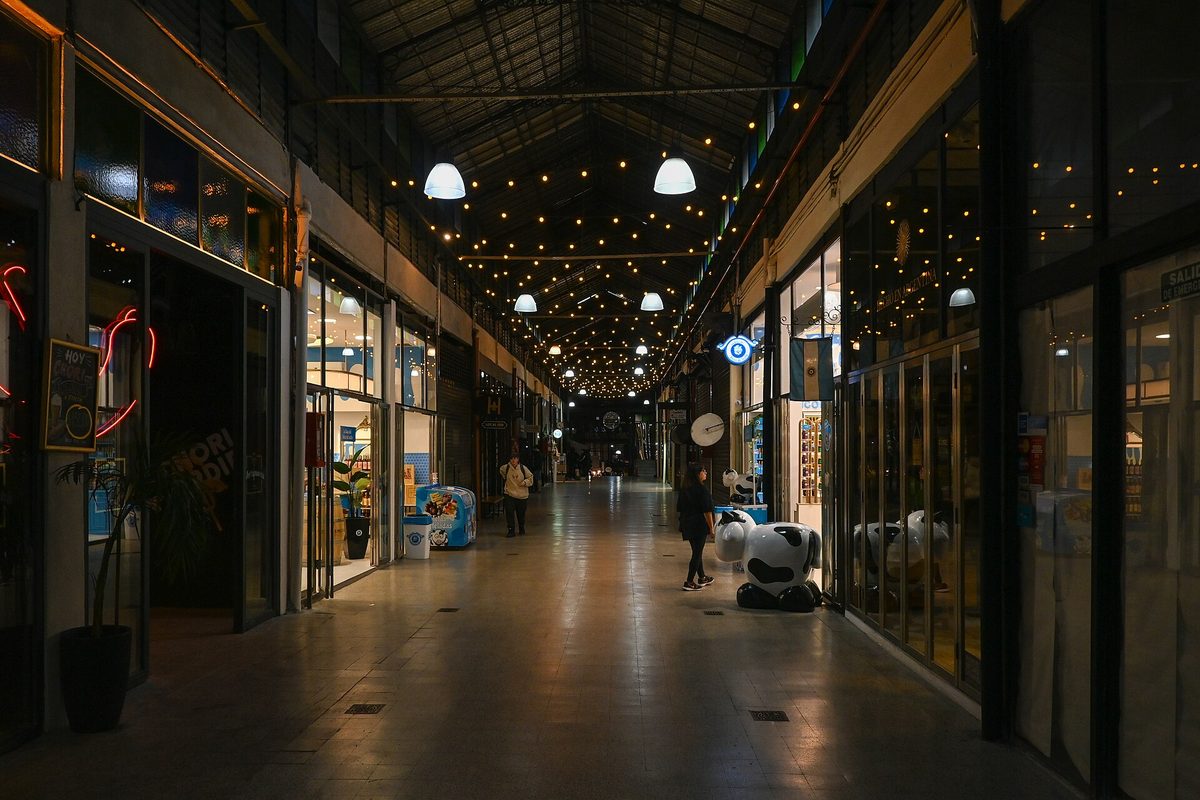
Mercado de San Telmo
Two minutes from Plaza Dorrego, this iron-and-glass hall opened in 1897 to feed waves of European immigrants and is now a national historic monument. Under its original beams you will find butchers and greengrocers trading alongside antique stalls and, increasingly, a buzzing food scene — coffee roasters, choripan counters, empanada windows and small restaurants in former produce stands. It is usually open daily from mid-morning, often until 8pm or later on weekends; hours vary by stall.
Mercado de Abasto and the food fairs
The old Abasto central market, once the city’s wholesale produce hub and the neighbourhood where tango legend Carlos Gardel made his name, is now a grand shopping mall — more air-conditioning than atmosphere, but a fun rainy-day option with a tango heritage you can read about in our guide to tango in Buenos Aires. For serious food lovers, watch for travelling gastro-fairs such as Feria Masticar, where well-known Argentine chefs set up stalls of local, seasonal cooking; dates move year to year, so check what is on during your visit.
Buenos Aires markets at a glance
Here is the quick cheat sheet I wish someone had handed me. Treat days and hours as a guide and confirm current details, because ferias do shift with the seasons and the occasional holiday.
| Market | Usual days | Area | Best for |
|---|---|---|---|
| Feria de San Telmo | Sundays, ~10am–5pm | San Telmo (Defensa) | Antiques, tango, atmosphere |
| Feria de Mataderos | Sundays (Apr–Dec); summer Sat nights | Mataderos (west) | Gauchos, folk, regional food |
| Feria de Plaza Francia | Sat, Sun & holidays | Recoleta | Quality crafts & silver |
| Feria de Plaza Serrano | Sat & Sun, ~10am–6pm | Palermo Soho | Design, clothing, bohemia |
| Mercado de San Telmo | Daily, mornings till evening | San Telmo | Food, produce, antiques |
| Parque Rivadavia | Most days | Caballito | Books, vinyl, comics |
Practical tips for visiting the ferias
A few things will make your market day smoother, and I learned most of them the hard way.
- Carry cash, mostly small notes. Many stallholders do not take cards, and change for big bills can be scarce. Bring pesos in small denominations and only what you plan to spend.
- Haggle gently. At craft fairs you are often buying directly from the artist, so a polite “¿me hacés un precio?” is fine, especially if you buy a few pieces — but do not lowball hand-made work. Antique dealers expect a little back-and-forth.
- Guard your phone and bag. The ferias are not dangerous, but dense Sunday crowds are exactly where opportunistic pickpockets work. Wear a cross-body bag in front, keep your phone out of your back pocket and avoid waving it around for long photo sessions. There is more in our Buenos Aires travel tips.
- Go early. Arrive before 11am for elbow room and the best pick of the stalls; the crowds peak between noon and 3pm.
- Build a route. San Telmo on a Sunday slots neatly into a wider day — many travellers pair it with nearby Caminito and La Boca in the morning or afternoon.
Frequently asked questions
What day is the San Telmo market?
The big outdoor Feria de San Telmo runs on Sundays, usually from around 10am to 5pm, all year and even in the rain. The separate indoor Mercado de San Telmo is open most days from mid-morning. So Sunday is the day for the full street-fair experience, but you can still eat and browse the covered hall midweek.
Is the Feria de Mataderos worth the trip?
If you want real gaucho culture rather than souvenirs, yes. It is about 45 minutes by bus or taxi from the centre, but in return you get horseback skill games, folk music, dancers in traditional dress and excellent regional food, all with far fewer tourists than San Telmo. Go on a Sunday from April to December, and confirm hours first.
What should I buy at Buenos Aires markets?
Mate gourds and bombillas, leather goods, silver and alpaca jewellery, woollen ponchos and textiles, and genuine antiques like soda siphons and old maps are the classics. At craft fairs you are often buying straight from the maker. Bring cash, and walk a few blocks past the busiest corners for better prices.
Are the markets safe?
They are generally safe during daylight, with police visible at the big ferias, but petty theft is the main risk in the crush. Keep valuables zipped and in front of you, do not flash cash or phones, and stay alert in the thickest crowds. San Telmo can feel quieter and edgier after dark, so treat the fair as a daytime plan.
Which market is best for solo travellers?
San Telmo is the easiest solo outing: it is central, busy, and full of street performers and cafes where you can take a break. The crowds make it feel sociable rather than lonely. For more ideas tailored to going it alone, see our guide to Buenos Aires solo travel.
Final thoughts
If I had to choose, I would spend Sunday morning at San Telmo for the antiques and the tango, then trek out to Mataderos on another weekend for the gauchos — two completely different cities living in the same one. Whatever you pick, go hungry, bring cash, and leave room in your bag for something you did not plan to buy. The ferias are some of the most rewarding, sociable, low-cost things to do in Buenos Aires, and they will tell you more about how the city lives than any museum.
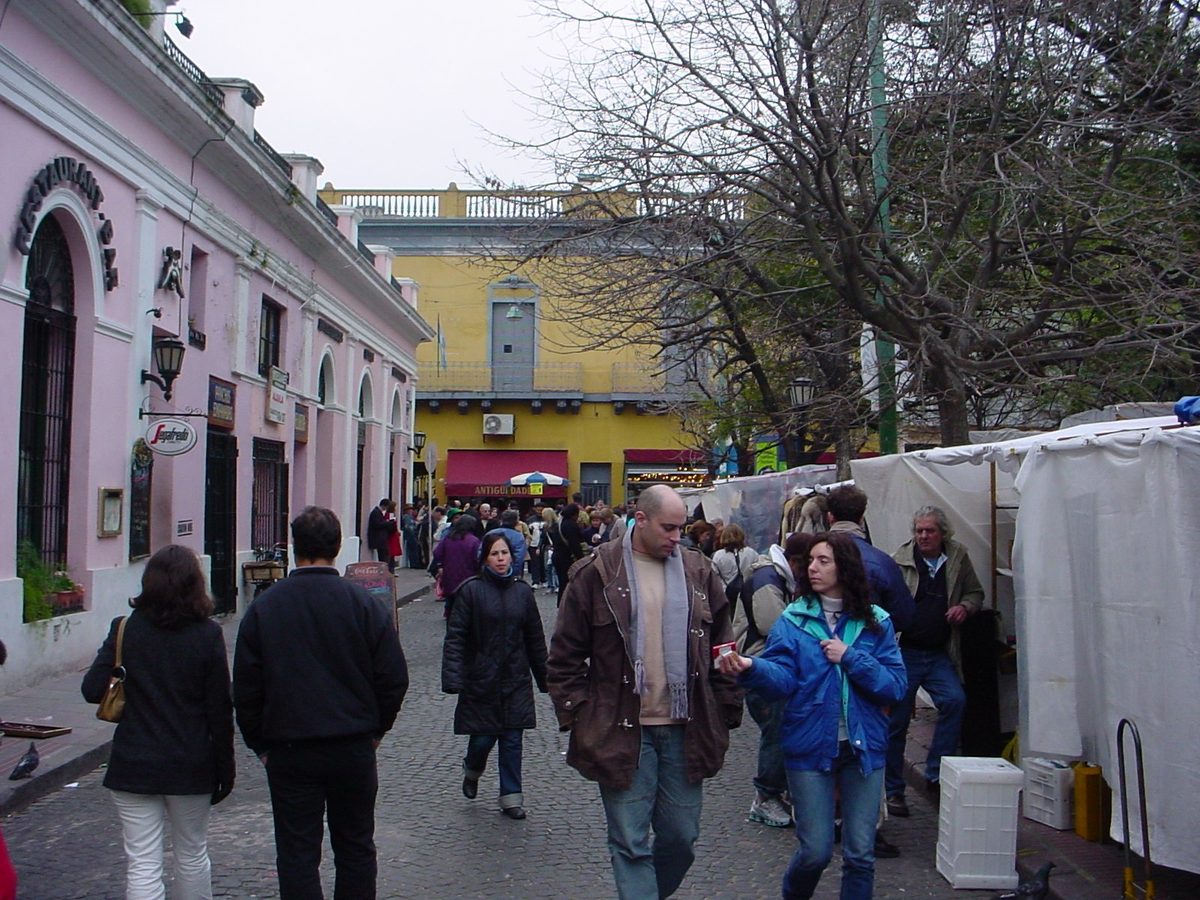
Photo credits
- Crowds and antique stalls on Calle Defensa, San Telmo — photo by Hermann Luyken, CC0, via Wikimedia Commons.
- White-tent stalls at the Feria de San Telmo — photo by Alexandre Campolina, CC BY 3.0, via Wikimedia Commons.
- Gauchos on horseback at the Feria de Mataderos — photo by User:Roberto Fiadone, CC BY-SA 3.0, via Wikimedia Commons.
- Interior of the historic Mercado de San Telmo — photo by ProtoplasmaKid, CC BY-SA 4.0, via Wikimedia Commons.


1 comment