I will tell you the exact moment Buenos Aires won me over, and it involved a steak. It was nearly midnight — absurdly late by my standards, perfectly normal by theirs — in a packed Palermo parrilla, and the waiter set down a bife de chorizo the size of a paperback, charred outside, pink within, with nothing on it but salt and the smell of woodsmoke. One bite and I understood that eating here is not a thing you do between sights. In Buenos Aires, eating is the sight.
Buenos Aires restaurants revolve around one glorious obsession — beef, grilled slowly over coals at a parrilla — but the city’s table is far bigger than steak. You will eat flaky empanadas, Italian-rooted pizza and pasta, choripán from a street cart, dulce de leche in everything, and some of the world’s best ice cream, all washed down with Malbec — and, thanks to the exchange rate, all for a fraction of what it would cost back home.
This is your complete guide to eating in the city: what to order, how the parrilla works, the restaurant types you have never heard of, where to eat in each barrio, and the dining customs (yes, dinner really does start at 10pm) that trip up every first-timer. I have organized it the way you will actually use it — by dish and by experience — so you can eat brilliantly whether you have three days or three weeks. Pair it with our things to do in Buenos Aires guide to build your days around your meals.

What to Eat in Buenos Aires: The Essential Dishes
Start here. Master this short list and you will eat like you know what you are doing from the first night — and if you want the long version, our guide to what to eat in Buenos Aires runs through every essential Argentine dish in detail.
Steak & the Cuts Worth Knowing
Argentine beef is the main event, and ordering it is half the fun once you learn the cuts. The classics: bife de chorizo (a thick, juicy sirloin strip — the default and my usual), ojo de bife (ribeye, richer and more marbled), bife de lomo (the lean, tender filet), asado de tira (crosscut short ribs, the soul of a real asado), and vacío (flank, chewy in the best way, with a crisp edge). A money-saving local tip: order it jugoso (rare) or a punto (medium) — ask for it well done and a porteño will quietly weep. It arrives with chimichurri, maybe a simple salad, and that is the point: the beef does not need saving. For the definitive ranking of where to eat it, see our guide to the best steak and parrillas in Buenos Aires.

Empanadas: The Perfect Handheld
If steak is dinner, the empanada is everything else — breakfast, lunch, a snack, a 3am rescue. These baked or fried pastry pockets come in endless fillings: carne (beef, sometimes with a sweet note of raisins and olive), jamón y queso (ham and cheese), humita (creamy corn), pollo (chicken). Each province has its own style, and every porteño swears by their corner spot. A good one is crimped by hand with a code (the repulgue) that tells you the filling. Cheap, perfect, everywhere — you will eat a lot of these, and you should. Our empanadas, pizza and bakery guide has the best spots.

Choripán, Provoleta & the Rest of the Asado Spread
A proper asado is not just steak — it is a procession. It opens with choripán (a grilled chorizo split into a crusty roll and slathered with chimichurri — the national street-food sandwich, and a religious experience from a good cart), provoleta (a whole disc of provolone grilled until molten and crusted with oregano), and morcilla (blood sausage, better than it sounds). Then come the achuras — the offal cuts like mollejas (sweetbreads, crisp and rich, a genuine delicacy) and chinchulines — before the steak even arrives. Order a parrillada (mixed grill) for two and you get the whole story on one platter.
Milanesa, Pizza & Pasta: The Italian Soul
Half of Buenos Aires descends from Italian immigrants, and it shows on every menu. The milanesa — a thin breaded cutlet, often topped with ham, cheese and tomato sauce as a milanesa napolitana — is the ultimate comfort food. The city’s pizza is its own thing entirely: thick, blanketed in mozzarella, and best ordered as fugazzeta (a stuffed onion pie) at an old-school joint like the century-old spots on Avenida Corrientes. And fresh pasta — sorrentinos, gnocchi (eaten on the 29th of the month, by tradition) — is a Sunday staple. None of it is an afterthought; it is half the city’s heart.

The Sweet Stuff: Dulce de Leche, Alfajores & Facturas
Argentina runs on dulce de leche, the caramelized-milk spread that finds its way into everything. The icon is the alfajor — two soft cookies sandwiching dulce de leche, often rolled in coconut or coated in chocolate — which you will buy by the boxful as gifts and eat most of yourself. Add facturas (the catch-all for sweet pastries) and you have the porteño sweet tooth in full. Save room; this city does dessert as seriously as it does beef.
The Parrilla: How to Eat Steak Like a Porteño
The parrilla — both the grill itself and the steakhouse built around it — is the temple of porteño eating, and knowing how it works turns a good meal into a great one.

A few rules of the road. Go hungry and go late — the kitchen is just warming up at 9pm. Order a parrillada for the table if you want the full spread, or a single named cut if you came for steak. Get the chimichurri (the garlicky herb sauce) but use it with restraint; good beef barely needs it. Pair it with a glass of Malbec, finish with a flan con dulce de leche, and do not even think about rushing — the meal is the evening.
As for where: the most famous parrilla in the country is Don Julio in Palermo, regularly ranked among the world’s best restaurants, where the walls are papered with signed, empty wine bottles — reserve weeks ahead, or queue early. La Cabrera, also in Palermo, is beloved for its generous cuts and free side dishes. El Preferido de Palermo marries a historic bodegón with a modern kitchen. But here is the honest secret: you do not need a famous name. A humble neighborhood parrilla — the kind with a hand-lettered sign and a grill you can see from the street — will serve you a steak and a glass of wine that would cost a fortune in London or New York, for the price of a sandwich back home. Some of my best meals here had no reservation and no Instagram presence at all.

It helps to understand that the asado is not really a meal — it is a ritual, and a national identity cooked over coals. The image above shows a countryside asado from over a century ago, and the essentials have barely changed: the slow fire, the unhurried hours, the asador presiding over the grill, the friends and family gathered around. When porteños invite you to an asado, they are not feeding you so much as adopting you for an afternoon. If you can possibly wrangle an invitation to a home or rooftop asado, accept it; if not, several operators run asado experiences, and an estancia day trip delivers the countryside version — see our day trips guide.
Types of Buenos Aires Restaurants You Should Know
Steak is only the beginning. Part of what makes eating here so rich is the sheer variety of kinds of restaurant, several of which you simply will not find elsewhere. Here is the lay of the land.
Puertas Cerradas: The Closed-Door Restaurants
One of the city’s most distinctive experiences is the puerta cerrada (“closed door”) — a restaurant run out of a private home or unmarked space, often with a single nightly seating, a set menu, and a host who cooks and chats. You reserve in advance, get the address only once you book, and eat alongside strangers at a communal table. They range from intimate supper clubs to some of the most creative cooking in the city. It is the most porteño way to spend an evening, and a brilliant solo-traveler move. We round up the best in our closed-door restaurants guide.
Bodegones: Old-School Neighborhood Soul
The bodegón is the porteño equivalent of a beloved old trattoria — a no-frills, family-run neighborhood institution serving enormous portions of classic comfort food (milanesa, puchero, pasta, flan) at gentle prices, often in a room that has not changed décor in fifty years. This is where you eat like a local, surrounded by locals. Seek them out in San Telmo, Boedo, and Almagro; they are the antidote to anything that feels too polished.

Cafés Notables: History You Can Drink
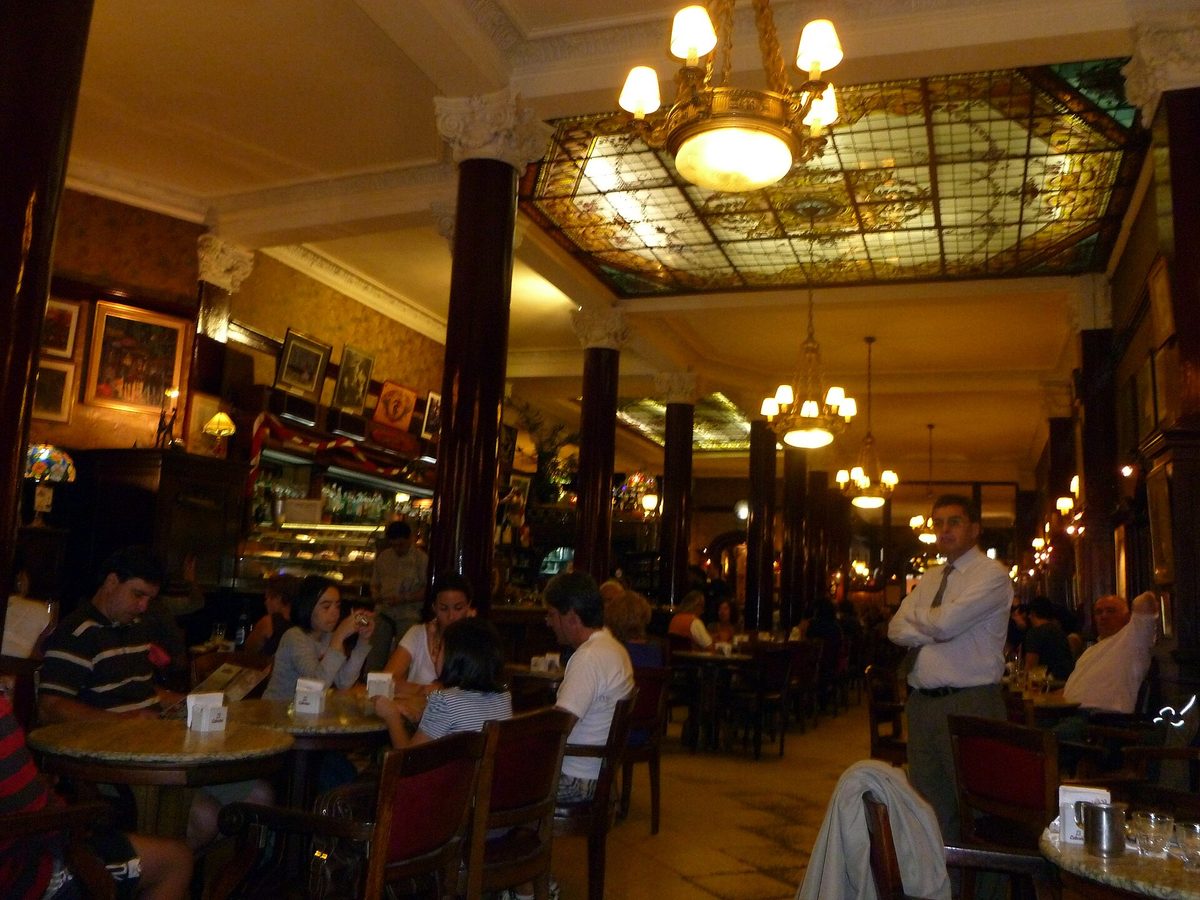
Buenos Aires takes its café culture as seriously as Paris or Vienna, and it protects its grandest old coffeehouses as cafés notables — legally recognized historic cafés. The most famous is Café Tortoni (open since 1858, all marble columns and stained glass), but the city is full of them: the dazzling Las Violetas in Almagro, El Federal in San Telmo. Go for a cortado (espresso cut with a little milk) and a couple of medialunas mid-morning, sit under the ghosts of the writers and tango singers who made these rooms famous, and do not expect to be rushed. Our cafés notables guide maps the best.
The New Wave: Modern Dining & Fine Dining
Buenos Aires is having a serious culinary moment. A new generation of chefs has put the city firmly on the global map — you will find multiple entries on the World’s 50 Best Restaurants list, ambitious tasting menus, natural-wine bars, and a thrilling farm-to-table scene, much of it clustered in Palermo and the up-and-coming barrio of Chacarita. Reserve well ahead for the headline spots, and know that even at the high end, the value remains extraordinary by international standards. For the standouts, see the best restaurants in Palermo.
Argentine Wine: Malbec & Beyond

You cannot talk about eating in Buenos Aires without talking about drinking, because the two are inseparable. Argentina is one of the world’s great wine nations, and its signature grape is Malbec — deep, plummy, velvety, and the natural soulmate of a charred steak. Most of it comes from Mendoza in the Andean foothills, but you do not need to leave the city to drink superbly: house Malbec by the glass is excellent and absurdly cheap, and even a very good bottle in a restaurant costs less than a mediocre one would at home.
Branch out, too. Torrontés is the country’s distinctive aromatic white, floral and crisp, perfect for a warm afternoon. Cabernet Franc and high-altitude reds from Salta are having a moment. And the city’s wine-bar scene — especially the natural-wine spots in Palermo and Chacarita — is one of the best ways to explore it all with a knowledgeable pour. For a proper deep dive, including in-city tastings, see our Argentine wine and Malbec tasting guide, and remember that the city’s bars and nightlife are a story of their own.
Where to Eat: The Best Buenos Aires Restaurants by Neighborhood
Great food is everywhere here, but each barrio has its own flavor. Match where you eat to where you are — and use our neighborhoods guide for the bigger picture.
Palermo is the dining capital — the highest concentration of great restaurants, parrillas, wine bars, and brunch spots in the country, spread across Soho and Hollywood. If you only have a couple of nights, eat here. Chacarita is where the cutting edge has migrated: natural-wine bars, specialty coffee, and the most exciting new-wave kitchens in the city, beloved by in-the-know locals. San Telmo serves history on a plate — classic bodegones, the bustling Mercado de San Telmo food hall, and Sunday-feria street eats. Recoleta leans upscale and traditional, with grand cafés and polished parrillas (see the best restaurants in Recoleta). And downtown hides century-old pizzerias and pavement cafés among the office towers. Wherever you are staying — our where to stay guide can help you decide — a great meal is rarely more than a block away. To eat your way across several barrios with a guide, a Buenos Aires food tour is one of the best first-day investments you can make.

Café Culture & Breakfast in Buenos Aires
Mornings here are gentle. The standard porteño breakfast is modest — a coffee and a couple of medialunas (small, sweet, glossy croissants, ordered de manteca for the buttery kind) — taken at a café, never rushed. Order a cortado or a café con leche, add a jugo de naranja (fresh orange juice), and you have the classic combo, often bundled as a cheap set breakfast.
The real institution, though, is the merienda — the late-afternoon coffee-and-pastry pause around 5 or 6pm that bridges the enormous gap to a 10pm dinner. Lean into it: it is one of the most civilized habits I picked up in the city, and it doubles as the perfect excuse to sit in one of those grand old cafés. If you are travelling with little ones, the relaxed café culture is a lifesaver — see our Buenos Aires with kids guide.

The Best Ice Cream (Helado) in Buenos Aires
Here is a delicious surprise: Buenos Aires makes some of the best ice cream on earth. Thanks to that deep Italian heritage, helado here is dense, intense, artisanal gelato, scooped into a peak and handed over with a tiny spoon. The flavor you must try is dulce de leche — and its gloriously over-the-top cousin dulce de leche granizado (with chocolate flecks). Sample the sambayón (a boozy zabaglione) too. A late-night heladería run is a genuine porteño tradition; many of the best deliver to your door until the small hours. Find the top scoops in our best ice cream in Buenos Aires guide.
Vegetarian & Vegan Buenos Aires
Let me be honest: in the land of beef, vegetarians once had a thin time of it. That has changed dramatically. Buenos Aires now has a thriving plant-based scene, especially in Palermo, Villa Crespo, and Chacarita, ranging from all-vegan parrillas (yes, really) to creative veggie tasting menus and abundant Middle Eastern and Asian options. Even traditional spots will do you a milanesa de berenjena (eggplant milanesa), grilled provoleta, salads, and pasta. You will not go hungry — you just need to know where to look, which is exactly what our vegetarian and vegan restaurants guide is for.
Dining Customs & Etiquette: What Every Visitor Should Know
More travelers get tripped up by the rhythm of eating here than by anything on the menu. A few essentials will save you:
- Everything is late. Lunch runs 1–3pm; dinner does not really begin until 9pm, and 10 or 11 is normal. Turn up at a restaurant at 7:30 and you may find it empty or not yet open. Adjust, snack on a merienda, and embrace it.
- The cubierto is not a scam. Many restaurants add a small per-person cover charge (the cubierto) for bread and table service. It is legitimate and standard — not a tip and not a tourist trap.
- Tipping (la propina) is customary at around 10% in restaurants, ideally left in cash even if you pay the bill by card, since card tips do not always reach the staff.
- Portions are big — especially at parrillas and bodegones. A single steak or parrillada para dos often feeds two; order conservatively and add more if needed. Sharing is completely normal.
- Asking for the bill. The waiter will almost never bring it unprompted — lingering is the whole idea. Catch their eye and ask: “La cuenta, por favor.”
- Tap water is safe to drink in Buenos Aires, though many people prefer bottled or sparkling (agua con gas) with meals.
- Reservations: essential for the famous parrillas and any puerta cerrada (book days to weeks ahead), but most neighborhood spots happily take walk-ins, especially if you arrive early-ish.
For the broader cultural do’s and don’ts, our Buenos Aires travel tips guide has you covered, and a tango dinner show is a fun way to combine a meal with the city’s signature art form.
Eating Well on Any Budget
Here is the best news of all: Buenos Aires is one of the world’s great value food cities right now. Argentina’s exchange-rate situation has shifted — the old gulf between official and street rates has largely closed — but for anyone earning in dollars or euros, dining here remains a steal. A world-class steak dinner with a bottle of Malbec can cost what a fast-casual lunch runs back home, and the gap is even wider at the everyday end.
To eat brilliantly for very little: lean on the set lunch menu (menú ejecutivo), a multi-course midday deal at even smart restaurants; graze the mercados (the San Telmo market is a food-hall gem); embrace empanadas, choripán, and pizza as cheap, glorious staples; and remember that the humble neighborhood parrilla delivers most of the magic of the famous ones at a fraction of the price. Pay by card where you can for a fair rate, carry a little cash for markets and tips, and read our Buenos Aires travel cost and blue dollar guides for the current money picture before you go.
Mate & the Other Drinks of Buenos Aires
Wine gets the headlines, but two other drinks tell you more about how porteños actually live. The first is mate (pronounced MAH-teh), the bitter green herbal tea sipped through a metal straw (bombilla) from a shared gourd. It is everywhere — in parks, on park benches, tucked under the arm with a thermos — and it is less a drink than a social glue: a circle of friends passing one gourd, refilled and handed round in turn. You will not be served it in a restaurant, but if someone offers you a sip, accept (and do not say “thank you” until you are done, or they will stop refilling you). A mate tasting is a lovely way to learn the ritual.
The second is Fernet con Coca — the unofficial national cocktail, a love-it-or-hate-it mix of the bitter, medicinal Italian amaro Fernet-Branca with Coca-Cola, over ice. Argentina drinks more Fernet than anywhere on earth, and no asado or night out is complete without it. Order one at least once; you may grimace, then find yourself oddly hooked. Beyond that, the craft-beer (cerveza artesanal) scene has exploded across Palermo and Chacarita, and the coffee, of course, is a religion of its own.
More Dishes Worth Hunting Down
Once you have the classics, keep digging — these are the dishes that turn a good eater into a knowing one.
- Locro — a hearty, slow-cooked stew of corn, beans, squash, and meat, the national dish, eaten especially on patriotic holidays like May 25th. Warming, ancient, and delicious in winter.
- Humita — a creamy sweetcorn mash, served on its own or as an empanada filling; comfort food with indigenous roots.
- Sándwiches de miga — delicate, crustless triple-decker tea sandwiches, a quintessential café and party snack you will see stacked in every bakery window.
- Tarta & pascualina — savory tarts (spinach-and-egg, ham-and-cheese), the perfect cheap, quick lunch from a bakery.
- Pancho & garrapiñada — the loaded street hot dog, and the bags of caramelized peanuts whose smell follows you around every plaza.
Food Markets & Food Halls
For one-stop grazing, head to the city’s historic markets, several of them beautiful old iron-and-glass halls now reborn as food destinations. The star is the Mercado de San Telmo (1897), where antique stalls share the aisles with some of the best casual eating in the city — choripán, fresh pasta, empanadas, specialty coffee. The Mercado de Belgrano and the food stalls of the Mercado de las Pulgas in Colegiales offer the same local-meets-foodie energy with fewer tourists. Markets are the single best move for a budget eater, a solo traveler, or anyone who wants to taste widely in one stop — and they are wonderful on the Sunday-feria circuit covered in our markets and ferias guide.
A Perfect Day of Eating in Buenos Aires
To pull it all together, here is how I would eat a perfect, gluttonous day in the city — adjust the volume to taste.
- 9am — Breakfast: a cortado and two medialunas de manteca at a grand café notable like Las Violetas. Do not rush.
- 1pm — Lunch: a few empanadas and a slice of fugazzeta, or the set menú ejecutivo at a Palermo bistro.
- 5:30pm — Merienda: coffee and a slab of cake, or a dulce de leche helado to tide you over.
- 8pm — Aperitivo: a glass of Torrontés or a Fernet con Coca at a Palermo wine bar.
- 10pm — Dinner: the main event — a long, unhurried parrilla feast, choripán and provoleta to start, a bife de chorizo and a bottle of Malbec to follow.
- 1am — Nightcap: a late helado run, because in this city the kitchen of the night never quite closes.
Buenos Aires Food Cheat Sheet
Keep this handy — the essential things to eat and drink, what each one is, and how to order like you belong.
| Eat / Drink | What it is | How to order it |
|---|---|---|
| Bife de chorizo | Thick sirloin steak, the default cut | “Jugoso” (rare) or “a punto” (medium) |
| Asado de tira | Crosscut short ribs, true asado flavor | Share a parrillada para dos |
| Empanada | Stuffed pastry pocket | “De carne” or “jamón y queso” |
| Choripán | Grilled chorizo in a roll | From a street cart, with chimichurri |
| Provoleta | Grilled provolone disc | To start, at any parrilla |
| Milanesa napolitana | Breaded cutlet with ham & cheese | At a classic bodegón |
| Medialunas | Small sweet croissants | “De manteca,” with a cortado |
| Alfajor | Dulce de leche cookie sandwich | By the boxful, as a gift (or not) |
| Helado | Italian-style artisanal ice cream | Dulce de leche granizado |
| Malbec | The signature red wine | By the glass, with steak |
| Fernet con Coca | The national cocktail | Over ice, at least once |
| Mate | Shared herbal tea ritual | Accept if offered; pass it back |
Tourist Traps to Skip (and What to Do Instead)
Buenos Aires is overwhelmingly a city where eating is honest and good, but a few traps catch visitors. Skip the restaurants with a host actively waving you in off the street in tourist zones — the good places do not need to. Be wary of the generic, overpriced spots clustered right on Caminito in La Boca; see the color, then walk back toward San Telmo to eat. The polished waterfront restaurants of Puerto Madero are fine but run pricier and more corporate than anywhere else in the city, so save your steak budget for a real Palermo or San Telmo parrilla. And do not over-order on your first night — portions are huge, so start smaller and add. The rule that almost never fails: eat where the locals are, ideally a block or two off the main tourist drag, and you will rarely go wrong. Our Palermo and Recoleta restaurant guides and a first-day food tour are the fastest way to find them.
Frequently Asked Questions
What food is Buenos Aires known for?
Above all, beef — grilled at a parrilla as steak or a full asado — plus empanadas, choripán, Italian-rooted pizza and pasta, dulce de leche and alfajores, world-class Malbec, and superb Italian-style ice cream. It is a beef-and-Italian food culture with a serious sweet tooth.
What should I eat in Buenos Aires for the first time?
Start with a bife de chorizo at a parrilla, a few empanadas, a choripán from a street cart, and a dulce de leche helado. Add a café cortado with medialunas one morning and a glass of Malbec with dinner, and you have hit the essentials.
What time do people eat dinner in Buenos Aires?
Late. Dinner rarely starts before 9pm, and 10 or 11pm is completely normal. Restaurants often do not open until 8pm. Bridge the long afternoon with a merienda (a coffee-and-pastry break) around 5 or 6pm, the way locals do.
How much does it cost to eat out in Buenos Aires?
Excellent value for foreign visitors. Roughly: empanadas or a slice of pizza a few dollars; a set lunch around $8–$15; a full steak dinner with wine at a good parrilla often $25–$45 per person; high-end tasting menus a fraction of European prices. Prices move with the exchange rate.
What is the best cut of steak to order?
The bife de chorizo (a thick sirloin strip) is the all-rounder and the safest first order. For more marbling go for ojo de bife (ribeye); for lean and tender, bife de lomo (filet); for the true asado flavor, asado de tira (short ribs). Order it jugoso (rare) or a punto (medium).
Do I need reservations for restaurants in Buenos Aires?
For the famous parrillas (like Don Julio) and any puerta cerrada, yes — book days or weeks ahead. Most neighborhood restaurants and bodegones take walk-ins happily, particularly if you arrive on the earlier side before the 10pm rush.
What is a puerta cerrada restaurant?
A “closed-door” restaurant run from a private home or unmarked space, usually with one nightly seating, a set menu, a host who cooks, and a communal table. You reserve ahead and get the address on booking. It is one of the most distinctive and sociable ways to eat in the city.
How much should you tip in Buenos Aires?
Around 10% in restaurants is the norm, left in cash where possible. Note the separate cubierto cover charge on many bills — that is a legitimate bread-and-service fee, not a tip, and not optional.
What is chimichurri?
The classic Argentine condiment for grilled meat: a tangy, garlicky sauce of parsley, oregano, garlic, vinegar, and oil. It is served alongside steak and choripán. Use it, but sparingly — good Argentine beef is seasoned with little more than salt for a reason.
Is Buenos Aires good for vegetarians and vegans?
Increasingly, yes. While the food culture is beef-centric, the city now has a strong plant-based scene — vegan parrillas, veggie tasting menus, and abundant Middle Eastern and Asian options — concentrated in Palermo, Villa Crespo, and Chacarita. Traditional spots also offer eggplant milanesa, provoleta, salads, and pasta.
What wine should I drink in Buenos Aires?
Malbec is the signature — rich and made for steak — and it is excellent and cheap even by the glass. For a white, try the aromatic Torrontés; for something different, high-altitude reds from Salta or a Cabernet Franc. House wine in restaurants is reliably good value.
Is the tap water safe to drink in Buenos Aires?
Yes, tap water in Buenos Aires is treated and safe to drink. Some visitors prefer bottled or sparkling water with meals out of preference rather than necessity. You can refill a bottle and skip buying water with confidence.
Can you eat well in Buenos Aires on a budget?
Absolutely — it may be the best value of any major food city right now. Use set lunch menus, graze on empanadas, pizza, and choripán, eat at neighborhood parrillas and bodegones rather than famous names, and visit the markets. You can eat superbly for very little.
What is the best neighborhood for food in Buenos Aires?
Palermo is the overall dining capital, with the densest concentration of great restaurants, parrillas, and wine bars. For the cutting edge, Chacarita has the most exciting new kitchens; for old-school soul, San Telmo’s bodegones and market. If you only eat in one barrio, make it Palermo.
Do Buenos Aires restaurants close in the afternoon?
Many do. A lot of restaurants close between lunch (which ends around 3–4pm) and dinner service (which starts around 8–9pm), so the late afternoon can be a dead zone for a sit-down meal. Bridge it with a café merienda, an ice cream, or a snack from a bakery, the way locals do.
Final Thoughts
If you take one thing from this guide, let it be this: do not treat eating in Buenos Aires as fuel between activities. Slow down, go late, order more than seems sensible, share it, linger over the wine, and let a three-hour dinner become the best part of your day. The steak deserves the hype, but the real magic is the unhurried, generous, deeply social way porteños sit down to a table. Come hungry, stay late, and let the city feed you. When you are ready to plan the rest of the trip around your meals, our guides to things to do and the city’s neighborhoods are waiting.
Photo Credits
Every image is used under its respective Creative Commons or public-domain license, sourced from Wikimedia Commons:
- A traditional countryside asado (historical). Photo by Unknown authorUnknown author, Public domain — via Wikimedia Commons.
- A grilled bife de chorizo steak. Photo by Yotam Nachum, CC0 — via Wikimedia Commons.
- Argentine empanadas. Photo by Horacio Cambeiro, CC BY-SA 3.0 — via Wikimedia Commons.
- Choripan with chimichurri. Photo by SimpleFoodie, Public domain — via Wikimedia Commons.
- A glass of Argentine Malbec. Photo by Ricardo Martins, CC BY 2.0 — via Wikimedia Commons.
- Alfajores with dulce de leche. Photo by Mbulig, CC BY-SA 4.0 — via Wikimedia Commons.
- Medialunas. Photo by ProtoplasmaKid, CC BY-SA 4.0 — via Wikimedia Commons.
- Cafe Tortoni interior. Photo by David Berkowitz from New York, NY, USA, CC BY 2.0 — via Wikimedia Commons.
- Dulce de leche helado. Photo by Vaquita marina, CC BY 4.0 — via Wikimedia Commons.
- A parrillada mixed grill. Photo by Kirt Edblom from Albany, Oregon, United States, CC BY-SA 2.0 — via Wikimedia Commons.