Last updated: June 2026 · Written by the Buenos Aires Tourism editorial team
The first time I pushed open the door of an unmarked milonga off Avenida Corrientes past midnight, I expected a show. Instead I found a room full of ordinary porteños — office workers, grandmothers, students — dancing tango to scratchy records as if their lives depended on it. No stage, no spotlight, no tourists clapping. Just the dance, the way locals live it.
A milonga buenos aires regulars love is not a tango show: it is the social dance event where the city’s own people come to dance tango with one another, most nights of the week, until the small hours. This guide is the insider’s how-to for attending one as a visitor in 2026 — the best venues, what a night feels like, what it costs, and how to find what’s on tonight.
What Is a Milonga, Exactly?
The word “milonga” carries three meanings, which trips up almost every newcomer. It’s a style of music and dance (faster and bouncier than tango proper); the name of the social event where people gather to dance; and loosely, the venue that hosts it. When porteños say “I am going to a milonga,” they mean the event — a social dance, the tango equivalent of a salsa night.
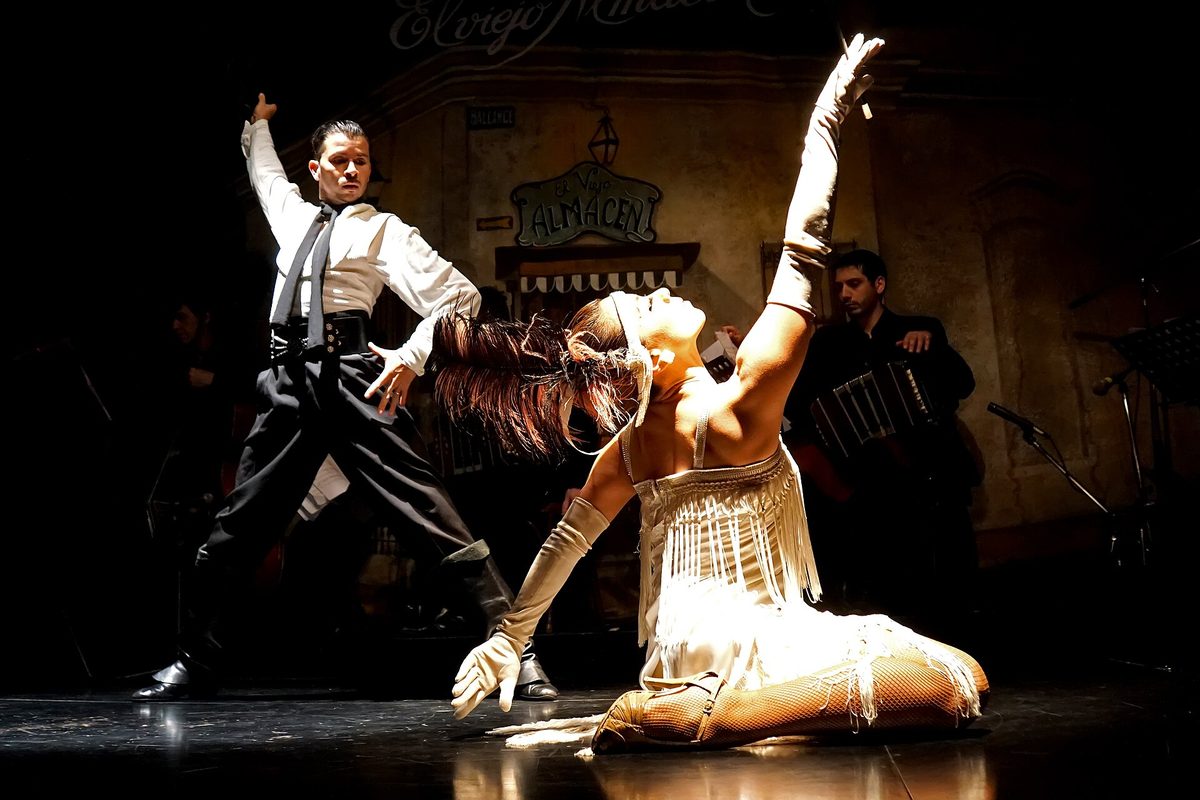
This is the most important distinction for a visitor to grasp. A tango show is a staged performance with professional dancers and (usually) a dinner; you sit and watch. A milonga is participatory: real couples dancing socially, for their own pleasure, with no audience. If you want the polished spectacle, see our guide to the best tango show in Buenos Aires; if you want the living dance, you want a milonga. Both belong to the wider world of tango in Buenos Aires, but they are completely different nights out.
And yes, you can attend purely as a watcher. Most milongas have tables around the floor where you can nurse a glass of Malbec and soak up the atmosphere without dancing a step. Nobody will pressure you — though the codes governing who dances with whom are worth understanding first.
Milonga vs Tango Show: Which One Do You Actually Want?
| Milonga | Tango show | |
|---|---|---|
| What it is | Social dance for locals | Staged performance for audiences |
| Who dances | You and other guests | Professional dancers only |
| Atmosphere | Authentic, informal, local | Polished, theatrical, tourist-facing |
| Typical cost | A modest entry fee (la entrada) | Considerably more, often with dinner |
| Start time | Late — often 11pm onwards | Earlier, dinner from ~8pm |
| Best for | Feeling the real culture | A one-off spectacle |
The Best Milonga Buenos Aires Venues (2026)
Dozens of milongas run across the city each week, each with its own character, crowd and dress code. These are the ones I would point a first-time visitor toward in 2026 — a mix of grand traditional salons and looser, bohemian halls. Schedules rotate constantly, so treat the nights below as a starting point and confirm against live listings.
Salón Canning (Palermo) — the classic
If you visit only one milonga, make it Salón Canning on Avenida Scalabrini Ortiz. This is a proper, polished, traditional salon with one of the best wooden floors in the city, and it hosts legendary nights such as the long-running Parakultural milonga. The dancing level is high and the energy electric. Visitors are welcome, but the floor belongs to serious dancers.
Maldita Milonga (San Telmo) — live orchestra
Held midweek in the atmospheric Buenos Aires Club on Perú street in San Telmo, Maldita Milonga is many travellers’ favourite for its live orquesta típica, El Afronte, who play sets through the night. Hearing tango played live while couples dance to it is a different order of experience. The vibe is warm, bohemian and welcoming to newcomers.
La Catedral Club (Almagro) — the alternative icon
The most famous “milonga alternativa” in the city, La Catedral is a cavernous former warehouse strung with fairy lights and mismatched furniture, where the music strays beyond traditional tango and nobody minds if you turn up in jeans and trainers. Classes run early, then an open milonga goes until very late. It is young, artsy and an easy first milonga if the formality of traditional salons feels intimidating.
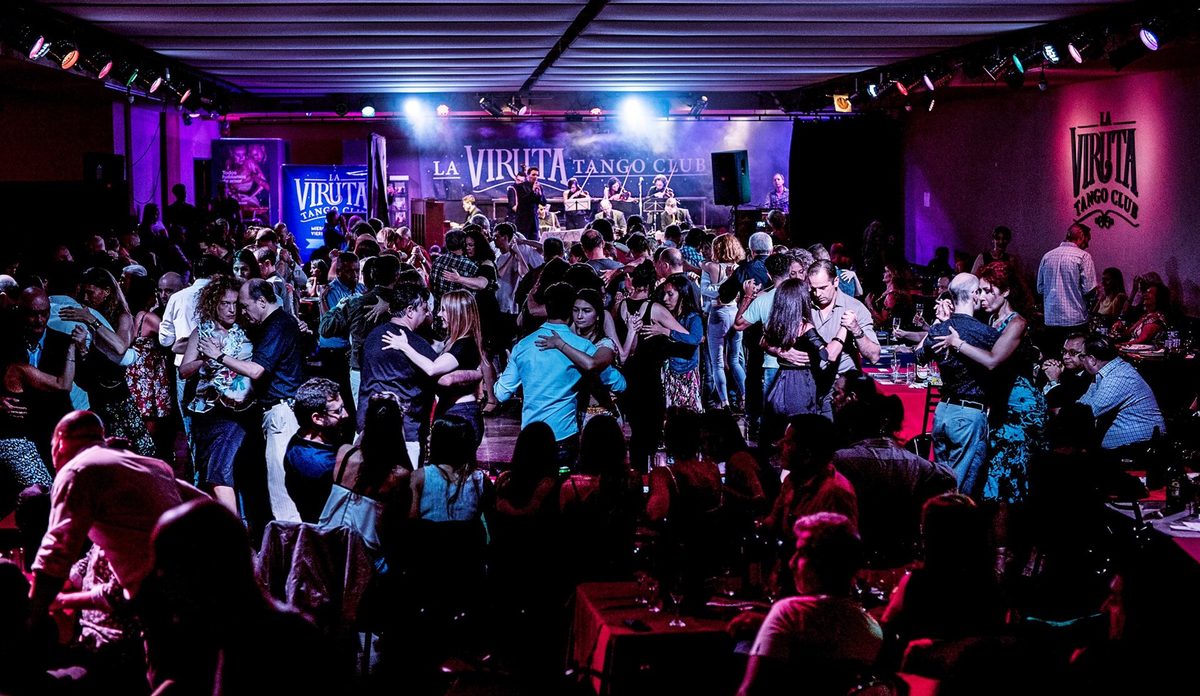
La Viruta (Palermo) — best for beginners
Run for three decades in the basement of the Armenian cultural centre, La Viruta is the gentlest landing for newcomers. It mixes tango with rock, salsa and folk, runs affordable classes before the dancing, and stays open until dawn at weekends. If you want to actually try dancing rather than just watch, this is where I’d send you first — pair it with a proper lesson from our guide to tango classes in Buenos Aires.
El Beso (Centro) — intimate and traditional
A tiny, intense, deeply traditional room near Avenida Corrientes, El Beso is “la casa de la milonga” — running afternoon and night sessions almost every day. The floor is small and the standard exacting — this is where committed dancers go. Wonderful to watch, but not the place for your first nervous steps.
La Glorieta (Belgrano) — open-air and free
For something completely different, head to the octagonal 1910 bandstand in Barrancas de Belgrano on a weekend evening, where dancers of every age and ability gather for a free open-air milonga under the stars. There’s an early class, then social dancing until late. It’s romantic, unpretentious and one of the loveliest free things to do in the city — see more in our guide to free tango in Buenos Aires.
Confitería Ideal (Centro) — the historic café
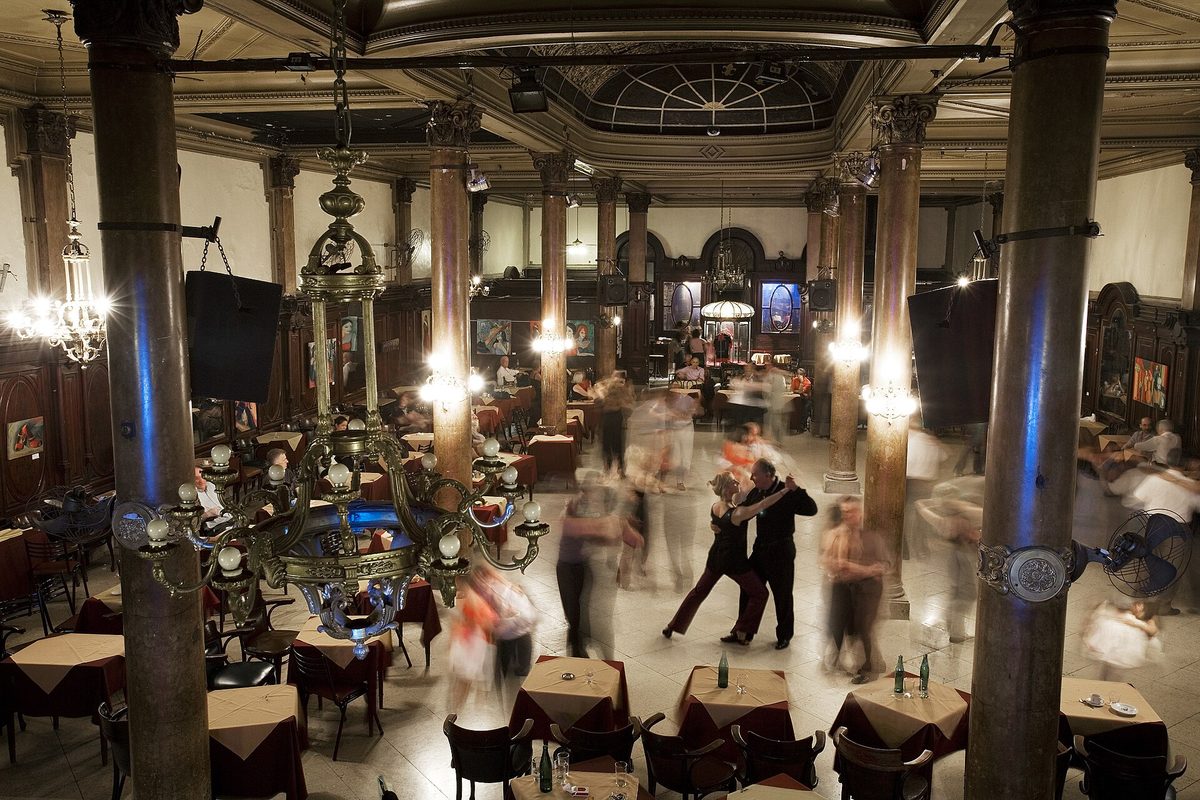
The grande dame of Buenos Aires tango cafés, the restored Confitería Ideal reopened after a long renovation and again hosts milongas and classes on its belle-époque first floor. As of mid-2026 it runs afternoon and evening milongas; confirm the current programme, as its calendar has shifted since reopening.
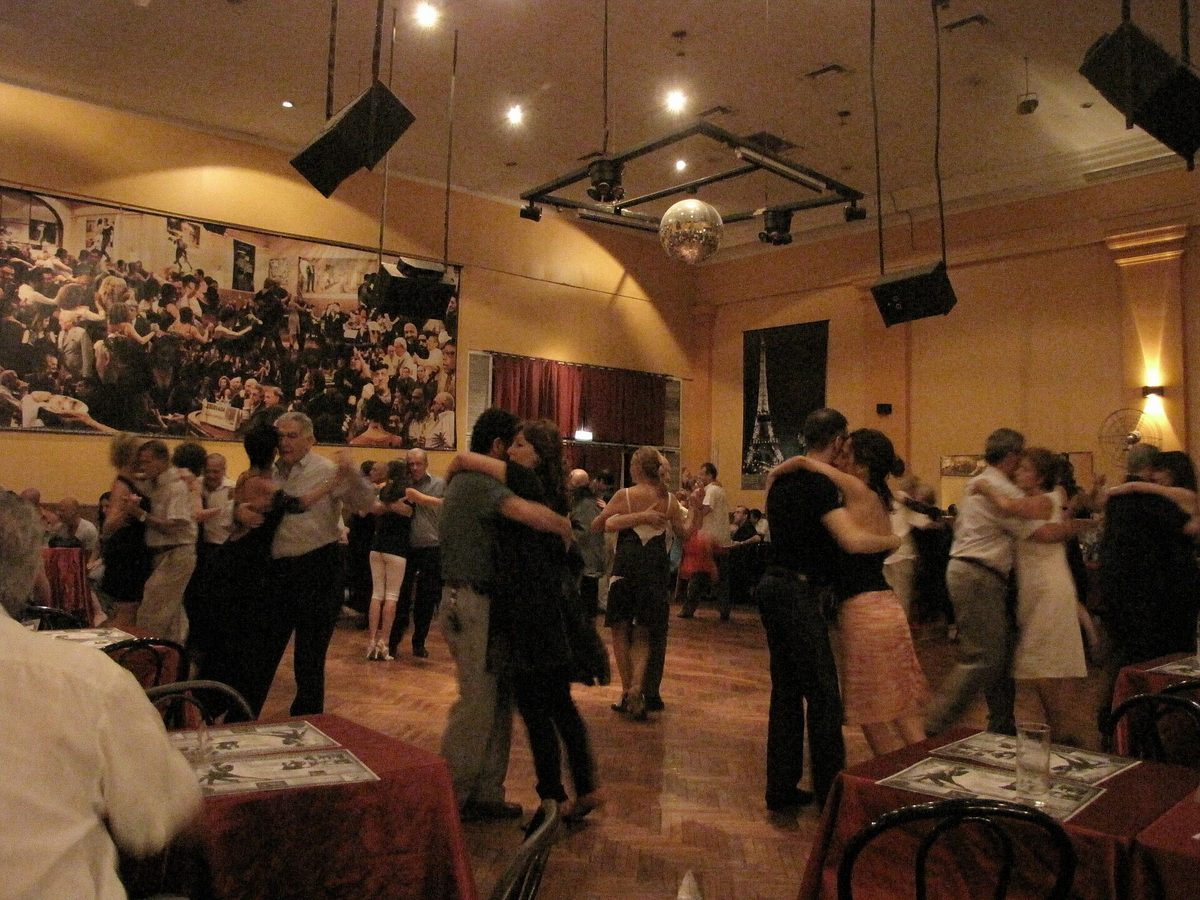
Traditional vs Alternative Milongas
Milongas split broadly into two camps, and knowing which you’re walking into saves a lot of confusion.
Traditional milongas (Salón Canning, El Beso, Confitería Ideal) play golden-age tango from the 1930s–50s in structured tandas (sets of three or four songs separated by a cortina, a snippet of non-tango music that clears the floor). Partners are invited by cabeceo — a glance and a nod across the room — and there is often separate seating for single men, single women and couples. Smart-casual dress is expected; the codes feel formal at first but exist to make a crowded floor work.
Alternative milongas (“milonga alternativa”: La Catedral, often La Viruta) relax all of that. The music ranges into electronic and neo-tango, dress is come-as-you-are, roles are fluid and you can simply ask someone to dance. They are far less intimidating for a first-timer and have become the gateway for a younger generation of dancers.
Neither is “more authentic” — both are genuinely how Buenos Aires dances in 2026. For where these scenes cluster, our guide to tango neighbourhoods in Buenos Aires maps San Telmo, Almagro and Abasto.
How to Find a Milonga Tonight
Here’s what guidebooks won’t tell you: the milonga calendar changes by night of the week and shifts seasonally, so any fixed schedule you read is half-wrong by the time you arrive. Don’t rely on a static list — check the live listings.
The essential tool is Hoy Milonga (hoy-milonga.com), a website and app that shows exactly which milongas are running each day, with start times, addresses and the DJ or orchestra. Locals live by it. Open it the morning of, filter by neighbourhood, and you’ll have tonight’s options in seconds. Instagram is the other live source — most milongas post that week’s programme on their own accounts.
A few pointers for choosing:
- Weekends have the most choice and the latest finishes; weeknights are quieter and friendlier for a first visit.
- Most milongas don’t get going until 11pm or later — turn up at 9pm and you’ll find an empty room. The floor peaks after midnight.
- Many venues run a class before the milonga (often 7–10pm), a gentle way to arrive early and meet people.
What Does a Milonga Cost?
Entry — la entrada — is modest, especially next to a tango dinner show. As of mid-2026 it’s typically a few thousand pesos at the door (very roughly in the order of US$3–8 equivalent), a little more for special nights with a live orchestra, and free at open-air La Glorieta. Because Argentine prices move fast, I’m deliberately not quoting an exact figure — check the current entrada on Hoy Milonga or the venue’s Instagram.
Bring cash in pesos: many milongas still don’t take cards at the door, and you’ll want small notes for drinks. Since Argentina lifted most currency controls in 2025, paying is far simpler than old “blue dollar” guides suggest — for how money works now, see our explainer on Argentine currency for tourists.
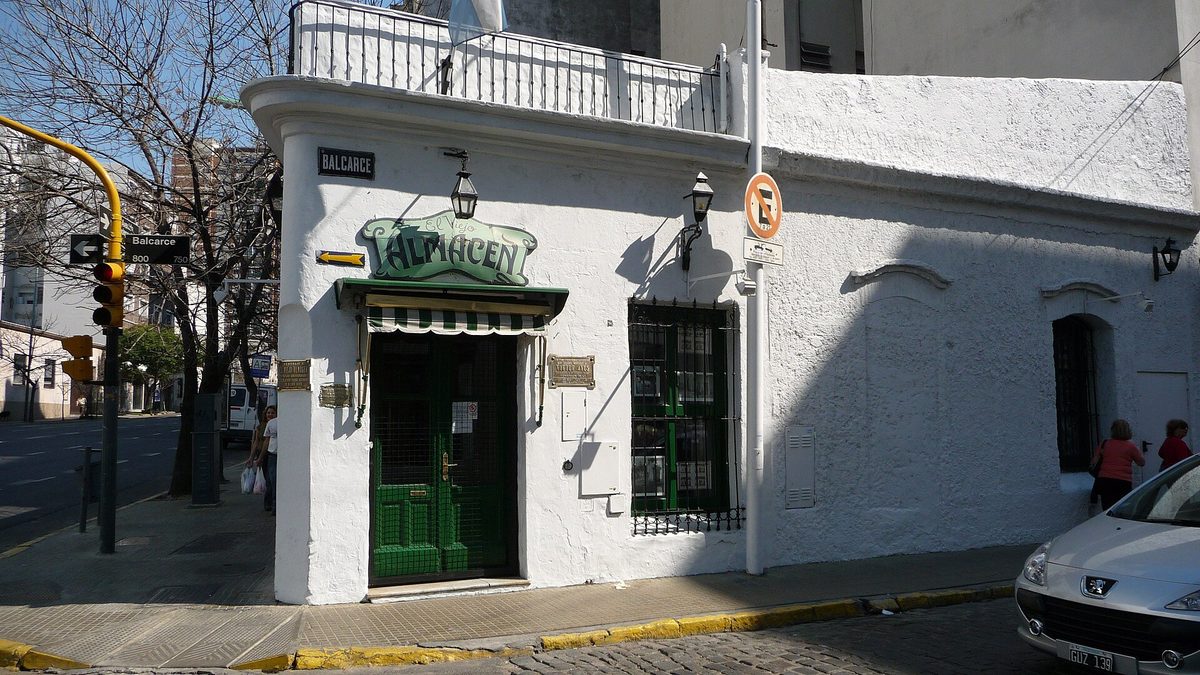
What to Expect as a First-Timer
Walk in, pay the entrada, and you’ll usually be shown to a table by the floor (in traditional milongas seating is assigned — say if you’re a couple or single). Order a drink, then watch: notice how the floor moves anticlockwise in a “ronda” (lane), how couples enter and exit between tandas, and how little anyone talks while dancing.
If you only want to watch, you are done — a respectful and unforgettable way to spend the night. If you want to dance, two routes work: come to the pre-milonga class, where partners rotate and beginners are expected, or, at an alternative milonga, simply ask someone. At traditional milongas, invitations happen by cabeceo — eye contact and a nod — and ignoring that code marks you instantly as a tourist.
That cabeceo is just one of several unspoken rules that keep a crowded floor running. I won’t unpack them all here, because we’ve written a dedicated guide: read our tango etiquette and milonga codes guide before your first night and you’ll feel far more at ease. If you’d rather build confidence on the floor first, start with beginner tango classes, then graduate to the milongas. For the full tango picture, our complete guide to tango in Buenos Aires ties the scene together.
A Few Insider Tips
- Go late, leave late. The magic happens after midnight; the best dancing is often at 2am.
- Dress one notch up for traditional salons (no shorts or beach sandals); anything goes at alternative ones.
- Observe before engaging. Ten minutes of watching teaches you the room’s codes.
- Bring proper shoes if you’ll dance — leather soles glide, rubber sticks. If you catch the bug, our guide to buying tango shoes in Buenos Aires covers the famous workshops.
- San Telmo on Sunday pairs perfectly with a milonga — combine the daytime Sunday street-tango and antiques fair with a night on the floor.
Frequently Asked Questions
What is a milonga in Buenos Aires?
A milonga is the social dance event where locals gather to dance tango with one another, most nights of the week, until the early hours. It is not a staged show — it is participatory and for the dancers’ own pleasure. The word also describes the venue and a faster style of tango music.
Can tourists go to a milonga in Buenos Aires?
Absolutely. Milongas welcome visitors, and you can attend purely to watch from a table without ever dancing a step. Venues like La Viruta and La Catedral are especially newcomer-friendly. Just observe the local codes — particularly the cabeceo at traditional salons — and you’ll fit right in.
Which is the best milonga in Buenos Aires for beginners?
La Viruta in Palermo is the gentlest first milonga: relaxed, affordable, with classes before the dancing. La Catedral in Almagro is another easy, come-as-you-are option. Both are far less intimidating than strict salons like El Beso.
How much does it cost to enter a milonga?
Entry (la entrada) is modest — typically a few thousand pesos at the door as of mid-2026, a little more for live-orchestra nights, and free at open-air La Glorieta. Bring cash in pesos, as many venues don’t take cards. Always check the current price on Hoy Milonga, since Argentine prices change fast.
What time do milongas start in Buenos Aires?
Late. Most milongas don’t fill until 11pm or later, and the floor peaks after midnight, often running until 3 or 4am. Pre-milonga classes usually run from around 7–10pm. Arriving at 9pm to a traditional milonga often means an empty room — embrace the porteño night.
Final Thoughts
A tango show will dazzle you, but a milonga will move you. Sitting at the edge of that floor at one in the morning, watching a couple in their seventies dance with more feeling than any stage act, is the moment Buenos Aires stops being a destination and becomes a memory. Check Hoy Milonga, pick a night, bring cash and an open mind, and go see where the dance really lives. For the full picture of the scene — shows, classes, history and neighbourhoods — start from our complete guide to tango in Buenos Aires.
Photo Credits
- milonga-buenos-aires-dancers.jpg: Jorge Royan / CC BY-SA 3.0 via Wikimedia Commons
- milonga-buenos-aires-salon-canning.jpg: TangOblivion / CC BY 2.0 via Wikimedia Commons
- milonga-buenos-aires-san-telmo.jpg: bastique / CC BY-SA 2.0 via Wikimedia Commons