Last updated: June 2026 · Written by the Buenos Aires Tourism editorial team
The first time I landed in Buenos Aires, I stepped off the plane clutching an envelope of crisp hundred-dollar bills like a state secret — because back then, that was genuinely the smart play. Fast-forward to 2026 and the rules have changed so much that half the advice online is quietly out of date. Here is the current version.
Here is the short answer. The argentina currency for tourists is the Argentine peso (ARS), and you will spend it on almost everything day to day. Since Argentina lifted most currency controls in April 2025, the once-massive gap between the official and “blue” dollar rates has largely closed, so paying by foreign card is now usually as good as cash. Bring a few hundred US dollars as backup, exchange them at an official casa de cambio, and you are set.
This guide is for any traveller who wants to understand how money actually works in Argentina right now — what the notes look like, whether to bring physical dollars, how much cash to carry, and where to change it safely. For the full trip-cost picture, pair it with our complete Buenos Aires travel cost guide.
Argentina currency for tourists in 2026: what actually changed
For years, the headline story was the “blue dollar” — an informal parallel exchange rate that paid you far more pesos than the official one. Tourists who arrived with cash dollars could get 50–100% more value than anyone using a card. That world is mostly gone.
In April 2025 the government lifted the bulk of its currency restrictions (the so-called cepo) and moved the peso to a managed float. The practical result for you: the official rate, the card/MEP rate, and the blue rate all converged. As of mid-2026 they tend to sit within a few percent of each other — very roughly in the region of 1,400–1,500 pesos per US dollar, though this is fast-moving and you should always check the current rate on a live source like dolarhoy.com or Google before you rely on any number.
Why does that matter? Because the old gospel — “always bring cash dollars, never use your card” — no longer holds. Foreign Visa and Mastercard payments have, since late 2023, been processed at a favourable tourist rate (essentially the dollar MEP rate), so tapping your card is now genuinely competitive. We dig into that trade-off in our guide to cash vs card in Argentina, and into the parallel market itself in our blue dollar in Buenos Aires explainer.
One thing that has not changed: inflation. It is falling but still elevated, which means any peso price I quote here will likely be higher by the time you travel. That is exactly why I pair every peso figure with a rough dollar equivalent — the dollar amount stays far more stable than the peso one.
The Argentine peso: notes, denominations and the inflation effect
The peso uses the same dollar sign you already know ($), which trips people up constantly. A menu price of $12,000 means twelve thousand pesos, not US dollars — thankfully, since that is roughly US$8, not a fortune. When in doubt, assume any price posted in Argentina is in pesos.
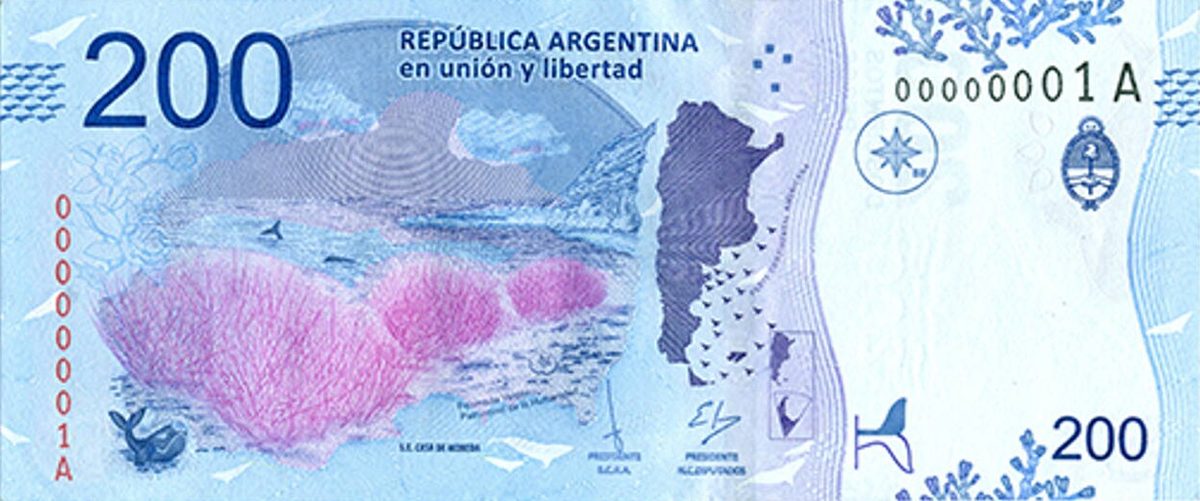
Argentina has kept adding higher-value banknotes to keep pace with inflation. As of 2026 the notes you will actually handle run from the small change of 10, 20, 50, 100 and 200 pesos up through 500, 1,000 and 2,000, and on to the two newest and most useful: the 10,000-peso note (introduced May 2024) and the 20,000-peso note (introduced November 2024), the highest denomination in circulation. The 1,000 and 2,000 notes are still legal and common; the older small notes are worth so little now that you will mostly ignore them.
Here is a rough sense of what each note is worth, using an illustrative rate of around 1,450 pesos to the dollar. Treat the dollar column as a ballpark and check the current rate before you travel:
| Banknote (ARS) | Rough USD value | What it buys, roughly |
|---|---|---|
| $1,000 | ~US$0.70 | A short bus/Subte ride with money to spare |
| $2,000 | ~US$1.40 | A small coffee to go |
| $10,000 | ~US$7 | A sit-down lunch dish or two empanadas plus a drink |
| $20,000 | ~US$14 | A casual dinner for one, or a couple of taxi hops |
Even with the big notes, a meaningful wad of pesos is bulky. Change US$200 and you may walk away with a brick of twenty or thirty notes — normal, just keep it organised and out of sight.
Should you bring US dollars to Argentina?
Short version: yes, bring some — but far less than you would have a couple of years ago, and not as your main spending strategy. Physical US dollars used to be king because cash bought blue-rate pesos. Now that the rates have converged, dollars are more of a sensible backup than a money-saving hack.
Still, there are real reasons to bring dollars to Argentina. They are a reliable fallback if a card terminal is down, if you hit a cash-only restaurant or market stall, or if you simply want pesos in hand the moment you land — exchanged in one go at a casa de cambio.
Bring crisp, clean, large bills
This part of the old advice still absolutely holds. Argentine exchange houses are famously fussy about US cash. Bring new-design $100 and $50 bills that are clean, uncreased and free of tears, pen marks or stamps. Worn or damaged notes, and smaller denominations like $20s and $10s, are routinely refused or changed at a worse rate. Pack them flat in an envelope, not crumpled in a pocket.
How much? For a typical week or two of travel, somewhere around US$200–400 in cash is plenty as a backup if you also plan to use cards. If you intend to live mostly on cash, budget closer to your full spend — very roughly US$50–70 a day for budget travel and US$100–130 a day for comfortable travel, then bring a sensible chunk of that and top up via Western Union as you go rather than carrying it all at once. Our Buenos Aires travel cost guide breaks those daily numbers down properly.
Where to exchange money in Buenos Aires
You have four realistic ways to turn dollars (or your home account) into pesos. With the rates so close together in 2026, the deciding factor is now convenience and safety rather than squeezing out the best rate.
Casas de cambio (official exchange houses)
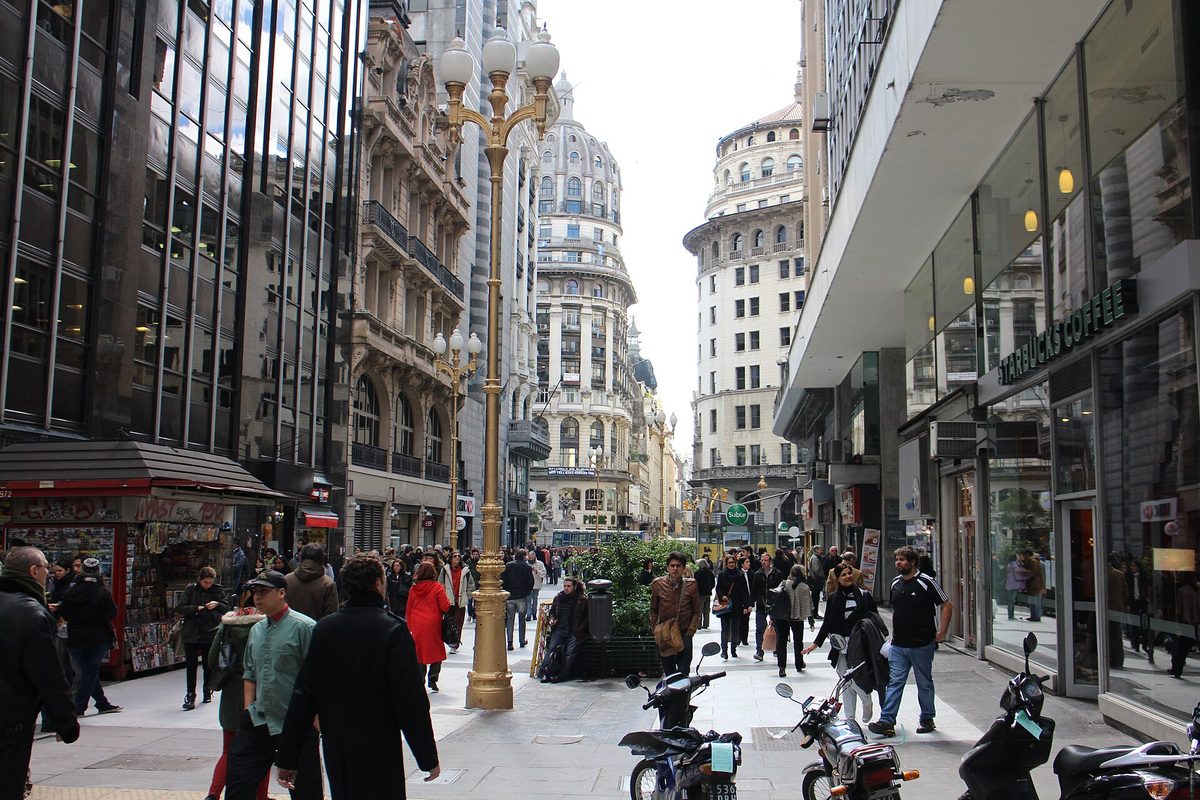
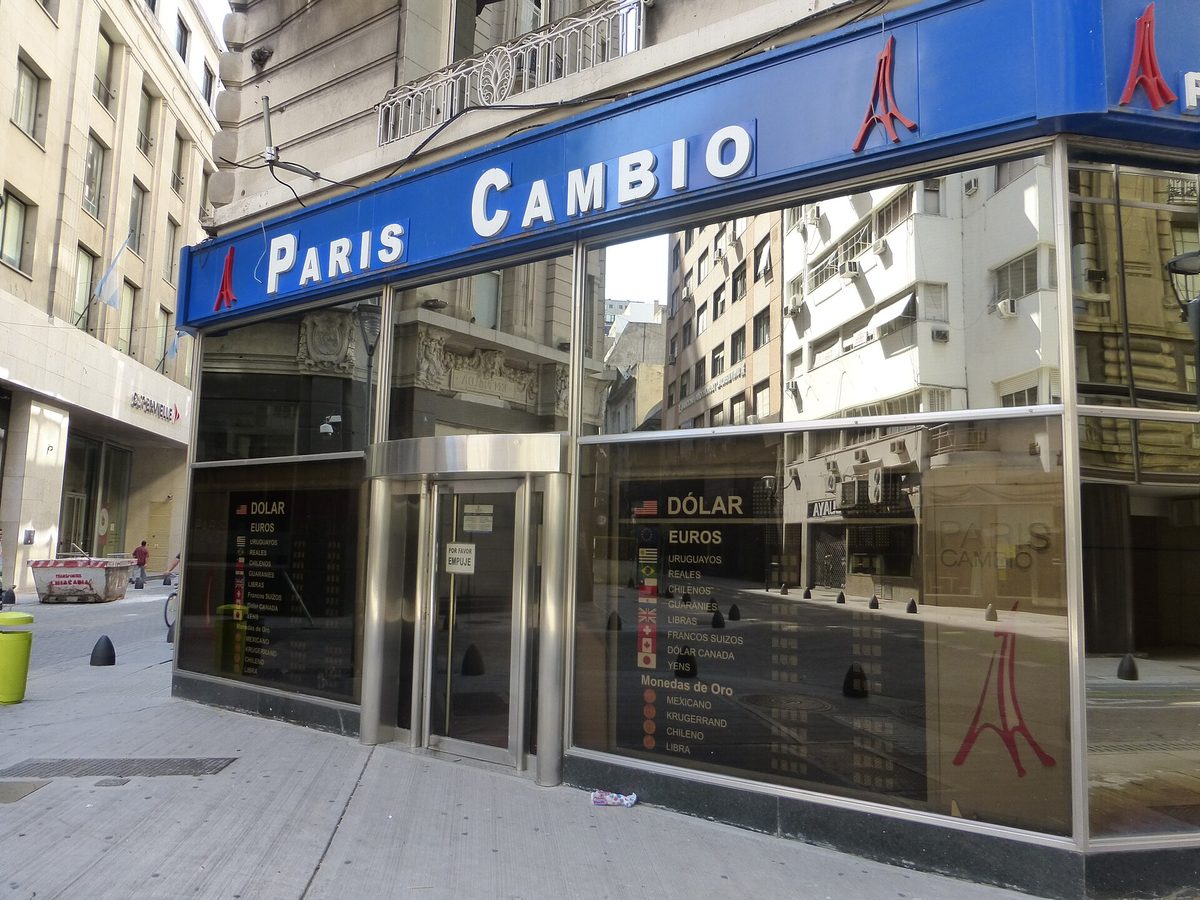
These are licensed bureaux de change — you will see clusters of them around Calle Florida and the city centre, with rate boards in the window. Bring your passport, hand over your crisp dollars, and you will get a fair, official rate with a proper receipt. This is my default recommendation for changing cash: simple, legal and low-drama. Banco Nación and other banks also exchange currency, though hours are short and queues can be long.
Western Union and dolar MEP
For years, sending yourself money via Western Union was the single best way to get pesos, often beating every other rate. That edge has narrowed now that rates converged, but WU can still occasionally match or slightly beat the card rate — and it spares you from carrying a wad of cash. You transfer online to yourself, then collect pesos at a branch (passport required; driver’s licences are not accepted). The catch is the queues, which in central Buenos Aires can run anywhere from 20 minutes to over an hour, plus the odd branch cash shortage. We cover the mechanics and current rates in our Western Union Argentina exchange rate guide.
ATMs
ATMs work and are handy in a pinch, but treat them as backup rather than your main source of pesos. Per-transaction withdrawal limits are low — often only the equivalent of around US$40–150 — and local ATM fees can run several dollars on top of whatever your home bank charges, so the per-dollar cost adds up fast. If you do use them, withdraw the maximum each time to spread the fixed fee. Our guide to ATM fees in Argentina explains how to keep those costs down.
Arbolitos and cuevas: the street market
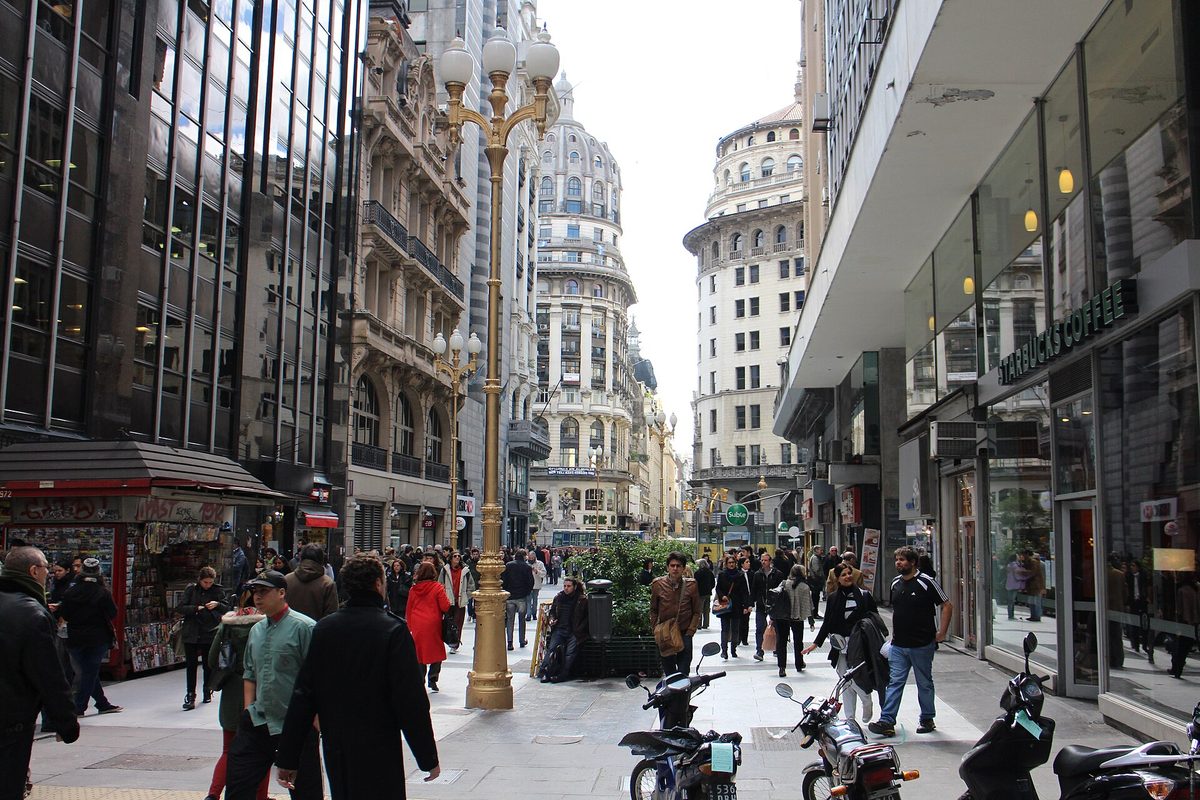
Walk down Calle Florida and you will hear people murmuring “cambio, cambio, dolares” — these are arbolitos (“little trees”), informal street changers feeding customers to back-room cuevas. In the blue-dollar heyday they offered the best rate in town. In 2026, with the rates almost level, the math no longer justifies the risk of counterfeit notes, short-counts and being marked as a tourist carrying cash. My honest advice: skip them and stick to a casa de cambio.
Keeping your money safe
Buenos Aires is a big city, and like any big city it has petty theft — mostly pickpocketing in crowds and on transport. A few simple habits go a long way:
- Split your stash. Keep the day’s cash in your pocket and the rest — spare dollars, backup card, passport — locked in your accommodation or a money belt.
- Carry a “mugging wallet.” A cheap wallet with a small amount of pesos and an old card means you never flash your full bankroll, and you have something to hand over if it ever comes to that.
- Be discreet at exchange and ATMs. Count and pocket your money inside the casa de cambio, not out on the street, and stay aware of who is around.
- Bring two cards. Keep a backup card separate from your main one, so a loss does not strand you.
For more on staying street-smart in the city, see our broader Buenos Aires travel tips.
Which approach suits you?
There is no single right answer — it depends on how you like to travel. A quick steer:
- The card-first traveller: happy tapping a fee-free Visa/Mastercard everywhere and carrying just US$200–300 in dollars as backup. Simplest option in 2026, and the rate is competitive.
- The cash-first traveller: prefers to know exactly what they are spending. Bring more dollars, change them at a casa de cambio in batches, and top up with Western Union for longer trips.
- The budget backpacker: watching every peso. Mix Western Union for the best peso value with card payments, and keep cash for markets, buses and small towns where cards are not accepted. See our shoestring itinerary for how to stretch it.
Whichever camp you fall into, the truth is the same: Argentina is far easier to handle financially in 2026 than its reputation suggests. For where these costs land across a whole trip, our Buenos Aires travel cost guide is the place to start.
Frequently asked questions
What currency should tourists use in Argentina?
Use the Argentine peso (ARS) for almost everything — food, transport, shops and entry fees are all priced in pesos. You can pay by foreign card at a favourable rate in most city businesses, and carry some peso cash for markets, taxis and small towns. Bring a little US cash as backup, but you will not spend dollars directly day to day.
Is it better to bring cash or use a card in Argentina?
In 2026 it is roughly a tie, which is a big change. Now that the official, card and blue rates have converged, paying by foreign Visa or Mastercard gives you a competitive rate with no bulky cash to carry. Cash still wins for markets, small towns and as a backup, so the smart move is to do both rather than commit to one.
How much cash should I bring to Argentina?
If you also plan to use cards, around US$200–400 in clean, large-denomination dollars covers a week or two as backup. If you want to run mostly on cash, bring a larger share of your budget — roughly US$50–70 a day for budget travel or US$100–130 for comfort — and top up via Western Union rather than carrying it all at once.
Do I need crisp US dollars for Argentina?
Yes. Exchange houses are genuinely picky: bring clean, uncreased, new-design $100 and $50 bills with no tears, marks or stamps. Worn notes and smaller bills like $20s are often refused or changed at a worse rate. Pack them flat in an envelope so they arrive in pristine condition.
Are the new 10,000 and 20,000 peso notes the largest?
Yes. The 20,000-peso note, introduced in November 2024, is currently the highest denomination in circulation, with the 10,000-peso note (May 2024) just below it. Both were added to cope with inflation. You will still see and use 1,000 and 2,000 notes regularly, while the older small notes are now nearly negligible in value.
Final thoughts
If you take one thing from this guide, let it be this: the dramatic, cash-only Argentina of a few years ago has mellowed. You no longer need to smuggle in a fat envelope of dollars to travel smart — bring a modest cash buffer of crisp bills, lean on your card for the convenience, change money at official casas de cambio, and confirm the live rate before you go. Do that, and the peso becomes one less thing to stress about, leaving you free to enjoy the steak, the wine and the tango. For the bigger budgeting picture, our complete cost guide has you covered.
Photo credits
- Argentine 200 peso banknote (Animales Autóctonos series) — Photo: Casa de Moneda / CC BY-SA 2.0 via Wikimedia Commons.
- Casa de cambio in Buenos Aires — Photo: Banfield / CC BY-SA 2.5 ar via Wikimedia Commons.
- Calle Florida, Buenos Aires — Photo: Gobierno de la Ciudad de Buenos Aires / CC BY 2.5 ar via Wikimedia Commons.
- Classic Buenos Aires restaurant facade — Photo: Gastón Cuello / CC BY-SA 4.0 via Wikimedia Commons.