Last updated: June 2026 · By the Buenos Aires Tourism editorial team
The first time I tried to “see” central Buenos Aires, I made the classic mistake: I hopped from sight to sight by taxi and missed everything in between. The second time I walked it, and the city finally clicked. Down here the history is street-level — balconies, cafe doorways, plaques, the worn marble of a hundred-year-old arcade. This is the one part of town that rewards slow feet over a packed itinerary.
How to do a Buenos Aires walking tour of the historic centre
The best buenos aires walking tour of the historic centre is a compact loop around Plaza de Mayo — Casa Rosada, the Cabildo, the Metropolitan Cathedral — then straight down Avenida de Mayo to Congreso, with a coffee stop at Cafe Tortoni. Allow two to three hours on foot. Do it self-guided with the route below, or join a tip-based free tour that leaves from the plaza most mornings.
This guide is for travellers who want to understand the centre, not just photograph it: first-timers, history buffs, and anyone with a spare half-day between bigger plans. It pairs naturally with the rest of our things to do in Buenos Aires guide if you’re still mapping out your days.
The self-guided route, stop by stop
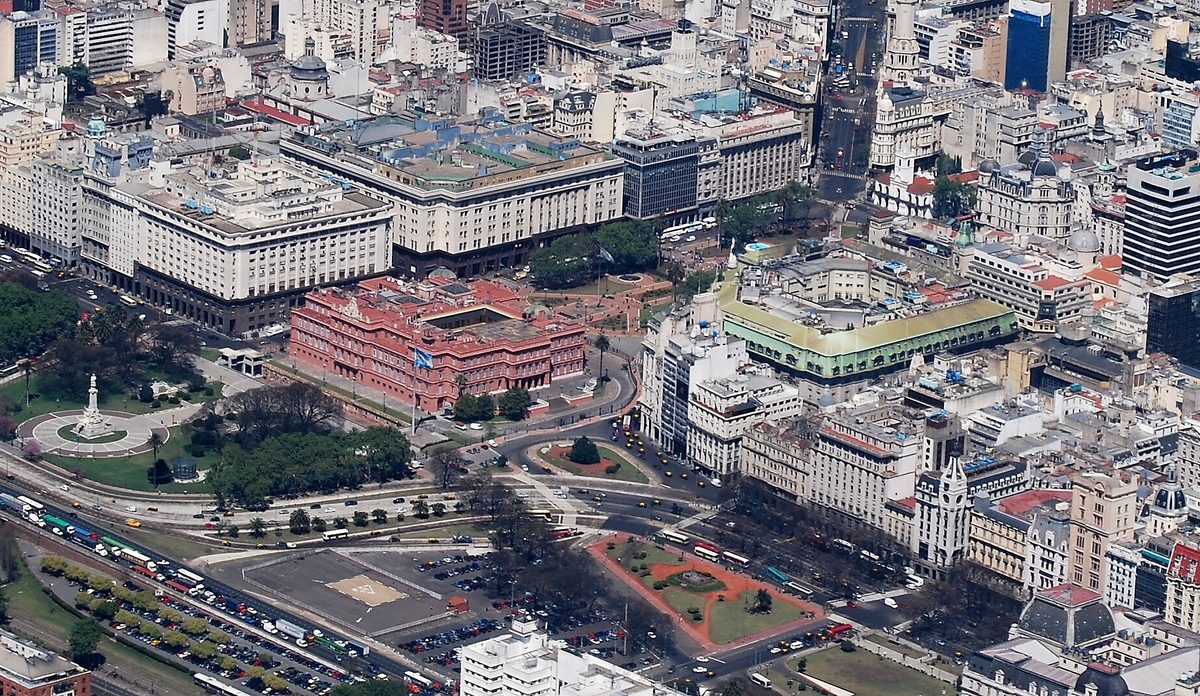
You can walk this entire loop in an afternoon, and it costs nothing but your time. Start at Plaza de Mayo, the political and emotional heart of the country since 1580, and work outward. Here’s the order I’d take it in.
1. Plaza de Mayo and Casa Rosada
Begin at the Pirámide de Mayo, the white obelisk in the centre marking the 1810 revolution. Face east and you’ll see the Casa Rosada, the salmon-pink presidential palace whose balcony has hosted everyone from Evita to modern presidents. The Museo Casa Rosada behind it is free and, at the time of writing, generally open Wednesday to Sunday — worth ducking into if the hours line up. Look down, too: the white headscarves painted on the pavement honour the Madres de Plaza de Mayo, who still march here on Thursdays.
2. The Cabildo
On the western edge of the plaza stands the Cabildo, the whitewashed colonial town hall and the oldest public building in the city centre. It’s where the May Revolution was plotted in 1810. The little museum inside is inexpensive and quick, and the rear balcony gives you a quiet view back over the square — a good spot to catch your breath.
3. The Metropolitan Cathedral
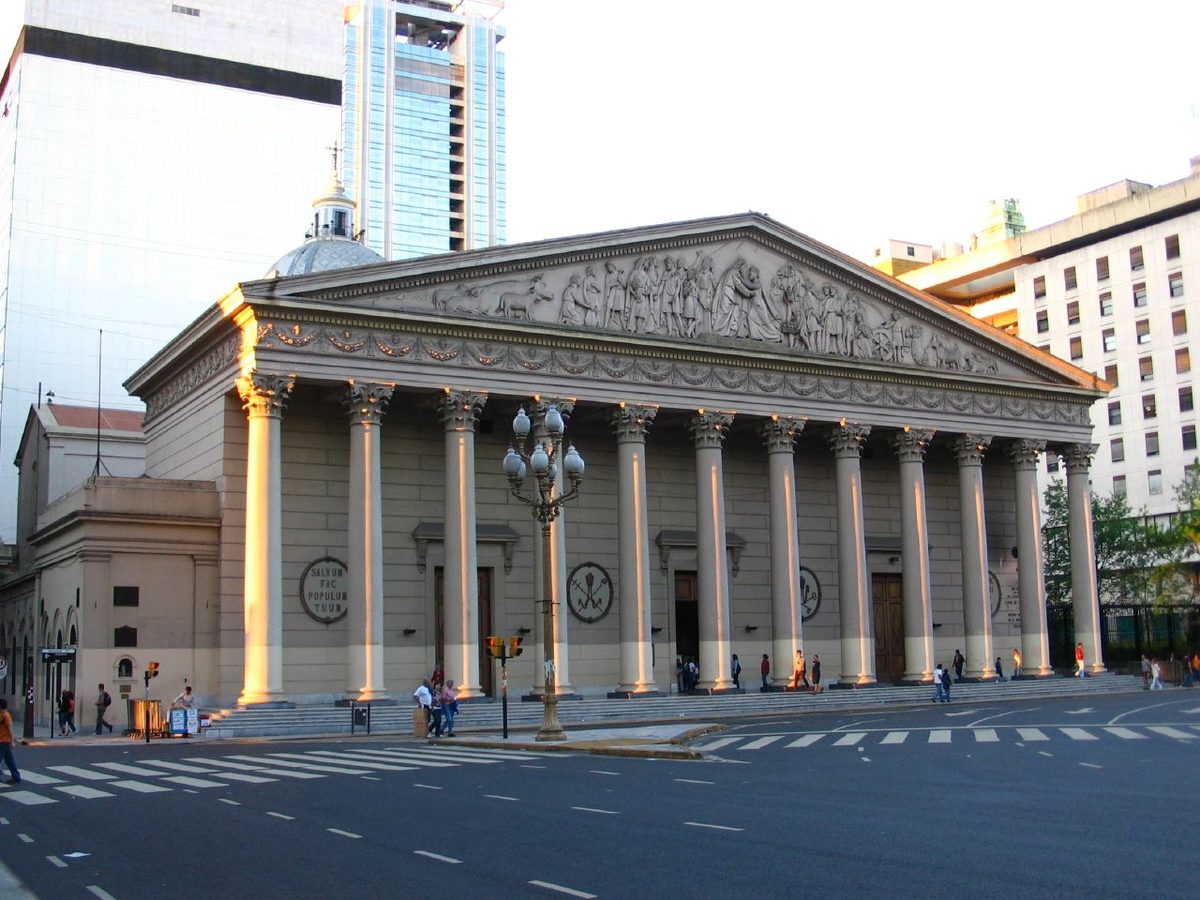
Cross to the cathedral, which looks more like a Greek temple than a church from the outside — twelve columns and a sculpted pediment. Inside is the marble mausoleum of General José de San Martín, Argentina’s liberator, guarded around the clock. This is also where the future Pope Francis served as archbishop. Entry is free; dress modestly and keep your voice down if a service is on.

4. Avenida de Mayo to Cafe Tortoni
Now walk west down Avenida de Mayo, the grand Paris-meets-Madrid boulevard cut through the city in the 1890s. The architecture is the show here: art nouveau ironwork, domes, and the extraordinary Palacio Barolo (worth a separate visit for its rooftop). About halfway along, at number 825, is Cafe Tortoni, open since 1858 and still serving chocolate con churros under stained glass. Expect a queue; it’s touristy now, but the room is genuinely beautiful.

5. Plaza del Congreso
Keep going to the end of the avenue and you’ll hit the Congreso de la Nación, a vast domed parliament facing its own leafy plaza. This is the natural finish line. From here you’re a short walk or quick taxi from San Telmo, Recoleta, or back into the centre — see our guide to getting around Buenos Aires for the easiest connections.
The historic-centre route at a glance
| Stop | What it is | Time to spend |
|---|---|---|
| Plaza de Mayo & Casa Rosada | Main square, presidential palace | 20-30 min |
| The Cabildo | Colonial town hall & small museum | 15-20 min |
| Metropolitan Cathedral | Neoclassical church, San Martín’s tomb | 15 min |
| Avenida de Mayo | Grand boulevard, Cafe Tortoni at no. 825 | 40-60 min |
| Plaza del Congreso | Parliament & plaza, the finish | 15 min |
How free walking tours work and where to book
If you’d rather have a local do the talking, the free walking tour circuit is the easiest way in. These run on a pay-what-you-feel model: you book a free spot online, show up, walk for two to three hours, and tip the guide at the end based on what you thought it was worth. There’s no fixed price, but plan to carry some cash — guides live on these tips, and a few thousand pesos per person is a fair ballpark to budget. Tip norms shift with inflation, so ask your hotel what’s customary the week you visit.
Most “free tour buenos aires” companies (operators like GuruWalk, Buenos Aires Free Walks, Strawberry Tours and Civitatis) run a city-centre route that meets right at Plaza de Mayo, usually once or twice a day in English and Spanish. Departure times change seasonally, so book ahead online to lock in your slot and confirm the meeting point. Reservations are free and easy to cancel if your plans shift.
Free versus self-guided
Go guided if you want the stories — the politics, the scandals, the meaning behind the headscarves on the pavement — and the reassurance of a local. Go self-guided if you prefer to linger, photograph, and set your own pace. Honestly, I think the centre is one of the safer, simpler areas to navigate alone, so a free tour is more about depth than necessity here.
Guided and themed tours worth paying for
Beyond the free circuit, paid private and small-group tours add focus and skip-the-line access. A few that tend to deliver:
- History-focused private tours — a knowledgeable guide one-on-one, ideal if you’re short on time or travelling with family.
- Architecture and Palacio Barolo — combine the centre with a ticketed climb up the Dante-inspired tower for the best rooftop view downtown.
- Self-guided audio apps — GPS-based guides work offline and let you wander the same route with commentary in your ear for a few dollars.
If your interests run to street art, tango, or food, the centre is just the starting point — branch out from our best things to do in Buenos Aires roundup, or peel south into San Telmo and the other neighbourhoods once you’ve got your bearings.
Timing, safety and what to skip
Walk in the morning or late afternoon to dodge the midday heat in summer; the centre also empties out and feels flatter on Sundays, when offices close. Weekdays give you the buzz of a working capital. Build this into a wider plan with our Buenos Aires itinerary guide.
On safety: the historic centre is busy and well-policed by day, and walking it is straightforward. Keep your phone in your pocket rather than your hand, carry a little cash and a card rather than a fat wallet, and stay alert around the crowded plaza and on the subte. After dark the area quiets quickly — fine to pass through, but I wouldn’t dawdle. Our Buenos Aires travel tips cover money and scams in more detail.
What to skip? Don’t try to bolt La Boca onto this on foot — it’s not a walkable extension and is better as its own trip; see Caminito and La Boca. And don’t bother with hop-on bus tours for the centre specifically; it’s so compact that your feet genuinely are the best transport.
Frequently asked questions
How long does a walking tour of the historic centre take?
Plan on two to three hours either way. A guided free tour usually runs about two hours of steady walking with commentary. Self-guided, you can do the core loop — Plaza de Mayo to Congreso — in roughly two hours, or stretch it to half a day if you go inside the museums and linger over coffee at Cafe Tortoni.
Is the free walking tour in Buenos Aires really free?
Yes, in that there’s no upfront charge and no credit card needed to book. But it’s tip-based: guides earn their living from what you hand over at the end, so it isn’t meant to be free. Bring cash and tip what the experience was worth to you — a few thousand pesos per person is a reasonable starting point, adjusted for inflation.
Where does the Plaza de Mayo walking tour start?
Almost every centre tour meets at Plaza de Mayo itself, typically by the Pirámide de Mayo (the central white obelisk) or in front of the Cabildo. Your booking confirmation will name the exact spot and time. If you’re going self-guided, the pyramid is also the logical place to begin before facing the Casa Rosada.
Is it safe to walk around central Buenos Aires?
By day, yes — the historic centre is one of the easier areas to explore on foot, busy with workers and tourists alike. Use normal big-city sense: watch your phone and bag in crowds and on the subte, and avoid flashing valuables. The area thins out and feels less lively after dark, so save your wandering for daylight hours.
Can I do the centre as a self-guided walk without a guide?
Absolutely, and many travellers prefer it. The sights cluster tightly around Plaza de Mayo and Avenida de Mayo, signage is decent, and a free offline map or audio app fills in the history. Going solo lets you photograph, sit, and detour at will — just start early and keep the route above handy.
Final thoughts
The historic centre is the part of Buenos Aires I’d send a first-timer to on day one, on foot, ideally before breakfast crowds and afternoon heat. Whether you join a tip-based group for the stories or walk the loop yourself with a coffee at the end, two unhurried hours here will teach you more about the city than any bus window. When you’re ready to fill in the rest of your trip, our full guide to the best things to do in Buenos Aires picks up where this walk leaves off. Lace up, start at the pyramid, and let the centre unfold.
Photo credits
- Aerial view of Plaza de Mayo with the Casa Rosada and Cabildo — photo by Pavel Špindler, CC BY 3.0, via Wikimedia Commons.
- The colonial Cabildo on Plaza de Mayo — photo by Crazychubut, CC0, via Wikimedia Commons.
- The facade of Cafe Tortoni on Avenida de Mayo — photo by Unknown author, CC BY-SA 2.5, via Wikimedia Commons.
- The columned facade of the Metropolitan Cathedral — photo by Alexis González Molina, CC BY-SA 3.0, via Wikimedia Commons.