Last updated: June 2026 · Written by the Buenos Aires Tourism editorial team
I went to Luján the first time almost by accident — a free Tuesday, a SUBE card and a vague memory that the biggest church in Argentina sat at the end of a commuter line. I came back genuinely moved, not by faith exactly, but by the sheer scale of the place and the quiet pull of a pilgrimage town on an ordinary weekday.
A lujan day trip from buenos aires takes you about 70 km west to Argentina’s great Marian shrine: the colossal neo-Gothic Basílica de Luján, home of the country’s patron Virgin. Pair it with one of South America’s biggest history-and-gaucho museums and a riverside lunch, and you have an easy, cheap, half-to-full day out. It suits anyone drawn to history, faith or grand architecture.
Is a lujan day trip from buenos aires worth it?
It depends on what moves you. Luján is not a pretty colonial gem like San Antonio de Areco or a leafy escape like Tigre — it is a working pilgrimage town wrapped around one of the most monumental churches in the Americas. If neo-Gothic architecture, Argentine history or Catholic devotion holds any interest for you, it is well worth the trip; if none of that does, a couple of hours is plenty.
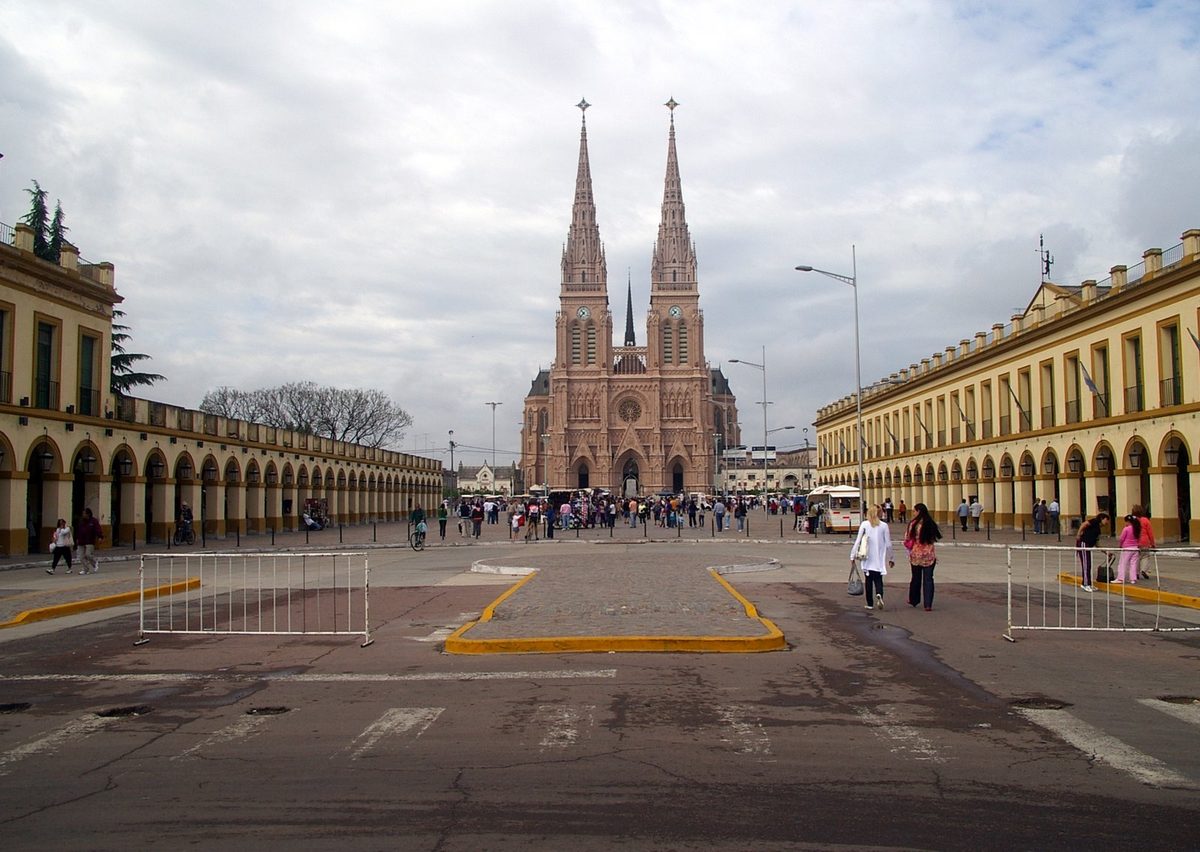
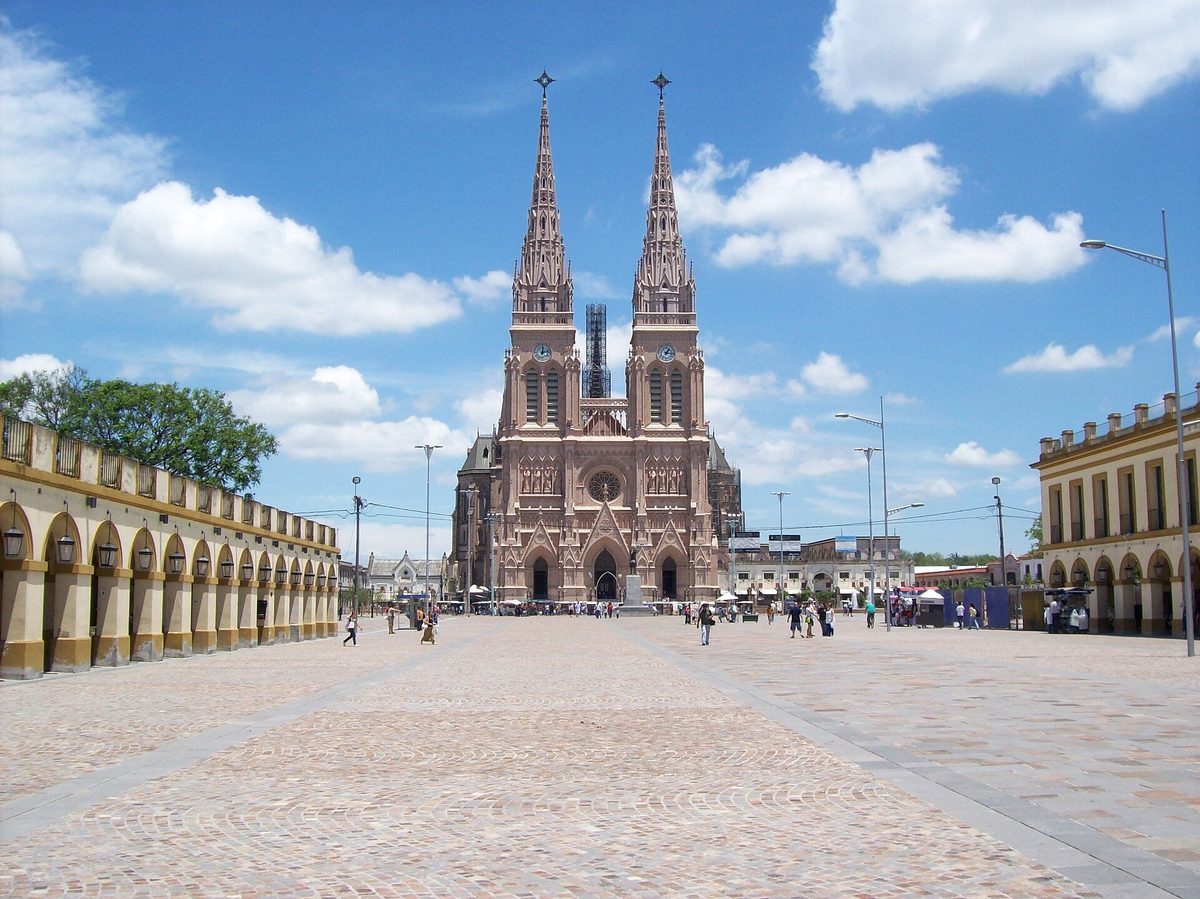
What makes it special is the contrast. You step off a battered diesel train or a city bus into a small provincial town, walk a few blocks, and suddenly two enormous spires rear up over a vast paved esplanade flanked by colonial-style arcades. It feels far bigger than the town around it because it is — it was built to receive millions. For how Luján compares with every other escape from the capital, see our guide to the best day trips from Buenos Aires.
The Luján day trip in numbers
Here is the trip at a glance. Figures are approximate and for mid-2026 — Argentine transport fares move with inflation, so treat pesos as a rough guide and check current rates before you go.
| Detail | What to expect |
|---|---|
| Distance from Buenos Aires | ~70 km west |
| Journey time | ~1h–1h30 by car or bus; ~2h+ by train (with a change at Moreno) |
| Cheapest way there | Bus 57 from Once or Plaza Italia, paid with SUBE |
| Time you need | Half a day for the basilica; a full day to add the museum and lunch |
| Rough cost | A few US dollars in transport; basilica free; museum a small entry fee |
| Best for | History, faith, architecture, families |
| Day trip or overnight? | A comfortable day trip — no need to stay over |
How to get to Luján from Buenos Aires
There are three realistic ways to make the trip — bus, train and car (or an organised tour) — and which one suits you depends on your patience, budget and where you are staying. None is difficult; this is one of the simplest day trips out of the city.
By bus — the cheapest and most direct
The classic budget option is the Line 57 colectivo, which runs all the way from the capital to Luján’s terminal, a short walk from the basilica. Branches leave from around Once (Plaza Miserere) and Plaza Italia in Palermo, depart frequently, and cost just a few hundred pesos paid with a SUBE card. Reckon on roughly 1h30 with traffic. It is slow but gloriously cheap and drops you almost at the door — my pick if I am not driving.
By train — scenic but with a change
There is no single direct train, but you can ride the rails most of the way. Take the Sarmiento line (Trenes Argentinos) from Once toward Moreno, then change at Moreno onto the diesel service that continues out to Luján. With the connection it is around two hours or more — longer than the bus — but it is also paid with SUBE and is a fun, very local way to travel. Always check current timetables with Trenes Argentinos before relying on it, as the Moreno–Luján diesel runs less often than the main line. Our Buenos Aires trains guide explains how the Sarmiento and other commuter lines work.
By car or tour — the fastest, best for combining towns
Driving is quickest: head west on the Acceso Oeste (Ruta 7) and you can reach Luján in about an hour to an hour and a quarter outside peak times. A car also unlocks the real prize — pairing Luján with nearby gaucho country in a single loop. If you would rather not drive, operators run an organised day tour with hotel pickup, often combining Luján with San Antonio de Areco (hedge the price in USD and check current offers). You can also catch a long-distance coach toward Luján or Mercedes from the Retiro terminal. For the wider picture, our overview of getting around Buenos Aires covers SUBE, colectivos and the Subte, and the full sweep of escapes lives in our guide to day trips from Buenos Aires.
The Basílica de Luján: Argentina’s great shrine
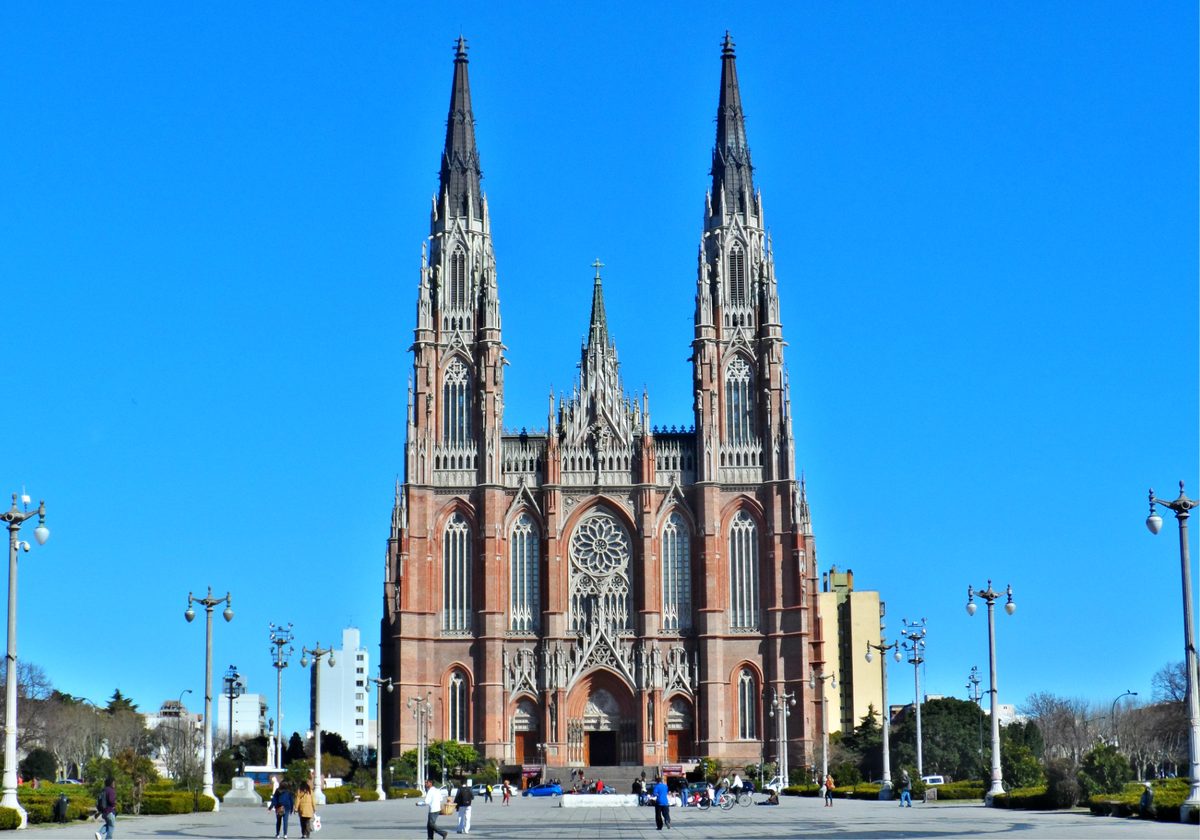
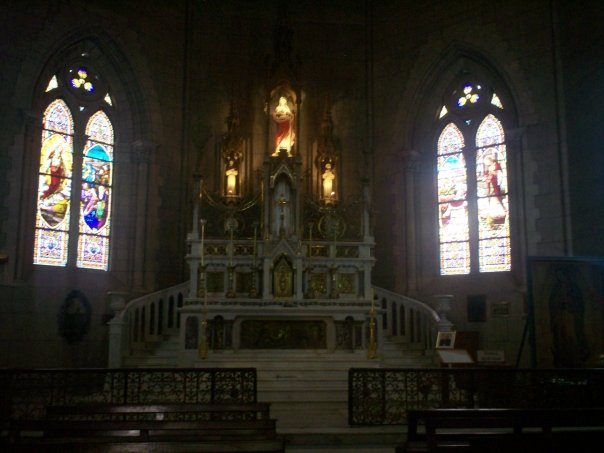
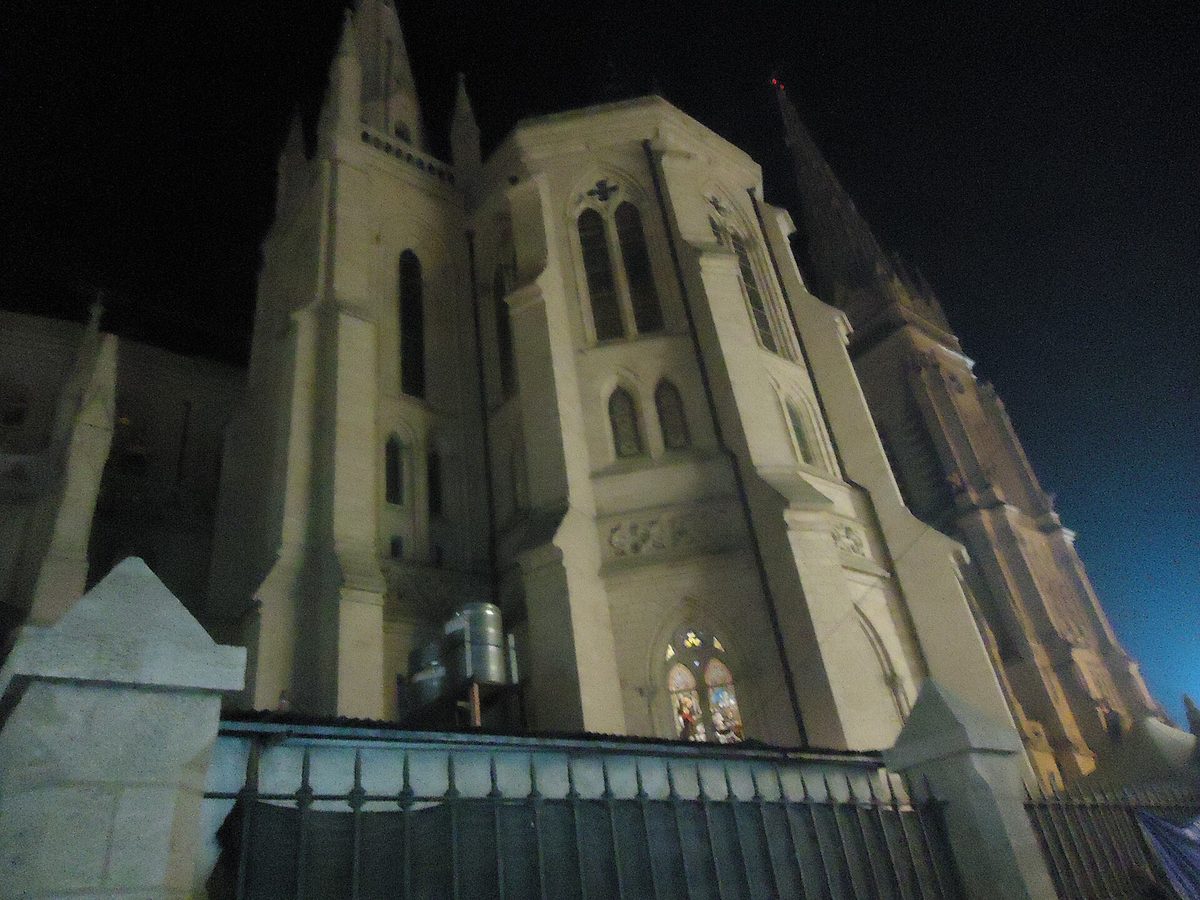
Everything in Luján orbits the basilica, and rightly so. The Basílica Nuestra Señora de Luján is a vast neo-Gothic pile begun in the late 19th century and built largely of pale stone, its twin spires rising over 100 metres and visible long before you reach the town. Designed in a French Gothic style, it deliberately echoes the great cathedrals of Europe — an astonishing thing to find on the flat Argentine pampas. Step inside and the nave soars, lit by ranks of stained glass, with side chapels honouring different provinces and nations.
At its heart is the reason it all exists: a small terracotta figure of the Virgin of Luján, patron of Argentina (and venerated in Uruguay and Paraguay too). Legend has it that in the 1630s a wagon carrying the statue became immovably stuck in the mud here, and the faithful took it as a sign that the Virgin wished to stay. The image you see today is robed and crowned above the main altar, and pilgrims file up behind it to view it close up in the camarín. Whatever your beliefs, the devotion on display is genuinely affecting.
The October pilgrimage walk
Luján’s most extraordinary spectacle is the youth pilgrimage, when an immense crowd walks the roughly 60 km from the western edge of Buenos Aires to the basilica through the night, arriving footsore at dawn for Mass. It typically falls on a weekend in early October, but exact dates shift year to year, so check the basilica’s announcements if you want to witness it — or deliberately avoid that weekend, when the town and the routes in are overwhelmed by well over a million people. On a normal day, the basilica is open from morning until evening and entry is free.
Give the church an hour or so: time to take in the facade from the esplanade, walk the nave, visit the crypt with its gallery of Marian images from around the world, and climb up behind the altar. It rewards slowing down.
Beyond the church: the museum, the river and lunch
Most day-trippers tick off the basilica and leave, but the streets around it hold the rest of a good day out.
The Complejo Museográfico Enrique Udaondo
Just behind the basilica sits one of the largest history museums in South America, the Complejo Museográfico Provincial Enrique Udaondo. It spreads across genuine colonial buildings — the old cabildo and viceregal-era houses — with an enormous, charmingly old-fashioned collection: a colonial and historical museum, a famous transport museum of vintage carriages, locomotives and pioneering aircraft, and a gaucho hall of silver-mounted knives, mate gourds, ponchos and horse gear. Children love the transport sheds. Opening days and hours have changed in recent years and reservations are sometimes required, so check the current schedule and allow an hour or two inside.
The riverside and the parrillas
A couple of blocks from the basilica, the slow Río Luján curls past a green riverside strip lined with restaurants where locals gather at weekends. The run of parrillas along the water is the obvious lunch stop: order a provoleta and a few cuts of grilled beef, sit under the trees, and you have the classic Argentine asado without the city prices — unpretentious, generous and exactly what a day like this calls for.
Pairing Luján with gaucho country
With a car or a tour, Luján combines beautifully with the pampas towns beyond it. The tiny, time-warped village of Carlos Keen is a short hop away, its old railway buildings turned into country restaurants. Further west lies the gaucho capital itself — our guide to a San Antonio de Areco day trip from Buenos Aires pairs naturally with Luján on a full-day loop — and for horses, asado and folklore on a working estate, see our estancia day trip from Buenos Aires.
Costs and who it suits
Costs are refreshingly low. Public transport out and back is only a few US dollars’ worth of pesos on your SUBE; the basilica is free; the museum charges a modest entry fee; and a riverside parrilla lunch is good value. Since Argentina lifted most currency controls in 2025, foreign cards are charged near the official rate, so the old “bring a wad of blue-dollar cash” advice is outdated — see our notes on the blue dollar in Buenos Aires, and slot the day into a longer stay with our Buenos Aires itinerary.
As for who it suits: history buffs get the colonial buildings and Udaondo collections; the faithful get one of the most important shrines in the Catholic world; lovers of architecture get a jaw-dropping neo-Gothic monument; and families get a manageable, low-cost outing with a transport museum and a riverside picnic. If you want beaches, nightlife or wine, look elsewhere — but for a meaningful, very Argentine half-day, Luján delivers.
Frequently asked questions
How do I get from Buenos Aires to Luján?
The easiest budget option is the Line 57 colectivo from Once or Plaza Italia straight to Luján’s terminal, paid with a SUBE card and taking around 1h30. You can also ride the Sarmiento train from Once to Moreno and change to the diesel service to Luján (about two hours), or drive the Acceso Oeste in roughly an hour. Check current timetables before you travel.
Is the Basílica de Luján worth visiting?
Yes. The Luján basilica is one of the most monumental churches in the Americas — an enormous neo-Gothic shrine to Argentina’s patron Virgin, with soaring twin spires and a richly decorated interior. Even visitors with no religious interest are struck by its scale and atmosphere. Entry is free, and an hour or so is enough to take it all in.
How long do you need in Luján?
Half a day covers the basilica comfortably — travel out in the morning and return by mid-afternoon. To add the excellent Complejo Museográfico Enrique Udaondo and a leisurely lunch at a riverside parrilla, plan a full day. There is no reason to stay overnight; Luján works perfectly as a one-day excursion from Buenos Aires.
When is the Luján pilgrimage?
The famous youth pilgrimage, when more than a million people walk roughly 60 km from Buenos Aires to the basilica overnight, usually takes place on a weekend in early October. Exact dates change each year, so confirm with the basilica if you want to join it — or avoid that weekend, when the town and roads are extremely crowded.
Can you combine Luján with San Antonio de Areco?
Yes, and it makes a great full-day loop if you have a car or take a tour. Areco lies about 50 km further west, so many organised day trips pair the two, often with the tiny village of Carlos Keen in between. By public transport it is harder to do both in one day, so most travellers choose one or drive.
Final thoughts
A lujan day trip from buenos aires is one of the simplest and most rewarding escapes the capital offers: cheap to reach, free to enter, and home to a monument that genuinely stops you in your tracks. Go for the basilica, stay for the Udaondo museum and a riverside asado, and — if you have wheels — loop it together with the gaucho towns to the west. For everything else within reach of the city, our guide to day trips from Buenos Aires maps out the rest, from Tigre’s delta to Colonia across the river.
Photo credits
- lujan-day-trip-from-buenos-aires-facade.jpg — Photo: Alejandro Gómez / CC BY 3.0 via Wikimedia Commons — Wikimedia file page
- lujan-day-trip-from-buenos-aires-plaza.jpg — Photo: Dario Alpern / CC BY-SA 3.0 via Wikimedia Commons — Wikimedia file page
- lujan-day-trip-from-buenos-aires-interior.jpg — Photo: Yardhi Abu Aiach / CC BY-SA 4.0 via Wikimedia Commons — Wikimedia file page
- lujan-day-trip-from-buenos-aires-night.jpg — Photo: Metrónomo / CC BY-SA 2.5 ar via Wikimedia Commons — Wikimedia file page