The single most common mistake I see people make in Buenos Aires is treating it like a checklist city — sprinting between sights, exhausting themselves, and somehow missing the point entirely. This is a city that rewards a different rhythm: long lunches, late dinners, whole afternoons given over to a single neighborhood. So the goal of this guide is not to cram in more, but to sequence your days well — grouping the right things together so you see the best of the city without ever feeling like you are racing a clock.
A good Buenos Aires itinerary needs at least four days to do the city justice, with five or six being the sweet spot if you can add a day trip. Below you will find a flexible, day-by-day plan built as modules — one neighborhood-focused day at a time — that you can stack to fit a weekend, a long week, or anything in between. Mix and match to build the trip that fits you.
Here is how this works, because it is a little different from the usual numbered list. Rather than write out separate two-day, three-day, and five-day itineraries that all repeat each other, I have built five self-contained day modules, each centered on one part of the city, and then shown you exactly how to assemble them for trips of different lengths. It is the way a local would actually plan it — efficiently, by geography — and it links straight through to our deeper guides on each piece, starting with things to do in Buenos Aires for the detail on every sight.

How Many Days Do You Need in Buenos Aires?
Let me answer this decisively, because the guides that hedge are not helping you. Four days is the realistic minimum to see the city’s essentials at a humane pace; five or six is ideal, giving you room for a day trip and an unscripted afternoon; and a full week lets you actually live a little, the way the city is meant to be experienced. You can do it in two or three days — many people do, often as part of a wider Argentina or South America trip — but you will be choosing favorites rather than seeing it all.
| Length | What you can realistically see | Best for |
|---|---|---|
| 1 day / layover | The historic center, a quick tango show | Stopovers, cruise days |
| 2 days | Center + San Telmo/La Boca + one Palermo evening | Weekend breaks |
| 3 days | The above + Recoleta & Palermo | The classic first-timer trip |
| 4 days | All the core neighborhoods, unrushed | The ideal short visit |
| 5–6 days | Everything above + a day trip + downtime | The sweet spot |
| 7+ days | The whole city, day trips, and living like a local | Slow travel, repeat visitors |
A quick reality check on pacing: Buenos Aires is big and spread out, porteños start the day late, and dinner does not happen until 9 or 10pm. Build your days around a relaxed late-morning start, a long lunch, and a sight-packed afternoon, and you will see plenty without burning out. Trying to do a sunrise-to-midnight blitz here is fighting the city’s nature.
How to Plan a Buenos Aires Itinerary (Read This First)
Three principles will make whatever plan you build work far better.
Plan by neighborhood, not by sight. The single biggest efficiency gain is to group everything in one barrio into one day, rather than crisscrossing the city. The day modules below do exactly this. It saves you hours of transit and lets each area set its own pace. Our neighborhoods guide explains how the barrios fit together.
Stay central, and stay put. Pick one good base — Palermo or Recoleta for most people — and do not move hotels mid-trip unless you are staying a week-plus. Where you sleep shapes your days more than anything; our where to stay guide breaks down the best areas.
Book the few things that need booking. Most of Buenos Aires is gloriously spontaneous, but a handful of things reward planning ahead: a famous parrilla like Don Julio, a tango show, a Teatro Colón performance, and a football match. Slot these into your evenings early. Everything else you can decide on the morning of.
The Buenos Aires Itinerary, Day by Day
Here are the five day-modules. Each is a complete, walkable day focused on one part of the city, with a morning, an afternoon, and an evening. Read them in order, then jump to the next section to see how to assemble them for your trip length.

Day 1: The Historic Heart & Downtown
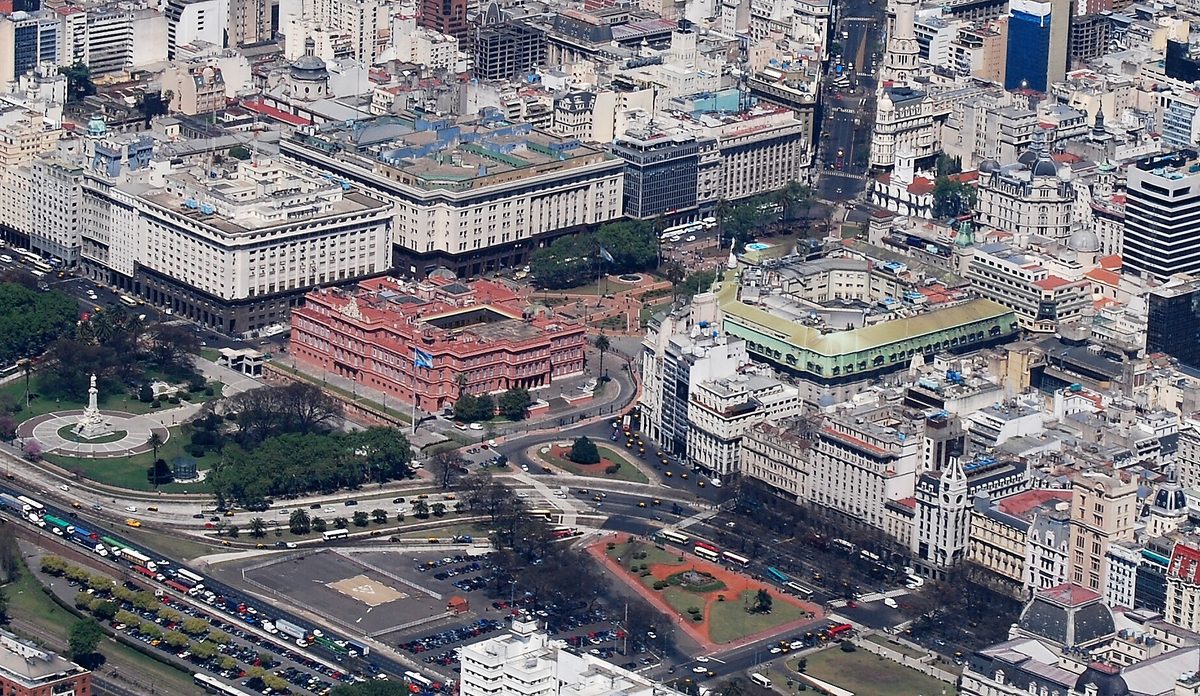
Start where the city did. Morning: begin at Plaza de Mayo, the political heart of Argentina — the pink Casa Rosada, the Cabildo, the cathedral with San Martín’s tomb. Walk west down beautiful Avenida de Mayo, pausing at the Dante-inspired Palacio Barolo (take the tour up for the view), to the Obelisco and the vast Avenida 9 de Julio. This whole stretch is best done with a guided walking tour that puts the history in order.
Lunch & afternoon: coffee and churros at the historic Café Tortoni, then the spectacular Teatro Colón (book the guided tour) and the world’s most beautiful bookshop, El Ateneo Grand Splendid, a short ride north. Evening: ease into the city with a classic tango dinner show — the perfect first-night introduction to the porteño soul.

Short on time? If you only have one day or a layover, this single module — Plaza de Mayo, Avenida de Mayo, the Obelisco, and a tango show — is the city in miniature. See our dedicated one day in Buenos Aires plan.

Day 2: San Telmo & La Boca
Today is about the city’s oldest, most atmospheric barrios. Morning: wander the cobblestones of San Telmo — the antique shops, the wrought-iron Mercado de San Telmo for a market lunch, the faded grandeur. If you are here on a Sunday, this is the day to do it, because the legendary San Telmo feria takes over Calle Defensa with antiques, crafts, and street tango (read the San Telmo guide).
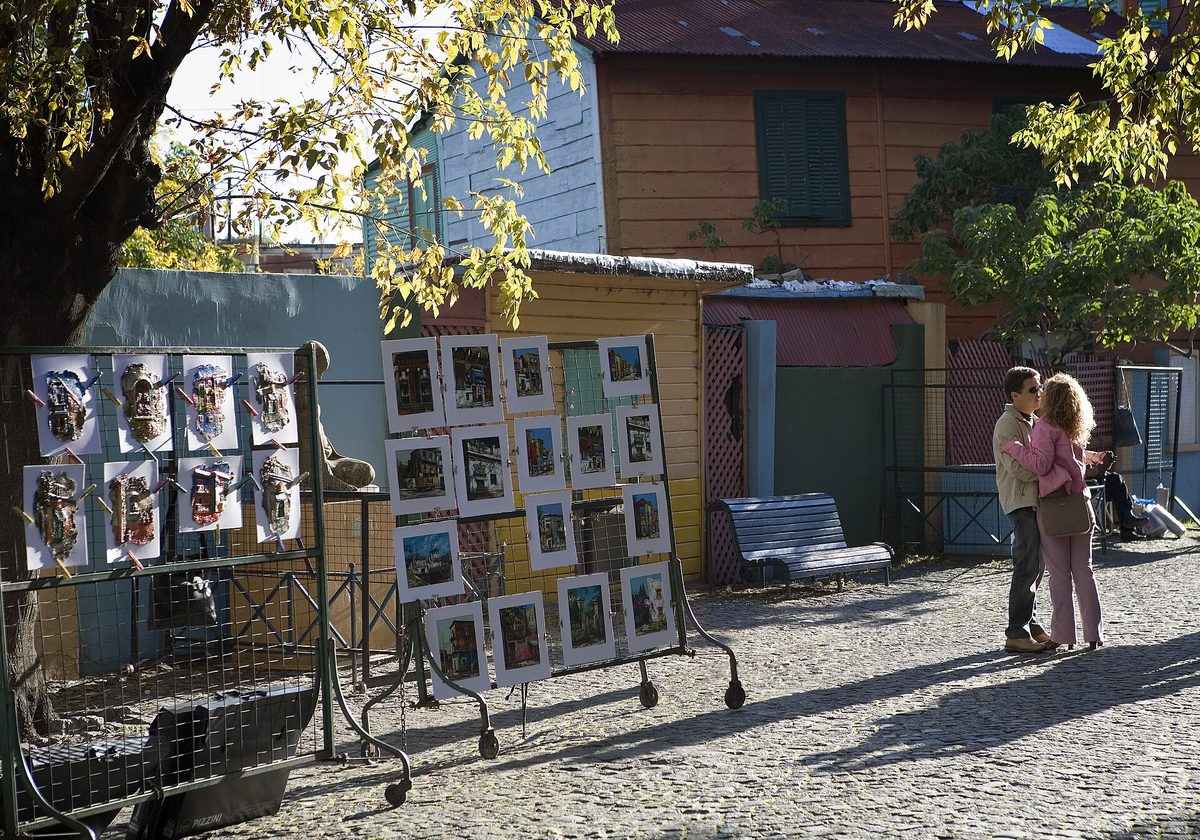
Afternoon: take a taxi or Cabify down to La Boca for the technicolor lane of Caminito and, if you are a football fan, the looming bulk of La Bombonera, Boca Juniors’ stadium (a tour is superb — see the fútbol guide). The crucial rule: stay in the tourist core, visit in daylight, and taxi in and out. Evening: back in San Telmo or Palermo for a proper parrilla dinner — your first real Argentine steak.

Day 3: Recoleta & Palermo
The grand-and-green day. Morning: the extraordinary Recoleta Cemetery, a marble city of mausoleums where Eva Perón is buried (our cemetery guide maps the highlights), followed by the free Museo Nacional de Bellas Artes and the giant Floralis Genérica flower sculpture nearby.
Afternoon: head into Palermo — the Bosques de Palermo parks, the rose garden, the serene Japanese Garden, and the excellent MALBA museum of Latin American art. Then wander Palermo Soho for street art and boutiques. Evening: this is the night to eat and drink well — Palermo has the best restaurants and bars in the country. If it is a Monday, swap dinner-and-bars for the joyous drum show La Bomba de Tiempo.
This is the classic three-day trip. Days 1 to 3 cover the absolute essentials of Buenos Aires; if three days is all you have, you will leave having seen the best of it. Our 3 days in Buenos Aires plan lays it out hour by hour.

Day 4: Puerto Madero, Markets & the City’s Passions
By day four you have earned a more relaxed, choose-your-own day built around the things that make porteños tick. Morning: stroll the waterfront of Puerto Madero, cross Calatrava’s Puente de la Mujer, and escape into the wild, free Costanera Sur ecological reserve right behind it — a startling pocket of nature at the city’s edge.
Afternoon & evening: pick your passion. Football fans should chase a match or a stadium tour; design and history lovers can dig into more of the city’s museums; shoppers can hit the boutiques of Palermo or the leather of Villa Crespo. In the evening, go deeper into tango at an actual milonga (a social dance hall) rather than a show, or simply repeat the thing you loved most so far. This is also the ideal day to slot a food tour if you have not done one. The point of Day 4 is to stop sightseeing and start living the city a little.

Day 5: Escape the City — A Day Trip
With five days or more, give one of them to the world beyond the city. The two easiest and best escapes: Tigre, an hour north by train, where a labyrinth of jungly delta waterways replaces streets and you explore by boat (the Tigre guide has the details); or Colonia del Sacramento, a postcard-perfect colonial town an hour across the river in Uruguay by fast ferry (bring your passport). For a taste of the pampas instead, an estancia day delivers gauchos, horses, and a vast countryside asado. All the options are weighed up in our day trips from Buenos Aires guide. Whichever you choose, you will be back in the city by dinner.
Buenos Aires Itinerary by Length: How to Assemble the Days
Now the easy part — snap the modules together to fit your trip. Each plan below also links to a full, hour-by-hour version.
24 Hours / Layover
Do the first half of Day 1: Plaza de Mayo, Avenida de Mayo, the Obelisco, Café Tortoni, and an early tango show. It is a taste, not a meal, but a memorable one. Full plan: one day in Buenos Aires.
2 Days (a Weekend)
Day 1 (historic center) + Day 2 (San Telmo & La Boca), with a Palermo dinner squeezed into one of the evenings. Time it so Sunday lands on Day 2 for the San Telmo feria. Full plan: 2 days in Buenos Aires.
3 Days (the Classic First Visit)
Days 1, 2, and 3 exactly as written — center, then San Telmo/La Boca, then Recoleta/Palermo. This is the itinerary I recommend to most first-timers on a city break, and it hits every essential. Full plan: 3 days in Buenos Aires.
4 Days (the Ideal Short Trip)
Add Day 4 (Puerto Madero + your passion) to the classic three. This is the length I would choose if I could only have one number — everything essential, at a pace that still feels like a holiday. Full plan: 4 days in Buenos Aires.
5 Days (the Sweet Spot)
The full sequence: Days 1 through 4 in the city, then Day 5 as a day trip to Tigre or Colonia. You get the whole city and a change of scene, without ever feeling rushed. Full plan: 5 days in Buenos Aires.
One Week (7 Days)
Run all five days, then use the extra two to go deeper: a second day trip (do both Tigre and Colonia, or add an estancia), the emerging food barrios of Chacarita and Villa Crespo, a cooking class or a proper milonga night, and — crucially — at least one totally unplanned day to follow your nose. Seven days is where Buenos Aires stops being a destination and starts feeling like a place you know. Full plan: one week in Buenos Aires.

Day Trips Worth Adding to Your Itinerary
If your trip stretches to five days or more, a day out of the city adds a completely different texture. Here are the ones I would prioritize, in order.
Tigre & the Paraná Delta is the easiest and most rewarding — an hour north by the scenic Tren de la Costa or commuter rail, then a launch through a maze of jungle-fringed channels where houses stand on stilts and everything arrives by boat. Browse the Puerto de Frutos craft market and you are home by evening. Colonia del Sacramento, across the Río de la Plata in Uruguay, is a UNESCO-listed colonial gem of cobblestones and bougainvillea, reachable by a one-hour fast ferry — a genuinely different country for the day (passport required). For the gaucho experience, an estancia day on the pampas delivers horses, folk music, and an enormous open-fire asado. And if you have a full week and a flexible budget, the thundering Iguazú Falls are a (long) day or, far better, an overnight by plane. All of these are covered in depth in our day trips guide, with dedicated plans for Tigre and Colonia.
Customize Your Buenos Aires Itinerary by Traveler Type
The modules are a strong default, but here is how I would tweak the plan depending on who you are.
First-timers should follow the day modules in order and not over-reach — four or five days, the core neighborhoods, one tango show, one day trip. Resist the urge to add a sixth thing to each day. Our first-timer itinerary is built exactly for this.
Couples should lean romantic: sunset from the roof of Palacio Barolo, a tango dinner show, a long Palermo dinner, a lazy day in the parks, and a Colonia day trip. Slow it down and build in downtime.
Families with kids should swap some museums for the Palermo parks, the Ecoparque, the planetarium, and a Tigre boat day, and keep mornings gentle. Our Buenos Aires with kids guide reshapes the plan around little legs.
Foodies should bolt a food tour onto Day 1, add the new-wave restaurants of Chacarita to an evening, and devote part of Day 4 to a closed-door puerta cerrada dinner and a wine tasting.
Budget travelers can do almost all of this for very little — the cemetery, the parks, the museums, and the ferias are free or nearly so. Our budget itinerary shows how to see the city for less.
Repeat visitors should skip the headline circuit and spend their days in the emerging barrios — Chacarita, Villa Crespo, Colegiales — eating, drinking, and living like a local, with day trips to fill the gaps.
When to Visit & How It Shapes Your Itinerary
Timing changes the plan in a few practical ways. Spring (September to November) and autumn (March to May) are the loveliest seasons, with mild weather perfect for the long outdoor walking these modules involve — and November brings the purple jacaranda bloom. Summer (December to February) is hot and humid, so shift sightseeing to mornings and evenings and build in shade and air conditioning; it is also when many porteños leave and some restaurants close. Winter (June to August) is mild and quiet, ideal for the indoor riches — cafés, museums, tango, the Teatro Colón season.
Two day-of-the-week notes that genuinely affect sequencing: aim to put Sunday on your San Telmo day for the feria, and know that many museums close on Mondays (though Monday is when La Bomba de Tiempo plays). Our best time to visit guide has the full seasonal breakdown.
Practical Tips for Your Buenos Aires Itinerary
A few logistics that will keep any version of this plan running smoothly.
- Getting around: buy a rechargeable SUBE card on arrival for the Subte (metro) and buses. The Subte is fastest across the center and north (Line D is the tourist workhorse), but remember that neither La Boca nor Puerto Madero has a Subte stop — use a taxi or Cabify for those. For door-to-door, Cabify and inDriver are cheap and easy. Full detail in our getting around guide.
- Embrace the late start. Shops and sights rarely get going before 10–11am, lunch is 1–3pm, and dinner is 9pm onward. Plan leisurely mornings and you will be in sync with the city instead of fighting it.
- Money: cards now generally settle at a fair rate, so you no longer need to carry stacks of cash — just a modest dollar buffer for taxis, tips, and markets. See our travel cost and blue dollar guides.
- Pre-book the essentials: a famous parrilla, a tango show, a Teatro Colón tour or performance, and any football match. Everything else can be decided on the day.
- Stay aware, not anxious: the main risk is petty theft, so keep your phone off the café table and out of sight on the street, especially in La Boca and crowded spots — our travel tips cover it.
- Wear comfortable shoes. These days involve real walking on cobblestones and broken pavement. This is not a heels-and-loafers city by day.
The Ideal Daily Template for Buenos Aires
Whatever neighborhood a given day lands on, the shape of a good Buenos Aires day stays the same — tuned to the city’s late, unhurried rhythm. Use this skeleton and slot the sights in.
- 10–11am — Slow start: a café breakfast of cortado and medialunas; do not set an alarm for sunrise.
- 11am–1pm — First sights: hit the day’s headline attraction while you are fresh and before the afternoon heat.
- 1–3pm — Long lunch: a proper sit-down meal, the porteño way — this is not a city for eating on the move.
- 3–7pm — The main event: the bulk of your sightseeing, walking the barrio at its best.
- 7–9pm — Aperitivo & downtime: a drink, a merienda, a rest at the hotel; the gap before dinner is real, so use it.
- 9pm–late — Dinner & beyond: a long dinner, then tango, bars, or a milonga — the night is when the city truly comes alive.
Notice how much breathing room that leaves. The temptation is to fill every gap; resist it. The spaces are where the best memories tend to happen.
Your 5-Day Buenos Aires Itinerary at a Glance
The whole sweet-spot plan on one screen — copy it, tweak it, and go.
| Day | Focus | Don’t miss | Evening |
|---|---|---|---|
| 1 | Historic center & downtown | Plaza de Mayo, Teatro Colón, El Ateneo | Tango show |
| 2 | San Telmo & La Boca | San Telmo feria, Caminito | Parrilla steak dinner |
| 3 | Recoleta & Palermo | Recoleta Cemetery, MALBA, the parks | Palermo dinner & bars |
| 4 | Puerto Madero & your passion | Eco reserve, football or a milonga | Food tour or milonga |
| 5 | Day trip | Tigre delta or Colonia, Uruguay | Farewell dinner back in the city |
Combining Buenos Aires with the Rest of Argentina
Many travelers arrive in Buenos Aires as the opening chapter of a bigger Argentine or South American trip, and the question becomes not just how to spend your days but how many to give the city before moving on. My advice: give Buenos Aires at least three or four days even on a packed multi-stop trip — it is the cultural heart of the country and deserves more than a transit stop, and almost everywhere else connects through it by air anyway.
The natural add-ons, all an easy flight from the city: the thundering Iguazú Falls in the subtropical north (two days); the Mendoza wine country in the Andean foothills, the home of Malbec (three days); Bariloche and the Lake District for alpine lakes and chocolate (three to four days); the glaciers and trekking of El Calafate and El Chaltén in Patagonia (four-plus days); and the dramatic, colorful canyons of Salta and the Northwest (three to four days). A classic two-week Argentina trip might run four days in Buenos Aires, then Iguazú, then Mendoza or Patagonia. Whatever you bolt on, treat Buenos Aires as your hub: fly in, use the city days to acclimatize and eat well, and loop back through it between regions. Iguazú and the closer escapes are covered in our day trips and excursions guide.
Common Buenos Aires Itinerary Mistakes to Avoid
After planning this trip many times over, these are the missteps I see again and again — all easy to sidestep.
- Cramming too much into each day. This is the big one. Buenos Aires is spread out and meant to be savored; three or four neighborhoods in a day means you will see all of them badly. Two or three things done well beats six done in a blur.
- Ignoring the late rhythm. Booking a 7pm dinner or expecting sights open at 9am sets you up to fight the city. Shift everything later and you will eat, drink, and sightsee alongside locals instead of in empty rooms.
- Putting La Boca on a long, wandering walking day. It is a quick taxi-in, taxi-out daytime stop, not a barrio to stroll into from elsewhere. Pair it with San Telmo and keep it tight.
- Missing the Sunday feria. San Telmo’s Sunday fair is a highlight; landing your San Telmo day on the wrong day of the week is a genuine loss. Plan the week around it.
- Skipping a day trip on a longer stay. If you have five days or more and never leave the city, you miss the delta, the river, and the pampas — some of the trip’s best contrast.
- Over-planning the evenings. Book the few things that need it, then leave space. The best nights here are the unscripted ones.
Adjusting Your Plan for Rain, Sundays & Mondays
A flexible itinerary bends around the calendar and the weather. If it rains, flip an outdoor day for an indoor one: the museums (MALBA, Bellas Artes, the MNBA), the grand café notables, the Teatro Colón, the shopping galleries, and a long lunch are all rainy-day gold. On a Sunday, prioritize San Telmo for the feria and know that some restaurants and shops keep shorter hours. On a Monday, many museums close — so make it a walking, parks, neighborhood, or day-trip day, and save the indoor culture for later in the week (Monday is, however, the one night for La Bomba de Tiempo). Building this kind of give into your plan is the difference between a trip that survives a curveball and one that is derailed by it.
Frequently Asked Questions
How many days do you need in Buenos Aires?
Four days is the realistic minimum to see the essentials at a relaxed pace, and five or six is the sweet spot, leaving room for a day trip. You can get a strong taste in three days, while a full week lets you add day trips and live like a local. Fewer than three and you are choosing favorites.
Is 3 days enough for Buenos Aires?
Three days is enough to see the essentials — the historic center, San Telmo and La Boca, and Recoleta and Palermo — which is why it is the classic first-timer length. You will not have time for a day trip or much downtime, but you will leave having experienced the best of the city.
Is 2 days enough for Buenos Aires?
Two days works for a weekend taste: the historic center on one day, San Telmo and La Boca on the other, with a Palermo dinner in the evening. You will miss Recoleta’s and Palermo’s daytime highlights, so prioritize what matters most to you and save the rest for next time.
What is the perfect Buenos Aires itinerary?
For most people, a five-day plan: Day 1 the historic center, Day 2 San Telmo and La Boca, Day 3 Recoleta and Palermo, Day 4 Puerto Madero plus your passion (football, food, or tango), and Day 5 a day trip to Tigre or Colonia. It covers everything essential without rushing.
What is the best way to structure your days in Buenos Aires?
Plan by neighborhood, not by individual sight — group everything in one barrio into one day to cut transit time. Start late, take a long lunch, sightsee in the afternoon, and eat dinner after 9pm. Build the few must-book things (tango, a top parrilla, football) into your evenings ahead of time.
Is Buenos Aires walkable for sightseeing?
Within a neighborhood, very — you will walk a lot in San Telmo, Recoleta, and Palermo. Between neighborhoods it is genuinely big, so you will mix walking with the Subte, buses, and cheap rideshare. La Boca and Puerto Madero in particular are best reached by taxi.
What should you not miss in Buenos Aires?
The unmissables: Recoleta Cemetery, the San Telmo Sunday feria, colorful Caminito in La Boca, the Teatro Colón, El Ateneo Grand Splendid, a tango show, and a long steak dinner in Palermo. Add a day trip to Tigre or Colonia if you have the time.
How many days do you need for Buenos Aires and a day trip?
Five days is ideal — four for the city and one for a day trip to Tigre or Colonia. You can squeeze a day trip into a four-day trip if you are willing to trim a city day, but five lets you do both comfortably.
What day trips can you add to a Buenos Aires itinerary?
The best are Tigre and its delta (an hour north by train), Colonia del Sacramento in Uruguay (an hour by ferry), and an estancia day on the pampas. With a week, Iguazú Falls is worth an overnight by plane. Any of them slots neatly onto Day 5.
When is the best time to visit Buenos Aires?
Spring (September–November) and autumn (March–May) offer the most comfortable weather for the outdoor walking these itineraries involve. Summer is hot and quieter; winter is mild and great for the city’s indoor riches. Try to land a Sunday on your San Telmo day for the feria.
Is Buenos Aires worth a whole week?
Absolutely. A week lets you cover the entire city, take two day trips, explore the emerging food barrios, and — crucially — keep a day or two unplanned. Buenos Aires rewards a slow pace more than a fast one, and seven days is when it starts to feel like a place you know.
What should I book in advance for my trip?
Reserve a table at any famous parrilla (like Don Julio), a tango show, a Teatro Colón tour or performance, and football tickets — these sell out or require planning. Your hotel should be booked early too, especially in spring. Almost everything else can be decided spontaneously.
Can you see Buenos Aires in a day or a layover?
You can see a meaningful slice: Plaza de Mayo and the Casa Rosada, a walk down Avenida de Mayo to the Obelisco, coffee at Café Tortoni, and an early tango show. It is a highlight reel rather than the full film, but a memorable one on a long layover.
Where should I stay to make my itinerary efficient?
Palermo or Recoleta for most travelers — both are central, safe, and well-connected, putting Day 3 on your doorstep and the rest a short ride away. Pick one base and stay put unless you are in town for a week or more. See our where-to-stay guide for the full breakdown.
How much should I budget for a Buenos Aires itinerary?
Buenos Aires is excellent value for foreign visitors. Outside of accommodation, many travelers spend roughly $40–$80 a day on food, transport, and sights, with plenty of free attractions (the cemetery, parks, museums, ferias) to keep it lower. Steak dinners, tango shows, and day trips are the splurges. See our travel cost guide for a full breakdown.
Is Buenos Aires good for solo travelers?
Very — it is sociable, walkable, and safe with normal precautions, with a strong hostel scene, group tango lessons, food tours, and communal closed-door dinners that make it easy to meet people. The late, lively social culture suits solo travel well; just keep the usual city sense about your phone and bag.
Can I build rest days into the plan?
Absolutely, and you should on any trip of five days or more. The modules are not a forced march — swap any afternoon for a park, a café, or the hotel pool without guilt. Buenos Aires rewards downtime, and a half-day of doing nothing in a good barrio is itself one of the city’s pleasures.
What is the best order to visit Buenos Aires neighborhoods?
Start central and historic (Plaza de Mayo and downtown) to get your bearings, then do San Telmo and La Boca together, then Recoleta and Palermo together, and save Puerto Madero and any day trip for later in the trip. Grouping adjacent barrios on the same day is the key to an efficient route.
Final Thoughts
The best Buenos Aires itinerary is not the one that packs in the most — it is the one that gives the city room to surprise you. Use these modules as scaffolding, then let yourself wander off them: linger an extra hour in that café, follow the sound of a milonga down a side street, say yes to the asado invitation. Sort the few bookings that matter, group your days by barrio, start late, eat well, and leave a little space for the unplanned. Do that, and however many days you have, you will go home already plotting your return. When you are ready to flesh out each day, our guides to things to do, the city’s neighborhoods, and where to stay are ready when you are.
Photo Credits
Every image is used under its respective Creative Commons or public-domain license, sourced from Wikimedia Commons:
- Buenos Aires aerial panorama. Photo by Roberto Fiadone, CC BY-SA 4.0 — via Wikimedia Commons.
- Plaza de Mayo. Photo by DerHexer, CC BY-SA 4.0 — via Wikimedia Commons.
- The Rosedal, Palermo. Photo by Alex Proimos, CC BY 2.0 — via Wikimedia Commons.
- Caminito, La Boca. Photo by DerHexer, CC BY-SA 4.0 — via Wikimedia Commons.
- The Tigre Delta. Photo by Loctus31, Public domain — via Wikimedia Commons.
- Colonia del Sacramento, Uruguay. Photo by Fredlyfish4, CC BY-SA 4.0 — via Wikimedia Commons.
- Puente de la Mujer, Puerto Madero. Photo by Maximiliano Buono, CC BY-SA 2.0 — via Wikimedia Commons.
- The Obelisco & Avenida 9 de Julio. Photo by Alekino, Public domain — via Wikimedia Commons.