Last updated: June 2026 · Written by the Buenos Aires Tourism editorial team
Getting a working SIM card the moment you land in Argentina can make or break your first few hours in the country — and the good news is that in 2026 tourists have better options than ever. As a practical matter, the argentina sim card tourist landscape now splits cleanly between buying a local prepaid SIM from one of Argentina’s three main carriers and activating an international eSIM before you even board your flight.
This guide covers both paths in full: which carriers work best, where to buy, what registration actually requires, realistic costs in 2026, and the five-minute eSIM route that many tourists now prefer. For the bigger picture on getting around and staying safe once you are connected, see our complete Buenos Aires travel tips guide.
Physical SIM vs. eSIM: the 2026 quick comparison
| Factor | Local prepaid SIM | Tourist eSIM (Airalo, Holafly, etc.) |
|---|---|---|
| Where you buy | Airport kiosk, carrier store, kiosco | Online before departure |
| Registration | Passport required in-store | None — instant QR scan |
| Typical data | 3–15 GB for 30 days | 1 GB–unlimited, varies by plan |
| Approximate cost | Roughly USD 8–20 | Roughly USD 6–35 |
| Hotspot/tethering | Usually yes (check plan) | Airalo yes; Holafly capped at 500 MB/day |
| Best for | Long stays, heavy data users | Short trips, hassle-free arrivals |
Argentina’s three main carriers: Claro, Movistar and Personal
Argentina’s mobile market is dominated by three carriers. All three cover Buenos Aires and the major tourist corridors (Mendoza, Córdoba, Patagonia, Iguazú) well on 4G LTE as of mid-2026. Coverage gaps appear mainly in remote Patagonian and Andean areas, where Claro edges out the others.
Claro
Claro is generally regarded as Argentina’s strongest network, especially outside Buenos Aires. Prepaid tourist packages range from around 2 GB to 15 GB of data with 30-day validity; as of mid-2026 expect to pay roughly ARS 4,000–15,000 (check current rates, as peso-denominated prices shift). You can top up online with an international card, which is handy if you run low mid-trip. Claro stores are easy to find citywide and at Ezeiza.
Personal (Flow)
Personal — now branded Personal Flow — is the only carrier with a dedicated store inside Ezeiza International Airport (EZE), located on the second floor of the arrivals hall opposite check-in desk 40, open roughly 09:00–22:00. It accepts card payments only. Personal also lets you purchase and activate an eSIM directly from their app or website, making it the most seamless local-carrier option for eSIM-compatible phones. Plans are comparable to Claro in price and data.
Movistar
Movistar rounds out the big three with solid Buenos Aires and urban coverage. Its tourist data bundles typically sit in the 3–6.5 GB range for 30 days. Top-up (“recarga”) is available via the Movistar app, ATMs, and kioscos displaying the “recarga acá” sign. If you are staying mainly in the city, Movistar is a perfectly workable choice.
All three carriers require passport registration for any prepaid SIM — see the section on registration below. None require a DNI (the Argentine national identity document); your passport is sufficient.
Where to buy an argentina sim card as a tourist
At Ezeiza Airport (EZE) — the easiest option
If you land at Ministro Pistarini International Airport (Ezeiza, EZE), the quickest move is to buy your SIM before leaving the arrivals hall. Personal Flow has the main dedicated store on the second floor. Some kiosks in Lobby A on the ground floor also sell prepaid SIMs from multiple carriers. Lines can form after busy international flights, so build in 15–20 minutes. Bring your passport — you will need it.
Aeroparque Jorge Newbery (AEP)
If you arrive on a domestic connection or a regional flight at Aeroparque (the city airport), SIM options are thinner; the airport has some kiosks but the selection is more limited. Better to sort it at Ezeiza if possible, or head to a carrier store in the city.
Official carrier stores in Buenos Aires
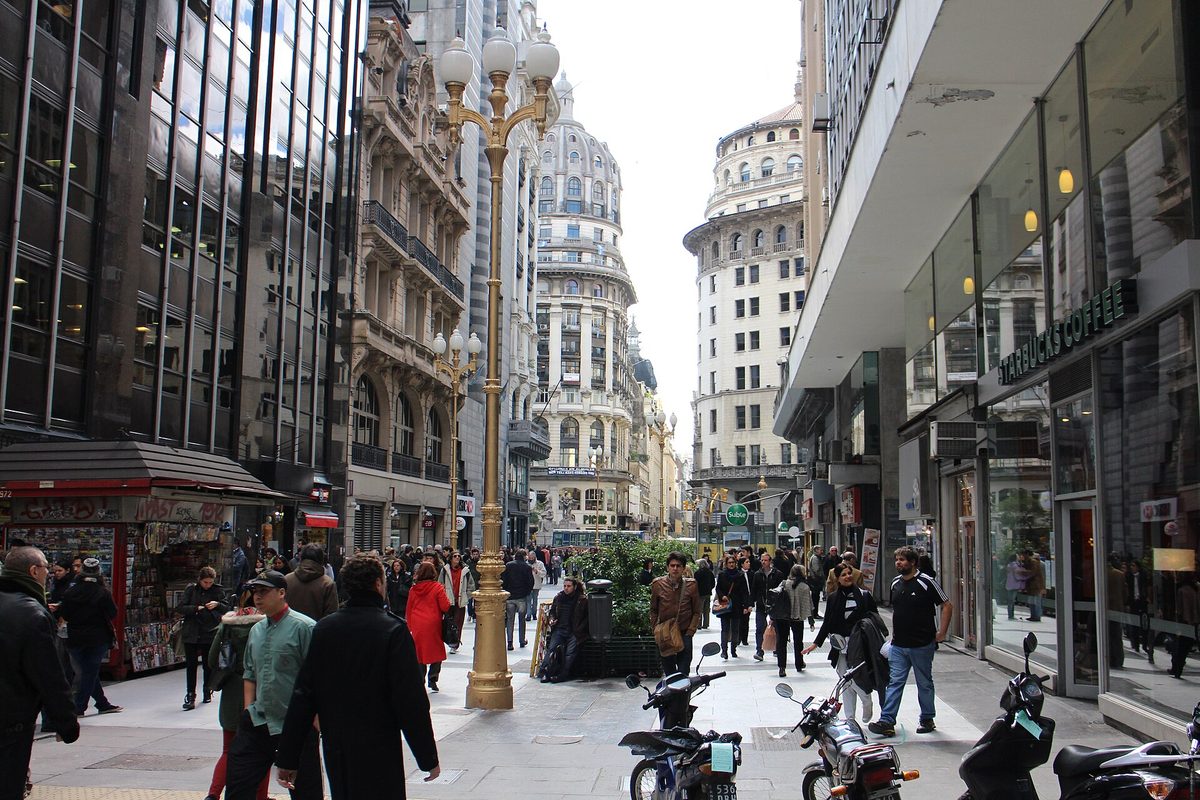
All three carriers have flagship stores along Calle Florida (the pedestrian shopping street in the Microcentro) and in major shopping centres like Abasto, Dot Baires and Alto Palermo. These stores handle tourist registrations efficiently and staff often speak basic English. Expect to wait 10–20 minutes during peak hours.
Kioscos and locutorios
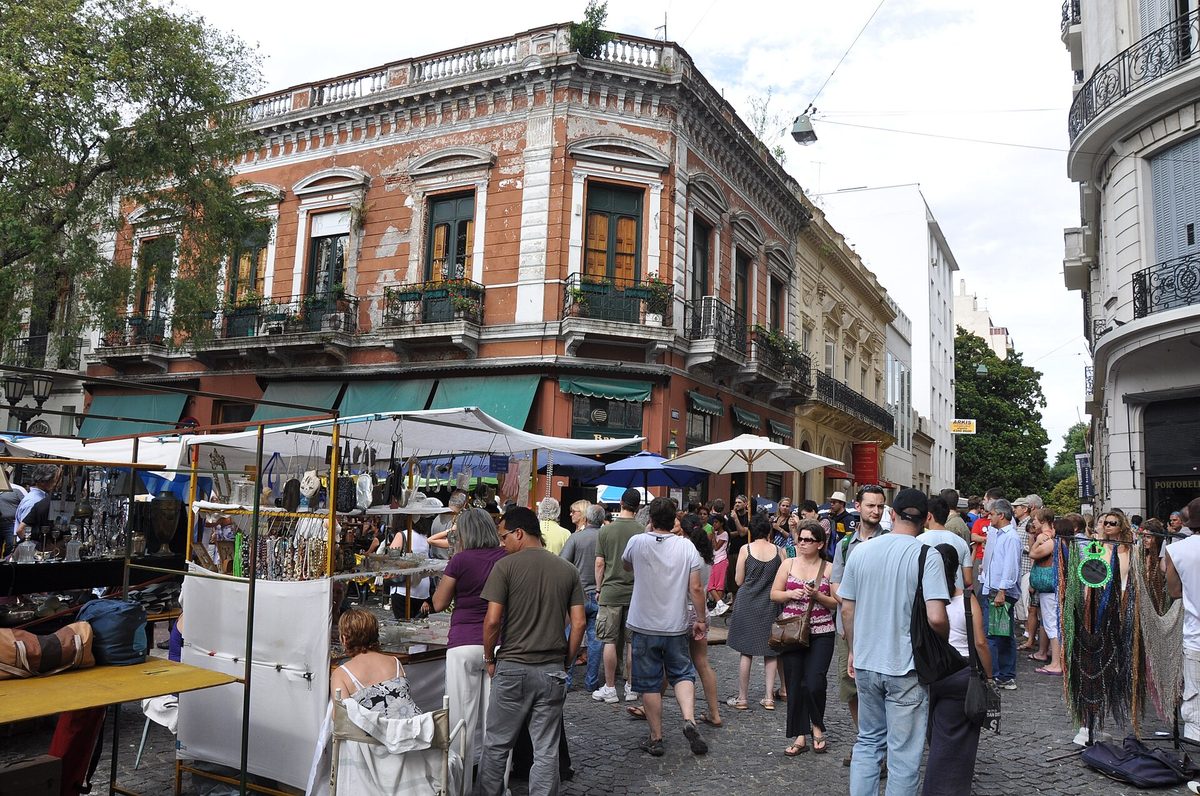
The ubiquitous corner kioscos (small convenience stores) sell prepaid top-up vouchers for all three carriers, and many also sell SIM cards. Locutorios — small phone-and-internet shops — are another option, particularly in neighbourhoods like San Telmo, Once and Congreso. Staff at kioscos will simply hand you the SIM; for the official registration step you may still need to activate through the carrier app or a carrier store. For first-time buyers, starting at an official store avoids confusion.
SIM card registration: do tourists need a DNI?
Argentine law requires SIM card registration for all users, including tourists. The good news: you do not need a DNI. Your passport is the only document required. The process at a carrier store typically takes under 10 minutes:
- Hand over your passport (they scan or note your passport number and nationality).
- Complete a short digital registration form — staff usually do this for you.
- Receive your SIM and activation confirmation, usually within 5–10 minutes.
Some travellers report that smaller kioscos skip the formal registration step and just sell you a SIM — this creates a grey-area situation where the SIM may work initially but could be deactivated later. To avoid hassle, use an official carrier store or airport outlet for your first SIM purchase.
If you would rather skip registration entirely, an international tourist eSIM is the cleaner solution.
eSIM for Argentina: the easier path for most tourists in 2026
If your phone supports eSIM (most phones released since 2019 do, including all recent iPhones, Google Pixels, Samsung Galaxy S-series and many mid-range Androids), buying an international tourist eSIM before you travel is genuinely the easier option. You buy online, download a QR code, scan it, and your phone is live the moment you land — no queue, no store, no passport form.
The two most popular providers for Argentina in 2026 are Airalo and Holafly, but several others (Nomad, Saily, Yesim, eSIM.net) also cover Argentina well. Here is how the main two compare:
Airalo
Airalo tends to be the budget leader: plans for Argentina start at around USD 6 for 1 GB / 7 days, with larger options scaling up. Airalo plans almost always include hotspot/tethering, making them good for working travellers who need to connect a laptop. Data limits apply, so it suits people who monitor their usage. The Airalo app is easy to use and supports plan top-ups without switching SIM. Check current plan pricing at airalo.com, as offers change frequently.
Holafly
Holafly sells unlimited-data plans for Argentina (one of the few providers that does), which appeals to travellers who want to stream maps, video calls and social media without tracking gigabytes. Hotspot is available but capped at around 500 MB per day of tethering, so it is less useful for heavy laptop users. Plans for Argentina currently run roughly USD 17–35 depending on duration — verify at esim.holafly.com before purchase. Holafly holds a Trustpilot rating of around 4.6 stars as of mid-2026.
Which should you choose?
If you want simplicity and unlimited data for phone use: Holafly. If you need hotspot for a laptop or want a cheaper short-trip option: Airalo. For stays longer than two weeks with heavy data use, a local carrier SIM from Personal, Claro or Movistar may work out cheaper — but factor in the registration friction.
Whatever you choose, activate your eSIM before boarding — you will want working navigation the moment you clear customs and need an Uber or to figure out getting around Buenos Aires.
Topping up a local SIM in Buenos Aires
If you buy a local prepaid SIM and need more data or credit mid-trip, topping up is straightforward:
- Carrier apps: Personal, Claro and Movistar all have apps that accept international credit cards. This is the easiest method once you are set up.
- Kioscos: Look for signs saying “recarga acá” or the carrier’s logo. Ask for a recarga (top-up) for your network. You pay in pesos and the credit appears within minutes.
- Official stores: Staff can process a top-up directly at the counter.
- ATMs: Some Argentine ATMs (particularly Banelco network) offer mobile top-ups as a menu option.
Note that since Argentina unified its exchange rate in 2025, peso-denominated prices for top-ups will be close to international card rates — there is no longer a meaningful advantage to paying in cash at a kiosco vs. paying by card in an app. For the full picture on Argentina’s currency situation, see our guide to Buenos Aires practical travel tips.
Practical arrival checklist: connectivity on day one
Here is the step-by-step I recommend for a smooth arrival:
- Before you fly: Check whether your phone supports eSIM (Settings → Cellular/Mobile → Add eSIM or similar). If yes, buy and install your eSIM now so it is ready to activate on landing.
- At Ezeiza arrivals: If buying a local SIM, head to the Personal Flow store (second floor, arrivals hall) or the Lobby A kiosk. Have your passport out.
- Unlock your phone: Confirm before travel that your handset is SIM-unlocked (not carrier-locked). Most phones sold outright or after the contract period are unlocked; if in doubt, contact your home carrier.
- Set APN if needed: Occasionally local SIMs require manual APN settings for data. Staff at carrier stores will configure this for you; for eSIMs the APN is usually set automatically.
- Download offline maps: Even with a working SIM, download Google Maps or Maps.me for Buenos Aires offline before you arrive. It is a safety net if data fails underground or in a fringe area.
- Keep Wi-Fi as backup: Buenos Aires has decent café and hotel Wi-Fi. If your SIM has issues, most cafés are happy for you to connect while ordering a coffee.
Once you are connected, getting around is much easier. Our guides to Uber in Buenos Aires and the Buenos Aires Subte (metro) guide both assume you have working mobile data for app access and QR payments.
Common mistakes tourists make with Argentine SIM cards
A few pitfalls come up again and again in traveller forums. Avoid these and you will be fine:
- Assuming roaming is cheaper: It almost never is. Even “international day passes” from your home carrier typically cost USD 10–15 per day for limited data. A local SIM or tourist eSIM beats this for any trip longer than two or three days.
- Buying a SIM from a random street seller: Stick to official carrier stores, airport outlets or a known kiosco chain. Unofficial sellers sometimes provide SIMs that are already registered to someone else, which is a legal grey area and can get the number blocked.
- Not checking eSIM compatibility before flying: Some older phones and some carrier-locked handsets do not support eSIM. Verify before you leave — you cannot always find out at the airport.
- Forgetting to keep your home SIM safe: If you swap to a physical Argentine SIM, store your home SIM somewhere you will not lose it. A folded piece of paper in your wallet works fine.
- Ignoring phone-snatch risk while using your phone: Buenos Aires has a real petty-crime issue around phone snatching in crowded areas. Be aware of your surroundings when navigating on screen in busy spots like Florida, Once and crowded buses. Our guide to Buenos Aires tourist scams covers this in detail, and for a broader safety picture read our honest Buenos Aires safety guide.
Data use tips for Buenos Aires
Buenos Aires is a big city and you will use more data than you expect if you are navigating constantly, using Uber and streaming music. A few practical habits help stretch your plan:
- Download your accommodation neighbourhood on Google Maps before leaving Wi-Fi.
- Uber, Cabify and the BA Cómo Llego transit app are the highest data drains — use them on your SIM plan, but download offline layers where possible.
- Most restaurants, cafés and hostels have reliable Wi-Fi; use it for heavy streaming.
- WhatsApp is the primary local messaging app. Once you have an Argentine number, locals will contact you there. It is light on data.
For a full two-week trip with moderate navigation use, 5–8 GB is a comfortable local SIM budget. Light users may manage on 3 GB; heavy users (constant video, hotspot for laptop) should look at 10 GB+ or an unlimited eSIM plan.
Being well-connected also helps you travel more safely. Check out our full overview of Buenos Aires travel tips and safety for how connectivity, etiquette and scam awareness all tie together. And before you go, our companion piece on Argentina travel insurance is worth a read — a good policy covers phone theft, which is a real risk in any large South American city.
FAQ: Argentina SIM cards for tourists
Can I buy a SIM card at Ezeiza airport?
Yes. Personal Flow has a dedicated store on the second floor of Ezeiza arrivals hall, open roughly 09:00–22:00, card payments only. Some kiosks in Lobby A also sell SIMs. Bring your passport. Expect a short wait after busy international flights.
Do I need a DNI to buy a SIM card in Argentina?
No. Tourists register with their passport only. No DNI, visa or proof of address is required. The registration takes under 10 minutes at an official carrier store.
Which carrier is best for tourists in Argentina?
Claro has the broadest rural and Patagonian coverage. Personal (Flow) is most convenient at Ezeiza and offers a local eSIM option. Movistar is solid for city-focused stays. For short trips, international eSIM providers like Airalo or Holafly are often easier than any local carrier. Check current plan prices before deciding — they shift regularly.
Is an eSIM better than a physical SIM for Argentina?
For most tourists visiting for two weeks or less: yes. An eSIM from Airalo or Holafly installs before you fly, activates automatically on landing, needs no passport registration and avoids queues. The trade-off is that hotspot/tethering may be capped (Holafly) or data-limited (Airalo). For longer stays or heavy data use, a local SIM from Claro or Personal may be cheaper.
How do I top up my Argentine SIM card?
Use the carrier’s own app (accepts international cards), visit any kiosco displaying “recarga acá,” or go to an official store. Claro, Movistar and Personal all have simple top-up apps. For eSIMs from international providers, top up directly through their app.
What about etiquette when using your phone in Buenos Aires?
Locals use WhatsApp for everything, so having data is essential for communication. Be discreet in crowded areas — phone snatching is the most common tourist crime in the city. For the full picture on local customs, read our Buenos Aires etiquette guide.
Final thoughts
In 2026 staying connected as a tourist in Argentina is easier than it has ever been. If you have an eSIM-compatible phone, buy a Holafly or Airalo plan before you board and land with data already working — it genuinely changes the arrival experience. If you prefer a local SIM, Personal Flow at Ezeiza is the most convenient airport option, and any of the three main carriers will serve you well in Buenos Aires and along the major tourist routes. The main thing to do is not rely on expensive home-carrier roaming: Argentina is simply too affordable a destination to overpay for data.
For everything else you need before your trip — safety, scams, getting around, what to pack — our complete Buenos Aires travel tips guide has you covered.
Photo credits
- San Telmo street market (Dorrego Square), Buenos Aires: Jorge Láscar from Australia / CC BY 2.0 via Wikimedia Commons
- Avenida de Mayo, Buenos Aires: Roberto Fiadone / Public domain via Wikimedia Commons
- Retiro railway station, Buenos Aires: Galio / Public domain via Wikimedia Commons