Last updated: June 2026 · By the Buenos Aires Tourism editorial team
The first time I walked into the Reserva Ecológica, I’d been in Buenos Aires for four days and my ears were ringing from traffic. Twenty minutes later I was standing beside a still lagoon, watching a southern screamer pick its way through the reeds while the glass towers of Puerto Madero shimmered on the water. The city was right there—and somehow completely gone. That contrast is the whole point, and it’s why I send every visitor here.
What is the Buenos Aires ecological reserve?
The buenos aires ecological reserve—officially the Reserva Ecológica Costanera Sur—is a 350-hectare wetland park on the Río de la Plata, right beside downtown. It’s the city’s largest, most biodiverse green space, with flat walking and cycling trails, three lagoons, and more than 300 bird species. Entry is free, and it sits a 10-minute walk from Puerto Madero.

Here’s the part that always surprises people: this whole place is accidental. In the late 1970s the city dumped rubble from demolished buildings into the river to reclaim land for a development that never happened. Nature moved in instead. Reeds took root, water pooled into lagoons, birds arrived, and by 1986 the abandoned landfill had been declared a nature reserve. Today it’s recognised as a Ramsar wetland of international importance and a BirdLife International Important Bird Area—not bad for a failed parking lot.
If you’re mapping out your days, I’d file this alongside the other open-air highlights in our guide to the best things to do in Buenos Aires. It pairs especially well with a slow Puerto Madero afternoon, and it’s one of the genuinely great free things to do in Buenos Aires when your wallet needs a rest after all that steak and Malbec.
Why go (and who it’s for)
Go for the quiet. Go for the birds. Go for the unbeatable view of the skyline framed by tall grass. The reserve works for almost everyone: runners and cyclists get flat, car-free kilometres; birdwatchers get one of South America’s best urban hotspots; families get space to roam; and frazzled sightseers get a reset that costs nothing.
It’s not a manicured botanical garden—if that’s more your speed, the formal lawns and rose gardens covered in our roundup of parks and gardens in Buenos Aires might suit you better. The Reserva is wilder, dustier, and more about wide horizons than tidy flowerbeds. That’s exactly what I love about it.
Walking and cycling the trails
The trail network is wide, flat, and mostly gravel—easy underfoot and friendly to strollers, road bikes, and tired legs alike. The main loop hugging the three lagoons and the riverfront runs roughly 6 kilometres, and a relaxed full circuit takes me about two hours with plenty of stops to stare at things. If you’re short on time, even a 45-minute out-and-back from the northern entrance gives you reeds, water, and that skyline view.

On foot
Walking is the way to actually see the place. The paths are well signed, and interpretive boards point out habitats and species along the way. Wear closed shoes—the gravel gets dusty and the grass edges can hide mud after rain. There’s very little shade out on the open stretches, so a hat earns its keep.
By bike
Cycling is hugely popular here, and the flat terrain makes it effortless. You can bring the city’s yellow Ecobici share bikes most of the way and lock up near the entrance, or rent from one of the kiosks along the Costanera. Keep your speed gentle—these are shared paths, and pedestrians, dogs, and the occasional plumed lapwing all have right of way. For getting to the reserve in the first place, our guide on getting around Buenos Aires breaks down the bike-share system, the Subte, and which buses run down Paseo Colón.
Birds and wildlife
This is the headline act. More than 300 bird species have been recorded inside the reserve, and on a good morning you don’t need to be an expert to rack up dozens. When the lagoons are full, the water fills with coots, gallinules, swans, and rafts of rosy-billed pochards. The reeds hide the dramatic southern screamer, while guira cuckoos and the flame-coloured red-crested cardinal flit through the scrub.

It’s not just birds. Keep your eyes down and you’ll spot lizards basking on the path, turtles hauled out on logs, and—if you’re lucky—the big black-and-white tegu lizard lumbering across the trail. Coypu (a large native rodent) paddle in the channels at dusk. For serious birding, come at dawn, bring binoculars, and grab the printable eBird checklist before you go. This is, hands down, the best spot for birdwatching in Buenos Aires without leaving the city limits.
Free guided nature walks usually run on weekends and holidays, and on the Friday closest to each full moon there’s a magical night walk—check the reserve’s current schedule, as times shift seasonally.
The skyline and river views
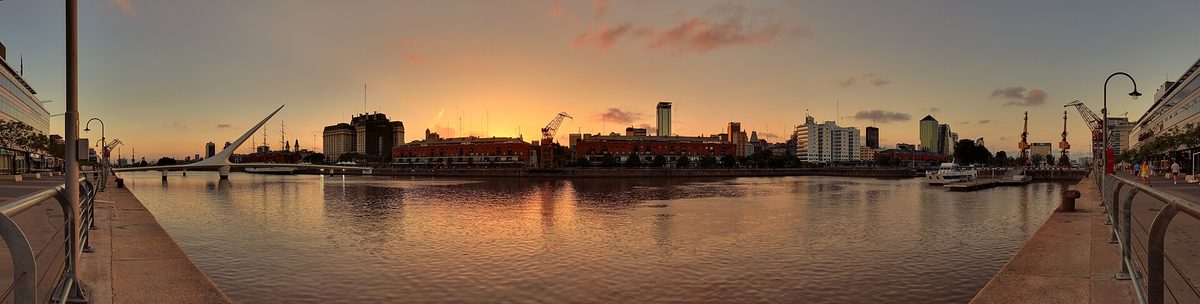
For me, the single best reason to come is the view. From the lagoon edges, the towers of Puerto Madero and the wider Buenos Aires skyline rise straight out of the wetland, and on a calm day they double in the water. Walk all the way to the eastern riverfront and the Río de la Plata opens up so wide it reads as the sea—a flat brown horizon with no far bank in sight. Locals fish, couples picnic, and at golden hour the whole place glows.
Sunset is the move. Time your loop so you’re near the water as the light drops; the skyline lights flick on and the sky over the river turns peach and violet. Just don’t dawdle past closing—the gates lock at dusk, and the reserve isn’t a place to be after dark.
Visiting the reserve: hours, getting there, what to bring
A few practical things make the difference between a great visit and a hot, thirsty slog. Here’s what I tell friends.
Opening hours and closed days
The reserve is usually open Tuesday to Sunday and closed on Mondays, with longer hours in summer (roughly 8am–7pm) and shorter ones in winter (roughly 8am–6pm). It also closes during heavy rain, when the trails flood. Hours and closed days do change, so check the reserve’s current information before you make the trip—Monday closures catch a lot of visitors out.
How to get there
The reserve has two entrances along its western edge: the northern gate near Viamonte, and the southern gate near Avenida Brasil and the Lola Mora fountain. From the centre it’s a short taxi or a 10–15 minute walk through Puerto Madero. Plenty of buses run down Paseo Colón and Avenida Alem nearby, and it’s an easy cycle. If you’re staying close to the action, our guide to the city’s neighbourhoods shows just how walkable Puerto Madero, San Telmo, and the centre are from here.
What to bring
- Water and snacks — there are no shops or cafes inside, so stock up first.
- Sun hat and sunscreen — shade is scarce on the open trails.
- Insect repellent — the wetland means mosquitoes, especially in warm months and near the lagoons.
- Closed, comfortable shoes — gravel and dust, with mud after rain.
- Binoculars — even cheap ones transform the birdwatching.
Combining with Puerto Madero and the Costanera
Don’t treat the reserve as a standalone trip—build an afternoon around it. The classic move is to pair it with the carritos, the legendary food trucks lined up along the Costanera Sur just outside the southern gate. Order a choripán—a charcoal-grilled chorizo split and loaded with chimichurri—and eat it standing up by the river like everyone else. It’s one of the best-value meals in town; our roundup of where to eat in Buenos Aires has more on the city’s grill culture.

From the southern gate you’re also a short stroll from Puerto Madero’s redbrick docks and the sail-like Puente de la Mujer, all polished restaurants and waterfront promenades. A reserve walk plus a choripán plus a wander across the bridge is a near-perfect half-day—and it slots neatly into a relaxed Sunday in Buenos Aires, when locals flood the paths and the carritos are at full smoky tilt. From there it’s a quick hop to cobblestoned Caminito in La Boca if you want to keep the day going.
Reserva Ecológica at a glance
| Detail | What to expect |
|---|---|
| Cost | Free |
| Open | Usually Tue–Sun; closed Mondays & in heavy rain (check current) |
| Time needed | 1–2 hours for the main loop |
| Main loop | ~6 km, flat gravel, stroller- and bike-friendly |
| Best for | Birdwatching, running, cycling, skyline views, picnics |
| Best time | Early morning for birds; sunset for the skyline |
| Bring | Water, hat, sunscreen, repellent, binoculars |
Frequently asked questions
Is the Buenos Aires ecological reserve free?
Yes. Entry to the Reserva Ecológica Costanera Sur is completely free, and so are the guided nature walks on weekends and holidays. There’s no ticket booth and no booking required for general entry—just turn up during opening hours. It’s one of the best free outdoor experiences in the city, which is partly why I recommend it so often.
Is the ecological reserve open on Mondays?
Usually not. The reserve is typically open Tuesday to Sunday and closed on Mondays, and it also shuts during heavy rain when the trails flood. Seasonal hours mean it stays open later in summer than in winter. Because these details shift, check the reserve’s current schedule before you go—a wasted Monday trip is the most common mistake visitors make.
How long do you need at the reserve?
Plan on one to two hours. A brisk circuit of the main loop takes about 90 minutes, but if you stop for birds, photos, or a riverside sit-down, it easily fills a half-day—especially once you add a choripán from the food trucks and a wander into Puerto Madero next door. Early birds and serious photographers often stay longer.
Is it safe to visit the reserve?
During opening hours it’s a safe, well-used park full of runners, families, and cyclists. Stick to the marked trails, carry water, and don’t linger after the gates close at dusk, as the area empties out fast. As anywhere in the city, keep an eye on your belongings. For more general pointers, see our Buenos Aires travel tips.
When is the best time to visit for birds?
Early morning, soon after the gates open, is prime time—birds are most active and the light is soft for photos. Spring and autumn add migratory species to the resident lineup. Weekdays are quieter than weekends. If you’re planning your trip around the seasons, our guide to the best months to visit has the full picture.
Final thoughts
The Reserva Ecológica is my favourite piece of evidence that Buenos Aires never quite does what you expect. A failed land grab became a wetland; a landfill became a refuge for 300-plus bird species; and a 10-minute walk from the financial district drops you into something close to wilderness. It’s free, it’s flat, it’s beautiful, and it rewards you whether you come to run, to watch birds, or just to breathe.
Give it a morning or a late afternoon, bring water and a hat, and let the city fall away. When you’re ready for more open-air ideas, head back to our full guide to things to do in Buenos Aires—the reserve is just the start of how green this city can feel.
Photo credits
- Wetland lagoon with the Puerto Madero skyline reflected, Reserva Ecológica Costanera Sur — photo by Horacio Patrone, CC BY-SA 4.0, via Wikimedia Commons.
- Tree-lined walking and cycling trail through the reserve — photo by Cesar Perez, CC BY-SA 4.0, via Wikimedia Commons.
- Rosy-billed pochard on a lagoon, a birdwatching highlight at Costanera Sur — photo by Vince Smith, CC BY-SA 2.0, via Wikimedia Commons.
- Puente de la Mujer at sunset in Puerto Madero, beside the reserve — photo by Maximiliano Buono, CC BY-SA 2.0, via Wikimedia Commons.