Last updated: June 2026 · Written by the Buenos Aires Tourism editorial team after many slow, broke, happy weeks wandering the city on foot.
Some of my favourite days in Buenos Aires have cost me almost nothing: a coffee, a bus fare, and a whole day of grand plazas, riverside trails and open-air tango under the trees. This is a city that performs for free if you know where to stand.
The best free things to do in Buenos Aires
The best free things to do in Buenos Aires are the ones locals do every weekend: take a tip-based walking tour of the historic centre, browse the San Telmo Sunday fair, wander Recoleta Cemetery and the Reserva Ecologica, stroll the parks of Palermo, and catch free concerts and museums. Most cost nothing beyond a bus fare and your own two feet.

This guide is the rundown I give friends arriving on a tight budget — what is genuinely free, what is “free with a catch” (looking at you, tip-based tours), and how to chain it all into full days without spending. It leans into the outdoor, neighbourhood and cultural side of the city. For the complete picture of paid sights too, our main guide to things to do in Buenos Aires is the companion piece to this one. And because Argentine prices move fast, treat any figure below as a rough 2026 guide and check current info before you go.
At a glance: free things to do, by mood
Here is the short version — pick by how you feel that morning. Everything in this table is free or pay-what-you-wish.
| If you want to… | Go to | Best on |
|---|---|---|
| Get your bearings | A tip-based walking tour from Plaza de Mayo | Any day, morning |
| People-watch and bargain-hunt | San Telmo Sunday fair on Defensa | Sunday |
| Be among monuments | Recoleta Cemetery & Plaza de Mayo | Any day |
| Breathe and walk | Reserva Ecologica or the Bosques de Palermo | Weekend daytime |
| See art for nothing | Museo Nacional de Bellas Artes | Tue–Sun |
| Dance with locals | La Glorieta open-air milonga, Belgrano | Sun evening |
Start with a tip-based walking tour
If you do one “free” thing on your first morning, make it a walking tour. Several companies — Buenos Aires Free Walks and others — run daily tours that work on a pay-what-you-want basis: no upfront fee, you simply tip what you felt it was worth at the end. They usually leave from a landmark you cannot miss, like Plaza de Mayo or the Obelisco, and cover the historic centre, San Telmo or Recoleta in around two to two-and-a-half hours.
Two honest caveats. First, “free” means tip-based, not zero: a fair tip runs somewhere around US$5–15 a person depending on the tour and how much you loved it, and the guides genuinely live on it. Second, the quality rests entirely on your guide, so read recent reviews and book ahead in high season. Done right, it is the best orientation money barely buys — and a natural primer for our deeper Buenos Aires walking tour of the historic centre.
Grand plazas and monuments that cost nothing
So much of central Buenos Aires is simply out in the open, free to walk through and gawp at. Start at Plaza de Mayo, the square where the country’s history happens: the rose-pink Casa Rosada at one end, the Cabildo and Metropolitan Cathedral around it, and the Pirámide de Mayo in the middle. You can admire the Casa Rosada’s famous balcony from the square for nothing; free guided tours of the interior run on weekends if you book ahead on the government site.
From there the free sightseeing keeps going. Walk west up the grand Avenida de Mayo to the Congreso building, look up at the floodlit Obelisco on Avenida 9 de Julio, and wander into the El Ateneo Grand Splendid — a 1919 theatre turned bookshop where browsing novels from the old box seats costs nothing at all. Here is how to visit El Ateneo Grand Splendid. To string these landmarks together on your own, it helps to know how the central Buenos Aires neighbourhoods fit together.
Recoleta Cemetery and its leafy surrounds
Recoleta Cemetery is the city’s number-one attraction and an open-air museum of marble mausoleums, weeping angels and art-nouveau domes, with Eva Perón’s tomb tucked among them. A heads-up that catches people out: entry is no longer free for visitors — non-residents now pay around US$15 at the gate (card only). What stays free is everything around it: the leafy Plaza Francia, the weekend craft fair, the Centro Cultural Recoleta and the giant Floralis Genérica flower sculpture nearby, whose steel petals open by day and close at night.
Green spaces and riverside walks
For me this is where free Buenos Aires really shines. My favourite is the Reserva Ecológica Costanera Sur, a surprising slab of wild wetland on the river’s edge, minutes from the skyscrapers of Puerto Madero. Entry is free, the flat trails are easy, and on a clear weekend you will share them with cyclists, birdwatchers and families toting maté gourds. Go in the morning, bring water and a hat, and check it is open before trekking out — it closes on Mondays and in bad weather.

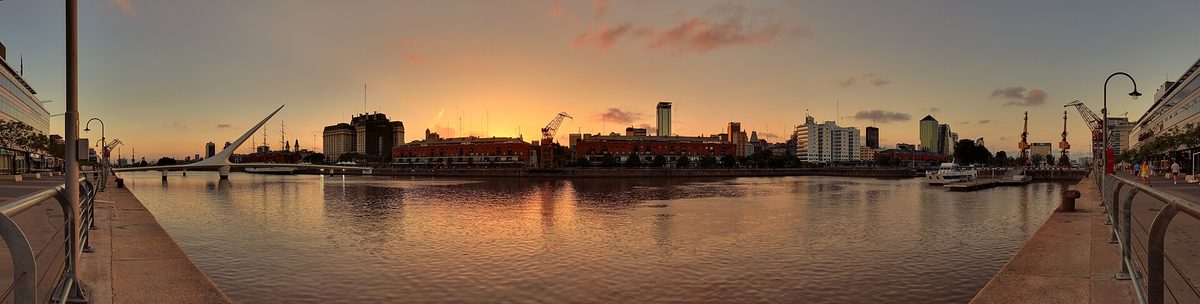
On the way you can cross the Puente de la Mujer, Calatrava’s elegant white footbridge over the old Puerto Madero docks — a lovely, free five-minute detour, especially at dusk. For more of this, our roundup of the city’s ecological reserve and riverside nature goes deeper on trails, wildlife and timings.

The other great free lung is Palermo’s Bosques de Palermo (Parque Tres de Febrero). Wander the rose garden at El Rosedal with its white pergola and little bridges, watch the paddle boats on the lake, or just sprawl on the grass like the locals do on a sunny afternoon. The nearby Jardín Botánico Carlos Thays is free too. Greenery is one of the city’s best free resources, and our guide to the parks and gardens of Buenos Aires maps out the rest, much of it free.

Markets, ferias and free street theatre
Weekends are when free Buenos Aires turns into a party. The unmissable one is the Feria de San Telmo on Sundays, when Defensa street fills for more than a kilometre with antiques, crafts, buskers and impromptu tango around Plaza Dorrego. Browsing costs nothing, the people-watching is world-class, and you can make a whole afternoon of it. It is the single free thing I would not skip.

San Telmo is far from the only one — there are craft and antique fairs at Recoleta, Mataderos and Palermo across the weekend, each with its own flavour. Our guide to the weekend markets and ferias of Buenos Aires sorts out which is on when. Over in La Boca, the famously colourful Caminito is free to wander; just stick to the tourist streets by day and take a taxi in and out.
Free museums and culture
You can fill days with free culture here. The standout is the Museo Nacional de Bellas Artes in Recoleta — permanently free, with everything from Argentine masters to a Van Gogh and a Monet. Several national museums (the Cabildo, the Immigration Museum) are free too, and many city museums run a free day each week, often Tuesday or Wednesday — worth checking schedules before you go, as they shift. For the full list and what is worth your time, see our guide to the best museums in Buenos Aires.
The other gem is the Centro Cultural Kirchner (CCK), the vast former post office turned cultural centre, where concerts and exhibitions are free — though the best gigs need a (free) ticket reserved in advance online. And on Sunday evenings, head to Barrancas de Belgrano park for La Glorieta, an open-air milonga under a bandstand where locals dance tango and beginners are welcomed in for nothing. For more on the dance and where to find it, our guide to tango in Buenos Aires covers both the free milongas and the grand shows.
How to do Buenos Aires (almost) for free: practical tips
A few things keep a budget day from leaking money. Get a rechargeable SUBE card on arrival: buses and the Subte are cheap enough that crossing the whole city costs less than a coffee, and it beats paying for taxis. Walking between the central barrios is free and often faster than you think. For a fuller breakdown of fares and passes, see our guide to getting around Buenos Aires.
Time your sightseeing to the free days — cluster the museums with free Tuesdays or Wednesdays, save the Sunday for San Telmo and La Glorieta, and book any pay-what-you-want tour and free CCK concert ahead. Bring a refillable water bottle and your own maté if you have it, and remember the genuinely free pleasures — the parks, the plazas, the river walk — never need a ticket. For the bigger money picture, our Buenos Aires travel cost guide shows where the rest of your budget goes, and our list of the best things to do in Buenos Aires for first-timers flags which paid sights are actually worth it.
Frequently asked questions
What can you do for free in Buenos Aires?
Plenty. Take a tip-based walking tour, browse the San Telmo Sunday fair, wander Plaza de Mayo and the streets of La Boca’s Caminito, walk the Reserva Ecológica and the Bosques de Palermo, and visit free museums like the Museo Nacional de Bellas Artes. Free concerts at the CCK and the La Glorieta milonga round out a no-spend day.
Are the free walking tours in Buenos Aires actually free?
They are free to join with no upfront charge, but they run on tips, so they are really pay-what-you-want. A fair tip is roughly US$5–15 a person depending on length and quality, paid in cash at the end. The guides depend on it, so budget for it. Booking ahead online in busy months helps secure a spot and a good guide.
Is Recoleta Cemetery still free?
Not for visitors anymore. Non-residents now pay around US$15 at the gate, card only, though Argentine residents may enter free or cheaper. The good news is the area around it stays free: Plaza Francia, the weekend craft fair, the Centro Cultural Recoleta and the Floralis Genérica sculpture all cost nothing, so you can enjoy the district even if you skip the tombs.
Is Buenos Aires expensive to visit?
It varies wildly with the peso, but Buenos Aires can be very affordable, especially for free and outdoor activities. Public transport, neighbourhood eats and many cultural sights are inexpensive or free; the bigger costs are flights, hotels and tango dinners. Lean on the free attractions here and your day-to-day spend stays low. Check current exchange rates and pricing before you travel.
What is the best free thing to do in Buenos Aires?
If I had to pick one, it is a Sunday in San Telmo: the kilometre-long antiques and crafts fair, the buskers, the smell of choripán and the spontaneous tango around Plaza Dorrego. It captures the city’s character better than almost anything, and it costs nothing but the snacks you cannot resist. Arrive by late morning and stay into the afternoon.
Final thoughts
The lovely thing about Buenos Aires is how generous it is with people who are not spending much. Some of its greatest hits — the plazas, the river reserve, the Sunday fairs, the tango under the trees — ask nothing of your wallet, only your time and a decent pair of shoes. Build your days around the free pleasures, splurge on the one or two paid things that matter to you, and you will come home having seen the real city. For everything beyond the free list, our complete guide to things to do in Buenos Aires is your next stop. Buen viaje.
Photo credits
All images are used under their respective licenses via Wikimedia Commons. Thank you to the photographers:
- The pink Casa Rosada and the Belgrano monument seen across Plaza de Mayo — photo by ProtoplasmaKid, CC BY-SA 4.0, via Wikimedia Commons.
- Antique and craft stalls and crowds at the free San Telmo Sunday fair — photo by Jorge Láscar from Australia, CC BY 2.0, via Wikimedia Commons.
- Pampas grass and the city skyline in the Reserva Ecológica Costanera Sur — photo by Rcidte, Public domain, via Wikimedia Commons.
- The white Puente de la Mujer footbridge at dusk in Puerto Madero — photo by Maximiliano Buono, CC BY-SA 2.0, via Wikimedia Commons.
- The lake and white pergola of El Rosedal in the Bosques de Palermo — photo by Alex Proimos, CC BY 2.0, via Wikimedia Commons.