There is no shortage of things to do in Buenos Aires, but the first thing the city did to me was confuse me — in the best way. I landed expecting a Latin American capital and walked out of the cab into what looked like Paris that had been left out in the South American sun for a hundred years — grand stone facades, plane trees, a couple kissing on a corner with zero self-consciousness, and the smell of grilling beef drifting down a street where a bandoneón was wheezing out a tango. By the end of the week I had eaten too much steak, learned to cross ten lanes of Avenida 9 de Julio, and completely fallen for the place. This guide is everything I wish someone had handed me on day one.
The best things to do in Buenos Aires are tied to its neighborhoods: watch tango spill onto the cobblestones of San Telmo, wander the technicolor lane of Caminito in La Boca, stand quietly among the mausoleums of Recoleta Cemetery, eat your weight in steak in Palermo, and feel a stadium shake at a fútbol match. Give the city at least four days — five or six if you can.
What makes this guide different from the dozens of “25 things to do” lists out there is how it is organized. Buenos Aires is enormous and spread out, so a random numbered list will just bounce you across the city and waste your days. Instead I have grouped everything by neighborhood and by theme, the way you will actually experience it, with honest notes on what is worth your time, what is a tourist trap (and still worth it anyway), and the practical stuff — money, timing, safety — that most guides skip. Whether you are here for three days or three weeks, a first-timer or coming back for more, you will find your trip in here.
One more thing before we start, because it changes everything about how it feels to travel here: thanks to Argentina’s unusual currency situation, Buenos Aires is astonishingly good value for anyone holding dollars or euros. A world-class steak dinner with a bottle of Malbec, a tango show, a taxi across town — all of it costs a fraction of what you would pay in Europe or North America, if you handle your money the right way. More on exactly how to do that below.
Buenos Aires at a Glance: Where to Start
If you are short on time, here is the shape of the city — the main areas, what each is for, and the one thing in each you should not miss. Use it to sketch your days, then dive into the detailed sections below. If you want that shortlist pre-made, our roundup of the best things to do in Buenos Aires for first-timers ranks the essentials in order.
| Neighborhood | Best for | Don’t miss |
|---|---|---|
| Microcentro & Monserrat | History, grand avenues, architecture | Plaza de Mayo & Casa Rosada |
| San Telmo | Antiques, tango, old-world atmosphere | Sunday feria on Calle Defensa |
| La Boca | Color, tango history, fútbol | Caminito & La Bombonera |
| Recoleta | Grandeur, art, the famous cemetery | Recoleta Cemetery & Evita’s tomb |
| Palermo | Parks, restaurants, nightlife, shopping | Steak at a Palermo parrilla |
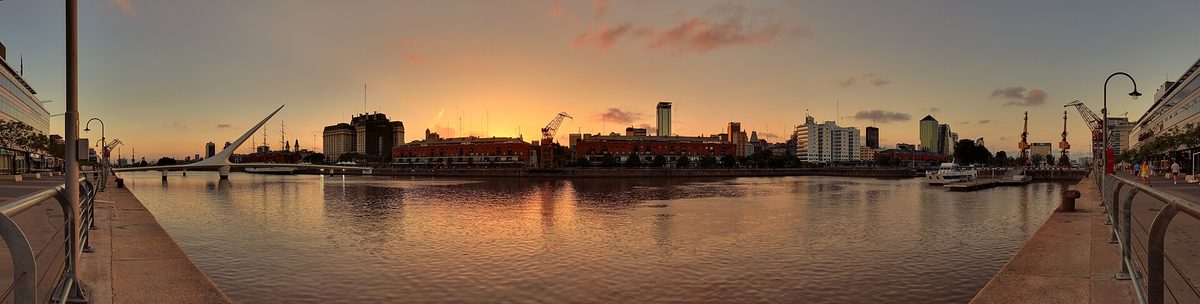
| Puerto Madero | Waterfront walks, modern skyline | Puente de la Mujer & the eco reserve |
Planning Essentials That Will Transform Your Trip
Most guides bury this at the bottom. I am putting it first, because three things — when you come, how you handle money, and how you get around — will do more for your trip than any single attraction. Get these right and the rest is gravy.
When to Visit Buenos Aires
The sweet spots are spring (September to November) and autumn (March to May), when the city runs warm and golden and the jacaranda trees turn whole avenues purple in November. Summer (December to February) is hot, sticky, and — this is the part people miss — half-empty, because porteños flee to the coast in January and many of the best restaurants close for holidays. Winter (June to August) is mild by northern standards, rarely freezing, and honestly underrated: short sleeves at midday, great tango, low-season prices. For the full month-by-month breakdown, see our guide to the best time to visit Buenos Aires.
Money, the “Blue Dollar,” and Why BA Is Such Great Value
This is the single most practical thing to understand, and almost no other guide explains it. For years Argentina has had two exchange rates: the official rate and a parallel street rate locals call the dólar blue. The gap between them has shifted a lot recently, so the smart move is not to trust a number you read months ago — it is to know your options. Bringing clean, newish US dollars in cash and exchanging them well, or using a card like Wise that tracks the favorable rate, can effectively make your whole trip 30–50% cheaper than the official rate would suggest. Avoid airport exchange counters and ordinary ATM withdrawals, which give you the worst rate and stiff fees. We keep a constantly updated explainer on exactly how to do this in our guide to the blue dollar in Buenos Aires, plus a full breakdown of daily costs in the Buenos Aires budget guide. Sort your money out before you arrive and the city becomes one of the great value destinations on earth.
Getting Around the City
Buenos Aires is wonderfully walkable within a neighborhood and genuinely big between them, so you will mix walking with the odd ride. Buy a SUBE card (the rechargeable transit card) at a kiosk or station as soon as you arrive; you need it for the Subte (the metro, the fastest way across the center on Line D) and the colectivos (buses). For door-to-door trips, the rideshare apps Cabify and inDriver work smoothly and cheaply, and street taxis are fine when hailed from a busy corner. Full details — airport transfers, the Subte map, the bus system — live in our guide to getting around Buenos Aires.
The Historic Heart: Plaza de Mayo, San Telmo & La Boca
Start here. The oldest part of the city, running from the downtown core south to the river, is where Buenos Aires began and where a first-timer should spend day one. You can walk a surprising amount of it, ideally stitched together with a guided walking tour of the historic centre to put the history in order.

Plaza de Mayo & the Casa Rosada
This is the political heart of Argentina, and it has been the stage for nearly everything that has happened to the country — revolutions, Perón’s rallies, protests, celebrations. The salmon-pink Casa Rosada (the presidential palace) sits at the eastern end; it is the balcony Evita famously addressed the crowds from, and yes, the one the Don’t Cry for Me Argentina scene was filmed at. You can tour the inside for free on weekends if you book ahead. Facing it across the plaza is the Cabildo, the old colonial town hall, now a small free museum, and the Metropolitan Cathedral, which holds the tomb of General San Martín, the country’s liberator, guarded around the clock. Come back on a Thursday afternoon and you may see the Madres de Plaza de Mayo, the mothers of the disappeared, still walking their slow circle around the central pyramid — a quiet, moving reminder of the country’s darker history that is worth pausing for.
Avenida de Mayo, Palacio Barolo & Café Tortoni
Walk west from the plaza down Avenida de Mayo, to my mind the most beautiful street in the city, a parade of Belle Époque and Art Nouveau facades that could be airlifted to Madrid or Paris. The showstopper is Palacio Barolo, an eccentric 1920s tower built as a stone homage to Dante’s Divine Comedy — hell in the basement, heaven (and a lighthouse beacon) at the top, with one of the best panoramic views in the city if you take the guided tour up. Halfway along sits Café Tortoni, the city’s oldest café (open since 1858), all marble, stained glass, and ghosts of writers. It is touristy and there is often a queue — go anyway, but go mid-morning, order a coffee and churros con chocolate, and soak up the room rather than expecting a meal.
The Obelisco & Avenida 9 de Julio
You cannot miss the Obelisco — it spears up out of the middle of Avenida 9 de Julio, which locals will proudly tell you is the widest avenue in the world (crossing it on foot takes two or three traffic-light cycles, so this is not entirely a boast). It is the city’s exclamation point, the spot where crowds flood to celebrate everything from football trophies to Pride. There is not much to do here beyond stand beneath it and feel the scale, but it is essential, and it is glorious lit up at night. Just off the avenue runs Avenida Corrientes, the old theater-and-bookshop street that stays awake past midnight — grab a slice of the city’s distinctive thick pizza here.

San Telmo: The City’s Oldest Soul
San Telmo is my favorite neighborhood to simply wander — cobblestone streets, crumbling mansions turned antique shops, leafy plazas, and the faint sense that the 19th century never fully left. The big event is the Sunday feria, a street fair that runs the length of Calle Defensa from Plaza de Mayo down to Plaza Dorrego, packed with antiques, leather, mate gourds, buskers, and tango dancers performing for the crowd in the square. Come early (by 11am) before the crush, and bring small bills. Any day of the week you can duck into the Mercado de San Telmo, a gorgeous Victorian iron-and-glass market hall where antique stalls sit cheek by jowl with some of the best casual food in the city. Don’t rush it — this is a neighborhood for getting pleasantly lost, and there is a whole San Telmo neighborhood guide if you want to go deeper, plus a roundup of the city’s best weekend markets and ferias. Sunday is its own beast here, and we have mapped out what to do in Buenos Aires on a Sunday around the feria.

La Boca: Caminito, Color & the Birthplace of Tango
Down by the old port, La Boca is where Genoese immigrants once painted their corrugated-metal houses with leftover ship paint, and where tango was born in the dance halls and brothels of the docks. The famous bit is Caminito, a short pedestrian lane blazing with color, where dancers perform for tips and artists sell their canvases. I will be honest: it is a tourist trap, compact and a little staged. It is also genuinely joyful and unmistakably Buenos Aires, and I would not skip it — just go in the morning, enjoy it for an hour, and keep your wits about you. The crucial safety note for La Boca: stay on the main tourist streets around Caminito and the stadium, and take a taxi or Cabify to and from rather than wandering the surrounding blocks, especially after dark. A few streets over stands La Bombonera, the throbbing home of Boca Juniors and one of football’s great cathedrals. Our full guide to Caminito and La Boca covers it street by street, and if a match is on your list, jump to the Buenos Aires fútbol guide.
Recoleta & Retiro: Grandeur, Art & the City of the Dead
If San Telmo and La Boca are the city’s working-class soul, Recoleta is its aristocratic face — wide leafy avenues, French-style mansions, embassies, and old money. It is elegant, walkable, and home to one of the most extraordinary places in the city.

Recoleta Cemetery
I know how it sounds to recommend a cemetery as a highlight, but Recoleta Cemetery is genuinely one of the most remarkable places I have ever walked through — a miniature city of the dead, where Argentina’s presidents, generals, and grandees built marble mausoleums the size of small houses along narrow “streets,” in every style from neo-Gothic to Art Deco. The one everyone comes for is Eva Perón’s tomb (look for the Duarte family vault, usually marked by fresh flowers), but the joy is in wandering — the crumbling angels, the stray cats, the sheer competitive grandeur of it. Entry is cheap (a few dollars; bring your camera), and a guided tour is well worth it to find the stories behind the stones. On weekends a big artisan market sets up on the plaza just outside, and the neighboring church and cultural center are worth a look. Our complete Recoleta Cemetery guide maps out the tombs worth finding.
Fine Art & the Floralis Genérica
A few blocks away, the Museo Nacional de Bellas Artes (National Museum of Fine Arts) holds the country’s best art collection — Argentine masters alongside Goya, Rodin, Monet and Van Gogh — and, gloriously, it is free. Give it an hour or two. Then walk over to the Floralis Genérica, an enormous steel-and-aluminum flower sculpture set in a reflecting pool, designed to open its petals at dawn and close them at dusk (the mechanism is temperamental these days, but it is a striking thing regardless and a favorite photo spot). For the wider art scene — and there is a lot of it — see our guide to museums, art and culture in Buenos Aires.

Palermo: Parks, Art & the Best Eating in the City
If I had to live in one Buenos Aires neighborhood, it would be Palermo — the city’s largest barrio, leafy and low-rise, and the engine room of modern porteño life. It splinters into sub-areas: Palermo Soho for cobblestone streets, boutiques, street art and brunch; Palermo Hollywood for restaurants and bars; and the green expanse of the parks to the north. It is also where most first-timers end up wanting to stay — our where to stay in Buenos Aires guide explains why, and the dedicated Palermo neighborhood guide goes block by block.
The Parks of Palermo
The Bosques de Palermo (Palermo Woods) are the city’s lungs — hundreds of acres of green where porteños jog, picnic, and row little boats on the lake. Inside you will find the Rosedal, a free rose garden with some 18,000 bushes and a pretty white bridge; the Jardín Japonés (Japanese Garden), a serene pocket of koi ponds and red bridges with a good little restaurant; and the free Jardín Botánico, a botanical garden famous for its resident colony of cats. On a sunny afternoon, an hour drifting through here is one of the simplest pleasures in the city — and it is great for kids, as our Buenos Aires with kids guide details. Palermo is only the start — see our full guide to parks, gardens and outdoor spaces across Buenos Aires for the ones beyond the Bosques.

MALBA & the Art Scene
On the edge of the parks, MALBA (the Museum of Latin American Art) is the one art museum I would not skip even if you only see one — a sleek, manageable collection of 20th-century Latin American art with works by Frida Kahlo, Diego Rivera, Botero and Tarsila do Amaral, plus excellent rotating exhibitions and a lovely café. Budget two or three hours. It pairs naturally with the parks across the road. For the deeper cut on it, see the MALBA visitor guide. The city’s other great art form is out on the walls: Buenos Aires has some of the most permissive graffiti laws anywhere, and a guided Buenos Aires street art tour through Palermo, Colegiales and Villa Urquiza is one of the best-value half-days in the city.
Eating & Drinking in Palermo
Now the part you have been waiting for. Palermo is the city’s dining heart, and Buenos Aires runs on beef. The ritual is the asado (Argentine barbecue) and the temple is the parrilla (steakhouse). The most famous is Don Julio in Palermo, regularly ranked among the world’s best restaurants — reserve weeks ahead, or try walking in solo early on a weeknight. But honestly, half the joy is that even a humble neighborhood parrilla will serve you a bife de chorizo and a glass of Malbec that would cost a fortune back home. Eat late — porteños rarely sit down to dinner before 9pm, and 10 or 11 is normal. Afterward, Palermo’s bar scene is world-class: the city has several entries on the World’s 50 Best Bars list, including the flower-shop speakeasy Floralía Atlántico. Pace yourself, because nightlife here doesn’t peak until 2 or 3am. Dig into where and what to eat in the Buenos Aires food guide and the best steak and parrillas roundup, and plan your night out with the Buenos Aires nightlife guide.
Puerto Madero & the Hidden Wilderness on the River
The newest neighborhood, Puerto Madero, is the city’s redeveloped docklands — glassy towers, converted brick warehouses full of restaurants, and a pleasant waterside promenade. The signature sight is the Puente de la Mujer (“Woman’s Bridge”), a gleaming white footbridge by Santiago Calatrava, said to evoke a couple dancing tango; it pivots to let boats through. It is a fine place for an evening stroll, though the restaurants here run pricier and more corporate than elsewhere.

The real surprise is just behind it: the Reserva Ecológica Costanera Sur, a 350-hectare wild wetland on the bank of the Río de la Plata, hiding in plain sight at the edge of downtown. It is free, criss-crossed with walking and cycling trails, and alive with more than 300 species of birds, the odd coypu, and big skies over the brown river. Come early, bring water, and you would never guess you were ten minutes from skyscrapers. Full details in our guide to the Costanera Sur ecological reserve.
Tango: How to Actually Experience It
You cannot come to Buenos Aires and ignore tango — it seeps out of doorways and onto street corners — but most visitors do it wrong, so here is how to do it right. There are really three levels, and which you choose depends on how deep you want to go.

Street tango is the free, spontaneous version: dancers performing for tips in Caminito, on the San Telmo feria, in Plaza Dorrego on a Sunday evening. It is touristy, but watching a skilled couple work a cobblestone square at dusk is still genuinely thrilling, and it costs nothing but the coins you drop in the hat.
A dinner show is the polished, professional spectacle — think a stage, a live orchestra, a three-course meal, and dancers in full flight. These range from the grand and pricey (the famous houses like El Viejo Almacén and Rojó Tango) to smaller, more intimate rooms. For a first-timer who wants the goosebumps without the commitment, this is the move. Book ahead, and read our breakdown of the best tango shows in Buenos Aires to pick the right one for your budget.
A milonga is the real thing — a social dance hall where porteños actually go to dance, with its own strict etiquette (the wordless cabeceo nod to ask for a dance, the codes about when you can and cannot cut in). You can watch, take a beginner lesson beforehand at places like La Viruta or Salón Canning, and dip a toe in. It is not a spectator sport, but if tango has its hooks in you, this is where the city’s heart actually beats. Our full guide to tango in Buenos Aires covers shows, milongas, and lessons in detail.
Experiences Only Buenos Aires Has
These are the things that make the city unlike anywhere else — the ones I tell friends they have to build a day around. For the stranger end of the spectrum, we keep a separate list of unusual and offbeat things to do in Buenos Aires.
A Fútbol Match
Argentines treat football like a religion, and a live match here — the flares, the songs that never stop, the bouncing terraces — is one of the most electric experiences in world sport. The two giants are Boca Juniors at La Bombonera and River Plate at the colossal Monumental. The catch: tickets to big matches are genuinely hard for tourists to get on your own, because league games are largely members-only. The realistic route is to go through a reputable hospitality operator that bundles a ticket with transport, or to take a stadium-and-museum tour on a non-match day, which is excellent in its own right. Skip the Superclásico (Boca v River) as a first-timer — it is chaos. We walk through exactly how to do it safely in the Buenos Aires fútbol guide.

Teatro Colón
The Teatro Colón is one of the greatest opera houses in the world — acousticians routinely rank it in the global top five — and stepping into its red-and-gold horseshoe auditorium is a jaw-drop moment. If there is a performance on (opera, ballet, or the symphony) while you are in town, buy the cheapest seat just to be in the room; the upper galleries are a steal and the sound is sublime. If not, take the guided tour, which runs through the day and walks you through the history, the foyers, and the hall itself. Either way, allow a couple of hours and book ahead. More in the Teatro Colón guide.

El Ateneo Grand Splendid
Often called the most beautiful bookshop in the world, El Ateneo Grand Splendid is a grand 1919 theater reborn as a bookstore — the frescoed ceiling and ornate balconies intact, the old stage now a café, the seats replaced by shelves. You do not need to read Spanish to love it; just go up to the first balcony for the best view, ideally on a weekday morning before the crowds, order a coffee on the former stage, and take it all in. It is free, it is central (in Recoleta, on Avenida Santa Fe), and it takes twenty minutes — one of the easiest wins in the city. Our full guide to visiting El Ateneo Grand Splendid covers opening hours, the quietest times to go, and what the café on the old stage is actually like.
La Bomba de Tiempo & the Live-Music City
If you are in town on a Monday, go to La Bomba de Tiempo — an improvised percussion show at the Ciudad Cultural Konex where a dozen drummers and a conductor whip a sweaty, joyful crowd into a frenzy. It is loud, communal, very porteño, and one of my favorite nights in the city. Beyond it, Buenos Aires has a deep live scene — rock nacional, jazz, cumbia, folk — and the free programming at the enormous Centro Cultural Kirchner (CCK), a former post office turned arts center, regularly puts on concerts and exhibitions worth checking. See what is on in the nightlife guide.
The Asado & the Ritual of Mate
Two things are less “attractions” than windows into how the city actually lives. The first is the asado — not just a barbecue but a slow, sacred social event built around the parrilla, where the meat (and the morcilla, the provoleta, the empanadas to start) arrives in courses and nobody is in a hurry. If you can wrangle an invite to a local’s rooftop asado, take it; if not, several operators run asado experiences for visitors. The second is mate, the bitter green tea that porteños carry everywhere in a gourd, sipped through a metal straw and shared in a circle — you will see it in every park. You will not be served it in a restaurant, but a mate tasting is a lovely way to understand the ritual (and the etiquette of sharing the gourd).
The Best Day Trips from Buenos Aires
Give the city its due first, but if you have five days or more, a day out of town adds a different flavor. Three stand out.
Tigre and the Paraná Delta is the easy classic — about an hour north by train (free with your SUBE card), where a maze of jungle-fringed waterways replaces streets and you get around by boat. Take a launch through the delta, browse the Puerto de Frutos craft market, and you are back in the city by dinner. See the Tigre day trip guide.
Colonia del Sacramento, just across the river in Uruguay, is a UNESCO-listed colonial town of cobblestones and bougainvillea, reachable by a one-hour fast ferry from Puerto Madero (bring your passport). It makes a delightful, easy day — details in the Colonia day trip guide.
And for a taste of the pampas, an estancia day — a traditional ranch with horses, gauchos, and an enormous asado lunch — is the most relaxing way to see the countryside. The full menu of options is in our day trips from Buenos Aires guide.
Free & Budget Things to Do in Buenos Aires
Even before you factor in the favorable exchange rate, a huge amount of the city is free or nearly so. You could fill several days without paying for much beyond coffee and transport. My go-to free list:
- The big free museums — the Museo Nacional de Bellas Artes, the contemporary CCK, and the Bellas Artes’ rotating shows cost nothing.
- The parks — the Bosques de Palermo, the Rosedal, the Jardín Botánico, and the Costanera Sur ecological reserve are all free.
- The Sunday ferias — wandering the San Telmo fair or the gaucho-flavored Feria de Mataderos out west costs only what you choose to spend.
- Street tango and the city’s plazas — Plaza de Mayo, Plaza Dorrego, Caminito, and the flag-lowering moments downtown.
- Walking the architecture — Avenida de Mayo, Recoleta’s mansions, Palermo’s street art; many free or tip-based walking tours leave from Plaza de Mayo and Recoleta daily.
For a full itinerary built around spending as little as possible, see our free things to do in Buenos Aires guide.
Things to Do in Buenos Aires by Traveler Type
Different trips want different things. Here is how I would steer each kind of visitor through the best things to do in Buenos Aires.
For First-Timers
Hit the non-negotiables: Plaza de Mayo and the Casa Rosada, Recoleta Cemetery, the San Telmo Sunday feria, Caminito, El Ateneo, one tango show, and at least one long, late steak dinner in Palermo. That is a perfect four to five days. Let our Buenos Aires itinerary guide sequence it for you.
For Couples
Sunset from the roof of Palacio Barolo, a tango dinner show, a blowout dinner at a Palermo parrilla, a lazy day in the Bosques de Palermo, and a ferry across to Colonia for a romantic day trip.
For Families
The Japanese Garden and the Botanical Garden (cats!), paddle boats on the Palermo lake, the colorful, walkable Caminito, the Ecoparque and the planetarium, and the comic-strip statues of the Paseo de la Historieta. The Buenos Aires with kids guide has a full family plan.
For Solo Travelers
Buenos Aires is a brilliant solo city: take a group tango lesson, go to La Bomba de Tiempo on a Monday, join a free walking tour, base yourself in social Palermo or San Telmo, and lean on the city’s famously late, friendly social hours. Our guide to Buenos Aires for solo travellers covers the best experiences to do alone, where to base yourself, and how to meet people.
Practical Tips for Visiting Buenos Aires
The logistics that will keep your trip smooth:
- Safety: Buenos Aires is broadly safe for tourists, but petty theft — phone-snatching, distraction scams — is the real risk. Keep your phone off the table at sidewalk cafés, don’t flash valuables, use a cross-body bag, and be extra alert in crowded spots and on the edges of La Boca, Constitución, and Retiro’s fringes. Use Cabify or a hailed taxi late at night. The full, non-alarmist rundown is in our is Buenos Aires safe guide and the broader Buenos Aires travel tips.
- Timing the day: Lunch runs 1–3pm, dinner starts at 9pm at the earliest, and nightlife doesn’t get going until well after midnight. Adjust or you will be eating alone.
- Tipping: Around 10% in restaurants is customary (watch for a cubierto cover charge, which is not a tip). Cash tips are appreciated.
- Money on you: Carry some cash — many smaller places prefer it, and it gets you the better exchange rate — but not all of it at once.
- Language: A little Spanish goes a long way; menus are usually Spanish-only, but porteños are warm and patient with anyone who tries. An offline translation app covers the gaps.
Frequently Asked Questions
How many days do you need in Buenos Aires?
Four to five days is the sweet spot for a first visit — enough to cover the historic center, Recoleta, Palermo, a tango show, and a steak feast without rushing. With a week, add a day trip to Tigre or Colonia and time to simply live like a local. Two or three days can work for a taste, but the city rewards a slower pace.
What is Buenos Aires best known for?
Tango, beef and Malbec, football (Boca Juniors and River Plate), European-style architecture earning it the nickname “the Paris of South America,” the legacy of Evita, and a famously late-night, passionate culture. It is a city of grand cafes, sprawling cemeteries, and neighborhoods with wildly different personalities.
Is Buenos Aires safe for tourists?
Generally yes — it is one of the safer big cities in Latin America for visitors, and violent crime against tourists is rare. The main risk is petty theft, so guard your phone and bag, stay on main streets in La Boca, and take rideshares late at night. See our dedicated safety guide for the full picture.
What is the best time to visit Buenos Aires?
Spring (September–November) and autumn (March–May) offer the most comfortable weather and the famous purple jacaranda blooms in November. Summer is hot and emptier; winter is mild and cheaper. There is no truly bad time — it comes down to heat tolerance and budget.
What are the best free things to do in Buenos Aires?
Wander Recoleta Cemetery (a few dollars, effectively free value), the free Museo Nacional de Bellas Artes and CCK, the Palermo parks and rose garden, the Costanera Sur ecological reserve, the Sunday San Telmo feria, El Ateneo bookstore, and a tip-based walking tour of the historic center.
How do I get the best exchange rate (the “blue dollar”)?
Bring clean US dollar bills to exchange, or use a Wise card, rather than withdrawing pesos from ATMs at the official rate. The gap between rates shifts often, so check a current source before you go — our blue dollar guide is kept up to date. Handled well, it can cut your costs dramatically.
What should I eat in Buenos Aires?
Steak (a bife de chorizo or ojo de bife), empanadas, choripán, provoleta, and milanesa, washed down with Malbec; dulce de leche and alfajores for the sweet tooth; and a medialuna with coffee for breakfast. Eating at a traditional parrilla is a must-do in itself.
What can you do in Buenos Aires at night?
See a tango show, eat a late dinner in Palermo, drink at a world-ranked cocktail bar, catch live music at La Bomba de Tiempo or a Konex event, or join porteños at a club that doesn’t fill up until 2am. The city genuinely comes alive after dark.
Is Buenos Aires worth visiting?
Absolutely — it is one of the world’s great cities, combining European elegance, Latin passion, extraordinary food, deep culture, and (right now) remarkable value for foreign visitors. It rewards curiosity and a slow pace more than a tick-box rush.
Final Thoughts
Buenos Aires is not a city you “do” in a tidy checklist; it is one you fall into. The first time, you will chase the landmarks — Caminito, the cemetery, the Obelisco — and they are wonderful. But the city you remember will be the small things: the waiter who took twenty minutes longer than he needed to because the conversation was good, the tango drifting out of a San Telmo doorway, the impossible color of a jacaranda avenue in November, the steak that ruined all other steak for you. Give it more days than you think you need, sort your pesos out before you arrive, eat late, walk a lot, and let the neighborhoods do the rest. Start with our neighborhood guide to decide where to base yourself, and the rest of the trip will build itself.
Photo Credits
Every image in this guide is used under its respective Creative Commons or public-domain license, sourced from Wikimedia Commons:
- Caminito, La Boca. Photo by Jorge Royan, CC BY-SA 3.0 — via Wikimedia Commons.
- The Obelisco & Avenida 9 de Julio. Photo by Alekino, Public domain — via Wikimedia Commons.
- Casa Rosada, Plaza de Mayo. Photo by Pavel Špindler, CC BY 3.0 — via Wikimedia Commons.
- Recoleta Cemetery. Photo by David Berkowitz from New York, NY, USA, CC BY 2.0 — via Wikimedia Commons.
- Teatro Colon auditorium. Photo by Roger Schultz from BUENOS AIRES, ARGENTINA, CC BY 2.0 — via Wikimedia Commons.
- El Ateneo Grand Splendid. Photo by HalloweenHJB (talk) (Uploads), CC BY-SA 3.0 — via Wikimedia Commons.
- Puente de la Mujer, Puerto Madero. Photo by Maximiliano Buono, CC BY-SA 2.0 — via Wikimedia Commons.
- Tango in San Telmo. Photo by Dennis G. Jarvis, CC BY-SA 2.0 — via Wikimedia Commons.
- Floralis Generica. Photo by Beatrice Murch from Buenos Aires, Argentina, CC BY 2.0 — via Wikimedia Commons.
- Jardin Japones, Palermo. Photo by Luis Argerich from Buenos Aires, Argentina, CC BY 2.0 — via Wikimedia Commons.


1 comment