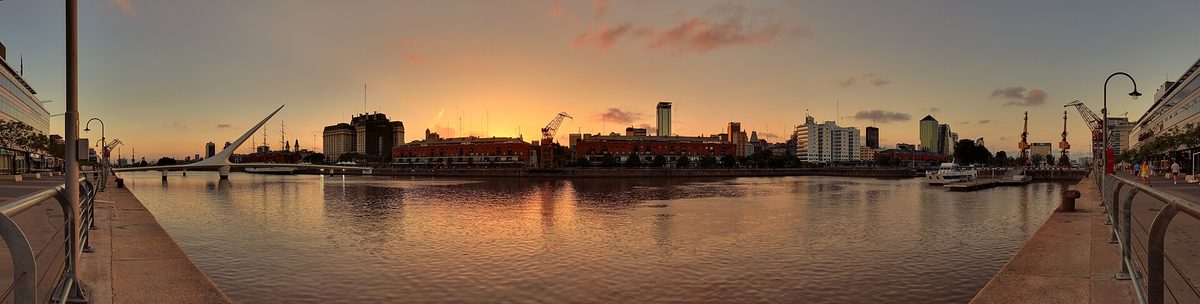
Last updated: June 2026 · Written by the Buenos Aires Tourism editorial team, drawing on years of slow mornings in Palermo, picnics by the lake, and far too many laps of the rose garden.
People come for the steak and the tango, then they are surprised by how green it is. I was. The city breathes outdoors, and once you tune into that rhythm your trip gets better.
What are the best Buenos Aires parks and gardens?
The best Buenos Aires parks and gardens cluster in Palermo: the vast Bosques de Palermo (Parque Tres de Febrero) with its lakes and rose garden, the serene Jardín Japonés, and the free Jardín Botánico. Add the riverside Reserva Ecológica and you have a full, mostly-free day in the open air.
This guide is for anyone who wants to balance the museums and parrillas with some grass underfoot. I will walk you through the big Palermo green spaces, the formal gardens worth a detour, the wild riverbank most visitors miss, and the leafy plazas scattered through the neighbourhoods — plus the honest practicalities of when to go and how to get there. Green space is one of my favourite chapters in the wider story of things to do in Buenos Aires, and it costs almost nothing.

Bosques de Palermo: the city’s green heart
If you only have time for one green space, make it the Bosques de Palermo, officially the Parque Tres de Febrero. It sprawls across roughly 400 hectares of Palermo — lakes, lawns, monuments, rose beds and wide avenues of jacaranda and palo borracho trees. On a sunny weekend half the city seems to be here, running, cycling, drinking mate on a blanket, or paddling a hired boat across the water. Entry is free and it never really closes.
El Rosedal, the rose garden
The Rosedal is the postcard. This rose garden holds something like 18,000 rose bushes, threaded with a lake, a white Greek-style bridge, an Andalusian patio of blue-and-white tiles, and a curious Poets’ Garden lined with busts of writers from Borges to Shakespeare. It earned an international Garden Excellence Award, and even on an ordinary Tuesday it is lovely. It generally opens daily except Mondays, roughly 10am to 6pm, and like everything here it is free. Go when the roses peak in spring — October and November are spectacular.
The lakes and what to do on them
Three linked artificial lakes sit at the centre of the park, and you can rent a pedal boat or a little electric boat to potter about for half an hour. It is gentle, slightly silly fun, and a brilliant way to entertain children. Around the water you will find rollerbladers, cyclists on the rental bikes, and food carts selling choripán and cold drinks. Bring cash, hire a bike, and just follow the paths — getting mildly lost here is part of the pleasure.

More inside the park
The Bosques also wraps around several separate attractions worth knowing about: the dome of the Planetario Galileo Galilei, the Eduardo Sívori art museum, the racecourse of the Hipódromo de Palermo, and the Japanese and botanical gardens covered below. You could fill two days here without repeating yourself.
The formal gardens worth a detour
Beyond the lawns, Buenos Aires keeps two beautifully designed gardens that reward a slower, more deliberate visit. They sit a short walk apart in Palermo, so it is easy to do both in a morning.

Jardín Japonés, the Japanese garden in Buenos Aires
The Jardín Japonés is, surprisingly, one of the largest Japanese gardens outside Japan, built in 1967 for a visit by then-Crown Prince Akihito. It is small, manicured and genuinely calming: red arched bridges over koi-filled ponds, stone lanterns, clipped bonsai, and a tea house and cultural centre that run workshops and serve matcha. Unlike most green spaces here, the Japanese garden in Buenos Aires charges a modest admission — budget a few thousand pesos — and the ticket office tends to run roughly 10am to early evening. It is worth every peso when you need a half-hour of quiet, and it does not close for rain.
Jardín Botánico Carlos Thays
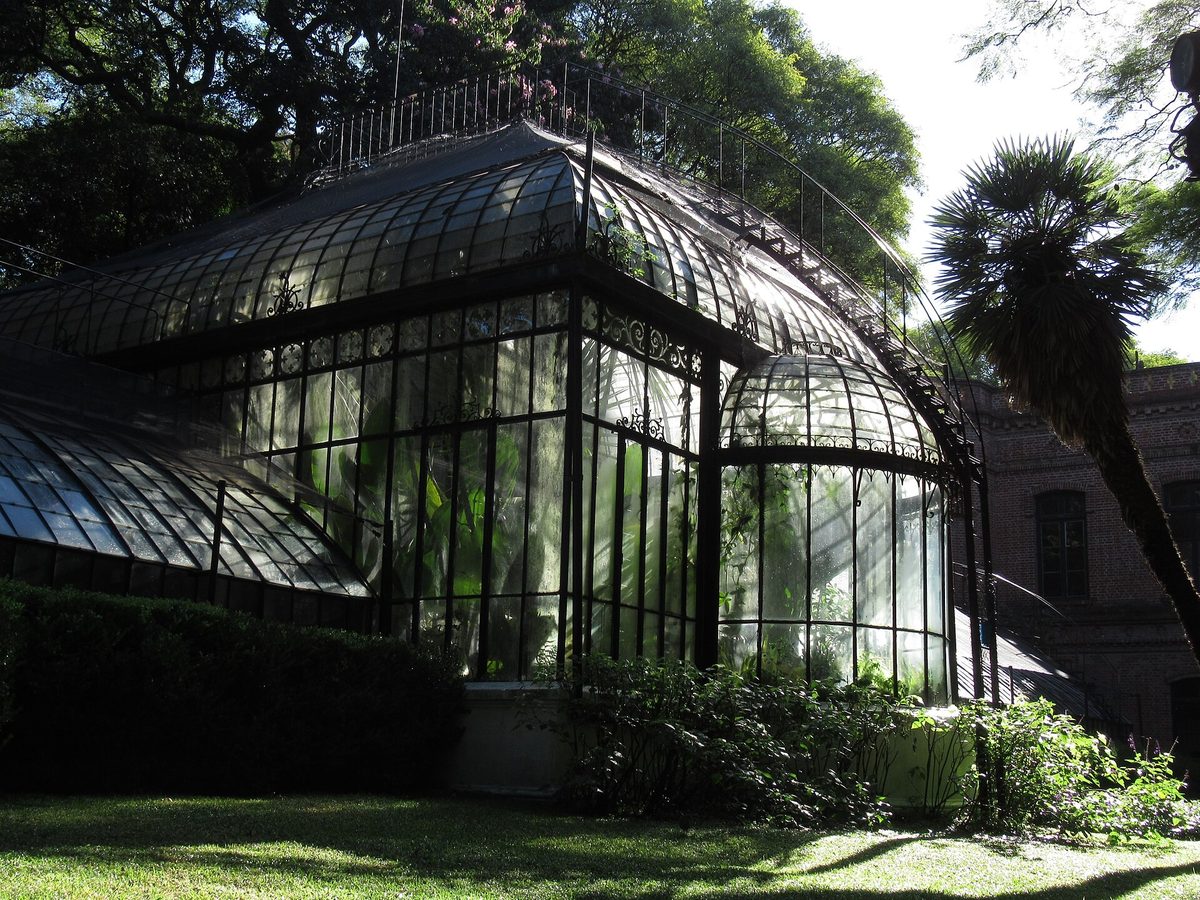
A few blocks away, the Jardín Botánico is free, and it is one of my favourite places in the city to do absolutely nothing. Landscape architect Carlos Thays designed it in the 1890s, and it holds more than 5,000 plant species arranged in Roman, French and Oriental sections, plus a glorious wrought-iron-and-glass greenhouse shipped over after the 1889 Paris World’s Fair. It is also famously full of cats — dozens of well-fed strays who own the place and will happily share your bench. Take a book, find a sunny spot, and let an hour disappear.
The wild side: riverbank and bigger parks
The manicured gardens are only half the story. For something rawer and more surprising, head east to the water or south to the neighbourhood parks.

Reserva Ecológica Costanera Sur
Right beside the polished towers of Puerto Madero lies the city’s largest green space and its biggest surprise: 350 hectares of reclaimed riverbank that nature took back. The Reserva Ecológica is laced with flat dirt trails through tall pampas grass and lagoons, and it is the best birdwatching in town — herons, coypu, the odd turtle, and a skyline view across the water that feels improbable for a wild marsh. Entry is free, it usually closes on Mondays, and there is little shade, so bring water, a hat and sunscreen. For the full rundown, see our guide to the Buenos Aires Ecological Reserve.
Parque Centenario and the neighbourhood parks
Out in Caballito, Parque Centenario is a big circular park built around a lake, ringed by joggers and dotted at weekends with tai chi classes, a science museum and a sprawling craft-and-book market. It is far less touristy than Palermo and all the better for it. Other green pockets worth a wander include Parque Lezama in the south — reputedly where the city was founded — and the steep, leafy slopes of Barrancas de Belgrano, another Thays design that hosts open-air milongas on warm evenings.
Leafy plazas in the heart of the city
You do not have to trek to Palermo for greenery. Some of the prettiest open space sits right in the centre, perfect for a breather between sights.
My pick is Plaza San Martín in Retiro, a sloping lawn under huge old trees, framed by belle-époque palaces and looking down toward the British clock tower. Office workers nap on the grass at lunchtime and it is a lovely place to land after the bustle of downtown. Over in Recoleta, the parks around Plaza Francia spill out from the famous cemetery and fill with a craft fair every weekend, while the Plaza de Mayo and the green Plaza del Congreso bookend the city’s grand civic axis. These squares stitch neatly into a stroll through the historic Buenos Aires neighbourhoods, and most appear on any decent walking tour of the centre.
Visiting the parks: practical tips
A few things I wish someone had told me before my first park day, with the usual caveat that hours and prices in Buenos Aires shift constantly — treat these as a guide and check current details before a special trip. The single best way to cover the Bosques is on two wheels — see our guide to cycling in Buenos Aires and the EcoBici bike-share for how to pick one up.
| Green space | Best for | Cost | Closed |
|---|---|---|---|
| Bosques de Palermo | Lakes, cycling, picnics | Free | Never |
| El Rosedal | Roses, photos, a stroll | Free | Mondays |
| Jardín Japonés | Calm, koi ponds, tea | Small fee | Open daily |
| Jardín Botánico | Plants, cats, reading | Free | Mondays (approx.) |
| Reserva Ecológica | Birds, trails, skyline | Free | Mondays |
Getting there is easy. The Subte and city buses (colectivos) reach all of these; for Palermo, the D line stops within walking distance of the gardens, and the rental bike scheme is genuinely handy for covering the Bosques — see how the system works in our guide to getting around Buenos Aires. A few habits worth adopting: carry small cash for boat or bike hire and snacks, take water and sunscreen because shade is patchy, watch your phone in crowds, and do as the locals do by bringing a thermos and a bag of mate. Because almost everything is free, the parks are a cornerstone of any list of free things to do in Buenos Aires, and they are wonderfully easy if you are travelling with kids.
When to go
Timing makes a real difference outdoors. Spring, from roughly September to November, is the sweet spot: the jacarandas turn the avenues purple, the Rosedal hits full bloom, and the weather is warm without the summer swelter. Autumn (March to May) is a close second, all golden light and crisp air. High summer in January and February can be punishing at midday, so go early or late and stick to shade. Winter is mild, quiet and underrated for a brisk walk. For a fuller breakdown, our guide to the ideal months to visit goes season by season. Weekday mornings are calmest everywhere; weekends bring the crowds, the fairs and the best people-watching.
Frequently asked questions
Are the parks and gardens in Buenos Aires free?
Mostly, yes. The Bosques de Palermo, El Rosedal, the Jardín Botánico, the Reserva Ecológica and every public plaza are free to enter. The main exception is the Jardín Japonés, which charges a modest admission that helps fund its upkeep. Activities like renting a boat or a bike in Palermo cost a little extra, but you can enjoy a full day outdoors for almost nothing.
What is the biggest park in Buenos Aires?
By area, the Reserva Ecológica Costanera Sur is the largest single green space, covering around 350 hectares of riverside wetland. The Bosques de Palermo (Parque Tres de Febrero) is the largest landscaped park at roughly 400 hectares, but that figure includes several distinct gardens and attractions. For sheer wild, walkable nature, the Reserva wins; for variety, Palermo does.
Is the Jardín Japonés worth visiting?
If you enjoy calm, designed spaces, absolutely. It is compact, so you will not spend hours there, but the koi ponds, red bridges, bonsai and tea house make it one of the most peaceful corners in the city. It is a particularly good escape on a hot or hectic day, and the small entrance fee keeps it well maintained and rarely overrun.
How much time should I spend in the Bosques de Palermo?
Give it at least half a day if you can. An hour barely scratches the surface; a relaxed morning lets you wander the Rosedal, hire a boat on the lake, visit one of the gardens and still have time to lie on the grass with a coffee. If you rent a bike, you can cover a lot more ground and easily fill a whole day.
Which Buenos Aires park is best for birdwatching?
The Reserva Ecológica Costanera Sur, hands down. Its lagoons and grasslands draw hundreds of bird species, plus coypu and turtles, and the flat trails make it easy to explore at a slow pace. Go early in the morning for the most activity, bring binoculars if you have them, and remember there is almost no shade out on the marsh.
Final thoughts
The parks are the part of Buenos Aires I miss most when I leave. They are where the city stops performing and just lives — families grilling on a Sunday, couples on the grass, a saxophonist practising under a tree. Start with a morning in the Bosques, fold in the Japanese or botanical garden, and save the Reserva for a clear day with a good pair of shoes. If you are still shaping your days, our wider guide to things to do in Buenos Aires will help you build the rest of the trip around mornings exactly like these, and the same green spaces anchor plenty of the best things to do in the city.
Photo credits
- White roses on the pergola at El Rosedal in the Bosques de Palermo — photo by K.B.L. Luccia, CC BY 2.0, via Wikimedia Commons.
- Boating lake with pedal boats in the Bosques de Palermo — photo by Alex Proimos, CC BY 2.0, via Wikimedia Commons.
- Red bridge over a koi pond at the Jardín Japonés — photo by Luis Argerich, CC BY 2.0, via Wikimedia Commons.
- Art Nouveau greenhouse at the Jardín Botánico Carlos Thays — photo by Felipe Restrepo Acosta, CC BY-SA 4.0, via Wikimedia Commons.
- Pampas grass and skyline at the Reserva Ecológica Costanera Sur — photo by Rcidte, public domain, via Wikimedia Commons.