The first time a friend asked me to sort out a car rental Buenos Aires arrangement for a long weekend, my honest first question was: do you actually need one? Inside the city, almost never. For a road trip out of it, sometimes absolutely. After years of helping visitors weigh it up, that distinction is the whole game.
So here is the straight answer. Renting a car in Buenos Aires runs from roughly AR$45,000–90,000 a day (very roughly US$40–80; always check current rates, because Argentine prices move fast). You will want a passport, a valid driver’s licence, a credit card for the deposit, and ideally an International Driving Permit. In the city itself you rarely need a car — transit is excellent and parking is brutal — but a rental earns its keep for day trips and longer drives.
Last updated: June 2026 · Written by the Buenos Aires Tourism editorial team
This guide gives the honest version: when to rent and when to skip it, how to book and what you need, insurance and the deposit, the manual-versus-automatic trap, driving rules and the local style, fuel, tolls and parking, and the road trips that make it worthwhile. For the bigger picture, start with our complete guide to getting around Buenos Aires, then come back when a car is genuinely on the table.
Do you even need a car in Buenos Aires?
Let me be blunt, because it will save you money: for the city itself, I almost always say skip the rental. Buenos Aires is dense, walkable and transit-rich. The Subte, the colectivo buses, taxis and apps reach everywhere far more cheaply and far less stressfully than a car you have to park, fuel and worry about.
Three things make a city car a liability. Parking is genuinely hard — street spots are scarce and metered downtown, so you lean on paid garages. Traffic is dense and the local style is assertive. And security: a parked rental with visible luggage is a target you do not want to manage. Add tolls and fuel, and a city car is mostly cost and hassle.
So when does it make sense? When you are leaving the city. A rental comes into its own for road trips and day trips — the Atlantic coast (Mar del Plata, Pinamar, Cariló), the sierra and wine country, the estancias and small towns of the Pampas, or the upper Tigre delta. If your plan is “city for a week,” skip it. If it is “city plus the open road,” read on.
Rent a car, or skip it? A quick shortlist
| Your plan | Rent a car? | Better option |
|---|---|---|
| City sightseeing only | Skip it | Subte, colectivos, Uber/taxi, walking |
| Airport transfer | Skip it | Shuttle, official taxi or Uber/Cabify |
| Day trip to Tigre or La Plata | Optional | Train is cheap; car adds flexibility |
| Atlantic coast / Pampas road trip | Rent it | A car is genuinely the best tool |
| Self-drive tour of several towns | Rent it | Freedom to stop where you like |
| Crossing to Uruguay (Colonia) | Skip it | Take the ferry as a foot passenger |
That last line matters: many visitors assume they should drive to Uruguay, but for Colonia or Montevideo the smart move is the Buenos Aires to Uruguay ferry as a foot passenger. Taking a rental across the river means extra paperwork and cross-border insurance you rarely need.
How to rent a car in Buenos Aires
Booking is the easy part. The big international names operate here alongside strong local firms, and prices vary more than you would expect, so compare a couple before you commit.
The rental agencies
You will recognise most of the players. Localiza (the big Latin American chain that absorbed Hertz’s local operation) is everywhere and a safe default. Avis, Europcar, Alamo, Sixt and Hertz-branded desks all appear at the airports and in town, and reputable Argentine independents can be cheaper — just read the reviews and confirm the insurance and deposit terms before you pay. Booking online a few days ahead almost always beats walking up cold.
Where to pick up: airport or city
You have two basic choices. Airport desks at Ezeiza (EZE, international) and Aeroparque (AEP, the close-in domestic airport) suit you if you are driving straight out of town — collect the car and go without fighting central traffic first. City offices cluster around the microcentro, Recoleta and Palermo, and suit you if you will spend a few days in town and only want wheels for the road-trip portion.
My usual advice: if a car is purely for a road trip, get into the city the easy way first — see our guide on getting from Ezeiza airport to the city — then rent later from a central office when you are ready to drive out. That keeps you out of city driving almost entirely.
What you need to rent
- Your passport — for ID and the contract.
- A valid driver’s licence from home. Argentina recognises foreign licences for tourists, but an International Driving Permit (IDP) is strongly recommended — it is cheap, handles the translation, and removes any argument at a counter or checkpoint. Get one before you leave home; you cannot obtain it once you arrive.
- A credit card in the main driver’s name — non-negotiable for the deposit hold. Debit cards and cash are usually not accepted for it.
- Minimum age is generally 21, and drivers under about 25 often pay a young-driver surcharge.
Manual or automatic? Read this before you book
Here is the one that trips people up. In Argentina the default rental is a manual (stick shift). Automatics exist, but they are a smaller, pricier slice of the fleet and they sell out — so if you cannot drive a manual, you must book an automatic explicitly, well in advance, and ideally reconfirm it. Do not assume the car waiting for you will be automatic; that assumption has stranded more than one traveller at a counter.
Paying, the peso and insurance
Argentina’s economy moves fast, so treat any price I quote as a rough, hedge-it figure and check the current rate before booking. Many agencies quote in or peg to US dollars and add local taxes. Because of high inflation, a peso price quoted months ahead can look very different by the time you travel, so confirm the all-in total in writing — including insurance and any airport or one-way fees — before you hand over a card. For context, our Buenos Aires travel cost guide puts the numbers in perspective.
On insurance: basic third-party cover is usually built in, but the standard excess is high and the agency places a sizeable hold on your credit card against damage and theft. You can buy extra cover to reduce the excess — whether it is worth it depends on your own card’s travel insurance. Read what is and is not covered (tyres, glass and “administrative” fees are common gotchas), photograph the car thoroughly at pickup, and keep the contract handy.
Driving in Buenos Aires: rules, tolls and the local style
If you do take the wheel, the mechanics are straightforward; the culture takes a little nerve.
The basic rules
- You drive on the right and overtake on the left.
- Seatbelts are mandatory for everyone, front and back, and child seats are required for little ones.
- Drink-driving limits are strict — treat it as effectively zero tolerance, especially as several provinces have moved to a 0.0 limit. Rules vary by jurisdiction and change, so the safe policy is simple: if you are driving, do not drink at all.
- Phones must be hands-free, headlights are required on highways, and limits are posted in km/h (roughly 40–60 in town, up to about 120–130 on motorways — watch the signs).
The local driving style
Let me set expectations honestly: porteño driving is assertive. Lane markings are treated as suggestions, gaps close fast, horns are used freely, and motorbikes filter between lanes constantly. It is not malicious — just a confident, fluid style that rewards decisiveness. If you are nervous, this is one more reason to rent only for the open road, where things calm down. Our Buenos Aires travel tips cover the street-smarts that apply behind the wheel too.
Fuel, tolls and the telepase
Fuel: the dominant chain is YPF (the national company), with Shell, Axion and others widespread; stations are easy to find in the city and along main rutas but thin out on remote stretches, so fill up before long empty runs. Most are full-service. Tolls (peaje): the access motorways and main intercity rutas are tolled, and many booths have gone electronic, so a rental fitted with a telepase transponder glides through the automatic lanes — ask the agency whether the car has one and how charges are billed back to you, and keep some cash and coins just in case.
Parking in the city
If you do keep a car in town, plan parking before you arrive somewhere. Street parking downtown is metered and scarce, with tow-away zones you do not want to test. The reliable answer is a cochera (paid garage) — common, charged by the hour or day, and your hotel can usually point you to one. Never leave bags or valuables visible in a parked car.
Where a rental really pays off: day trips and road trips
This is the fun part — and the reason to bother. With a car you can string together places that are awkward by public transport: the Atlantic coast beaches in summer, the estancias and Pampas towns like San Antonio de Areco for gaucho country, the sierra and wine escapes, and the upper Tigre delta. For the full menu, see our guide to day trips from Buenos Aires — a car turns several of those from “doable” into “easy.”
And once more on the cross-border question, because it comes up constantly: to reach Uruguay, do not drive. Leave the car (or simply do not rent for that leg) and take the ferry across the Rio de la Plata — faster, cheaper and far less hassle than a rental with international paperwork.
Getting around without a car: the easy alternatives
Because I have spent this guide nudging you away from a city car, it is only fair to point at what to use instead. The Subte and colectivos handle most journeys, apps cover the rest, and the suburban trains reach the nearest day trips. Start with the getting around Buenos Aires guide, then dig into Uber, Cabify and taxis for door-to-door trips and the Buenos Aires trains guide for Tigre, La Plata and the suburbs. For most visitors, that combination replaces a rental entirely.
Car rental Buenos Aires: FAQ
Do I need an International Driving Permit to rent a car in Argentina?
Tourists can technically drive on a valid home licence, but an International Driving Permit is strongly recommended and some agencies effectively expect it. It is inexpensive, provides an official translation, and avoids any dispute at the counter or a checkpoint. Arrange one in your home country before you travel — you cannot get it once you have arrived.
Is it safe to drive in Buenos Aires?
It is safe enough mechanically, but the style is assertive and city traffic is intense, so it is not relaxing for a first-timer. The bigger practical risks are parking hassles and leaving valuables in a parked car. Most visitors are happiest using a car only for road trips and relying on transit and apps inside the city.
How much does a car rental in Buenos Aires cost?
Roughly AR$45,000–90,000 per day for a small-to-mid car (very approximately US$40–80), plus insurance, taxes and a credit-card deposit hold. Argentina’s high inflation and a moving exchange rate mean these figures shift quickly, so confirm the current all-in total in writing before booking rather than trusting an old quote.
Are rental cars in Argentina manual or automatic?
Most are manual (stick shift). Automatics are a smaller, pricier part of the fleet and they book out, so if you can only drive an automatic you must reserve one explicitly and in advance, then reconfirm. If you are comfortable with a manual, you will have more choice and lower prices.
Can I drive a rental car from Buenos Aires to Uruguay?
You can, but most travellers should not. Taking a rental across the river involves extra cross-border paperwork and insurance. For Colonia or Montevideo it is faster, cheaper and simpler to leave the car and take the ferry as a foot passenger, then use local transport on the Uruguay side.
Final thoughts
My verdict has not changed in years: for the city, skip the car and let the Subte, buses and apps do the work; for the open road, a rental is one of the best things you can do. Book ahead, insist on an automatic if you need one, carry your IDP and a credit card, hedge the price against inflation, and save the wheels for the day trips and road trips where they shine. Do that and a car rental Buenos Aires plan becomes a tool you use deliberately — not a daily headache you regret.
Photo credits
- Avenida 9 de Julio traffic and the Obelisco — Photo: Facumissing (CC0, public domain) via Wikimedia Commons.
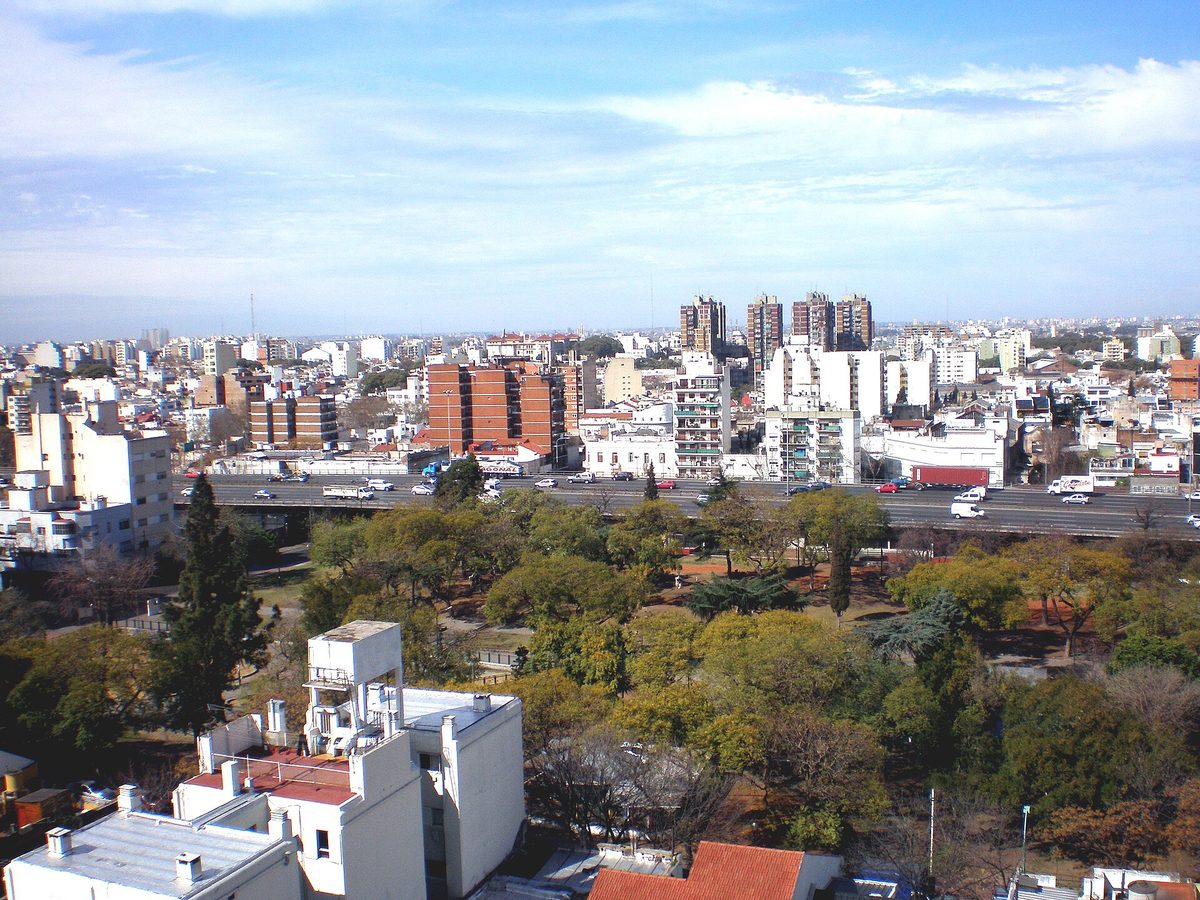
- Autopista 25 de Mayo through Buenos Aires — Photo: LANOEL / CC BY-SA 3.0 via Wikimedia Commons.
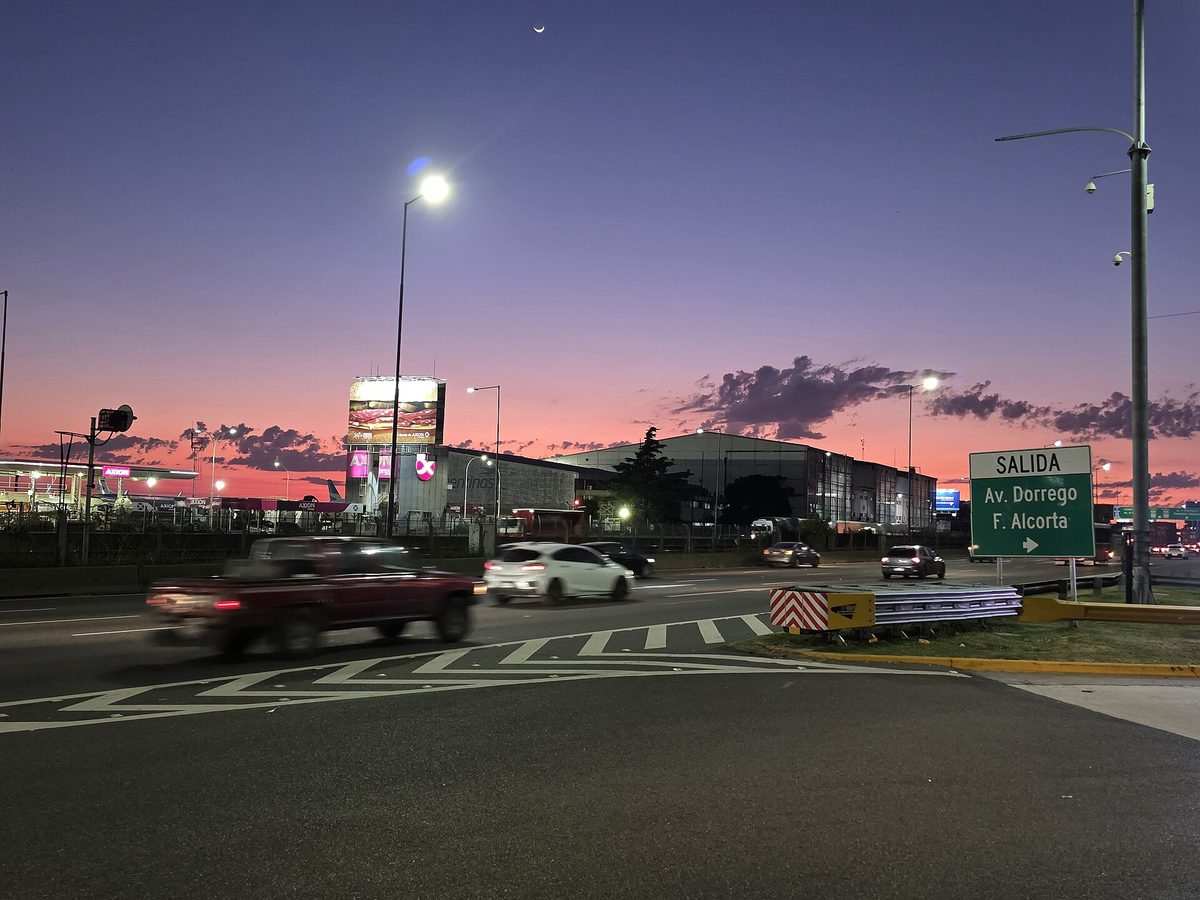
- Traffic at dusk near Aeroparque (SALIDA Av. Dorrego exit) — Photo: Horacio Cambeiro / CC BY-SA 4.0 via Wikimedia Commons.
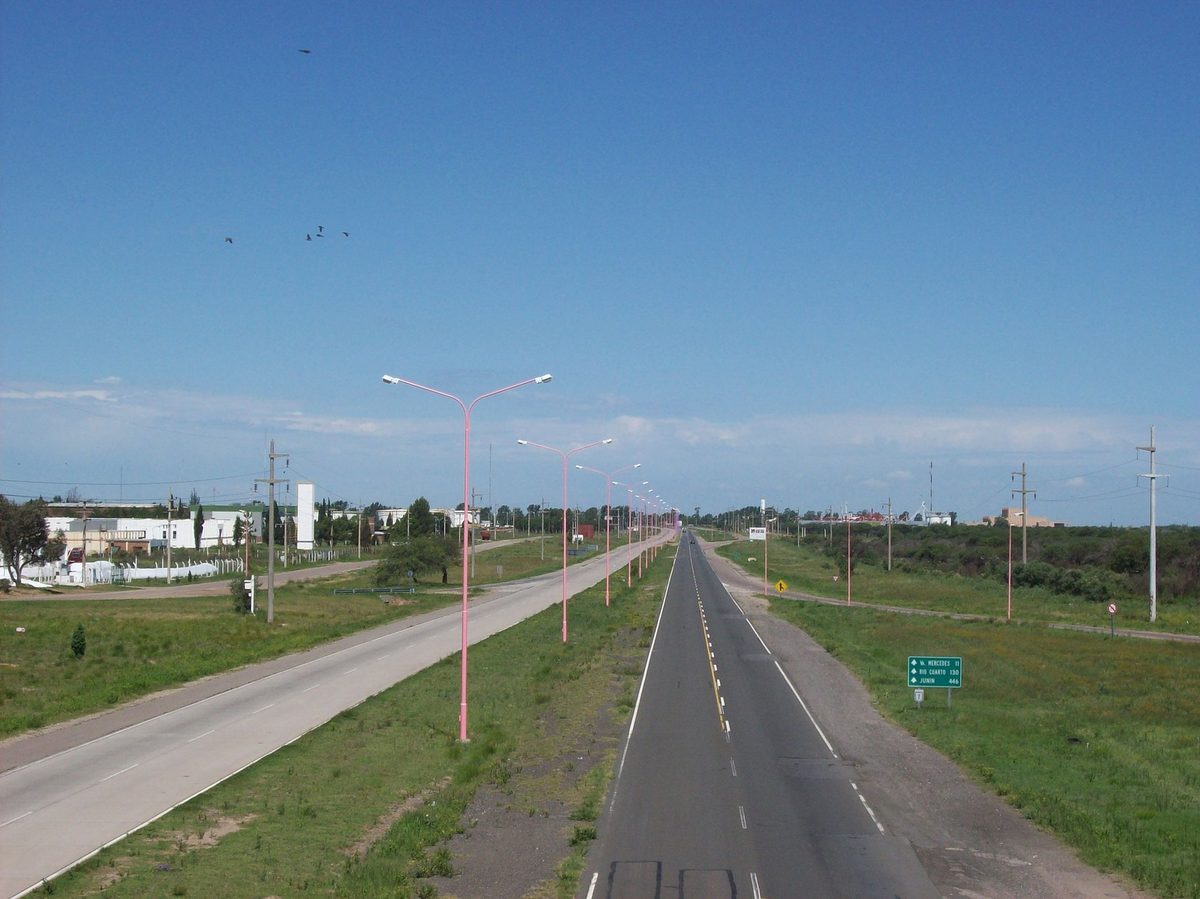
- Open divided ruta (Ruta Nacional 7 near Villa Mercedes) — Photo: Dario Alpern / CC BY-SA 3.0 via Wikimedia Commons.