Last updated: June 2026 · Written by the Buenos Aires Tourism editorial team
The first time a friend suggested I “pop over to Uruguay for the day,” I assumed she was joking. Then I watched her board a fast ferry in Puerto Madero before lunch and send me photos from a cobblestone street abroad by mid-afternoon. Crossing the Río de la Plata really is that easy — my favourite way to add a passport stamp to a porteño holiday.
A Colonia del Sacramento day trip from Buenos Aires is the classic international escape: a roughly one-hour fast ferry across the river to a tiny, ridiculously photogenic UNESCO town in Uruguay. You leave in the morning, wander cobbled lanes and a colonial old quarter, eat well, and sail home by evening. One full day is genuinely enough — Colonia is small — which is exactly what makes it perfect.
Why a Colonia del Sacramento day trip from Buenos Aires wins
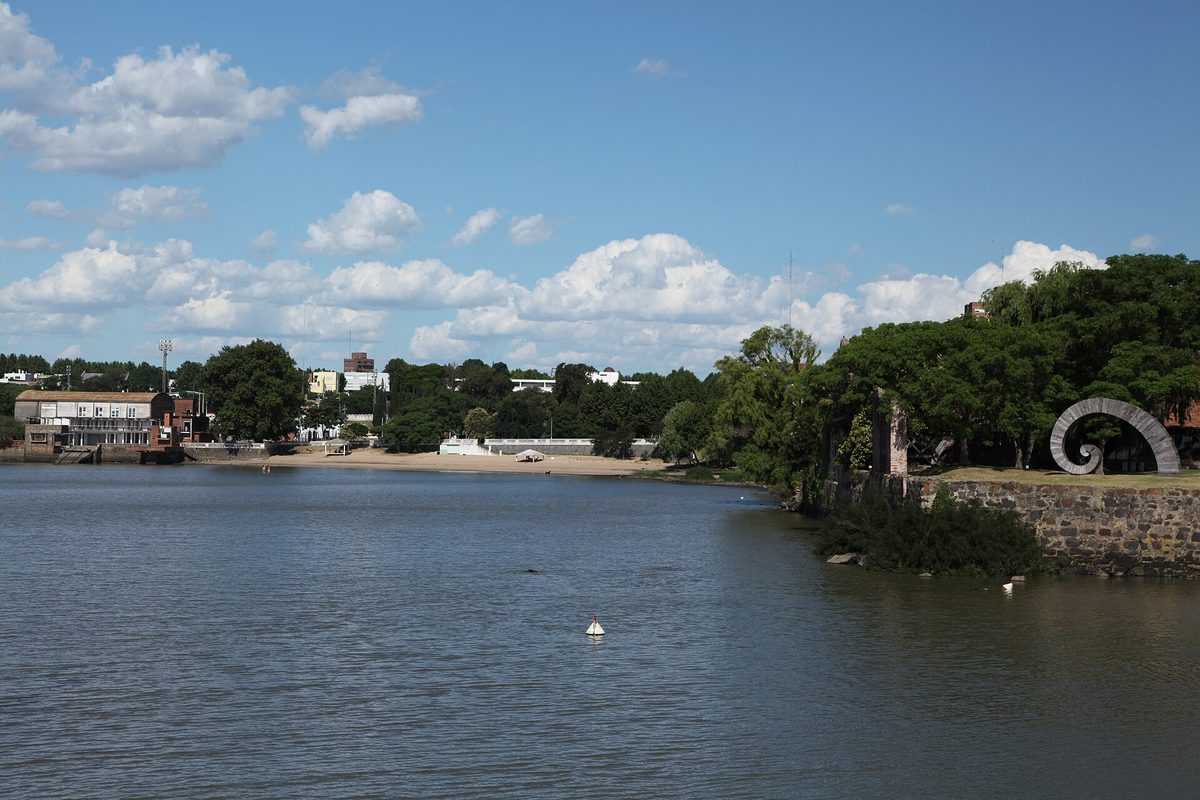
Of all the day trips from Buenos Aires, Colonia is the one I recommend first to anyone with a single free day. It is close, it is easy, and it delivers something the city cannot: a complete change of country, currency and pace in under an hour and a half on the water. Founded by the Portuguese in 1680 and fought over for a century, the town’s Barrio Histórico is a UNESCO World Heritage Site of cobbled streets, stone walls, a lighthouse and a drawbridge gate around a sleepy riverfront.
It is also blessedly compact. Where Iguazú demands a flight and an overnight, Colonia asks only that you catch a boat. You can see the highlights on foot in an afternoon, linger over a long lunch, and still make the evening ferry home. Want a bigger city instead? Pair it with our guide to a Montevideo day trip from Buenos Aires — but for ease-to-reward ratio, Colonia wins.
The trip in numbers (mid-2026, approximate)
Here is the whole day at a glance. Treat the figures as a planning guide rather than gospel — ferry fares in particular move with season, operator and how far ahead you book, so always check the current rate.
| What | Detail |
|---|---|
| Distance across the river | ~50 km (Río de la Plata) |
| Fast-ferry crossing | ~1 hour to 1 hour 15 minutes |
| Ferry operators | Buquebus, Colonia Express, Seacat Colonia |
| Round-trip ferry fare | ~US$80–170 return, varies by season & booking window |
| Departure point | Puerto Madero ferry terminal (Dársena Norte) |
| You must bring | Your passport — it is an international crossing |
| Time needed in Colonia | A full day is plenty; the old town is tiny |
| Currency in Uruguay | Uruguayan peso (UYU); pay by card or UYU |
How to get to Colonia: the ferry across the Río de la Plata
The only sensible way to do this trip is the fast ferry — there is no bridge across the Río de la Plata, and nobody flies or buses it for a day trip. The catamarans leave from the ferry terminal in Puerto Madero (Dársena Norte, an easy taxi or walk from the centre) and deposit you right beside Colonia’s old town. The fast crossing takes roughly one hour to one hour and fifteen minutes.
The three ferry operators
Three companies work the river, and in practice their schedules and fares overlap. Book whichever has the departure time and price that suits — I price-compare all three every time.
| Operator | Vessel / route | Crossing time | Notes |
|---|---|---|---|
| Buquebus | Fast catamarans, the biggest brand | ~1h–1h15 | Most sailings, on-board duty-free, priciest at peak |
| Colonia Express | Fast ferry, often the cheapest | ~1h–1h15 | Frequent budget fares if you book early |
| Seacat Colonia | Fast ferry (Buquebus group) | ~1h–1h15 | Sometimes cheaper than the Buquebus brand on the same route |
The differences are marginal: all three run modern fast catamarans that cross in about an hour. The bigger variables are when you sail and how early you book. A return fare typically lands around US$80–170 as of mid-2026, but I have paid less booking weeks ahead and far more buying same-day in summer. The first boats leave around 08:00–08:15 and the last return is in the evening, giving you a comfortable full day across the river. For the deeper comparison — classes, luggage, the Montevideo routes — see our dedicated guide to the Buenos Aires to Uruguay ferry.
Passport, immigration and timing
This is the one thing people forget: you need your passport. Colonia is in Uruguay, so this is a genuine international crossing. Cleverly, both Argentine exit and Uruguayan entry immigration happen at the Puerto Madero terminal before you board — you are stamped out and in at once, then walk off the boat in Colonia with no further formalities. The catch: everyone must clear immigration before the ferry leaves, so queues can be long.
Arrive at least 60 to 90 minutes before departure, especially in summer or at weekends. Argentine and Brazilian citizens can travel on a national ID card, but every other nationality needs a valid passport (ideally with six months left). Most visitors get a 90-day Uruguayan tourist stamp on arrival with no visa — but confirm your own nationality’s rules first.
What to do in Colonia’s Barrio Histórico
Here is the joy of Colonia: the best of it is a ten-minute walk from where the ferry docks, and getting lost is the whole point. The Barrio Histórico is a knot of cobbled lanes, leaning colonial houses and river views you can cover in a couple of unhurried hours. These are the sights I steer everyone towards.
Calle de los Suspiros and the cobbled lanes
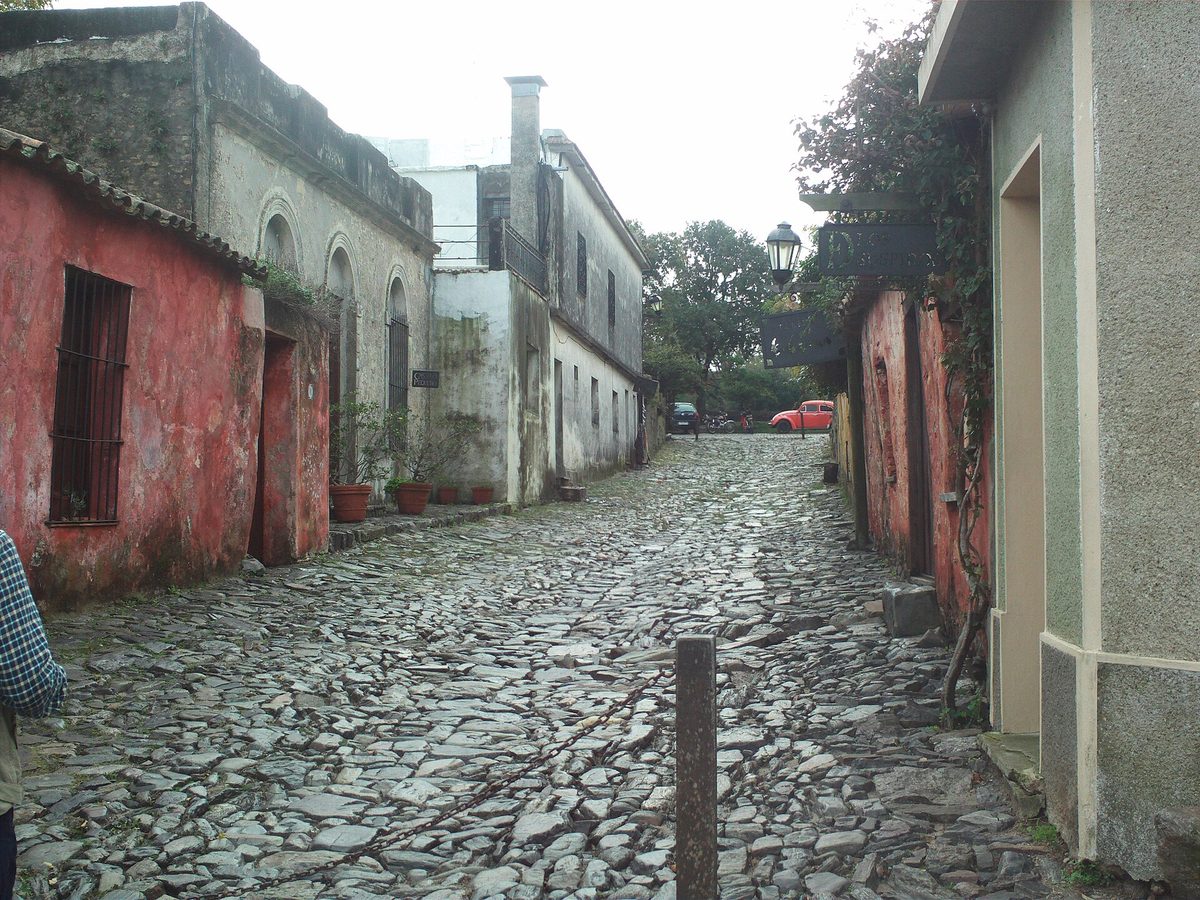
The Calle de los Suspiros — the “Street of Sighs” — is Colonia’s most photographed lane: a short, steeply cobbled street of rose- and ochre-washed houses running down to the river. It is lovely and tiny, so go early or late to beat the tour crowds. Honestly, though, half the pleasure of Colonia is simply wandering the surrounding streets with no map at all.
The Portón de Campo, the walls and Plaza Mayor
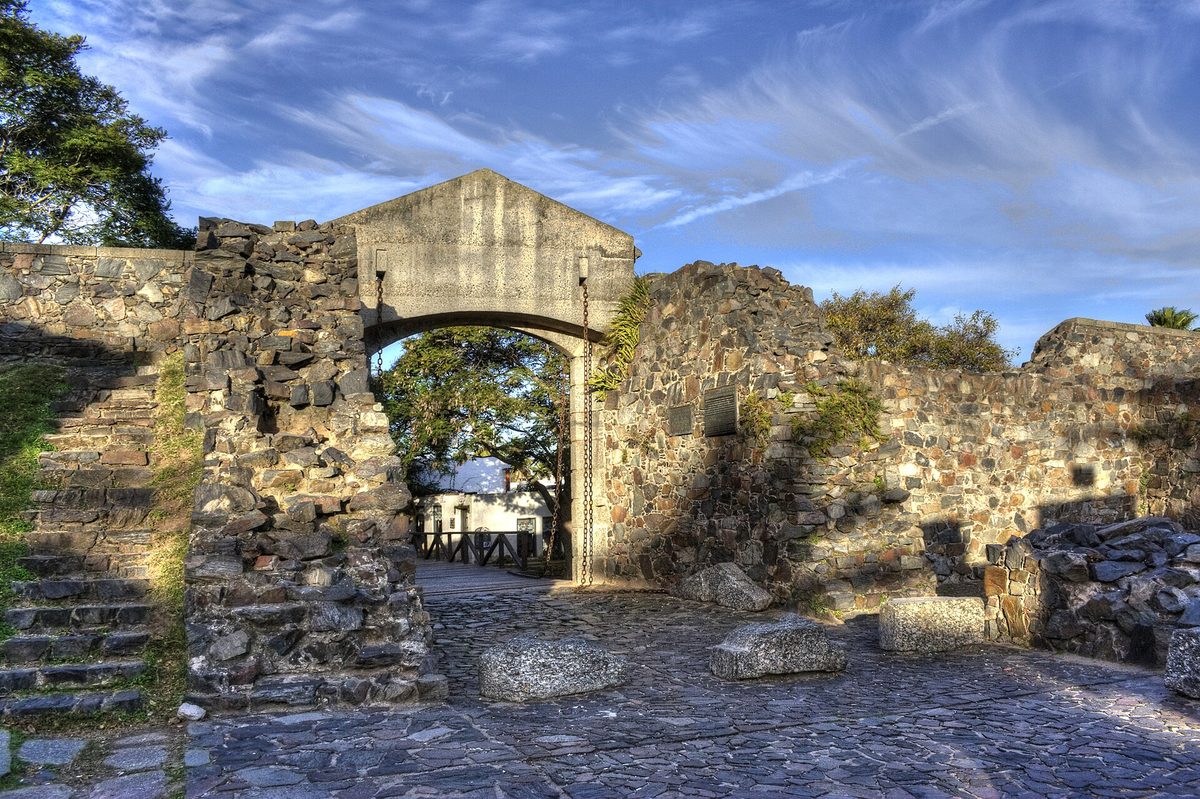
The most theatrical way into the old town is through the Portón de Campo, the 1745 city gate with its wooden drawbridge and the remains of the fortified walls. Climb the grassy ramparts for a river view, then drift through to the leafy Plaza Mayor, the old heart of town, ringed by small museums and shaded benches — the kind of square where an hour disappears unnoticed.
Climb the lighthouse (El Faro)
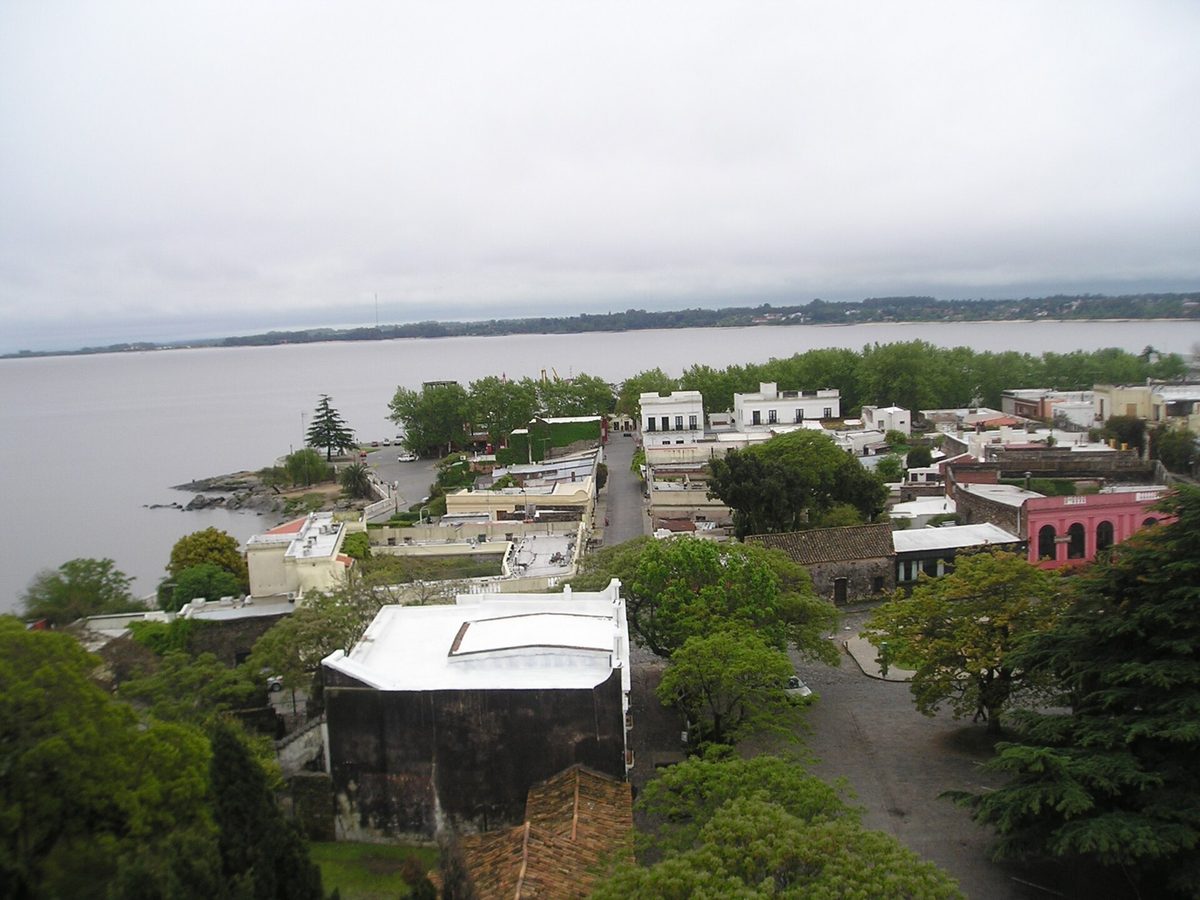
For the best view in town, climb the 19th-century lighthouse (El Faro), built among the ruins of an old convent beside Plaza Mayor. It is a short, steep spiral up, the entry fee is pocket change, and from the top the whole red-roofed old town lies against the wide brown river — on a clear day you can just make out the Buenos Aires skyline you sailed from. My favourite five minutes in Colonia.
Rent a golf cart, scooter or just walk
Two things buzz around Colonia: rented golf carts and old vintage cars left photogenically along the streets. Renting a cart or scooter (from shops near the port) is a fun way to potter out to the riverfront and beaches beyond the old town — reckon on roughly US$50–55 a day for a four-seat cart, US$20–25 for a scooter as of mid-2026, and bring your driving licence. For the historic centre alone, though, you truly do not need wheels; it is all walkable. I rent a cart only to chase the riverside sunset further out.
How long do you need in Colonia?
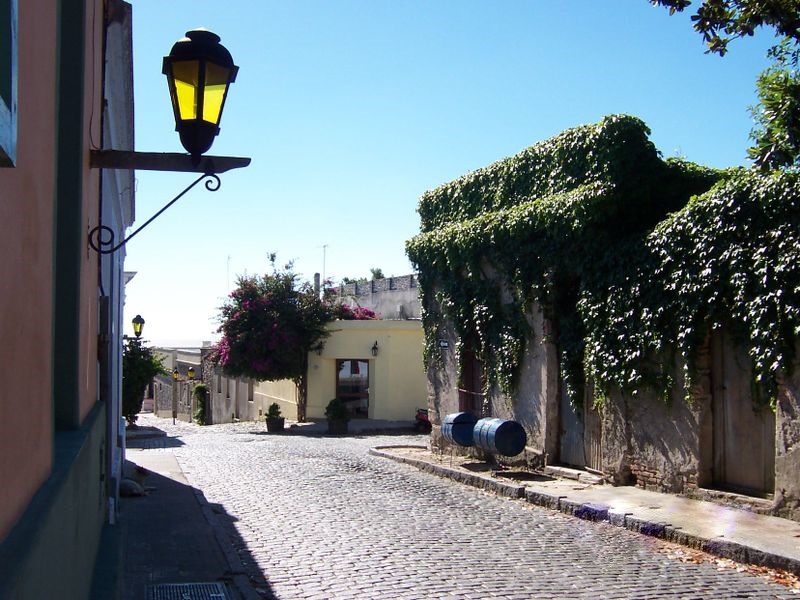
One full day is plenty. Colonia is small, and the Barrio Histórico is comfortably explored in three to four hours, lunch included. A morning ferry over and an evening ferry back gives you the town at its best without any rush. An overnight does have its charm — the cobbled streets empty once the day-trippers leave, lit by lanterns and barely a soul around — but you do not need a night, and most visitors are very happy with a single day. Slot it into a longer city plan using our Buenos Aires itinerary guide.
Money in Uruguay: what it costs and how to pay
One thing trips people up: Uruguay is a different country with a different, generally pricier, economy. The currency is the Uruguayan peso (UYU), and Colonia, leaning hard on day-trip tourism, also takes US dollars and Argentine pesos — though usually at a so-so rate. The simplest approach in 2026 is to pay by card or in Uruguayan pesos: tap your card in restaurants and shops, or pull a little local cash from an ATM. You rarely need to load up on Uruguayan currency for a single day, but budget a touch more than a comparable day in Buenos Aires — a sit-down lunch is not cheap.
None of this has anything to do with Argentina’s own currency quirks; if you want that side covered, our guide to Argentina currency for tourists handles the peso, cards and the post-2025 picture, so I will not repeat it here.
Who Colonia suits (and who might want more)
Colonia is close to a universal crowd-pleaser. It is ideal for couples after a slow, romantic day; for first-time visitors who want a passport stamp and a complete change of scene; for history and architecture lovers; and for anyone craving a calm, walkable break from the big-city buzz. Families do well here too — the golf carts alone keep children happy.
Who might want more? If you are after nightlife, big museums, shopping or a proper city, Colonia will feel sleepy — that is when Uruguay’s capital calls. And if a tiny colonial town for a whole day sounds thin, you might prefer a busier excursion closer to home, like a delta day in Tigre. Weigh it against the field in our roundup of the day trips worth taking.
Combining Colonia with Montevideo
Want more of Uruguay? A popular move is to ferry to Colonia, spend a few hours, then continue by bus (about 2.5 to 3 hours) to Montevideo, turning the day trip into an overnight or weekend; some ferry tickets bundle the onward bus. If the capital is your real target, though, the direct Buquebus fast ferry to Montevideo (around 2h15) is the better bet — our Montevideo day trip guide lays out both options.
Colonia del Sacramento day trip FAQ
Is Colonia del Sacramento worth a day trip from Buenos Aires?
Yes — for most travellers it is the easiest and most rewarding day trip going. In about an hour by fast ferry you reach a tiny, beautiful UNESCO old town in a different country, see the highlights on foot, and sail home by evening. So much change of scene for so little effort is hard to beat.
How long is the ferry from Buenos Aires to Colonia?
The fast ferry takes roughly one hour to one hour and fifteen minutes across the Río de la Plata, depending on the operator and conditions. Buquebus, Colonia Express and Seacat Colonia all run modern catamarans from the Puerto Madero terminal. Build in extra time before departure to clear immigration, which can be slow at busy periods.
Do I need a passport for a Colonia day trip?
Yes. Colonia is in Uruguay, so it is an international crossing and you need your passport — both Argentine exit and Uruguayan entry stamps are done at the Buenos Aires terminal before you board. Argentine and Brazilian citizens may use a national ID card; everyone else needs a valid passport, ideally with six months remaining.
How much does a Colonia del Sacramento day trip cost?
The main cost is the ferry, roughly US$80–170 return as of mid-2026, cheaper booked well ahead and pricier in peak summer. Add lunch, small entry fees (the lighthouse is pocket change) and any golf-cart rental. Uruguay is a touch pricier than Buenos Aires, so budget a little extra and pay by card or in pesos.
What currency do I need in Colonia?
Uruguay uses the Uruguayan peso (UYU). Colonia also accepts US dollars and Argentine pesos because of its day-trip trade, but usually at a mediocre rate. For a single day the easiest approach is to pay by card or draw a little local cash from an ATM; you rarely need to stock up on Uruguayan currency in advance.
Can you do Colonia and Montevideo in one day?
It is a stretch as a single day. You can ferry to Colonia and bus onward to Montevideo (about 2.5–3 hours each way), but doing both well really calls for an overnight. If Montevideo is your priority, take the direct fast ferry there instead and save Colonia for its own trip.
Final thoughts
A Colonia del Sacramento day trip from Buenos Aires is the rare excursion that asks almost nothing and gives a great deal: an hour on the water, a passport stamp, a perfect little colonial town, a long lunch, and home by dark. Book your ferry a few days ahead, pack your passport, leave time for immigration, and travel light. Then spend the day doing the only thing Colonia really demands — wandering its cobbled lanes with nowhere in particular to be. For the wider picture and every other escape near the city, start with our complete guide to day trips from Buenos Aires.
Photo credits
- colonia-del-sacramento-day-trip-from-buenos-aires-old-town.jpg — Photo: Liam Quinn from Canada / CC BY-SA 2.0 via Wikimedia Commons — Wikimedia file page
- colonia-del-sacramento-calle-de-los-suspiros.jpg — Photo: Ypsilon from Finland (CC0) via Wikimedia Commons — Wikimedia file page
- colonia-del-sacramento-porton-de-campo.jpg — Photo: User:HalloweenHJB / CC BY-SA 3.0 via Wikimedia Commons — Wikimedia file page
- colonia-del-sacramento-lighthouse-faro.jpg — Photo: Heretiq / CC BY-SA 3.0 via Wikimedia Commons — Wikimedia file page
- colonia-del-sacramento-riverfront.jpg — Photo: Alfredobi (CC0 / public domain) via Wikimedia Commons — Wikimedia file page