Last updated: June 2026 · Written by the Buenos Aires Tourism editorial team
People always ask me whether you can “pop over” to Montevideo for the day the way you can to Colonia. You can — I have done it — but I will be honest up front: it is a long, full, slightly frantic day, and most travellers are happier turning it into an overnight. If a single day is all you have, here is how to make it work.
A montevideo day trip from buenos aires is doable but tight. The fast direct ferry across the Río de la Plata takes around two and a quarter hours each way, so with the early sailing you land in Uruguay’s capital by mid-morning and have roughly seven to nine hours before the last boat home — enough for the old town, a grilled-meat lunch and a walk along the river, but only just.
Is Montevideo worth a day trip — or should you stay over?
Montevideo is a very different animal from Colonia del Sacramento. Colonia is a tiny, cobbled jewel-box you can genuinely “do” in an afternoon. Montevideo is a real, sprawling capital of around 1.4 million people — a working port city with a faded-grand old town, a long coastal promenade and a slower mood than Buenos Aires. You cannot see all of that between two ferries.
So here is my honest take. If you are happy with a fast, greatest-hits day, the direct ferry makes a day trip workable. If you want to actually feel the place — a leisurely asado, a sunset on the Rambla, a night out in Ciudad Vieja — book one night, which removes the clock-watching that defines the day-trip version. For the wider menu of escapes from the capital, our complete guide to day trips from Buenos Aires sets Montevideo alongside the easier, shorter options.
The trip in numbers (mid-2026)
Here is the day trip at a glance. All times and fares are approximate and move with season and how far ahead you book, so treat them as a planning guide and check current prices when you reserve.
| Detail | The reality |
|---|---|
| Distance | ~225 km across the Río de la Plata |
| Direct fast ferry | ~2h15 each way (Buquebus) |
| Ferry-to-Colonia + bus | ~3.5–4h each way, cheaper |
| Time on the ground (day trip) | ~7–9 hours with the early boat |
| Round-trip fare | Direct ~US$130–300; combo ~US$70–150 (varies a lot) |
| Documents | Passport required — it is an international crossing |
| Best for | Determined day-trippers; better as an overnight |
Getting there: a montevideo day trip from buenos aires by ferry
This is an international crossing of the Río de la Plata, so it is all about the boats. There are two sensible ways across, and your choice largely decides whether a single day is realistic. You need your passport either way — both countries stamp it, and immigration for both is handled together at the Puerto Madero ferry terminal in Buenos Aires before you board.
Option 1: the direct fast ferry (Buquebus)
The direct catamaran is the only option I would trust for a true day trip. Run by Buquebus, it crosses in around two hours fifteen minutes from the Puerto Madero terminal, arriving right in Montevideo’s port on the edge of Ciudad Vieja. The sailing for day-trippers is the early-morning departure (typically around 7:30am), getting you into Uruguay by roughly 9:45–10am; to get home you want the evening boat back, which tends to leave around 7:30pm. That is your day: in by ten, out by half-seven.
It is not cheap. As of mid-2026 a round trip on the direct fast ferry typically runs somewhere around US$130 to US$300 depending on season, seat class and how early you book — and a return is essentially just two one-ways, with no real round-trip discount. Book online in advance, both to lock the schedule you need and because the cheaper fare buckets sell out.
Option 2: ferry to Colonia, then a bus
The cheaper route is the short, fast ferry to Colonia del Sacramento (about an hour to an hour and fifteen), then a coach for the roughly two-and-a-half to three-hour run along the coast into Montevideo. Operators such as Buquebus, Colonia Express and Seacat Colonia sell these ferry-plus-bus combinations, and they can be markedly cheaper — very roughly US$70 to US$150 round trip, again dependent on dates and booking window.
The catch is time: around three and a half to four hours each way eats most of your daylight and leaves only a few hours in Montevideo itself. I would only do it as a day trip if the direct fares are sky-high or sold out; otherwise it suits an overnight, or a trip where Colonia is the actual destination. If Colonia tempts you in its own right — and it should — see our full guide to a Colonia del Sacramento day trip from Buenos Aires.
For the nuts and bolts of every crossing — terminals, classes, luggage, check-in — our dedicated guide to the Buenos Aires to Uruguay ferry goes deeper than I can here. Whichever boat you take, reach the Puerto Madero terminal an hour or two before departure: you are clearing two countries’ immigration, and the peak-time queues are real.
What to do in Montevideo with limited hours
Assume you arrive at the port around 10am and need to be back for the evening boat. That is a compact but rewarding day on foot — almost everything worth seeing on a flying visit is within walking distance of the port, in and around Ciudad Vieja. Here is the route I would walk.
Ciudad Vieja — the old town
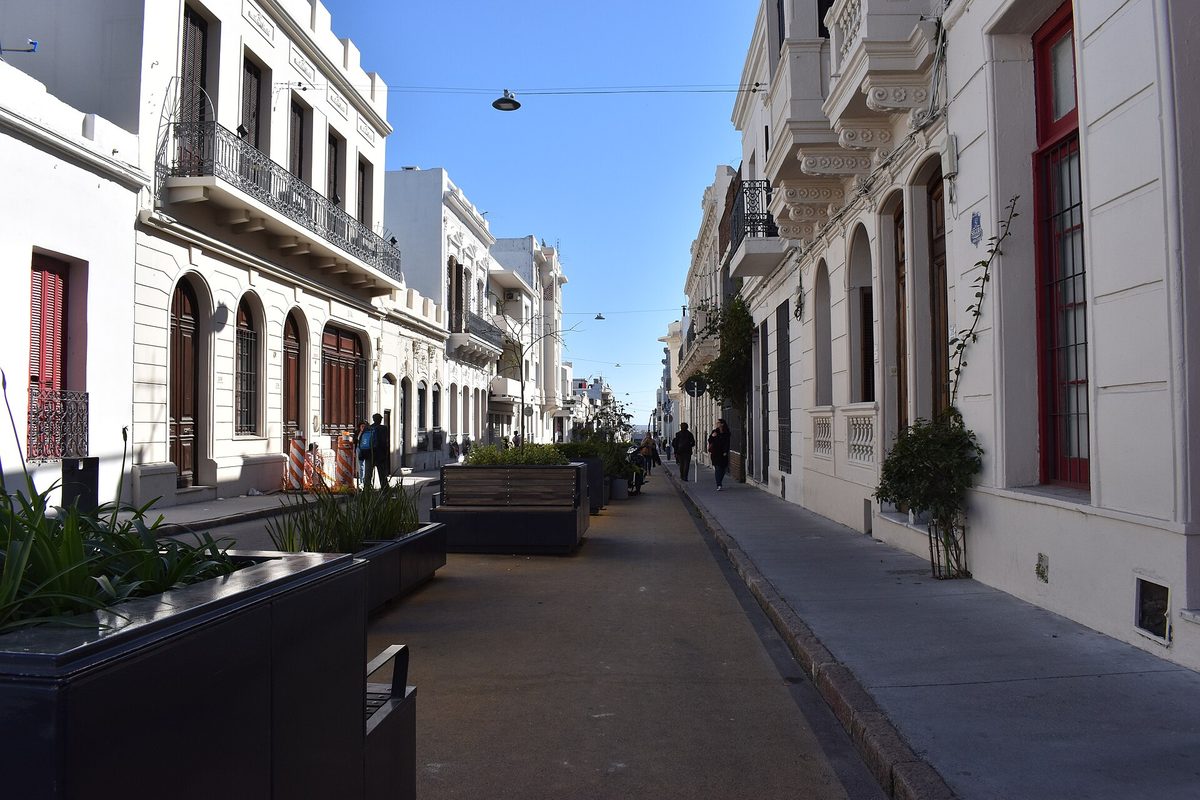
Step off the boat and you are already on the doorstep of Ciudad Vieja, the historic core on its little peninsula. This is where you spend your morning: cobbled streets of faded Art Deco and colonial facades, leafy plazas, bookshops and cafes, and the pedestrianised Calle Sarandí. It is gritty in patches and handsome in others, and rewards aimless wandering more than any checklist. Keep your wits about you with valuables and stick to the busier streets.
Plaza Independencia & Palacio Salvo
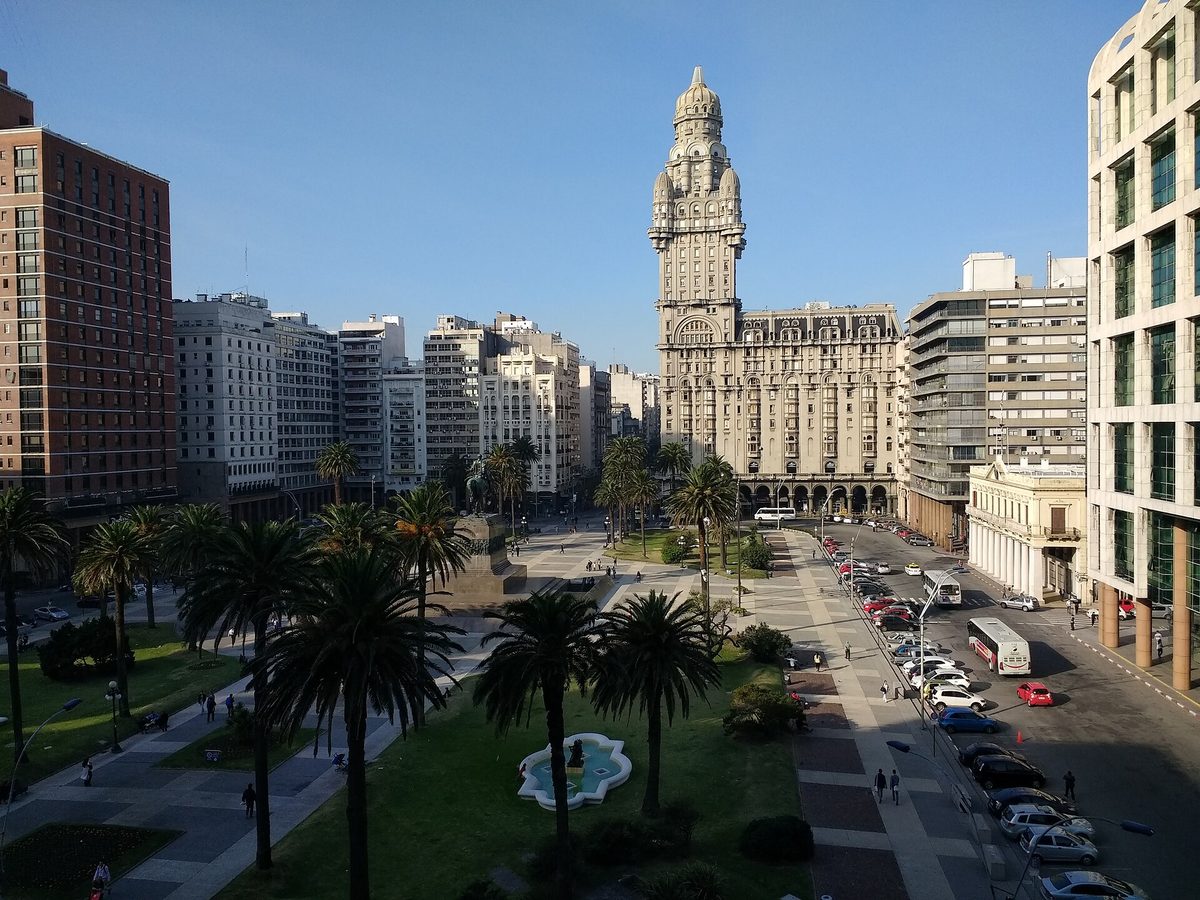
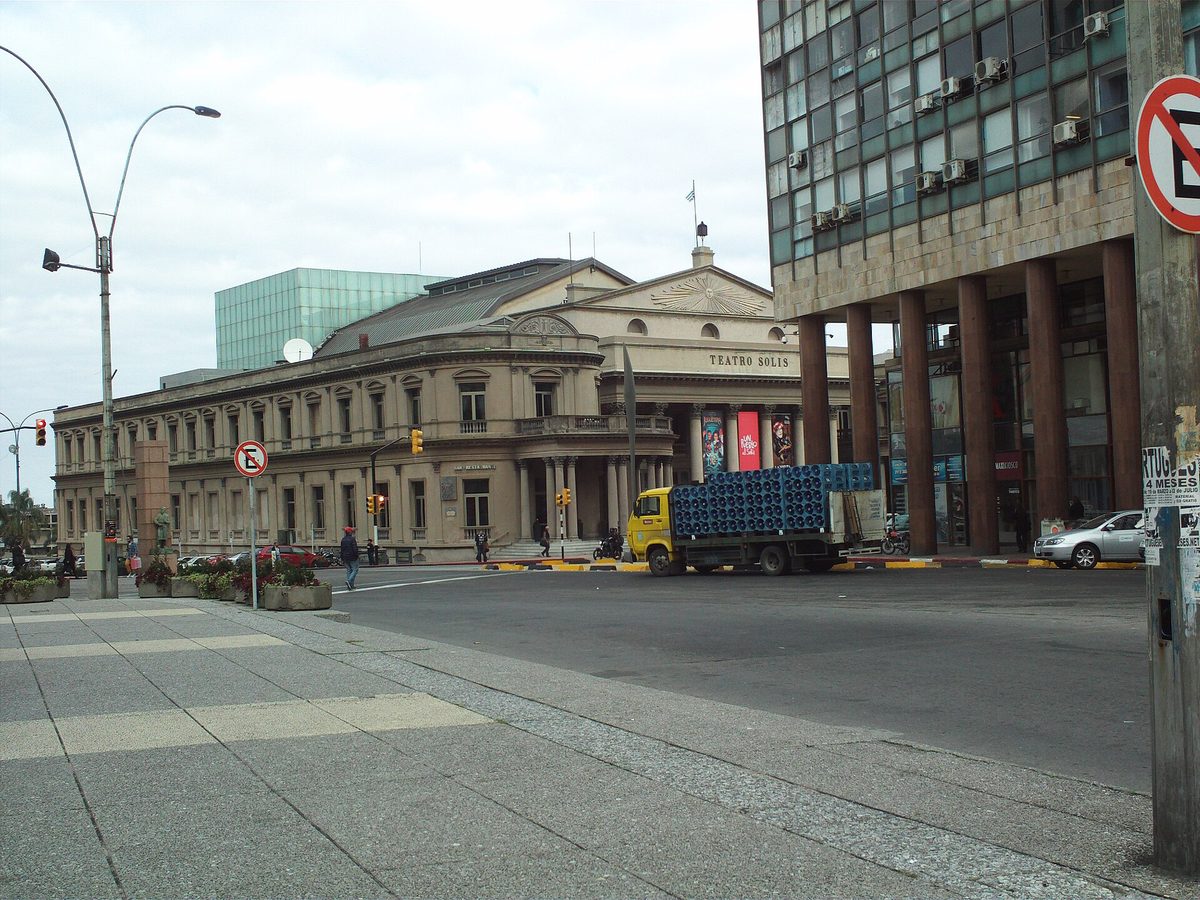
Ciudad Vieja ends, dramatically, at Plaza Independencia, the great square that hinges the old town to the modern downtown. In its centre stands the mausoleum and equestrian statue of national hero José Artigas; on one flank looms the Palacio Salvo, an eccentric 1920s tower that was once the tallest building in South America and is still the city’s defining landmark. The neoclassical Teatro Solís, Uruguay’s grand old opera house, is a two-minute walk away and worth a look from outside even if you have no time to tour it.
Mercado del Puerto — lunch over the coals
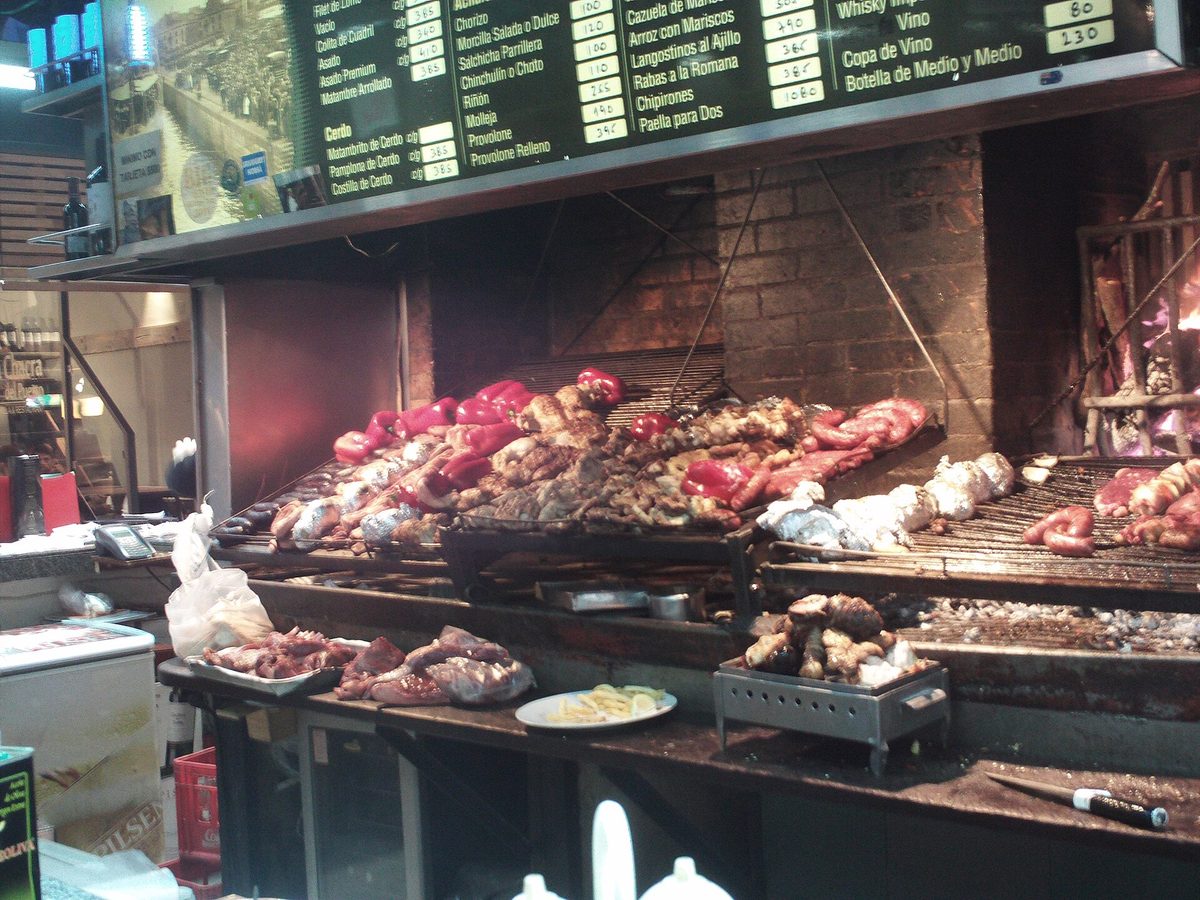
Do not miss lunch at the Mercado del Puerto, a wrought-iron market hall back by the port that has become Montevideo’s temple to grilled meat. A row of parrillas blaze away, and you eat asado — short ribs, sausages, sweetbreads, a chivito if you are brave — at the counter or a packed table, washed down with Uruguayan Tannat or the local medio y medio (half sparkling wine, half white). It is touristy, smoky and brilliant, and the most Montevidean thing you can do on a short visit. Go a little before or after the local lunch rush if you can.
The Rambla and Pocitos — if time allows
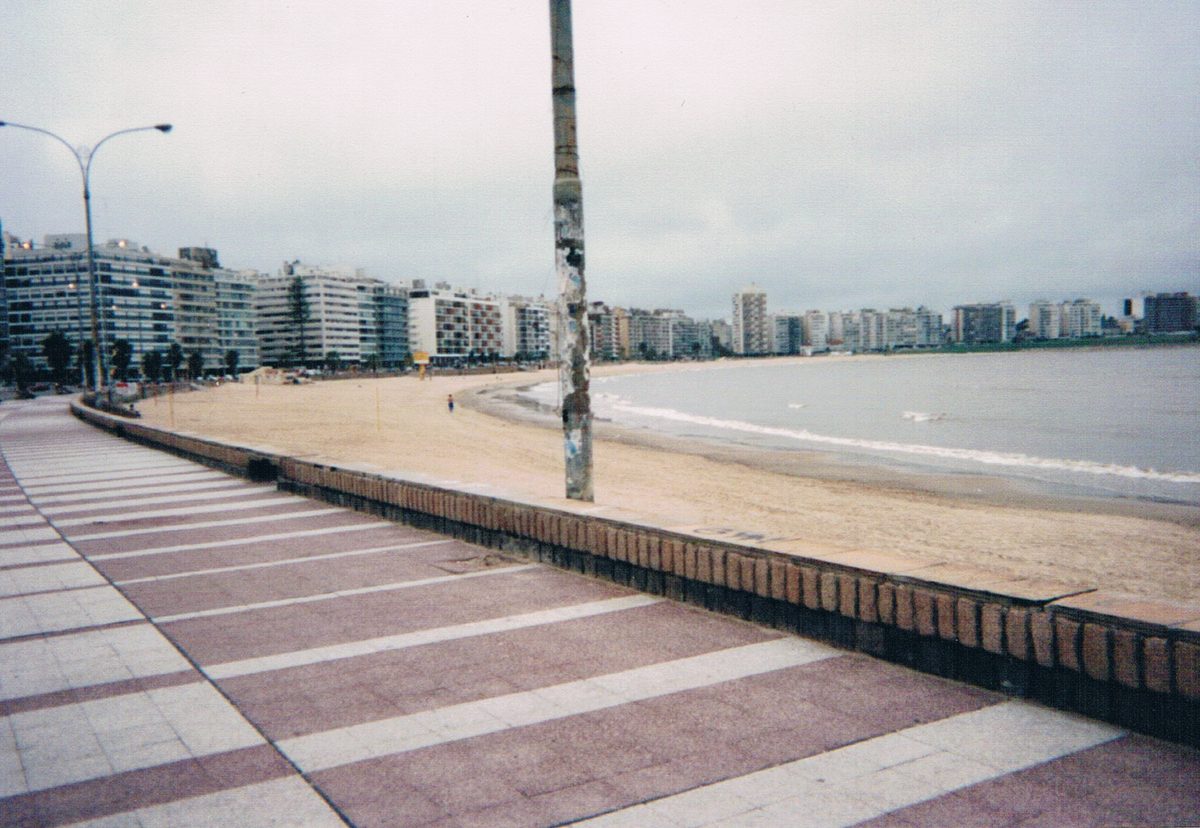
With a full belly and an afternoon to spare, head for the water. Montevideo’s Rambla is its glory: a vast riverside promenade that runs for miles along the Río de la Plata, where locals jog, fish, sip mate and watch the sun go down. Even an hour’s stroll gives you the measure of the city. If you have the time, push on to the beach barrio of Pocitos, with its curve of city beach and apartment towers, a short ride from the centre. On the day-trip clock you are choosing between a slow Rambla walk and Pocitos, not both — exactly why I keep nudging people towards an overnight.
How to maximise a single day (and why an overnight wins)
If you are committed to the day trip, success comes down to discipline. Book the earliest direct ferry and the latest return, and reserve in advance so you are not at the mercy of a sold-out boat. Travel light, a daypack only. Have a rough plan (old town → Plaza Independencia → Mercado del Puerto lunch → Rambla), accept that you will skip the museums and outer beaches, keep everything walkable and near the port, and leave a buffer to clear immigration on the way home.
But I will say it once more, because it is the most useful advice here: Montevideo is better with a night. Stay over and the day relaxes completely — a long lunch, a sunset on the Rambla, dinner in Ciudad Vieja, and a second morning for whatever you missed. A two-day, one-night trip is, for most people, the sweet spot. If you are building a longer Argentina trip, our Buenos Aires itinerary shows where an overnight to Uruguay fits without derailing the rest.
Money in Montevideo: a quick note
Cross the river and you change currencies: Uruguay uses the Uruguayan peso (UYU), and US dollars are widely accepted at the touristy end. Be ready for a jolt — Uruguay is noticeably pricier than Argentina, and Montevideo can feel expensive after Buenos Aires. The easy move is to pay by card wherever you can; you get a fair rate and avoid juggling a third set of cash for one day. For how money works on the Argentine side — and why the old “bring a wad of cash” advice is outdated since the 2025 reforms — see our guide to Argentina currency for tourists.
Who a Montevideo day trip suits
This one is not for everyone. It suits the time-pressed traveller who wants to set foot in a second country and get a real taste of the Uruguayan capital in a single, efficient day — and who cannot spare a night. It suits repeat visitors to Buenos Aires after a change of scene, and anyone who loves a long ferry day on the water. It does not suit travellers who hate rushing, who want beach time, or who are choosing between Montevideo and Colonia for a relaxed day out — in that last case, Colonia or even nearby Tigre is the smarter, lower-stress pick. To weigh it against every option from the capital, our roundup of the best day trips from Buenos Aires lays them side by side.
Frequently asked questions
Can you do Montevideo as a day trip from Buenos Aires?
Yes, but it is tight. Take the early direct Buquebus fast ferry (about 2h15) and you land mid-morning with roughly seven to nine hours before the evening boat home — enough for Ciudad Vieja, a Mercado del Puerto lunch and a Rambla walk. It works for focused day-trippers, but most people enjoy it far more as an overnight.
How long is the ferry from Buenos Aires to Montevideo?
The direct fast ferry with Buquebus takes around two hours fifteen minutes each way. The cheaper alternative — a short ferry to Colonia del Sacramento followed by a coach — takes roughly three and a half to four hours each way, so it suits an overnight better than a single day.
How much does the Buenos Aires to Montevideo ferry cost?
As of mid-2026, a round trip on the direct fast ferry typically runs around US$130 to US$300, depending on season, seat class and how early you book; a return is essentially two one-ways. The ferry-plus-bus combo via Colonia is cheaper, very roughly US$70 to US$150 round trip. Fares move a lot, so check current prices.
Do I need a passport to visit Montevideo?
Yes. Crossing to Uruguay is an international journey, so you need your passport. Both countries stamp it, and immigration for both is handled together at the Puerto Madero ferry terminal in Buenos Aires before you board, which makes arrival in Montevideo quick.
Is Montevideo or Colonia the better day trip?
For a relaxed single day, Colonia wins easily — it is far closer (about an hour by fast ferry), compact and made for an afternoon’s stroll. Montevideo is a bigger, richer city but a much longer haul, and really wants an overnight. Choose Colonia for an easy day out; choose Montevideo if you have the time to do it justice.
Final thoughts
A Montevideo day trip from Buenos Aires is absolutely possible and quietly demanding. Catch the early direct ferry, keep your plan tight and walkable — old town, that great square, a smoky lunch at the Mercado del Puerto, a stretch of Rambla — and you will get a genuine taste of the Uruguayan capital and be home for a late dinner in Buenos Aires. Do it if a day is all you have. But if you can spare a night, give Montevideo one: it repays the extra time many times over. Either way, start with our complete guide to day trips from Buenos Aires to see how it fits with everything else within reach of the city.
Photo credits
- montevideo-day-trip-from-buenos-aires-skyline.jpg — Photo: Aymatth2 (CC0) via Wikimedia Commons (Rambla and Pocitos, Montevideo) — Wikimedia file page
- montevideo-day-trip-ciudad-vieja.jpg — Photo: Intendencia de Montevideo / CC BY-SA 4.0 via Wikimedia Commons (Calle Washington, Ciudad Vieja) — Wikimedia file page
- montevideo-day-trip-palacio-salvo.jpg — Photo: Mx. Granger (CC0) via Wikimedia Commons (Plaza Independencia and Palacio Salvo) — Wikimedia file page
- montevideo-day-trip-mercado-del-puerto.jpg — Photo: Ypsilon from Finland (CC0) via Wikimedia Commons (parrilla at the Mercado del Puerto) — Wikimedia file page
- montevideo-day-trip-teatro-solis.jpg — Photo: Ypsilon from Finland (CC0) via Wikimedia Commons (Teatro Solís) — Wikimedia file page