Last updated: June 2026 · Written by the Buenos Aires Tourism editorial team
The first time someone asks me how to do Iguazú Falls “as a day trip” from Buenos Aires, I have to break some news: the falls are about 1,300 km away, up in the subtropical corner of Misiones province where Argentina, Brazil and Paraguay meet. This is not Tigre.
So let me be honest from the start. Visiting Iguazu Falls from Buenos Aires is not a true day trip; it is a flight plus at least one overnight. You can technically fly in and out in a single long day on an organised tour, but the sensible version is two or three days — one night minimum, ideally two so you can see both the Argentine and Brazilian sides. Below is exactly how to do it in 2026, what it costs, and how to choose.
Is Iguazú really a day trip from Buenos Aires?
Short answer: not in any normal sense. Iguazú is roughly a two-hour flight or an eighteen-hour bus ride from the capital. When operators sell a “full-day Iguazú trip with airfare”, they mean a pre-dawn pickup, an early flight up, a guided dash around the Argentine park, and a late flight home — a fourteen-hour day, give or take.
That long day-tour exists, and for time-pressed travellers it beats not going at all. But you see one side only, you are rushed, and you pay a premium for it. If you possibly can, give Iguazú an overnight. For where it sits among the easier options, see our complete guide to day trips from Buenos Aires — Iguazú is the grand exception that breaks the “there and back in a day” rule.
Iguazu Falls from Buenos Aires at a glance
Here is the trip in numbers as of mid-2026. Treat fares as ballpark figures — Argentine domestic prices move with the season and the booking window, so always check current rates.
| Option | Each way | Rough cost (return) | Best for |
|---|---|---|---|
| Fly (AEP → IGR) | ~1h45 in the air | ~US$110–230 | Almost everyone |
| Long day-tour with airfare | 14h round trip | ~US$350–550+ | Very tight schedules |
| Overnight bus from Retiro | ~16–18h | ~US$110–260 (cama) | Budget & time-rich |
| 2–3 day trip (recommended) | Fly + 1–2 nights | From ~US$300 all-in | Seeing both sides properly |
My honest recommendation: fly up, stay two nights, and split your time between the Argentine and Brazilian parks. That is the version that does this UNESCO World Heritage site justice.
Getting there: flights vs the bus
Flying (what almost everyone does)
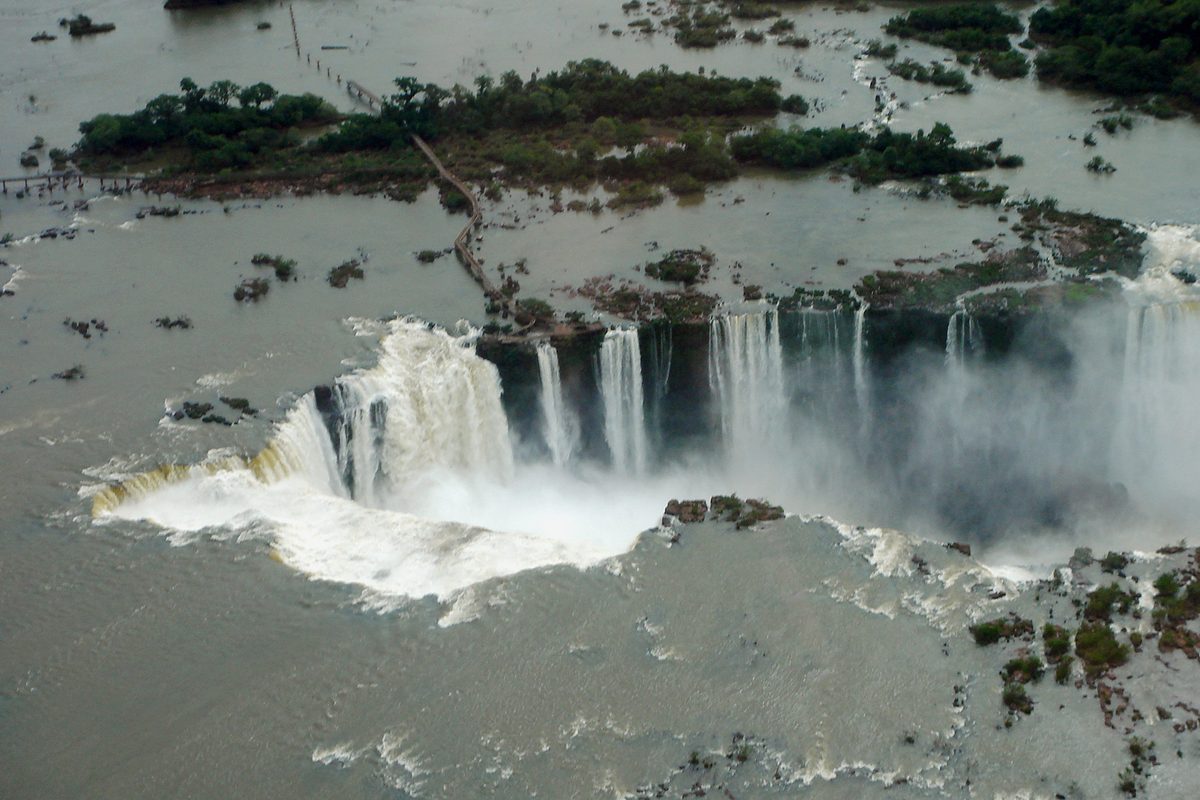
The practical way to reach Iguazú is to fly from Buenos Aires’ city airport, Aeroparque Jorge Newbery (AEP), to Cataratas del Iguazú International Airport (IGR) at Puerto Iguazú — about an hour and forty-five minutes. Three airlines run the route in 2026: full-service Aerolíneas Argentinas and the low-cost Flybondi and JetSMART. Some flights also leave from Ezeiza (EZE), but Aeroparque is far handier if you are staying in the city.
Return fares in 2026 typically land somewhere around US$110–230, though the low-cost airlines occasionally dump seats far cheaper if you book early and travel light. Watch the catch with Flybondi and JetSMART: the headline fare excludes checked — and sometimes carry-on — baggage, so add bags back in before you compare. From IGR it is a 20-minute taxi or transfer into Puerto Iguazú town or out to the park. For the city end of the journey, our guide to getting around Buenos Aires covers reaching Aeroparque.
The overnight bus from Retiro
The long-distance alternative is the bus from Retiro terminal in Buenos Aires. It is a serious haul — roughly sixteen to eighteen hours each way — on operators like Crücero del Norte and Vía Bariloche. Pay for a cama or cama suite seat that reclines almost flat; a regular semi-cama for that long is punishing. A return ticket in cama class runs around US$110–260 depending on operator and season.
Who is the bus for? Budget travellers with time to spare, or anyone who enjoys the overland experience. For most visitors the cheap flights make eighteen hours on a bus a false economy — you would burn two precious nights sleeping upright. All long-distance buses leave from Retiro; check current timetables with the operators before you commit.
The Argentine side: Parque Nacional Iguazú
The Argentine park is where you get up close and personal. You walk among the falls, over them, almost into them — it is the immersive, wet, roaring half of the experience, and you need the better part of a full day for it.
From the visitor centre, the free Tren Ecológico de la Selva (jungle train) shuttles you through the forest to the trailheads. There are two main loops of passarelas (metal walkways): the Upper Circuit along the tops of the cascades, and the Lower Circuit down to their base where the boat trips launch. Allow a couple of hours for the circuits alone, more if you stop to gawp — and you will.
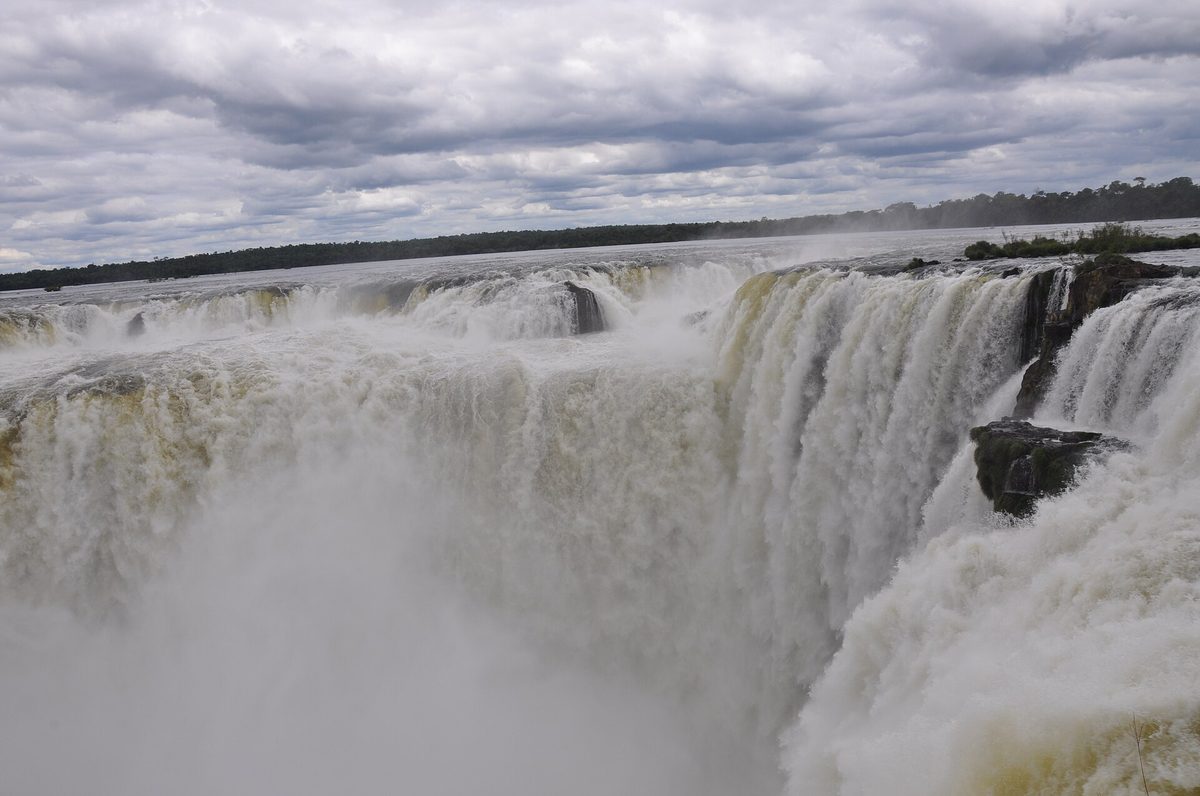
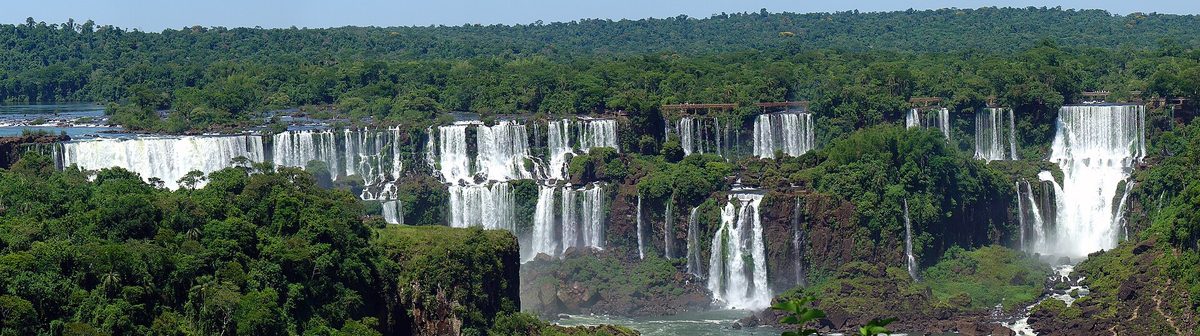
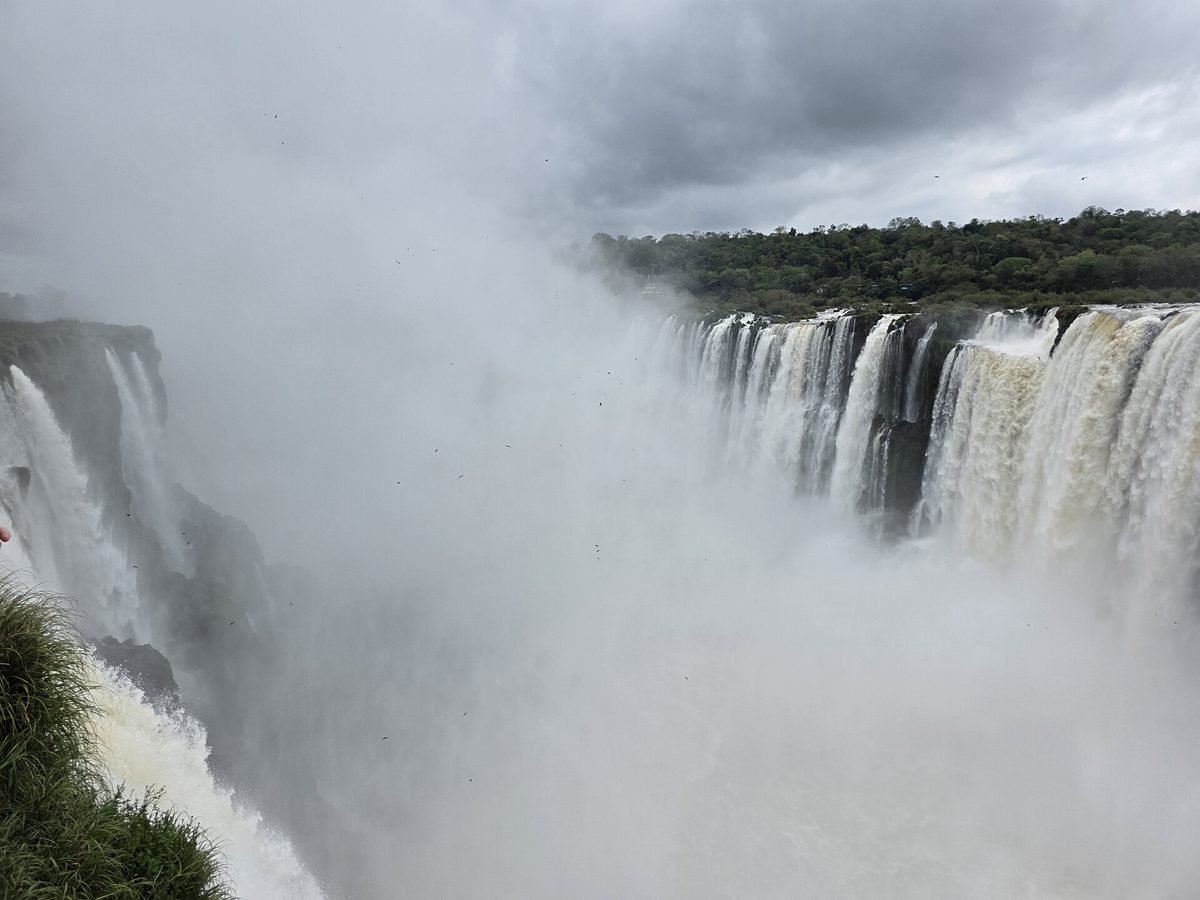
The unmissable finale is the Garganta del Diablo (Devil’s Throat). The train carries you to its own station, from where a long elevated walkway snakes more than a kilometre across the placid upper river — and then the world simply drops away into a thundering, mist-wreathed horseshoe. It is the single most overwhelming thing I have seen in Argentina. Go early or late; the midday queues on the walkway can be slow.
Park entry for foreign visitors sits around US$20–25 (charged in pesos, roughly ARS 45,000 in recent pricing) — check the official figure when you go, as it is adjusted regularly. Keep your ticket: pay for it again the next day and you usually get a discount on a second consecutive visit. If you want the optional Gran Aventura speedboat that powers you right under the cascades, budget extra and expect to get drenched.
The Brazilian side: the panoramic view
The two sides are not rivals — they complement each other, and ideally you do both. If Argentina is the immersive side, Brazil is the postcard side: a single, shorter trail along the Foz do Iguaçu rim that hands you the wide, jaw-dropping panorama of the whole falls system across the gorge. You can see it comfortably in half a day, which is why two nights works so neatly.
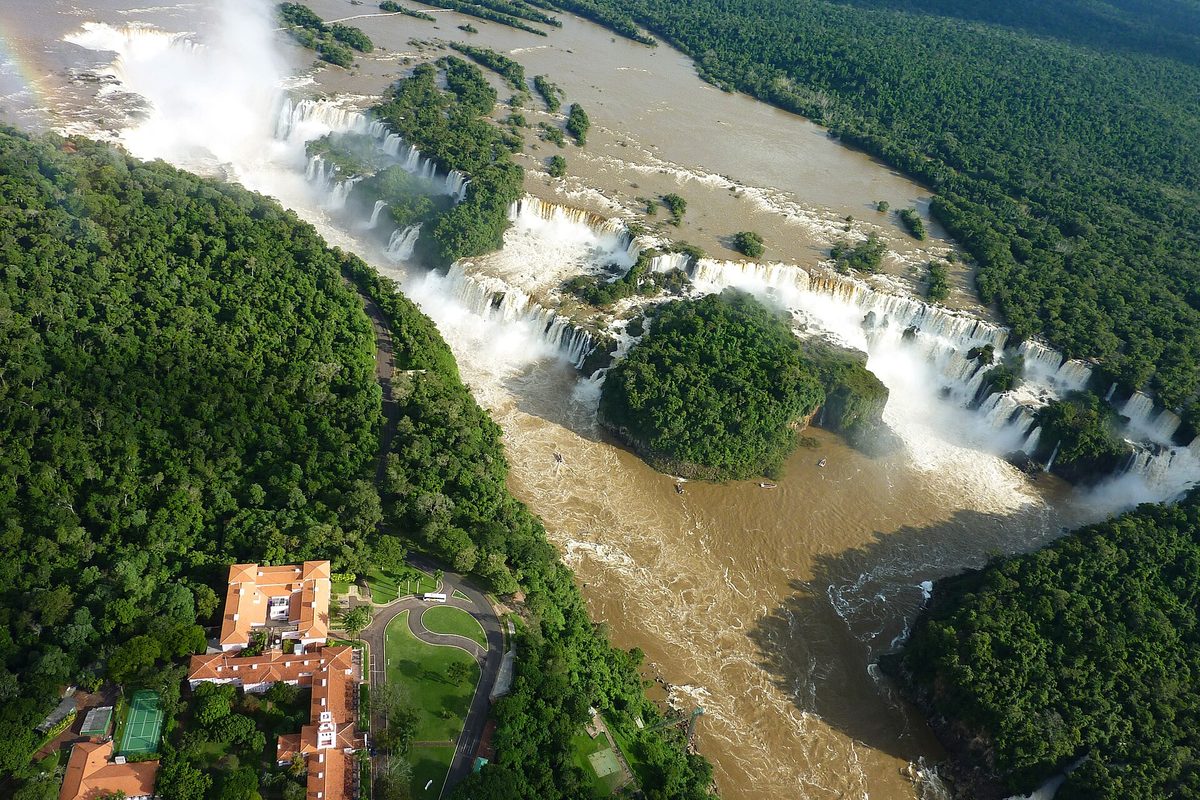
Crossing the border matters, so plan it. Puerto Iguazú (Argentina) and Foz do Iguaçu (Brazil) sit about 15 km apart, linked by the Tancredo Neves bridge. You need your passport and you must clear immigration on both sides. Crucially, since 2025 Brazil again requires an eVisa from citizens of the United States, Canada and Australia — apply online well in advance, and make sure it permits multiple entries if you are crossing back. UK and EU passport holders enter Brazil visa-free for tourism. The easiest way to handle the logistics is a half-day Brazil-side tour from Puerto Iguazú with the transfer and queues handled for you.
Where to stay and how many days
You have two broad choices on the Argentine side. Puerto Iguazú town is the budget-to-mid-range base: a small, walkable place with plenty of hotels, hostels and restaurants, 15–20 minutes from the park gate and well set up for both border crossings. It is where most independent travellers stay, and it is the better-value option.
The splurge is the Gran Meliá Iguazú (the former Sheraton), the only hotel inside the Argentine park. It is pricey, but you wake to falls views and reach the circuits before the day-trippers arrive — a real perk for photographers. The Brazilian-side equivalent is the Hotel das Cataratas.
How long do you need? My rule of thumb:
- One night (two days): the minimum — fly up, do the Argentine side properly the next morning, fly home. You will miss Brazil.
- Two nights (three days): the sweet spot — a full day in Argentina, a half-day in Brazil, time to actually breathe.
- Three nights: for keen photographers or anyone adding the Itaipú dam, a boat safari or a slower pace.
An Iguazú overnight slots neatly onto the end of a city stay; if you are still mapping out the capital itself, our Buenos Aires itinerary shows where a two- or three-day side trip fits best.
What it costs
A rough mid-2026 budget for two people doing the recommended two-night version: figure on roughly US$220–460 for the return flights between you, US$80–240 for two nights’ accommodation, around US$40–50 each in park fees across both sides, plus the Brazil eVisa fee if it applies, transfers, meals and any boat add-ons. Call it from about US$300 a head all-in — less if you go low-cost and stay in hostels, far more at the Gran Meliá.
One money note for 2026: Argentina lifted most currency controls in 2025, so the old “bring cash for the blue dollar” advice is outdated — foreign cards are now charged near the official rate. The Brazilian side trades in reais. For the bigger picture, see our guide to Buenos Aires travel costs.
Best time to go
Iguazú is good year-round — the falls always flow — but the shoulder seasons are kindest. Spring (September to November) and autumn (March to May) bring comfortable 20–30°C days, lower humidity and thinner crowds. If you want maximum water thundering over the edge, the summer rains of December to February deliver raw power — but also fierce heat above 35°C and the year’s biggest crowds.
Avoid, if you can, mid-December to mid-February (Christmas, New Year and the Argentine school holidays) and Semana Santa (Easter week), when both the falls and the flights are at their most packed and priciest. October — warm, green, not yet sweltering — is one of the loveliest months to come. Our guide to the best time of year to be in Buenos Aires helps you pick your overall window.
How Iguazú compares to the easy day trips
Because Iguazú demands a flight and a hotel, it sits in a different league from the genuine out-and-back excursions. If your time is short, the classic day trips deliver a lot for far less effort: our ranked overview of the classic excursions from the city lays them all out, and the riverside delta town of Tigre is the easiest — about an hour by train.
If it is a foreign stamp you are after rather than waterfalls, the colonial Uruguayan town of Colonia del Sacramento is a one-hour ferry hop, while Montevideo works as a long day or an overnight. Iguazú, by contrast, is the one excursion worth rearranging your itinerary for.
Frequently asked questions
Can you visit Iguazú Falls from Buenos Aires on a day trip?
Only as a long, organised day-tour that flies you up and back in roughly fourteen hours — and even then you see just the Argentine side. The falls are about 1,300 km away, so there is no quick out-and-back. For a proper visit you need at least one overnight, ideally two.
How do you get from Buenos Aires to Iguazú?
Fly from Aeroparque (AEP) to Cataratas del Iguazú airport (IGR) in about one hour and forty-five minutes on Aerolíneas Argentinas, Flybondi or JetSMART. The budget alternative is an overnight bus from Retiro, sixteen to eighteen hours each way. For most travellers the cheap flights make the bus a false economy.
How many days do you need at Iguazú?
Two nights is the sweet spot: a full day on the Argentine side and a half-day on the Brazilian side. One night is the bare minimum and limits you to the Argentine park. Add a third night only if you want a slower pace, more photography time, or to fit in extras like a boat safari.
Do you need a passport or visa to see both sides of Iguazú?
Yes — crossing from Argentina to Brazil is an international border, so bring your passport and clear immigration both ways. Since 2025, US, Canadian and Australian citizens need a Brazilian eVisa, arranged online in advance. UK and EU passport holders enter Brazil visa-free for tourism. Argentina is visa-free for these nationalities too.
Which side of Iguazú Falls is better, Argentina or Brazil?
They are different, not rivals. The Argentine side is immersive — kilometres of walkways that put you among and above the cascades, including the staggering Garganta del Diablo. The Brazilian side gives the wide panorama of the whole falls system from across the gorge. If you can, do both; if forced to pick one, choose Argentina.
Final thoughts
Iguazú is the one excursion that earns the disruption to your plans. No, it is not a real day trip from Buenos Aires — it is a flight and at least one overnight, and pretending otherwise just leaves you exhausted and short-changed. Fly up from Aeroparque, give it two nights, see both the immersive Argentine side and the panoramic Brazilian one, and you will understand why visitors consistently rank it among the greatest natural sights on earth. Sort the Brazil eVisa early, travel in spring or autumn if you can, and treat it as the centrepiece it deserves to be. For everything closer to the city, our guide to day trips from Buenos Aires has the rest of the picture.
Photo credits
- iguazu-falls-from-buenos-aires-panorama.jpg — Photo: Martin St-Amant (S23678) / CC BY 3.0 via Wikimedia Commons — Wikimedia file page
- iguazu-falls-from-buenos-aires-walkway.jpg — Photo: Mariordo (Mario Roberto Durán Ortiz) / CC BY-SA 4.0 via Wikimedia Commons — Wikimedia file page
- iguazu-falls-from-buenos-aires-national-park.jpg — Photo: Horacio Cambeiro / CC BY 4.0 via Wikimedia Commons — Wikimedia file page
- iguazu-falls-from-buenos-aires-devils-throat.jpg — Photo: Jorge Láscar / CC BY 2.0 via Wikimedia Commons — Wikimedia file page
- iguazu-falls-from-buenos-aires-aerial.jpg — Photo: chensiyuan / CC BY-SA 4.0 via Wikimedia Commons — Wikimedia file page