Last updated: June 2026 · Written by the Buenos Aires Tourism editorial team after many trips spent wandering the city’s stranger corners.
By my third visit I had run out of cemeteries to be moved by and steaks to over-order, so I went looking for the unusual things to do in Buenos Aires instead: a palace built to hide water tanks, a skyscraper laid out like Dante’s Inferno, a bar you enter through a flower shop. That is when the city stopped being “the Paris of South America” to me and became something far more itself — theatrical, eccentric and a little obsessive. This is the guide I wish someone had handed me back then.
The most unusual things to do in Buenos Aires, at a glance
The best unusual things to do in Buenos Aires are the ones hiding in plain sight: tour the tiled Water Palace and its museum of old toilets, descend into the El Zanjon tunnels under San Telmo, climb Dante-inspired Palacio Barolo, drink in a speakeasy behind a florist, and get lost in offbeat barrios like Chacarita and Coghlan. Most are cheap, central and gloriously strange.

This is the offbeat companion to our main guide to things to do in Buenos Aires — so I am skipping Recoleta Cemetery, the Obelisco and the obvious tango halls (the big hitters live in our roundup of the best things to do in Buenos Aires for first-timers). Everything below rewards curiosity over a checklist. A reminder before we start: Argentine prices move fast with inflation, and quirky little places keep quirky little hours, so treat every figure as “around” and check current details before you set out.
Buenos Aires’s strangest buildings
Porteno architects had Beaux-Arts ambitions and, occasionally, a sense of humour. These three are my favourite oddities — all walkable from the centre, all stories you would not invent.
The Water Palace that hides giant tanks (Palacio de Aguas Corrientes)
From the outside, the Palacio de Aguas Corrientes in Balvanera looks like a wedding-cake French palace: 170,000-odd glazed tiles and tens of thousands of enamelled bricks shipped in from England and Belgium in the 1890s. The joke is that it was built to disguise a giant municipal water-pumping station — the most ornate water tank you will ever see. Inside, a small, free and frankly bizarre Museo del Patrimonio displays antique toilets, taps and pipes. It is usually open weekday mornings; ring ahead, as guided visits run on a limited schedule.
Palacio Barolo: a skyscraper built like Dante’s Inferno
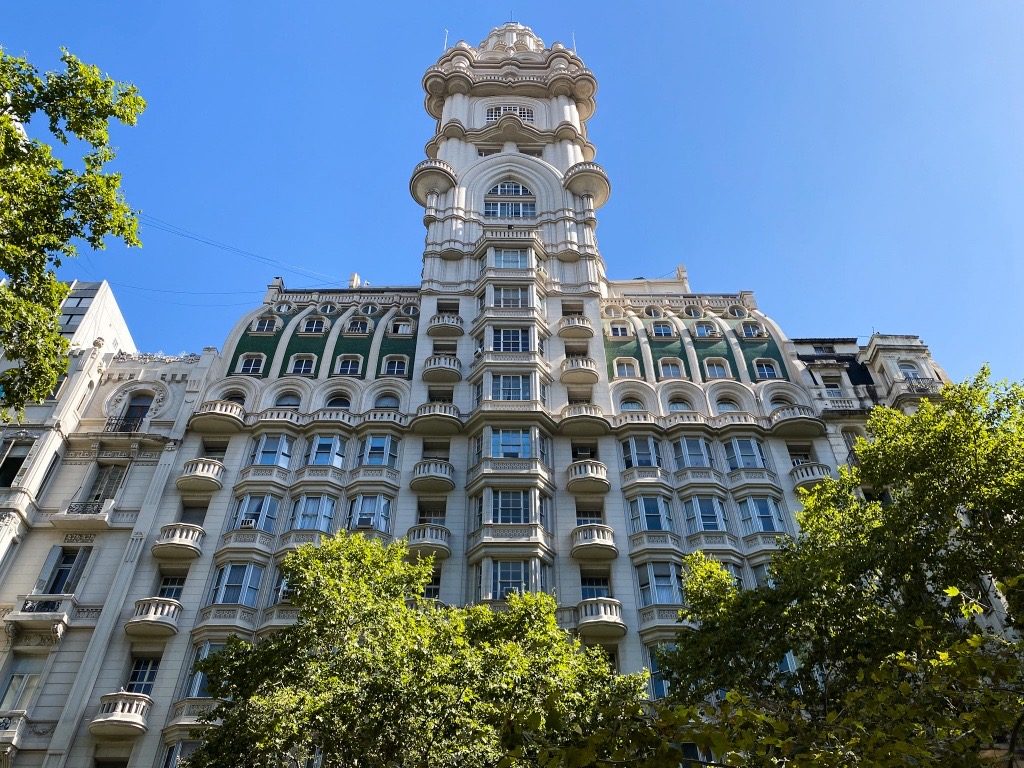
On Avenida de Mayo stands my single favourite oddity in the city. Palacio Barolo (1923) was designed around Dante’s Divine Comedy: a hell of dimly lit lower floors, a purgatory of middle storeys, and a lighthouse at the 100-metre summit standing in for paradise. The 22 floors nod to the cantos; the building’s height in metres matches the poem’s verses. Tours climb to the lighthouse for one of the best, least-known views in town — book ahead, and aim for a sunset slot if you can.
La Casa de los Azulejos and other tiled curiosities
Buenos Aires rewards looking up and looking closely. La Casa de los Azulejos near Retiro wears a facade of hand-painted Italian tiles depicting a pastoral scene; it is a quick photo stop rather than a visit, but it captures the city’s magpie love of imported beauty. If grand interiors are your thing, our guide to El Ateneo Grand Splendid — the opera house turned bookshop — belongs on the same afternoon.
Go underground: the El Zanjon tunnels
Beneath an unassuming San Telmo townhouse on Defensa runs a secret: a network of restored brick tunnels and cisterns from the city’s earliest settlement, built over a stream that was bricked over in the 1800s. El Zanjon de Granados is one of the most atmospheric hours in Buenos Aires — a privately excavated archaeological dig you walk through, layer by layer, learning how the city literally built on top of itself.
Visits are by guided tour only and need booking; expect to pay somewhere around US$15–25 for the standard hour, more for premium tours that end with empanadas and Malbec. Hours are limited and skew to weekday late mornings, with shorter Sunday slots, so check the official site. It pairs perfectly with San Telmo’s antique shops and the Sunday weekend markets and ferias right outside.
Quirky museums most visitors miss
Buenos Aires has world-class art museums — the MALBA and Bellas Artes anchor our guide to the city’s museums, art and culture. But the offbeat ones are where the city’s personality leaks out.
- Museo Xul Solar (Palermo): the home-studio of Argentina’s most eccentric modernist, a painter who invented his own languages, tarot decks and a reformed chess. The angular concrete interior is half the fun.
- Museo de la Inmigracion: housed in the old Hotel de Inmigrantes where arrivals were processed, a moving, under-visited window onto the waves of newcomers who made the city.
- Museo Evita: smaller and more personal than you expect, set in a former shelter for single mothers and children.
- The Water Museum inside the Palacio de Aguas Corrientes (above) — pipes and porcelain, free and delightfully odd.

None of these will swallow more than an hour or two, which makes them easy to slot between meals or fold into a wider Buenos Aires itinerary.
Offbeat neighbourhoods to wander
The mainstream barrios — Palermo, San Telmo, Recoleta — are covered in our Buenos Aires neighbourhoods guide. For something stranger and more local, point yourself here instead.
Chacarita: a cemetery bigger than a barrio
Recoleta gets the crowds, but Chacarita is the one I send people to now. Its cemetery is vast — many times larger than Recoleta — a near-empty city of art-nouveau mausoleums, leafy avenues and the tombs of tango legends like Carlos Gardel, whose statue often has a lit cigarette wedged between its fingers. The surrounding neighbourhood has quietly become one of the best places in the city to eat and drink, with no tourist sheen on it yet.

Coghlan, Villa Crespo and Parque Chas
Coghlan, in the leafy north, hides an excellent open-air street-art scene on its quiet residential walls — a low-key alternative to the famous Palermo murals in our Buenos Aires street art and graffiti guide. Neighbouring Villa Crespo is a bohemian foodie pocket with more apartments than hotels, and Parque Chas is the city’s genuine oddity: a barrio of curving, concentric streets laid out in circles, where locals only half-joke that the layout swallows taxi drivers whole.
Hidden bars and after-dark oddities
Buenos Aires runs late, and its drinking culture has a soft spot for the secret door. The city’s nightlife and bars scene is full of speakeasies that take the “hidden” part seriously.
The legend is Florería Atlántico near Plaza San Martin: walk into a working flower shop, open a fridge-style door, and descend into one of the world’s most awarded cocktail bars, themed around immigration and the sea. Elsewhere, places like Frank’s and various back-room puertas cerradas (“closed-door” supper clubs) trade addresses by word of mouth. A few tips from experience: nobody arrives before midnight, a reservation or a polite WhatsApp helps, and the cocktails are excellent but not the bargain the steak is.
For something gentler after dark, the giant Floralis Generica — a 23-metre steel-and-aluminium flower that was designed to open at dawn and close at dusk — is floodlit and photogenic in its plaza by the Law Faculty, and free to visit any time.

A loose plan for an offbeat day or two
You do not need to militarise this, but grouping by area saves you crossing a very large city twice. Here is how I would string the highlights together.
| Offbeat spot | Area | Rough cost (2026) | Time |
|---|---|---|---|
| El Zanjon de Granados tunnels | San Telmo | Around US$15–25, tour only | 1 hour |
| Palacio Barolo + lighthouse | Monserrat | Around US$10–20 tour | 1–1.5 hours |
| Palacio de Aguas Corrientes & museum | Balvanera | Free | 45 min |
| Museo Xul Solar | Palermo | Around US$5 | 1 hour |
| Chacarita cemetery & barrio | Chacarita | Free | Half a day |
| Floreria Atlantico (drinks) | Retiro | Cocktails ~US$8–14 each | An evening |
A workable shape: morning in San Telmo (Zanjon plus the market), afternoon downtown for Barolo and the Water Palace, then a separate day for Chacarita and Palermo’s Xul Solar, capped with a speakeasy. Getting between them is easiest by Subte and the odd taxi — our guide to getting around Buenos Aires has the details.
Frequently asked questions
What are the most unusual things to do in Buenos Aires?
My top picks are touring the El Zanjon de Granados tunnels under San Telmo, climbing the Dante-inspired Palacio Barolo to its lighthouse, visiting the tiled Palacio de Aguas Corrientes and its quirky water museum, drinking at the Floreria Atlantico speakeasy, and wandering offbeat barrios like Chacarita and circular Parque Chas. All sit well off the standard tourist trail.
Where are the best hidden gems in Buenos Aires?
The best hidden gems Buenos Aires keeps off the standard map sit north and west of the usual circuit. Chacarita and Villa Crespo have a thriving, untouristy food scene; Coghlan hides excellent street art on residential walls; and Parque Chas is a maze of curving streets. For green space, the Parque de la Memoria on the riverfront is the kind of off the beaten path Buenos Aires corner most visitors never reach.
Is El Zanjon de Granados worth visiting?
Yes, if you like history you can walk through. It is a privately excavated network of tunnels and cisterns beneath a San Telmo townhouse, telling the story of how the city was built over a buried stream. Visits are guided and need booking, run roughly an hour, and cost around US$15–25. Check the official site, as hours are limited and change.
How many days do you need for the offbeat side of Buenos Aires?
Two unhurried days covers the highlights comfortably alongside the classics: one for San Telmo’s tunnels and downtown’s strange palaces, another for Chacarita, an offbeat barrio and a quirky museum, ending at a speakeasy. If you only have an afternoon, pair Palacio Barolo with the Water Palace — both are central and walkable.
Are the hidden speakeasies in Buenos Aires safe and easy to get into?
Generally yes. Bars like Floreria Atlantico are well-run, central and welcoming — you just need to know the door is real and arrive late, as nights start after midnight. A reservation helps at the popular ones. Take a registered taxi or rideshare home, and keep the usual big-city awareness with phones and bags in crowded spots.
Final thoughts
What I love about the offbeat side of Buenos Aires is that it is not really hidden at all — the Water Palace is on a main avenue, Barolo is impossible to miss, the tunnels sit under a busy market street. The city just trusts you to be curious enough to look. Give it a day or two beyond the greatest hits and it rewards you with stories no listicle prepared you for. When you are ready for the classics too, our complete guide to things to do in Buenos Aires is the map back to the mainstream. Buen viaje.
Photo credits
All images are used under their respective licenses via Wikimedia Commons. Thank you to the photographers:
- The tiled facade of the Palacio de Aguas Corrientes — photo by Leandro Kibisz (Loco085), CC BY-SA 2.5, via Wikimedia Commons.
- The ornate Palacio Barolo tower on Avenida de Mayo — photo by EEJCC, CC0, via Wikimedia Commons.
- The angular concrete interior of the Museo Xul Solar — photo by Roberto Fiadone, CC BY-SA 4.0, via Wikimedia Commons.
- The Floralis Generica flower sculpture beside the Law Faculty — photo by Beatrice Murch, CC BY 2.0, via Wikimedia Commons.
- An ornate art-nouveau mausoleum in Chacarita cemetery — photo by Seauton, CC BY-SA 4.0, via Wikimedia Commons.