Last updated: June 2026 · Written by the Buenos Aires Tourism editorial team, who have walked the diques at sunset, climbed aboard the Fragata Sarmiento, and watched the parakeets wheel over the Reserva Ecológica next door.
Puerto Madero buenos aires: the short answer
Puerto madero buenos aires is the city’s newest and most polished barrio — a regenerated docklands of restored red-brick warehouses, glass towers and a yacht-lined waterfront, built around four numbered docks called diques. Its headline sights are the sail-like Puente de la Mujer, two historic museum ships and the wild Reserva Ecológica on its eastern edge. It is upscale, safe and very walkable.
I bring first-time visitors here when they want a calm, glossy contrast to the cobbles of San Telmo or the buzz of Palermo. You stroll past century-old port buildings that now hold steakhouses and design hotels, cross a bridge shaped like a tango couple, then step straight into 350 hectares of marshland alive with birds. Few cities pull off that jump from polished promenade to wetland in a single afternoon.
If you are still piecing the city together, start with our full guide to the Buenos Aires neighbourhoods and how they connect. Below I focus on Puerto Madero alone — what it is, what to see and eat, where to stay, and how to make the most of a half-day or evening here.
The barrio and how it was reborn
Puerto Madero is, paradoxically, both the oldest and the youngest part of Buenos Aires. The docks themselves were built in the 1880s and 1890s, named after the businessman Eduardo Madero who championed them, and engineered with British brick and ironwork to be the city’s grand modern port. The problem was that they were obsolete almost on arrival: bigger ocean-going ships soon needed a deeper harbour, a new Puerto Nuevo opened to the north, and Madero’s elegant docks slid into nearly a century of dereliction.
The turnaround came in the 1990s. A public-private corporation recycled the four long warehouse blocks on the west side of the docks into lofts, offices, universities, restaurants and hotels, while a cluster of glass towers — some of the tallest in the country — rose on the east side. The result is Argentina’s most ambitious urban-regeneration project and, since 1991, the city’s newest official barrio.
The diques, and streets named after women
The layout is easy to read. Four rectangular docks — Dique 1 to Dique 4 — run in a line, with the restored brick warehouses along the western quay and the modern towers, the Hilton and the Faena along the eastern side. Footbridges stitch the two banks together. One lovely detail: nearly every street here is named after a notable woman — the writer Juana Manso, the human-rights activist Azucena Villaflor, the aviator Carola Lorenzini — which is why you will also find the Parque de las Mujeres Argentinas tucked among the towers.
What to see and do in Puerto Madero
The sights line up neatly along the water, so the barrio is best tackled as one continuous walk from the docks to the nature reserve. Here is what I would not miss.
Puente de la Mujer
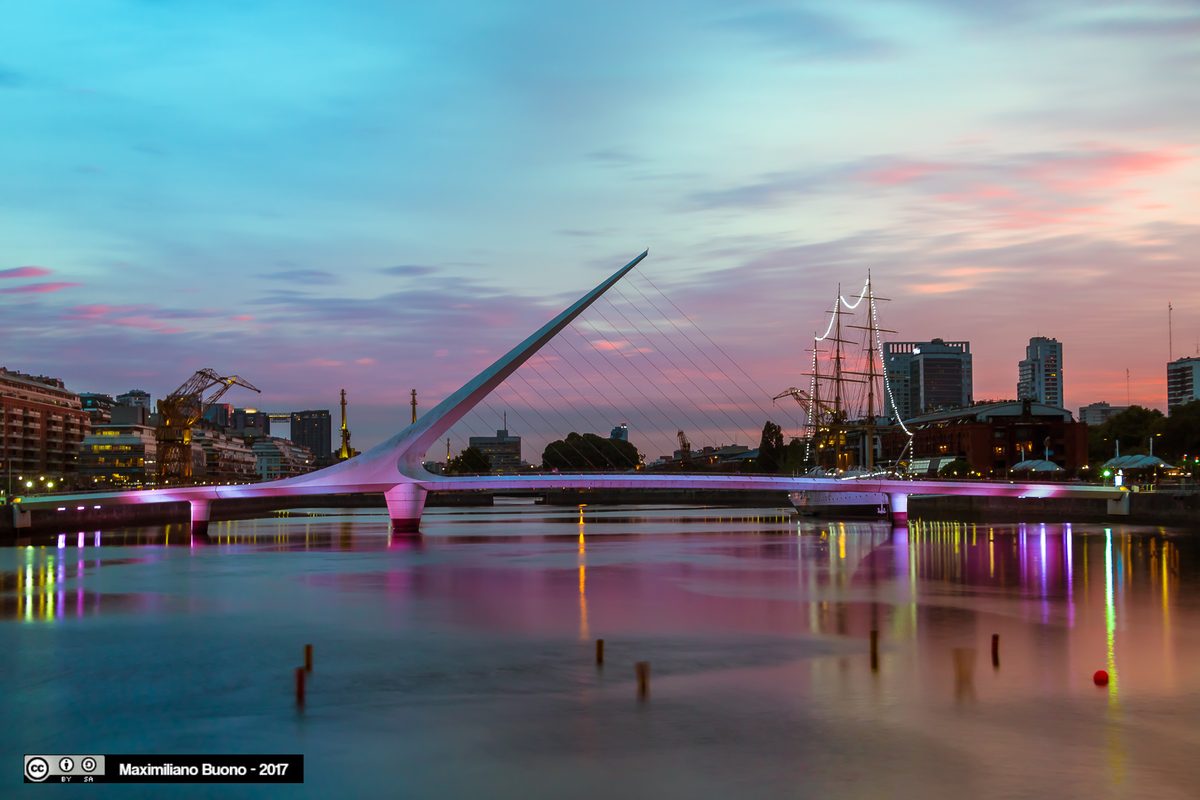
The barrio’s signature image is the Puente de la Mujer, or Woman’s Bridge, the first Latin American work of Valencian architect-engineer Santiago Calatrava. Opened in 2001, its single white pylon leans out over Dique 3 like a needle, the cables fanning down to suggest a couple frozen mid-tango. The central span pivots to let boats through. Crossing it, and photographing it from both quays, is the classic Puerto Madero moment, and it is free.
The diques walk
Simply walking the length of the docks is the main event. Start at one end and follow the brick-paved promenade past moored yachts, the old gantry cranes left in place as sculpture, and the warehouse arcades full of cafe tables. It is flat, pram-friendly and entirely pedestrian along the water. At dusk the towers light up and reflect in the still dock water — the best free show in the barrio.
The museum ships
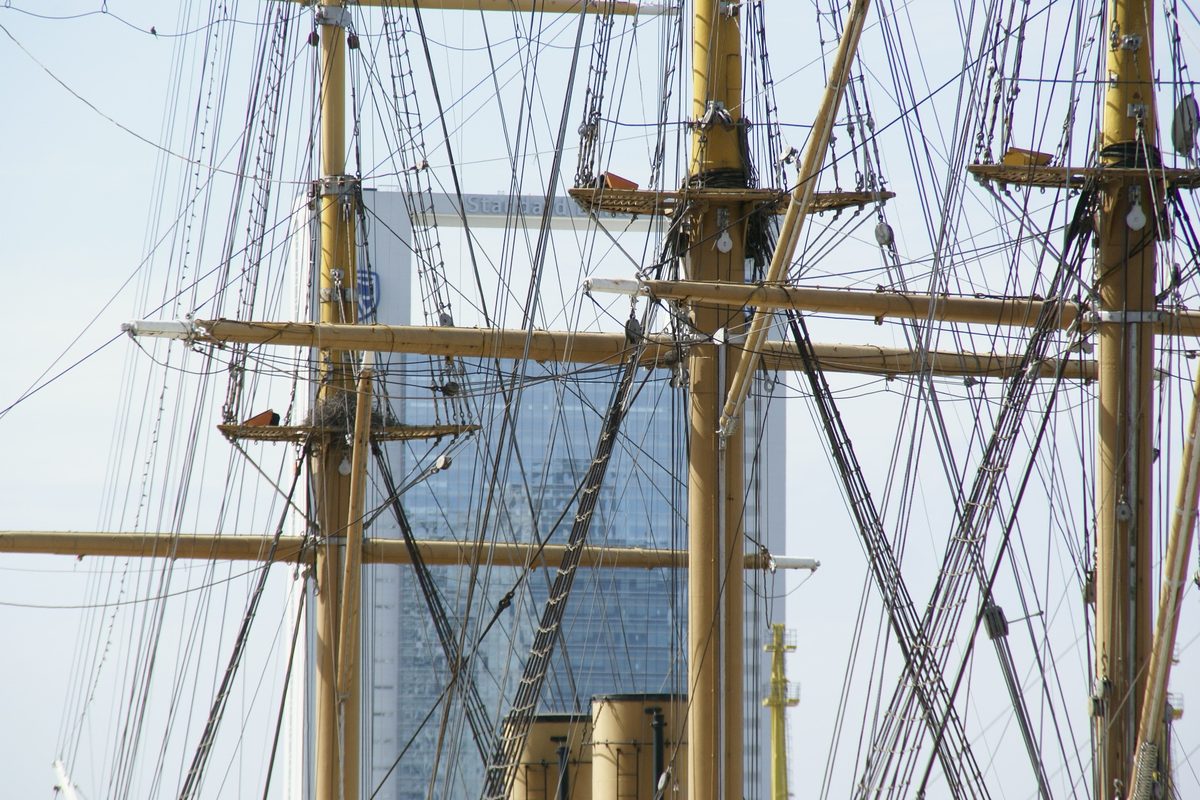
Two historic vessels are permanently moored beside the Puente de la Mujer and both are floating museums you can board. The Fragata Presidente Sarmiento, an elegant 1897 navy training ship that circled the globe dozens of times, is a national monument crammed with polished brass and seafaring history. Beside it, the Corbeta Uruguay (1874) is the oldest ship still afloat in the Argentine navy, famous for a 1903 Antarctic rescue. Admission is modest and children are often free, but opening days and hours shift seasonally, so confirm before you go.
Colección de Arte Amalia Lacroze de Fortabat
The barrio’s cultural heavyweight is the Fortabat art collection, housed in a striking glass-and-steel building on Dique 4 with a retractable roof. Assembled by one of Argentina’s wealthiest collectors, it ranges from Argentine masters to international names — Turner, Dalí and an Andy Warhol portrait of Amalia Fortabat herself. It is compact, air-conditioned and a perfect rainy-day stop. Hours and ticket prices change, so check the latest before visiting.
The Reserva Ecológica Costanera Sur
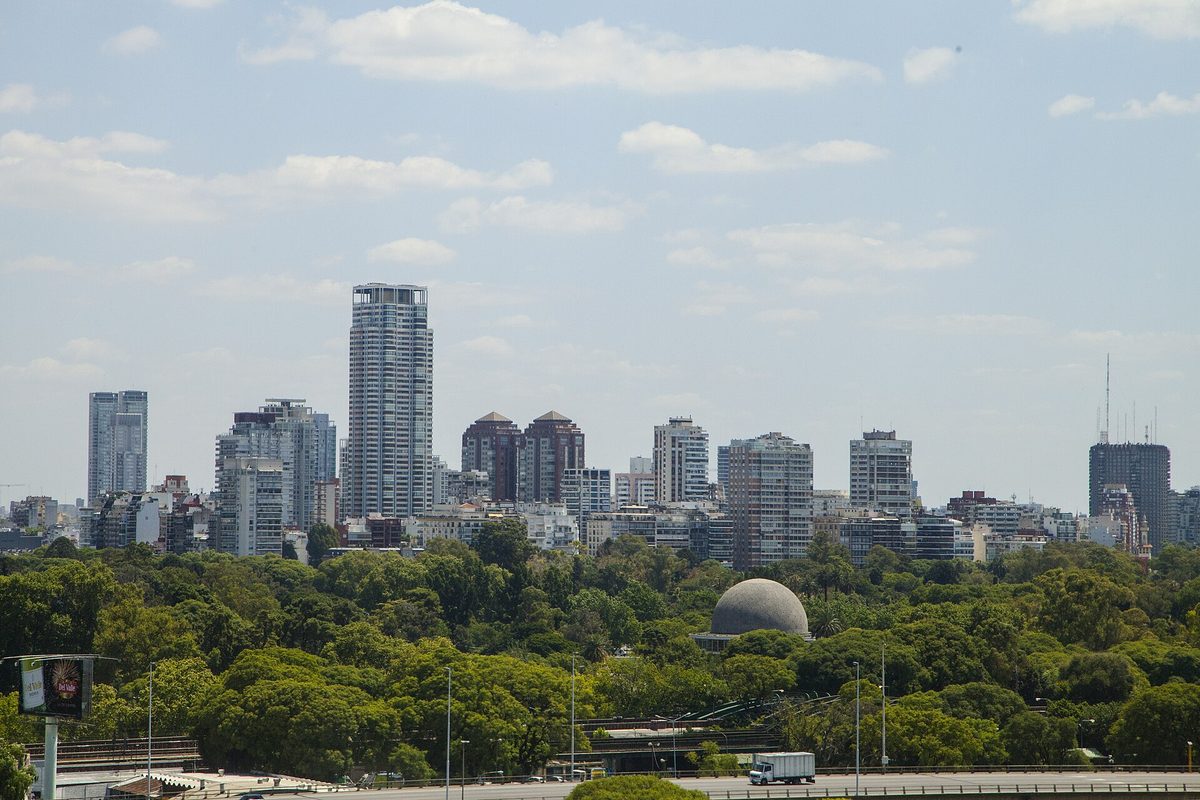
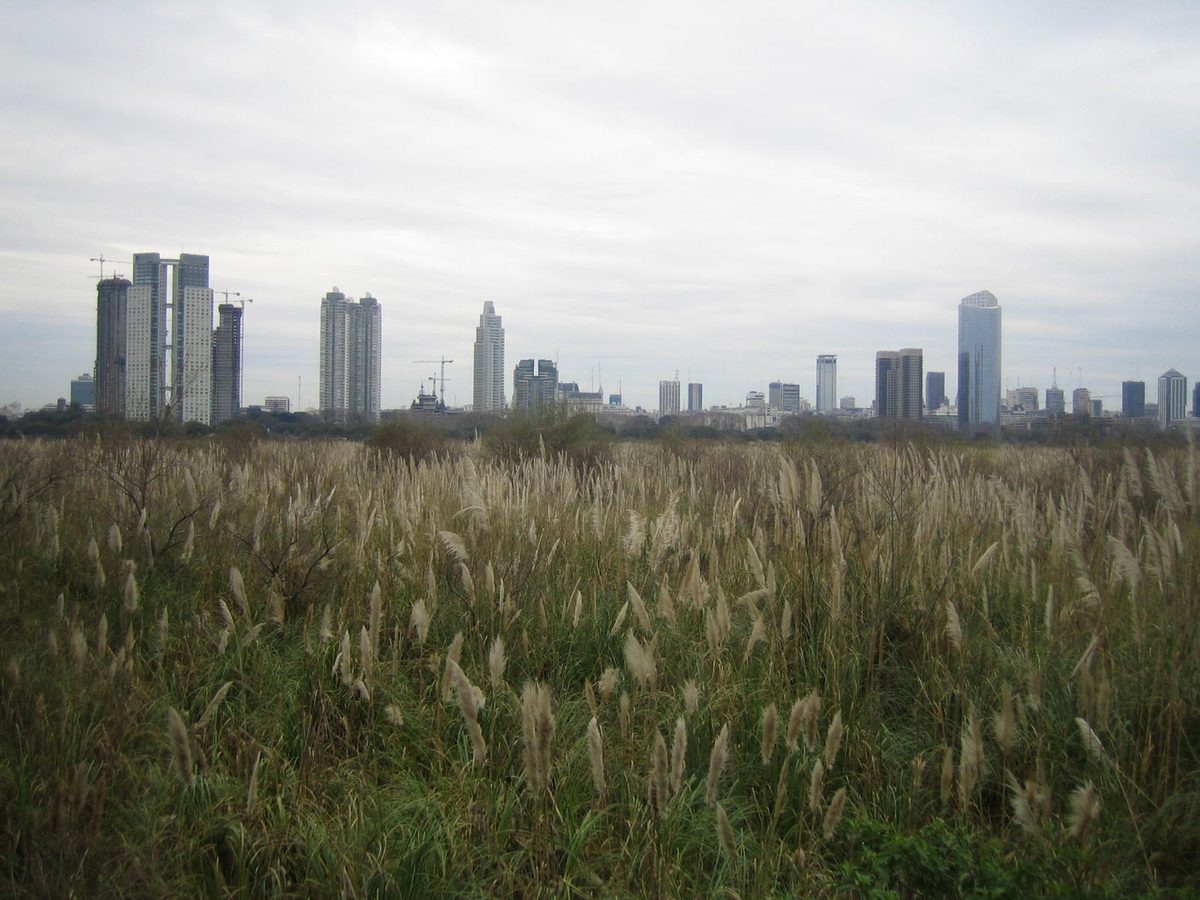
The surprise on Puerto Madero’s eastern flank is one of the city’s natural wonders. The Reserva Ecológica Costanera Sur spreads over roughly 350 hectares of reclaimed riverbank — lagoons, pampas grass, alder woods and trails running out toward the Río de la Plata. It shelters hundreds of bird species along with coypu, lizards and turtles, and it is gloriously free to enter. Come at opening for the best birdlife, bring water and sun cover, and note it usually closes on Mondays and rainy days. Our dedicated guide to the Buenos Aires ecological reserve has the trails, hours and wildlife in full.
Eating and drinking on the waterfront
Puerto Madero has the city’s densest concentration of waterfront restaurants, and dining here is as much about the dock views and people-watching as the food. It skews smarter and pricier than the rest of Buenos Aires — this is where locals come to celebrate — but the setting, with tables spilling onto the promenade, is hard to beat at sunset.
Steak is the headline. The barrio is wall-to-wall parrillas, from old-school grills like Cabaña Las Lilas and El Mirasol del Puerto to Estilo Campo. For a famously good-value blowout, Siga La Vaca is an all-you-can-eat tenedor libre that has been packing in families for decades. Beyond beef you will find Italian, sushi, seafood and a string of cafes and ice-cream spots in the warehouse arcades. For the wider city picture, see our guide to Buenos Aires restaurants.
A quick view-versus-value steer
| If you want… | Head for… | Expect |
|---|---|---|
| The classic dock view | A warehouse-side parrilla on Dique 3 or 4 | Premium prices, sunset over the water, prime steak |
| Big appetite, smaller bill | An all-you-can-eat parrilla | Fixed-price grilled meats, lively and casual |
| Coffee or ice cream | The brick arcades along the west quay | Cafes and gelato with promenade tables |
| A special-occasion dinner | A hotel or fine-dining room in the towers | Polished service, river views, book ahead |
Restaurant names, menus and prices turn over quickly here, and Argentina’s prices move fast — treat the above as a guide and check current reviews before booking.
Where to stay in Puerto Madero
This is the luxury end of the Buenos Aires hotel map. Puerto Madero is home to the flamboyant Faena, the riverside Hilton, the Alvear Icon and a run of sleek tower apartments, most with pools, spas and dress-circle views over the docks or the reserve. The trade-off is that the barrio is quiet and a little corporate after dark, and slightly removed from the historic centre — wonderful for calm and safety, less so if you want to roll out of your hotel into nightlife. Genteel Recoleta offers a similar polish with more to do on foot. Weigh the options in our where to stay in Buenos Aires guide.
Getting there and around
Puerto Madero sits right beside the historic centre, so it is an easy walk in: from Plaza de Mayo it is barely ten minutes east to the docks. By Subte (metro), the closest stop is L. N. Alem on Line B, a five-to-ten-minute walk to Dique 4; Lines A, D and E also drop you within walking distance via the microcentro. You will need a rechargeable SUBE card, sold at stations and kiosks.
Taxis and rideshare apps (Uber, Cabify, DiDi) are cheap and drop you right on the promenade — handy if you are heading to the far end or the reserve. Once you arrive you simply walk; the whole barrio is flat and pedestrianised along the water. Many visitors pair Puerto Madero with the adjacent San Telmo or the city centre on the same day, since they are within strolling distance.
Who Puerto Madero suits
This barrio is made for couples after a romantic waterfront dinner, families who want a safe, stroller-friendly walk with museum ships to climb, and runners and cyclists drawn to the long flat promenade and the reserve’s trails. Photographers love the bridge at golden hour and the towers mirrored at night. If you crave gritty character, street markets and bohemian bars, you will find Puerto Madero a little sleek and want to base yourself in Palermo or historic San Telmo instead — but for a polished, safe, scenic few hours, nowhere in the city is easier.
Practical tips and safety
Puerto Madero is widely considered one of the safest barrios in Buenos Aires — it is modern, well-lit, patrolled and comfortable to walk well into the evening, which is part of why it draws families and couples. Standard city sense still applies: keep your phone in a pocket rather than on the table, and on the lonelier stretches toward the reserve after dark, take a taxi. A few more pointers:
- Time it for light. Late afternoon into sunset is magic — warm light on the brick, then the towers reflecting in the docks. The reserve, by contrast, is best early.
- Bring sun cover for the reserve. The trails are open and shadeless; water, a hat and sunscreen make a big difference, and there is little to buy inside.
- Book dinner ahead. The best dock-side tables fill on weekends and warm evenings; reserve if you have your heart set on a view.
- Carry some cash. Cards are widely taken, but small notes help for the museum ships, kiosks and tips.
- Confirm hours. The museum ships, the Fortabat and the reserve all change their schedules seasonally and close on certain days — a quick check saves a wasted trip.
Frequently asked questions
Is Puerto Madero worth visiting?
Yes, especially for a relaxed half-day or an evening. You can walk the docks, cross the Puente de la Mujer, board a historic museum ship, see the Fortabat art collection and step into the wild Reserva Ecológica — all in one flat, scenic, very safe stretch. It feels different from the rest of Buenos Aires: newer, glossier and calmer, which is exactly why many visitors enjoy it.
How much time do you need in Puerto Madero?
Half a day covers the highlights comfortably — a stroll along the diques, the bridge, a museum ship and a meal. Add a couple of extra hours if you want to walk the trails of the Reserva Ecológica Costanera Sur properly, or come back in the evening for dinner on the waterfront and the lit-up towers reflected in the docks.
Is Puerto Madero safe?
It is generally regarded as one of the safest neighbourhoods in Buenos Aires — modern, well-lit and comfortable for walking into the evening, which is why families and couples favour it. Take normal city precautions with phones and valuables, and after dark take a taxi on the quieter stretches out toward the ecological reserve rather than walking alone.
What is the Puente de la Mujer?
It is Puerto Madero’s landmark footbridge, designed by Santiago Calatrava and opened in 2001. The leaning white mast and fan of cables are meant to evoke a couple dancing tango, and the central section rotates to let boats pass. Crossing it is free, and it is the barrio’s most photographed sight, especially at sunset.
Can you visit the Reserva Ecológica from Puerto Madero?
Yes — the Reserva Ecológica Costanera Sur sits right on Puerto Madero’s eastern edge, a short walk from the docks, and entry is free. It offers around 10km of flat trails through wetland and woodland, with hundreds of bird species. It usually closes on Mondays and rainy days; arrive early for wildlife and bring water and sun protection, as there is no shade.
Puerto Madero or San Telmo — which should I choose?
They are opposites. Puerto Madero is new, sleek, safe and quiet, all glass towers and waterfront dining; San Telmo is old, cobbled, bohemian and lively, with antiques and tango. For a polished, scenic walk choose Puerto Madero; for atmospheric, historic Buenos Aires choose San Telmo. Happily they are next to each other, so you can easily see both.
Final thoughts
Puerto Madero is the easy, elegant Buenos Aires — a place to slow down, walk by the water, eat well and watch the towers light up over the old docks, with a genuine slice of wild nature waiting at the far end. It will not give you the grit of San Telmo or the swagger of Palermo, but as a safe, scenic half-day it is one of the city’s most rewarding strolls. To see how it fits with the rest of the city and plan the barrios around it, head back to our full guide to the Buenos Aires neighbourhoods.
Photo credits
- The white rotating Puente de la Mujer footbridge by Santiago Calatrava over a dock at dusk in Puerto Madero, Buenos Aires — photo by Maximiliano Buono, CC BY-SA 2.0, via Wikimedia Commons.
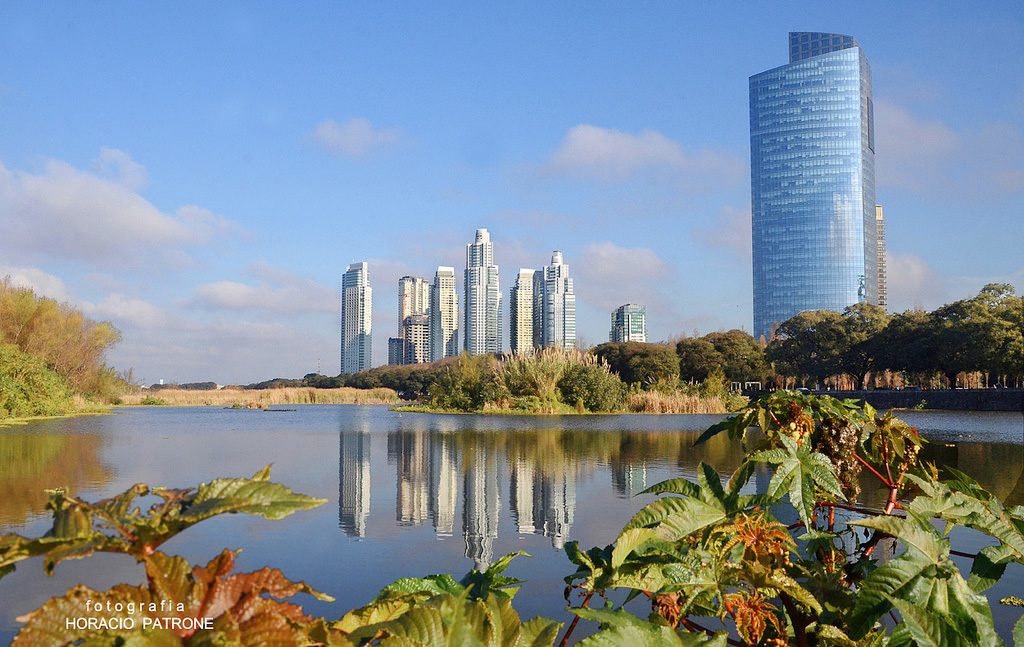
- Modern glass towers of puerto madero buenos aires reflected in the calm water of the docks — photo by Horacio Patrone, CC BY-SA 4.0, via Wikimedia Commons.
- Masts and rigging of the historic Fragata Presidente Sarmiento museum ship against a glass tower in Puerto Madero, Buenos Aires — photo by Hermann Luyken, CC0, via Wikimedia Commons.
- Pampas-grass wetland of the Reserva Ecológica Costanera Sur with the Buenos Aires skyline behind, on the edge of Puerto Madero — photo by Rcidte, CC0, via Wikimedia Commons.