I have walked into a lot of grand buildings in Buenos Aires, but the first time I stepped under the glass marquee of the Teatro Colón and looked up at that gilded foyer, I genuinely stopped talking mid-sentence. This is the city’s cultural crown jewel, and you do not need to love opera to be floored by it.
The teatro colon buenos aires is one of the world’s great opera houses, inaugurated in 1908 on Cerrito and Libertad beside Avenida 9 de Julio. You can experience it two ways: a paid guided tour by day (around 50 minutes, multiple languages) that walks you through the Golden Hall and the main auditorium, or a performance in the roughly March–December season, where the cheapest upper seats cost a fraction of a tour.
Last updated: June 2026 · Written by the Buenos Aires Tourism editorial team
Tour vs show: which way should you visit?
Most visitors only have time for one. Here is the honest at-a-glance, with everything volatile hedged — always confirm the current figures on the official site before you go.
| Guided tour | Seeing a performance | |
|---|---|---|
| Typical price | Roughly US$15–25 as of mid-2026 (foreigners pay more than residents); booked-online packages cost more | From just a few US$ for the upper levels up to US$100+ for stalls — huge range |
| Duration | About 50 minutes | A full evening (often 2–3 hours plus intervals) |
| When | Daily, roughly every 15 min from about 10:00 to 16:45 | Season runs roughly March–December; performances mostly evenings |
| How to book | Online via the official theatre site, or the box office on Tucumán 1171 | Official site / tuentrada, or the box office; book popular nights well ahead |
| Best for | First-timers, architecture lovers, anyone short on time or visiting by day | Opera, ballet and concert fans who want the auditorium alive |
My one-line verdict: if you can only do one thing, take the tour — it is the simplest way to stand inside the Golden Hall and the auditorium without building your whole evening around a show. If you love live performance, a cheap seat at an actual show is an unbeatable, only-in-Buenos-Aires bargain. For the bigger cultural picture, see our guide to Buenos Aires museums and culture.
Why the Teatro Colón matters
When people rank the world’s opera houses, the Colón keeps company with La Scala in Milan, the Vienna State Opera and the Palais Garnier in Paris — and acoustically it is often put at, or near, the very top. That reputation is not marketing fluff. The horseshoe-shaped auditorium combines soft, sound-absorbing surfaces (wood, fabric, carpet, plush boxes) with hard, reflective ones (marble, bronze, the proscenium arch) to spread sound with uncanny evenness. Plácido Domingo famously half-complained that the acoustics were so good that if he made the smallest mistake, everyone would hear it.
It also has the history to match. The current building took nearly two decades to complete and opened on 25 May 1908 with Verdi’s Aida. The project ran through three architects: the Italian Francesco Tamburini, then his compatriot Víctor Meano — both of whom died before the inauguration, the coincidence spawning a local “curse” legend — and finally the Belgian Jules Dormal, who carried it over the line and left his own stamp on the interiors. Since then the stage has hosted Toscanini, Stravinsky, Callas, Pavarotti, Nureyev and most of the giants of twentieth-century music and dance.
What to see inside the Teatro Colón
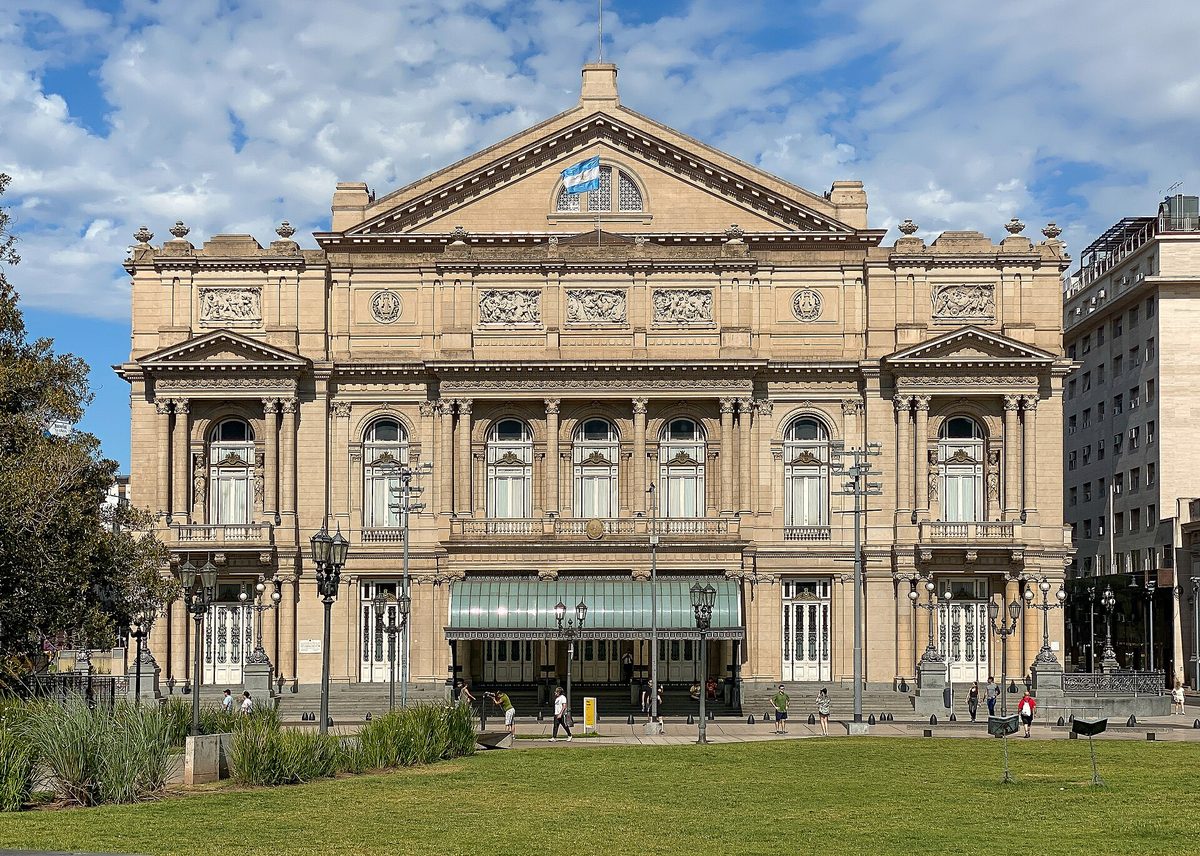
The exterior is a stately French-and-Italian academic pile, but the real drama is indoors. On a tour you move through a sequence of spaces, each more theatrical than the last.
The main foyer and Gallery of Busts
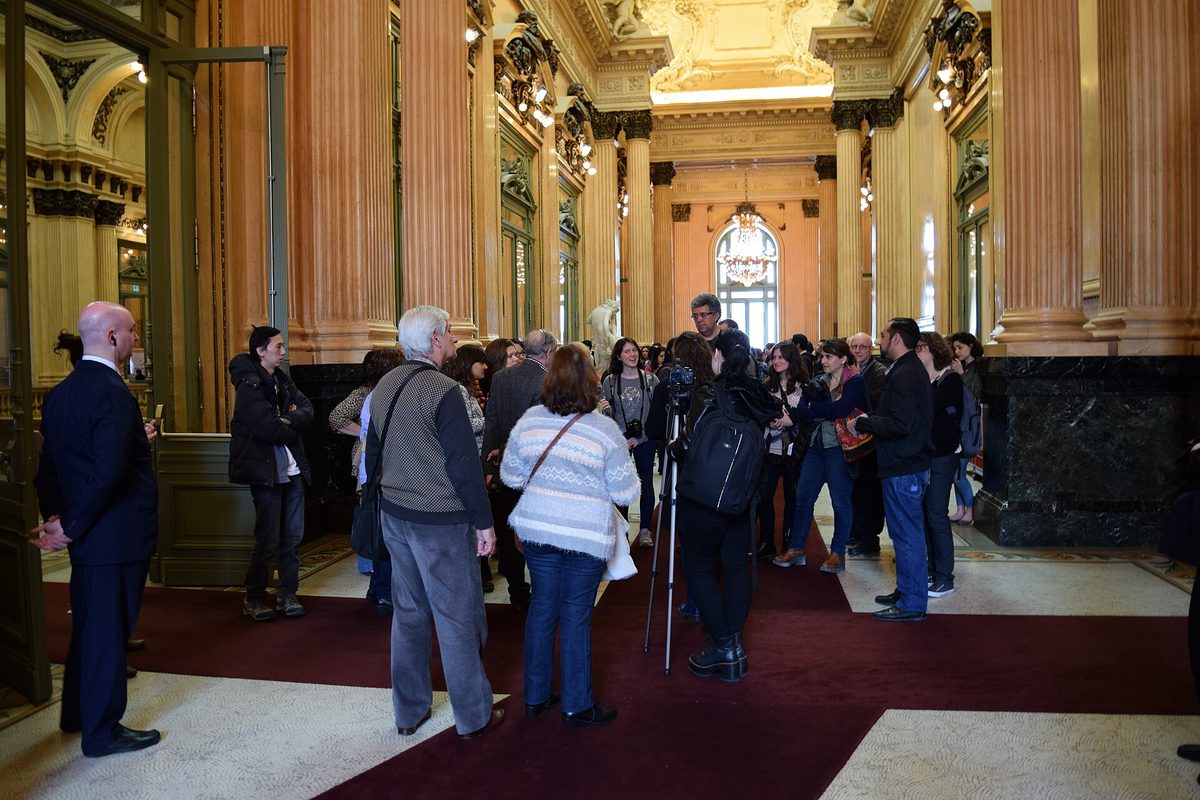
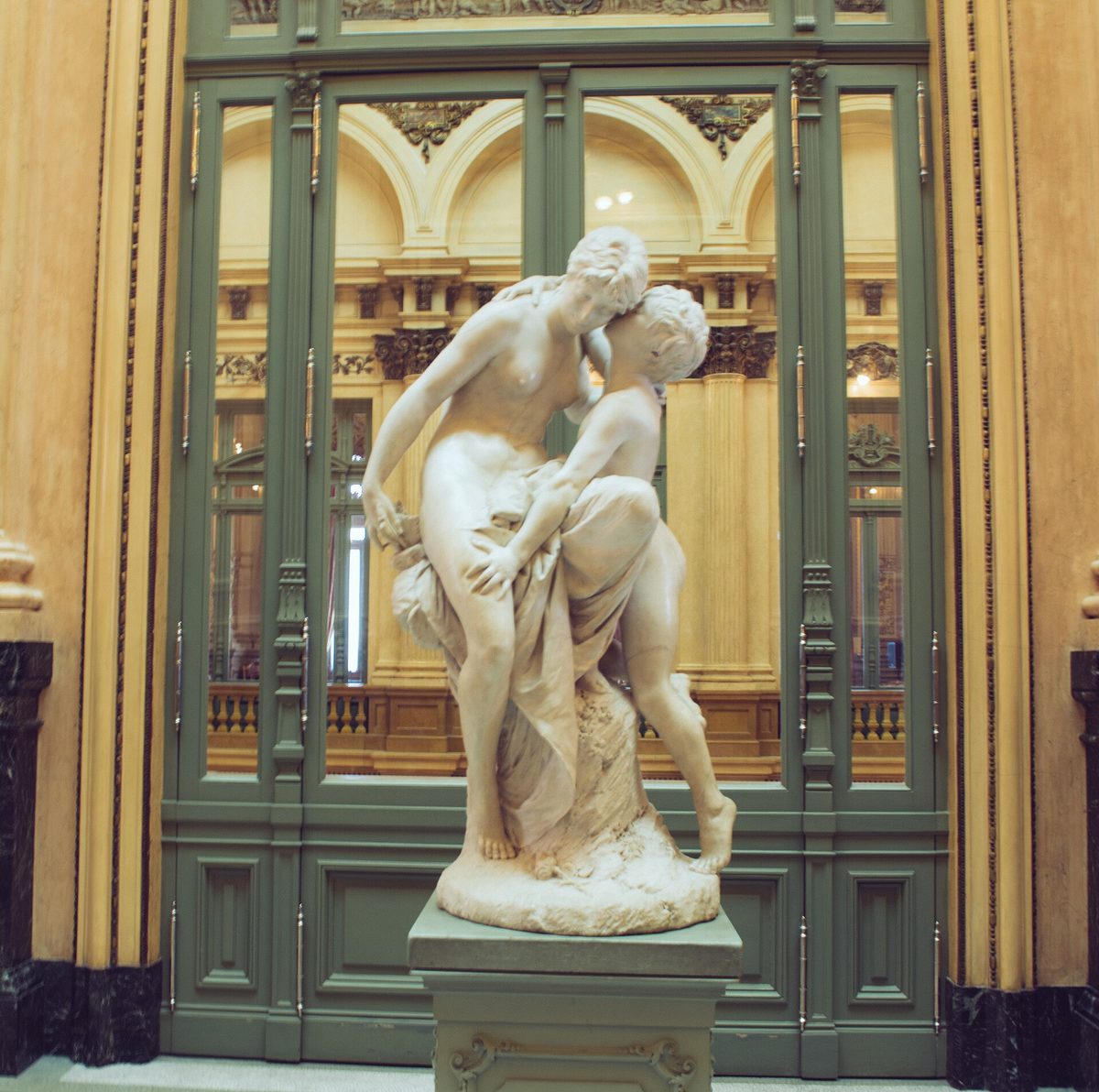
You enter into a soaring hall of marble columns and a sweeping staircase, ringed by busts of composers — the Sala (or Galería) de los Bustos. Look up for the stained glass overhead. This is where tour groups gather, and it sets the tone immediately.
The Salón Dorado (Golden Hall)
The Salón Dorado is the showstopper: a French Baroque-inspired reception room dripping with gold leaf, mirrors and chandeliers, used for recitals and receptions. It is a highlight of the tour — and a reason the cheapest performance tickets can sting a little, because holders of the lowest-priced seats are generally not allowed into the Salón Dorado or up the main staircase.
The auditorium and its acoustics
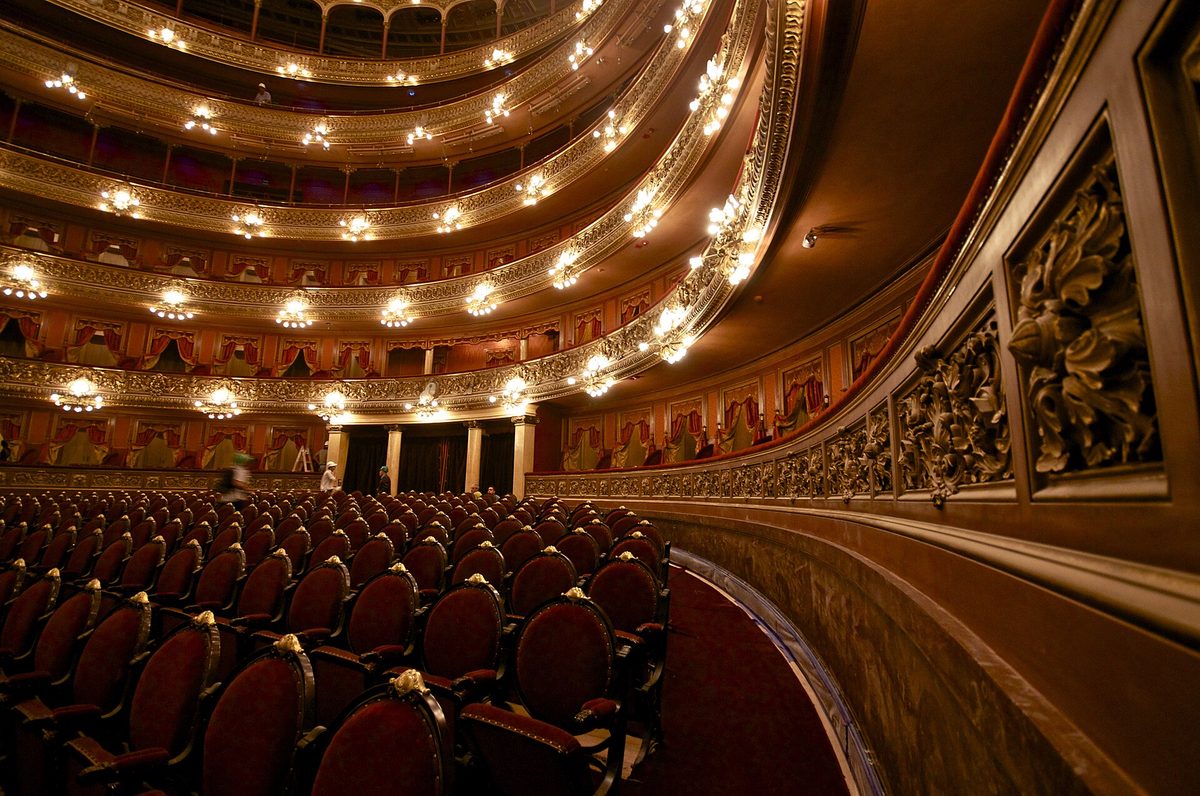
Then the big reveal: the horseshoe auditorium, with around 2,500 seats over stalls and tiers of boxes and galleries (plus standing room that pushes total capacity well higher). Red velvet, gilt balconies seven levels high, an enormous central chandelier, and above it all the cupola — repainted in 1966 by the Argentine artist Raúl Soldi, who reportedly finished the dome’s dancers, musicians and lovers in just 41 days. It is one of the most beautiful ceilings in any theatre I have stood under.
Planning a Teatro Colon Buenos Aires tour
The guided tour is the easy win and the answer to the most common question I get: yes, you can absolutely visit without seeing a show. Tours run daily, roughly every 15 minutes from about 10:00 to 16:45, and last around 50 minutes, with departures in Spanish, English and Portuguese. English slots are fewer and the first to sell out, so if your schedule is tight, book online a few days ahead rather than gambling on same-day availability.
Tickets cost roughly US$15–25 for foreign visitors as of mid-2026 (Argentine residents, students and seniors pay noticeably less, and small children are usually free) — but inflation moves these numbers constantly, so treat that as a feel, not a quote, and check the current price. Buying at the box office on Tucumán 1171 is generally cheaper than third-party online packages, though those packages lock in your time and language. Thanks to Argentina’s 2025 currency changes, you can now pay by card at close to the official rate, so the old “bring a wad of blue-dollar cash” advice is outdated — for the full picture see our notes on the blue dollar in Buenos Aires and Argentina currency for tourists.
Getting there
The Colón sits right by Avenida 9 de Julio, but note that the main visitor entrance is on the Libertad side facing Plaza Lavalle, not on 9 de Julio as many assume. The nearest Subte is Tribunales on Line D (Lavalle on Line C and Carlos Pellegrini on Line B are also close). It is an easy walk from the Microcentro, and pairs naturally with the Obelisco and a wander through the historic centre — an architecture-rich stretch covered in our Buenos Aires walking tour.
Seeing a performance: the real bargain
Here is the secret locals know: the cheapest way through the doors is not the tour at all, it is a ticket to an actual show. The season runs roughly March to December and spans opera, ballet and the resident philharmonic, with most performances in the evening.
The auditorium is tiered, and so are the prices. Stalls (plateas) and the lower boxes are the pricey, dress-up seats. Climb higher and it gets cheap fast: the cazuela and tertulia levels have honest sightlines for far less, and right at the top the paraíso (“paradise”) includes standing room that costs only a few dollars. You are a long way up, but the sound — this being the Colón — is still superb, and many regulars swear the acoustics up there are the best in the house. The trade-off: budget tiers usually cannot access the Salón Dorado or the main staircase, so you get the music without the full red-carpet promenade.
To book, use the official theatre website (tickets are handled through tuentrada) or the box office; popular titles and gala nights sell out well in advance, so plan ahead. On dress code: formal attire is no longer strictly enforced, and it relaxes the higher and cheaper you sit, but the stalls and lower boxes still lean smart, and dressing up for a gala is part of the fun.
Who it suits — and is it worth it?
For first-time visitors, architecture buffs and anyone who loves a “how is this real” interior, the Colón is an easy yes and one of the best things to do in the city centre — see more in our roundup of things to do in Buenos Aires. It is also a perfect rainy-day plan and slots neatly alongside the city’s other cultural heavyweights: the best museums in Buenos Aires, the Latin American art at MALBA, and the open-air sculpture of Recoleta Cemetery. Lovers of grand buildings should also read our Buenos Aires architecture guide, since the Colón is a centrepiece of it, and our overview of museums, art and culture in Buenos Aires ties it all together.
Who might skip it? If you actively dislike guided tours and have no intention of attending a performance, the daytime experience may feel constrained — the tour really is the main way to see the interior by day. And if your trip is all about tango rather than opera, you may prefer to spend the evening at a tango show in Buenos Aires instead. But for almost everyone else, an hour inside the Colón is one of Buenos Aires’ most memorable, best-value cultural hours.
Teatro Colón FAQ
How much is a Teatro Colón tour?
As of mid-2026, a guided tour runs roughly US$15–25 for foreign visitors, with Argentine residents, students and seniors paying less and young children often free. Prices change frequently with inflation and exchange rates, and online packages cost more than the box office, so always confirm the current figure on the official theatre website before you go.
Can you visit Teatro Colón without a show?
Yes. The daily guided tour is designed exactly for that — it takes you through the foyer, the Gallery of Busts, the Salón Dorado and the main auditorium in about 50 minutes, no performance ticket required. For many visitors the tour, not a show, is how they experience the building, and it is the simplest option if you are visiting by day.
How long is the Teatro Colón tour?
About 50 minutes. Tours leave roughly every 15 minutes through the day, from around 10:00 to 16:45, in Spanish, English and Portuguese. English departures are more limited and tend to sell out first, so book ahead if you need a specific language or time slot rather than relying on same-day tickets.
Is Teatro Colón worth visiting?
For anyone interested in architecture, history, music or sheer spectacle, absolutely. It is consistently ranked among the world’s finest opera houses, the interiors are breathtaking, and even a short daytime tour delivers. If you can catch a performance — even a cheap seat high up — the famous acoustics make it even more worthwhile.
Final thoughts
Whether you go by day for the tour or by night for a show, the Colón rewards you. Spend US$15–25 on the guided walk and you will see the Golden Hall and that Soldi cupola in good light; spend a few dollars on a paraíso ticket and you will hear why this auditorium is legendary. Either way, it is the cultural anchor of any Buenos Aires trip — build the rest of your art-and-museums days around it with our Buenos Aires museums and culture guide.
Photo credits
- Teatro Colón facade — Photo: EEJCC (CC0) via Wikimedia Commons.
- Main auditorium — Photo: Roger Schultz (CC BY 2.0) via Wikimedia Commons.
- Entrance foyer with tour group — Photo: Vestidofloreado (CC BY-SA 4.0) via Wikimedia Commons.
- Interior gallery sculpture — Photo: Vestidofloreado (CC BY-SA 4.0) via Wikimedia Commons.