Last updated: June 2026 · Written by the Buenos Aires Tourism editorial team after several trips through the city with kids of our own in tow.
The first time we did Buenos Aires with kids — a five-year-old and a baby in tow — a waiter at a packed Palermo parrilla took one look at our frazzled faces, scooped up the toddler, and walked her around the dining room introducing her to other tables while we actually ate a steak. Hot. With both hands. That, in a single moment, is the city as a family destination: loud, late, a little chaotic, and astonishingly warm toward children.
If you are weighing up whether a 13-hour flight to a steak-and-tango capital makes sense with little ones, let me put your mind at ease and then arm you with everything you need to actually pull it off.
Buenos Aires with kids: the short answer
Buenos Aires with kids is far easier than its late-night, big-city reputation suggests. Argentines adore children, so your family is welcome absolutely everywhere — from steakhouses at 10pm to the leafy parks of Palermo. Expect paddle boats, hands-on museums, ice cream on every corner, and a city that bends happily around little ones. Plan for late nights and you will all have a brilliant time.

This is the comprehensive, parent-to-parent guide I wish we had on that first trip. It pulls together the attractions that genuinely work with children, the best neighbourhoods to base yourselves, how to eat and get around with a stroller, the day trips worth the effort, and the slightly awkward practical stuff — car seats, pharmacies, late dinners and the famously confusing money situation — all updated for 2026. For the wider city beyond the family angle, our main guide to things to do in Buenos Aires is the companion piece to this one.
Is Buenos Aires good for families? An honest take
Yes — emphatically, and more so than most first-time visitors expect. Argentina is a child-besotted culture. Strangers will coo at your baby, hold doors, give up seats on the subte and generally treat a family with small children as a delight rather than an inconvenience. Restaurants do not flinch at a toddler at 9pm; many actively cater to them with play areas and staff who will entertain your kids while you finish your wine.
The trade-offs are real but manageable. The rhythm of the city runs late, so you will either shift your kids onto a more Argentine schedule (afternoon downtime, dinner at 8.30 or 9) or eat early and a little apart from the local crowd. Sidewalks are uneven and curb ramps unreliable, which matters if you are pushing a stroller. And the city is huge, so you will want to base yourself well and not try to cram in too much. None of this is a dealbreaker. Buenos Aires rewards families who slow down.
Here is a quick at-a-glance look at the attractions families ask about most, with rough ages, costs and the neighbourhood each sits in. Treat every price as approximate — Argentine inflation moves fast and many sites charge separate resident and visitor rates, so always check the official site before you go.
| Attraction | Best for ages | Rough cost (2026) | Area |
|---|---|---|---|
| Bosques de Palermo & paddle boats | All | Free (boats extra) | Palermo |
| Ecoparque (former zoo) | 2–9 | Free | Palermo |
| Planetario Galileo Galilei | 5+ | ~US$2–4 | Palermo |
| Museo de los Niños (Abasto) | 3–12 | ~US$3–5 | Abasto |
| MIJU children’s museum | 0–12 | Low, book online | Puerto Madero |
| “Prohibido No Tocar” science museum | 3–14 | ~US$5–8 | Recoleta |
| Jardín Japonés | All | ~US$3–9 | Palermo |
| Temaikèn biopark (day trip) | All | ~US$12–18+ | Escobar (1 hr) |
| Tigre & the Delta (day trip) | All | Train ~US$1–2 + boats | Tigre (1 hr) |
The best things to do in Buenos Aires with kids
Rather than hand you a numbered list of thirty things, I have grouped the city’s family attractions by the kind of day they make — green-space days, animal-and-science days, rainy indoor days, and big-sight days. Mix and match by your kids’ ages and moods. If you want the grown-up version of all of this, our things to do in Buenos Aires guide covers the city for every type of traveller, and we have a dedicated deep-dive on the top things to do in Buenos Aires with kids if you want even more options than fit here.
Green-space days: parks, lakes and gardens
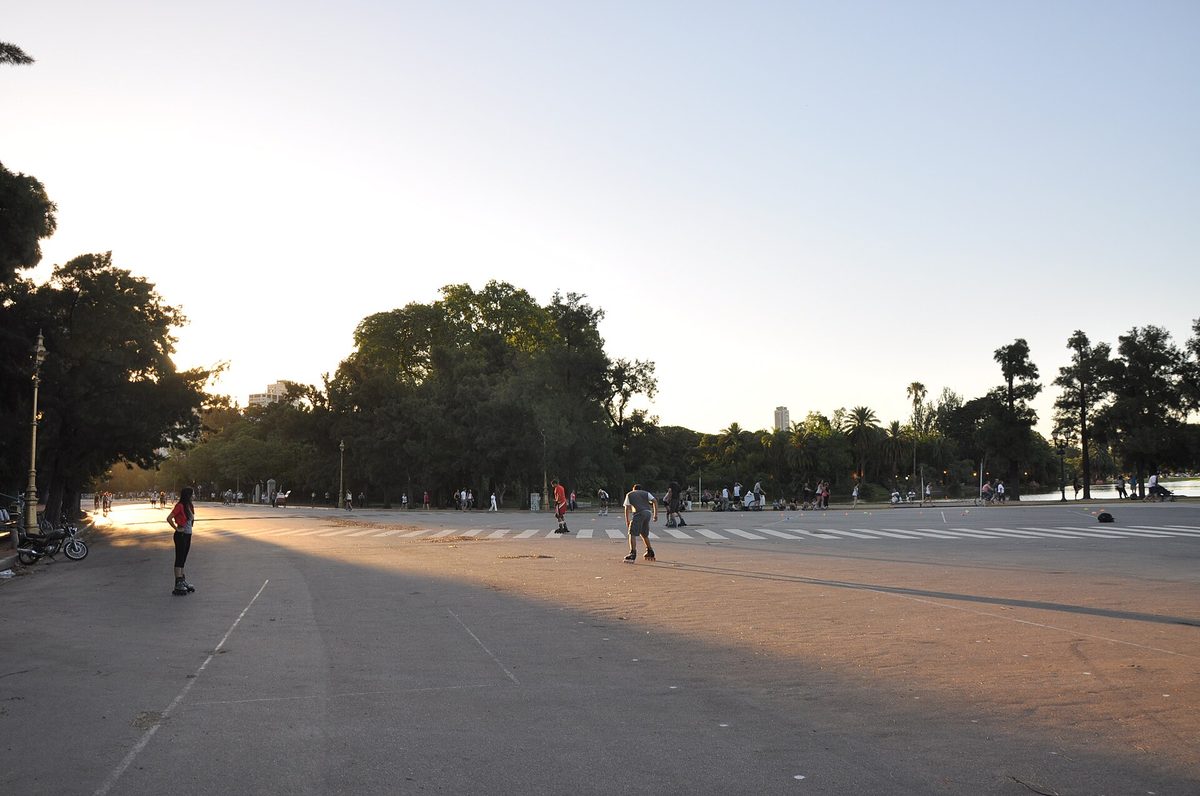
Palermo’s enormous Bosques de Palermo (officially Parque Tres de Febrero) is the family heart of the city, and it is free. The lake is the draw: rent a pedal boat for half an hour and let older kids do the work, or just buy a bag of something to feed the ducks and geese. On weekends, vendors rent roller skates along the running paths, families spread out picnic blankets, and the whole place hums in the best way. There is no entry gate and no closing time for the wider park, so it is the easiest “we have two free hours” option in the city. For a fuller rundown of the city’s green lungs, see our guide to Buenos Aires parks and playgrounds for families.
Tucked inside the same parkland is El Rosedal, a gated rose garden with a little white bridge and a pergola that kids love to run laps around; it is open roughly 10am to 6pm and closed Mondays. A short walk away is the Jardín Japonés (Japanese Garden), one of the largest outside Japan. The koi here are enormous and shameless — buy a paper cup of fish food and you will have a riveted toddler for twenty minutes as the carp practically climb out of the water. Red lacquered bridges, stepping stones and a teahouse make it a calm, stroller-friendly hour. Entry runs around US$3 for residents and up to roughly US$9 for visitors, with under-12s often free; prices have crept up, so check at the gate.

For wide-open running room with a view, the Reserva Ecológica Costanera Sur sits right beside Puerto Madero: flat gravel trails through tall pampas grass, river views, birds and butterflies, and enough space for kids to scoot or cycle until they are properly tired. It is free and usually open Tuesday to Sunday from around 8am to 6pm. Bring hats, sunscreen and water — there is almost no shade. Pair it with the choripán (sausage sandwich) trucks along the Costanera for a cheap, very local lunch. It is one of the best free things to do in Buenos Aires with energetic kids.

Animals and science: the day the zoo question comes up
First, clear up a common confusion: the old Buenos Aires Zoo is closed. It shut in 2016 after years of welfare concerns, and the site reopened as the Ecoparque, a free conservation park in Palermo. Healthy animals were gradually rehomed to sanctuaries; what remains is a pleasant, leafy walk where Patagonian maras and peacocks roam free, a handful of enclosures hold native species, and — the part small kids adore — there are button-operated animatronic sea lions and a carousel near the Libertador entrance. It is open roughly 11am to 6pm, closed Mondays and on rainy days, and it costs nothing. Do not arrive expecting a full modern zoo; arrive expecting a nice free morning that pairs perfectly with the nearby Botanical Garden and the parks.
If your kids are animal-mad and you want the real thing, save it for a day trip to Temaikèn, the excellent biopark about an hour north in Escobar. Big naturalistic enclosures, an aquarium, birds of prey, and a hands-on farm where children can hand-feed calves make it a genuine full-day outing. Admission is roughly US$12–18 for adults with discounts for booking online, and — worth knowing — Temaikèn no longer takes cash, card only. Strollers can be rented on site. I cover the logistics in the family day trips from Buenos Aires section below and in our dedicated guide.
Back in town, the Planetario Galileo Galilei is a must for space-curious kids aged about five and up. The building alone is a thrill — a giant concrete flying saucer that glows blue at night — and inside there are reclining 360-degree dome shows, a chunk of moon rock and a 4,000-year-old meteorite you can touch. Tickets are cheap (a couple of US dollars) but shows sell out and the ticket windows have been phased out, so book online in advance. Most narration is in Spanish; even so, the visuals carry it for non-Spanish-speaking children. It sits inside the Palermo parks, so you can fold it into a green-space day. We go deeper on this and the Ecoparque in our Ecoparque, Planetarium and zoo guide for families.

Dinosaur households should make a beeline for the Museo Argentino de Ciencias Naturales in Caballito, where the star is a towering Patagonian sauropod skeleton alongside halls of minerals, sea life and an Antarctic room. It is genuinely cheap, often free for the youngest, and usually open afternoons from around 2pm. It rarely makes the glossy listicles, which is exactly why it is a calm, uncrowded win.
Rainy-day and hands-on: the indoor winners
The single most reliable kid attraction in the city is the Museo de los Niños on the top floor of the Abasto shopping centre. It is a whole town shrunk to child scale — a mini supermarket with tiny trolleys, a bank, a dulce de leche “factory,” a child-sized colectivo bus, a doctor’s office, a harbour with a working crane, and a giant slide shaped like a toilet that kids find hysterical. It runs in timed sessions (roughly midday, mid-afternoon and early evening) with a clean-up between them, so arrive ten minutes before your slot. It is astonishing value — a few US dollars per child — and good for about two hours of pure role-play, ages three to twelve. There is seating for adults and no separate stroller storage, so everything comes in with you.
Down by the river in Puerto Madero, the newer MIJU (Museo de la Imaginación y el Juego) is a city-run discovery museum split cleanly by age: a sensory zone with ball pits and slides for the 0–3s, an indoor playground for 4–7s, and a digital and arts floor for 8–12s, plus a shaded outdoor playground. Entry is timed and capped (usually about an hour of indoor play) so reserve online. It is one of the best wet-weather options for under-eights, and it sits a short walk from the Reserva Ecológica for a combined outing.
In Recoleta, the participatory science museum nicknamed “Prohibido No Tocar” (Forbidden Not To Touch) is exactly what it sounds like: a hands-on warren of levers, pulleys, optical illusions and experiments where touching everything is the whole point. No Spanish required, no reservation needed, and easily two hours of engagement for ages three through the teens. It sits inside the Centro Cultural Recoleta, right beside the famous cemetery and a couple of excellent themed playgrounds — a very efficient corner of the city for a family afternoon.
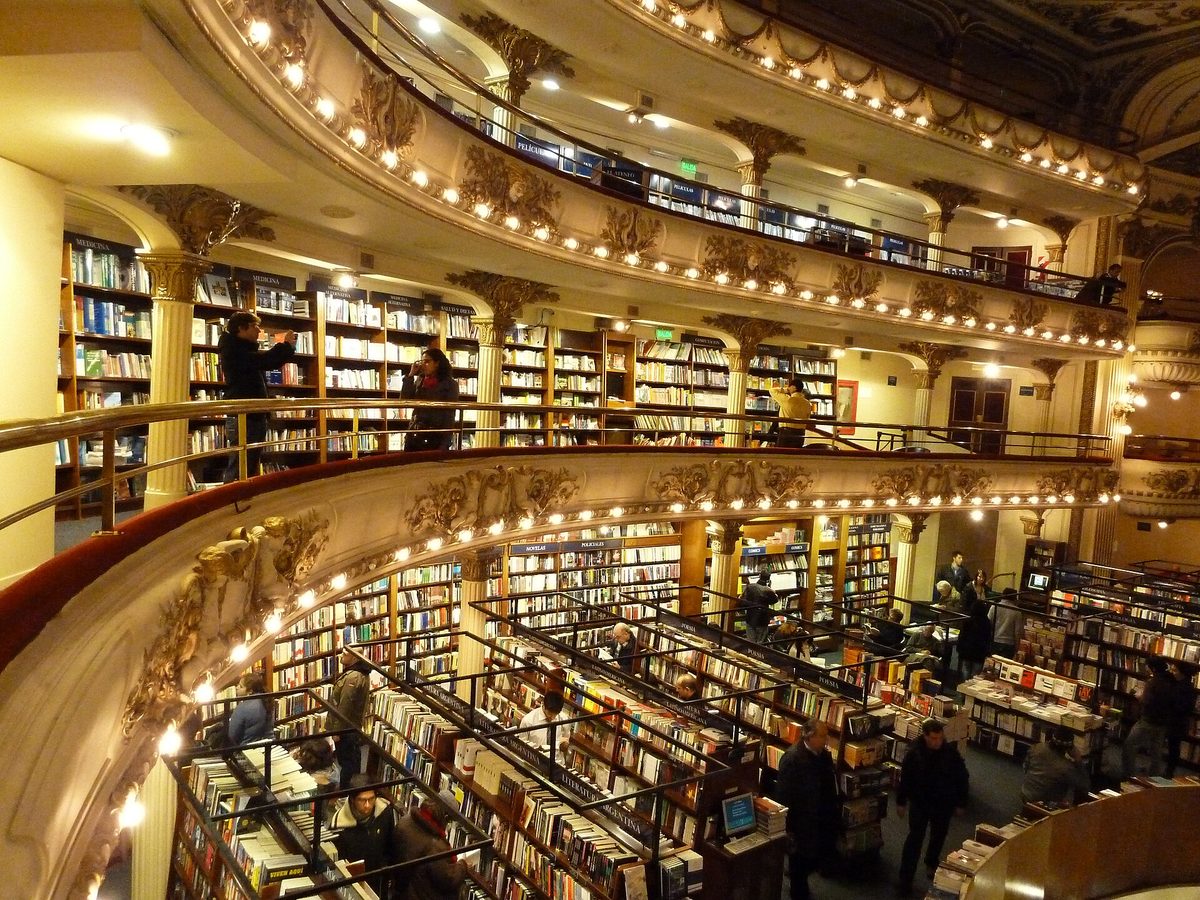
And do not overlook a bookshop: El Ateneo Grand Splendid on Avenida Santa Fe is a 1919 theatre turned into a cathedral of books, with frescoed ceilings, gilded balconies and a café on the old stage. It is free to wander, the children’s section is in the basement, and it is a genuine “wow” for kids and a five-minute sanity stop for parents. It is the kind of weather-proof, low-effort marvel I send every family to; there is a fuller story in our guide to El Ateneo Grand Splendid.
The big city sights kids actually enjoy
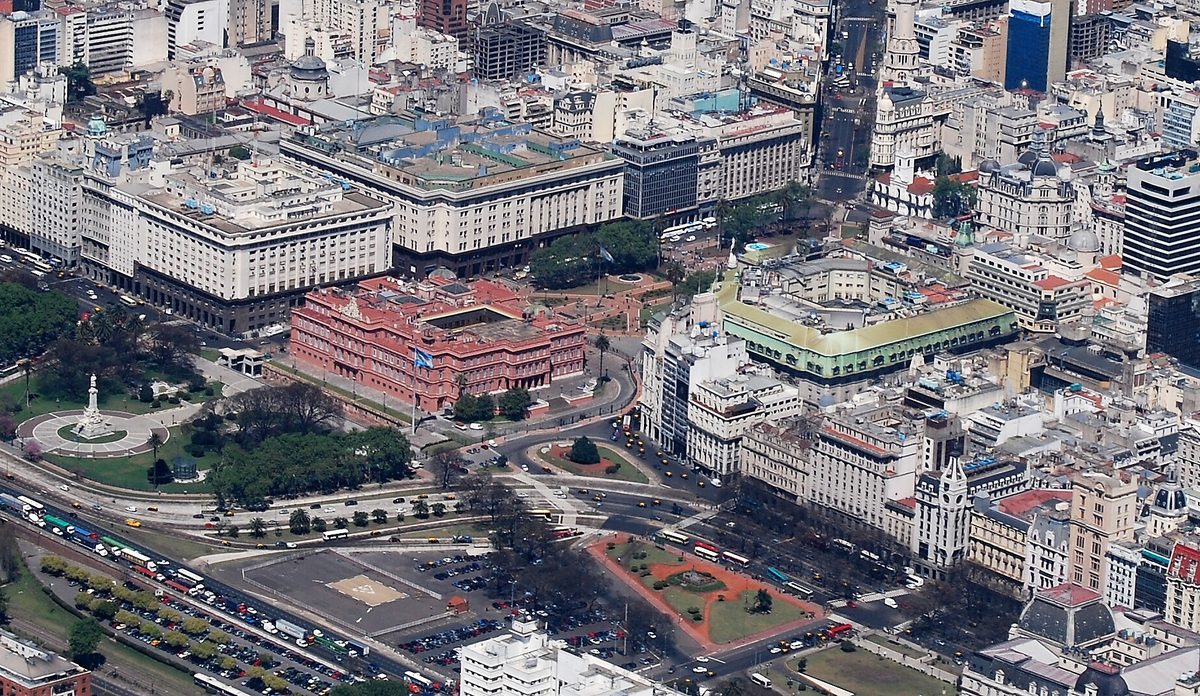
Not every famous landmark works with children, but several do. Plaza de Mayo and the pink Casa Rosada are a surprisingly good hit — tell kids it is the “pink palace” where the president works, watch the pigeons scatter, and time a weekend visit for the free guided tours inside (bring a passport for security). The square is also a living history lesson about the Madres de Plaza de Mayo if your children are older.
For colour and energy, the cobbled Caminito in La Boca is a riot of painted tin houses, tango dancers and street art that photographs beautifully and entertains little ones — just keep it to daytime, hold hands, keep phones tucked away, and stick to the tourist streets, as the wider neighbourhood is rough around the edges. Our Caminito guide has the practical details. Football-mad kids will want to see La Bombonera, the Boca Juniors stadium nearby; stadium tours are a brilliant outing for sports fans, covered in our Buenos Aires football guide.

On a Sunday, the San Telmo street market (roughly 10am to 4pm) is a sensory feast of antiques, buskers and food stalls; carry younger kids or wear them, because it gets shoulder-to-shoulder busy. The Recoleta Cemetery is more interesting to children than you would think — a silent city of marble streets and stray cats, with Eva Perón’s tomb to hunt down like a treasure map. Keep visits short and respectful.
Plazas and themed playgrounds
One of the quiet joys of parenting in Buenos Aires is how many neighbourhood plazas have proper fenced playgrounds — the fencing keeps toddlers in and dogs out. The city has leaned into themed ones, too: a “Crossing the Andes” San Martín-themed playground in Recoleta, robot and pirate-ship designs dotted around Palermo and Belgrano, and port-themed structures near La Boca. The catch is shade — most have very little, so they are tough in the midday summer sun and best enjoyed first thing in the morning or in the cooler late afternoon. Wherever you are staying, the nearest plaza will become your daily reset button.
Best neighbourhoods for families and where to stay
Where you base yourselves matters more with kids than almost anything else, because it decides how much of your day is spent in transit versus actually doing things. Buenos Aires is a city of distinct barrios; our full neighbourhoods guide breaks them all down, but here is the family-focused shortlist.
Palermo is the default, and for good reason. It is leafy, walkable and stuffed with the parks, the Ecoparque, the planetarium and the Japanese Garden, plus an endless supply of kid-friendly cafés and ice cream. Palermo Soho and Hollywood are buzzier and more boutique; Palermo Botánico and Las Cañitas are calmer and greener, which I prefer with small children. Recoleta is elegant, central and safe, with grand architecture, good sidewalks, the science museum and several playgrounds — a solid choice if you want a more classic, slightly quieter base. Belgrano is residential and peaceful, great for longer or slower stays with parks and sports clubs and a real neighbourhood feel.
Puerto Madero deserves a mention for one reason: its wide, flat, traffic-free promenades are the most stroller-friendly surfaces in the city, and it is modern and very safe. The trade-off is that it is pricey and a little sterile, set slightly apart from the “real” Buenos Aires. For families it can be a comfortable, low-stress compromise.
On accommodation type, my strong advice for families is to favour an apart-hotel or a serviced apartment over a standard hotel room. A kitchen lets you handle early breakfasts and fussy-eater dinners on your own schedule (a lifesaver given the late local mealtimes), and in-unit laundry is gold on a long trip. One practical warning: many handsome older buildings have tiny cage elevators that barely fit two adults, so a compact, foldable stroller will save you grief. Our wider accommodation guide goes into specific buildings and price bands, and there is a family-specific guide to the most family-friendly neighbourhoods in Buenos Aires.
Eating out with kids in Buenos Aires
This is where Buenos Aires quietly excels. Argentine food culture is not just tolerant of children — it is built around family, and kids are folded into long, leisurely meals as a matter of course. You will rarely get a sideways glance for bringing a baby to dinner; you are far more likely to get your baby admired and your toddler entertained.
The schedule is the only real adjustment
Locals eat late. Breakfast is light — coffee and medialunas (small, sweet croissants). Lunch is mid-afternoon. The genius bridge is la merienda, an afternoon coffee-and-pastry break around 5 to 7pm that keeps everyone going until a dinner that rarely starts before 8.30 or 9pm, later on weekends. With kids you have two options: adopt the rhythm by building in an afternoon rest so they can stay up for a late family dinner, or eat dinner on the early side (places open around 8) and accept you will be ahead of the local crowd. Both work. We lean into the merienda hard — a proper pastry stop at five buys you a happy table at nine.
What kids will actually eat
Argentina is a paradise for unadventurous young eaters. Around sixty percent of Argentines have Italian heritage, so excellent pizza and pasta are everywhere. The national kid staple is milanesa — a thin breaded cutlet, essentially a posh chicken or beef schnitzel — which appears on nearly every menu, often with fries. Empanadas are cheap, portable and on every block, perfect for park picnics; the little pleat on top tells you the filling. And then there is the main event: a proper parrilla (steakhouse grill), where the portions are vast and a shared mixed grill plus a salad easily feeds a family. Many parrillas have children’s menus, and the whole experience — sizzling grill, generous waiters — tends to delight kids. Our food, steak and restaurants guide covers the city’s eating scene in full, and there is a dedicated family-friendly restaurants in Buenos Aires guide for kid-tested spots.
Play-area cafés and the ice cream rule
A wonderful local quirk: many cafés and restaurants have a staffed peloteros or play area, and parents genuinely choose where to eat based on it. Palermo’s family cafés often lay on dollhouses, craft tables and, on weekends, the odd clown or magician, while the grown-ups get pizza, coffee and wine. High chairs are usually available but basic, often without a tray or straps, so a clip-on travel seat is worth packing if your baby needs strapping in.
Finally, the most important rule of eating in Buenos Aires with children: helado. Argentine ice cream is a national obsession — dense, Italian-style, swirled into impossible peaks, and a guaranteed win after any wobble. Order dulce de leche at least once. Heladeriías stay open late and double as cafés, so a post-dinner cone at 10pm is entirely normal. Legendary names include Cadore and Rapa Nui on Avenida Corrientes; near Temaikèn, the Munchi’s on Avenida Sarmiento even has its own playground.
Getting around Buenos Aires with kids
The good news is that Buenos Aires is a walking city and a cheap one to move around. The main thing you need is a SUBE card, a single rechargeable contactless card that works on the subte (metro), the colectivos (buses) and the commuter trains. Buy and top it up at kiosks and stations; one card can tap several people through, and fares are tiny — often well under a dollar a ride. Our getting around Buenos Aires guide explains the whole system.
With a stroller, the trains are easiest — mostly step-free with elevators — while the subte is workable but frustrating: elevators in the older downtown stations are unreliable or absent, so be ready to carry the stroller up stairs, and avoid the subte entirely at rush hour. On buses, fold the stroller before you board. A genuinely lovely cultural detail: the priority seats by the doors are sacred, and locals will readily stand so a parent holding a baby can sit. Holding a baby on public transport essentially guarantees you a seat.
For door-to-door ease, taxis and apps like Cabify and Uber are cheap, plentiful and my preferred mode with tired kids; drivers are patient and will help wrangle a stroller into the boot. Which brings us to the one genuinely awkward topic.
The car seat reality
Be prepared for this: car seats are essentially never used in taxis and rideshares here, and none are provided by default. Locals routinely hold children on laps in cabs. That is the on-the-ground reality, and you should decide your own family’s line on it. Your options if you want a seat: ask a private transfer company in advance (some provide seats, especially for airport runs); bring a travel-friendly solution such as a Doona (a combined infant seat and stroller), a RideSafer travel vest for bigger kids, or a lightweight travel seat in a padded gate-check bag; or hire a driver for the day and leave your seat in the car. There is no perfect answer — just go in informed rather than surprised at the airport.
On that note, both airports are wonderfully family-friendly. Ezeiza (the international airport) and Aeroparque (domestic) both wave families with toddlers to the front of check-in, immigration and security lines, and both have play areas past security — Ezeiza even has free loaner strollers and toy push-cars and a lactation room near the gates.
Practical tips for parents on the ground
Is Buenos Aires safe with children?
Buenos Aires is broadly as safe as any major capital — think Madrid, London or a big US city — with the same common-sense precautions. The family-friendly neighbourhoods (Palermo, Recoleta, Belgrano, Puerto Madero) are comfortable to walk by day and evening. The real risk is petty theft, not violence: keep phones out of sight on the street (the classic local hazard is the motochorro, a thief on a motorbike who snatches a phone from your hand), use a zip cross-body bag, leave passports in the hotel safe, and stay alert in packed markets and on La Boca’s fringes. Reassuringly for parents, the tap water is safe to drink across the city, and there is no meaningful tropical-disease risk in Buenos Aires itself. Our broader Buenos Aires safety and travel tips guide goes deeper.
Strollers, sidewalks and baby gear
Pack a lightweight, compact, foldable stroller — the kind that survives tiny elevators and bus boarding. A baby carrier is invaluable for cobbled streets (La Boca, San Telmo), crowded markets and stair-heavy subte stations. Be ready for cracked, uneven pavements and missing curb ramps; it is the single most common gripe of visiting parents, and a carrier solves most of it for the under-twos.
Supplies are easy. Farmacias (pharmacies) are on every corner; many products sit behind the counter, so just ask — pharmacists are helpful. Diapers are pañales; formula, wipes and baby food are widely stocked in pharmacies and supermarkets. A few Argentine product names parents find useful (not medical advice — bring your own familiar medicines too): infant paracetamol drops are sold as Termofrén en gotitas, and colic/gas drops as Factor AG. Every medicine box includes a dosage insert.
If a child gets sick, head to a guardia — a walk-in emergency department — ideally a guardia pediátrica at a hospital. Expat families often use Hospital Alemán in Recoleta, Sanatorio Los Arcos in Palermo, or Clínica Zabala in Belgrano. Breastfeeding in public is completely normal and accepted; feed wherever you need to.
One more 2026 essential: since mid-2025 Argentina has required all foreign visitors to carry travel health insurance covering medical care, emergency evacuation and repatriation, and airlines have been told to check it before boarding. It is exactly the cover most families buy anyway, but do not skip it — carry proof in both printed and digital form, and confirm the current requirement before you fly, as the rules have changed recently.
The best time to visit Buenos Aires with kids
Remember the seasons are flipped — this is the Southern Hemisphere, and Northern visitors get it backwards constantly. Spring (September to November) is my top pick for families: mild, jacaranda trees turning the city purple in October and November, and manageable crowds. Autumn (March to May) is the other sweet spot — gentle temperatures and lower hotel prices.
Summer (December to February) is hot and humid, with highs around 30°C/86°F; January in particular sees many locals leave on holiday, so some shops and restaurants close and the city feels quieter (but the heat is real and shadeless playgrounds are tough at midday). Winter (June to August) is cool and grey, rarely freezing, and has the fewest international tourists — but here is the family wrinkle: the roughly two-week winter school break in July brings a wave of Argentine families and a burst of kid-focused programming at museums and the planetarium. For a month-by-month breakdown, our guide to when to go has you covered.
The best day trips from Buenos Aires with kids
A few of the region’s best family experiences sit just outside the city. If you have five days or more, build in at least one. Our full day trips from Buenos Aires guide covers them all; here are the ones that shine with children, with more detail in the family day trips guide.
Tigre and the Delta is the classic car-free family day. Take the Mitre line train from Retiro station to the end of the line — under an hour, trains every 15–20 minutes, a dollar or two with your SUBE — and step out beside the river. From there you can ride a lancha colectiva (a public water-bus) out among the stilt houses and footbridges of the Delta, browse the Puerto de Frutos craft and food market, or, for older thrill-seekers, hit the Parque de la Costa amusement park right by the station. Budget four to eight hours. It is genuinely magical for kids who love boats. Our Tigre day trip guide has the step-by-step.

Temaikèn biopark (covered above) is the best animal day out, about an hour north in Escobar. An estancia day on the Pampas is the one I push hardest for horse-mad kids: a working ranch day with horseback or carriage rides, gaucho skills, and a vast asado lunch, roughly an hour or more from the city — see our estancia day trip guide. For tiny children, República de los Niños near La Plata is a 1953 theme park built entirely at child scale — a miniature world of little buildings to wander.
And if you fancy crossing a border for the novelty, Colonia del Sacramento in Uruguay is a short ferry across the river — a tiny, cobbled, walkable old town where kids can rent a golf buggy and you can be back by dinner. Details in our Colonia del Sacramento guide.
How many days do you need, and a sample family plan
Three days is the realistic minimum to enjoy the city without rushing; five days is the sweet spot, giving you the core sights plus one day trip; a week or more lets you settle into the rhythm and add a couple of excursions. Whatever you do, resist over-scheduling — one big thing per day, anchored by a park or a plaza, is the formula that keeps small children (and parents) sane. For longer framings, see our Buenos Aires itinerary guide, and there is a ready-made one-week Buenos Aires family itinerary if you want it mapped out day by day.
Here is the shape of a relaxed family day that works: a morning at a park or a hands-on museum while everyone is fresh; lunch out, then back to the apartment for downtime or a nap; a late-afternoon merienda (pastries and a playground); and a late dinner at a parrilla or a play-area café, finished with a helado on the walk home. Do that for five days, swapping in a Tigre or Temaikèn day, and you have a near-perfect trip.
Money, costs and entry for families in 2026
Argentina’s money situation has long been the most confusing part of any trip, so here is the current, honest picture — with the firm caveat that this is the single most fast-changing topic in this guide, so verify the latest before you travel. For years there was a big gap between the official exchange rate and the parallel “dólar blue” cash rate, which made carrying wads of US dollars worthwhile. As of mid-2026 that gap has largely collapsed — the official, blue and card (MEP) rates now sit within a few percent of each other, roughly in the region of 1,400–1,500 pesos to the US dollar.
The practical upshot for families is a big quality-of-life win: foreign Visa and Mastercard now give you a rate close to the street cash rate, automatically, with none of the hassle or risk of carrying an envelope of cash. Cards are far more usable than older guides claim. I still keep some cash on hand for markets, small vendors, taxis and tips, but the days of cash-only travel are over. Check a live rate tracker before and during your trip, and treat every peso price in this article as a moving target. Our Buenos Aires travel costs and money guide tracks this in more depth.
On entry: citizens of the US, UK, EU, Canada, Australia and many other countries need no visa for tourist stays of up to 90 days, and the old US$160 reciprocity fee remains abolished. You will want a passport valid for at least six months. The one newer requirement, as noted above, is mandatory travel health insurance — budget for it and carry proof. As always with borders, confirm the current rules with an official source close to your travel date, since policy here can shift.
Buenos Aires with kids: frequently asked questions
Is Buenos Aires safe for families with kids?
Yes, with normal big-city sense. The family neighbourhoods — Palermo, Recoleta, Belgrano, Puerto Madero — are comfortable day and evening. The main risk is petty theft, especially phone-snatching on the street, so keep valuables hidden and bags zipped. Violent crime against tourists is rare, and the tap water is safe to drink. See our safety guide for detail.
How many days do you need in Buenos Aires with kids?
Three days is the comfortable minimum for the core city; five days is the sweet spot, adding a day trip such as Tigre or Temaikèn; a week lets you slow right down. The key with children is one main activity a day rather than a packed schedule. Our family itinerary maps it out.
What is the best neighbourhood to stay in Buenos Aires with a family?
Palermo is the default for its parks, attractions and kid-friendly cafés. Recoleta is elegant, central and safe; Belgrano is calm and residential; Puerto Madero has the most stroller-friendly streets. Favour an apart-hotel with a kitchen and laundry. Compare them all in our family neighbourhoods guide.
Is Buenos Aires stroller-friendly?
Mostly, with caveats. Parks, Puerto Madero and the trains are easy, but expect cracked sidewalks, missing curb ramps and unreliable subte elevators. Bring a lightweight, compact, foldable stroller and a baby carrier for cobbled areas and markets. Older buildings often have tiny elevators, so smaller is better.
Do taxis and Uber in Buenos Aires have car seats?
No — car seats are essentially never used in taxis or rideshares, and none are provided by default. Locals hold children on laps. If you want a seat, arrange a private transfer that supplies one, hire a driver for the day, or bring a travel seat or vest of your own. Decide your family’s comfort level in advance.
What time do families eat dinner, and are kids welcome at restaurants?
Dinner rarely starts before 8.30 or 9pm, and children are warmly welcome everywhere, often very late. Use the afternoon merienda (a 5–7pm pastry break) to bridge the gap, or eat on the early side around 8. Many cafés even have staffed play areas. See our family restaurants guide.
Is the Buenos Aires zoo still open?
No. The old city zoo closed in 2016 and reopened as the free Ecoparque, a conservation-focused park in Palermo with native species, an animatronic exhibit and a carousel. For a full zoo experience with big enclosures and an aquarium, take the day trip to Temaikèn biopark in Escobar instead.
What are the best things to do in Buenos Aires with toddlers?
Toddlers do best with the parks (paddle boats, duck-feeding, the Japanese Garden koi), the Ecoparque carousel, MIJU’s 0–3 sensory zone, and neighbourhood plazas with fenced playgrounds. Keep mornings active and afternoons free for naps. Our baby and toddler guide is built for the under-threes.
Is the tap water safe to drink in Buenos Aires?
Yes, tap water is safe to drink throughout Buenos Aires and most of Argentina, which makes travelling with kids much simpler. Carry a refillable bottle. Some travellers prefer bottled water for taste, but it is not a health necessity in the city.
How do you pay in Argentina — cash or card?
As of 2026, cards are the easy choice: the once-huge gap between official and “blue” rates has largely closed, so foreign Visa and Mastercard now give a rate close to the cash street rate without the hassle. Keep some pesos for markets, taxis and tips, and always check live rates, as this changes fast.
Final thoughts
Buenos Aires surprised me as a family destination, and I think it will surprise you too. It is not a city that has bolted on a few attractions for tourists with children; it is a place where children are simply part of life, welcomed into late dinners and long walks and Sunday markets as a matter of course. Lean into the rhythm — the parks in the morning, the rest in the afternoon, the helado at night — and you will find a warm, affordable, endlessly interesting city that treats your kids like the small VIPs they are.
Pack a compact stroller, sort your travel insurance, keep some pesos in your pocket, and go. And if you are tempted to stay longer than a holiday, our guide to living in Buenos Aires picks up where this one leaves off. Buen viaje — have a wonderful trip.
Photo credits
All images are used under their respective licenses via Wikimedia Commons. Thank you to the photographers:
- Families pedalling paddle boats on the lake in the Bosques de Palermo — photo by Alex Proimos, CC BY 2.0, via Wikimedia Commons.
- The Planetario Galileo Galilei lit up blue at night in Parque Tres de Febrero — photo by Aleksandrs Timofejevs, CC BY 3.0, via Wikimedia Commons.
- Red bridge and koi pond at the Jardin Japones in Palermo — photo by Viajar Ahora (Las Palmas de Gran Canaria), CC BY 2.0, via Wikimedia Commons.
- The El Ateneo Grand Splendid bookshop inside a former theatre in Recoleta — photo by Galio, CC BY-SA 3.0, via Wikimedia Commons.
- Brightly painted tin houses and art stalls along Caminito in La Boca — photo by Jorge Royan, CC BY-SA 3.0, via Wikimedia Commons.
- Aerial view of Plaza de Mayo and the pink Casa Rosada presidential palace — photo by Pavel Spindler, CC BY 3.0, via Wikimedia Commons.
- A provisions boat on the river channels of the Tigre Delta near Buenos Aires — photo by Robert Cutts (pandrcutts), CC BY 2.0, via Wikimedia Commons.
- Pampas grass and the city skyline at the Reserva Ecologica Costanera Sur — photo by Rcidte, Public domain, via Wikimedia Commons.
- Roller-skaters on the wide promenades of the Bosques de Palermo at golden hour — photo by Jorge Láscar from Australia, CC BY 2.0, via Wikimedia Commons.
Photo Credits
Every image in this guide is used under its respective Creative Commons or public-domain license, sourced from Wikimedia Commons:
- Families pedalling paddle boats on the lake in the Bosques de Palermo,. Alex Proimos / CC BY 2.0 via Wikimedia Commons.
- Roller-skaters on the wide promenades of the Bosques de Palermo at gol. Jorge Láscar from Australia / CC BY 2.0 via Wikimedia Commons.
- Red bridge and koi pond at the Jardin Japones in Palermo, Buenos Aires. Viajar Ahora (Las Palmas de Gran Canaria) / CC BY 2.0 via Wikimedia Commons.
- Pampas grass and the city skyline at the Reserva Ecologica Costanera S. Rcidte / Public domain via Wikimedia Commons.
- The Planetario Galileo Galilei lit up blue at night in Parque Tres de . Aleksandrs Timofejevs / CC BY 3.0 via Wikimedia Commons.
- The El Ateneo Grand Splendid bookshop inside a former theatre in Recol. Galio / CC BY-SA 3.0 via Wikimedia Commons.
- Aerial view of Plaza de Mayo and the pink Casa Rosada presidential pal. Pavel Spindler / CC BY 3.0 via Wikimedia Commons.
- Brightly painted tin houses and art stalls along Caminito in La Boca, . Jorge Royan / CC BY-SA 3.0 via Wikimedia Commons.
- A provisions boat on the river channels of the Tigre Delta near Buenos. Robert Cutts (pandrcutts) / CC BY 2.0 via Wikimedia Commons.