Last updated: June 2026 · Written by the Buenos Aires Tourism editorial team, who have walked these murals with local guides and alone.
The first time a guide pointed up at a five-storey parrot mural and told me the artist had painted it dangling over a busy avenue, I stopped thinking of Buenos Aires street art as decoration. It is a public, ever-changing argument about politics, football and joy, painted legally on walls owners actually offer up. Which is exactly why a buenos aires street art tour belongs near the top of your list: this is one of the most open-air-friendly mural cities on earth, and the best way in is on foot.
What a Buenos Aires street art tour actually shows you
A buenos aires street art tour is a guided (or self-guided) walk through neighbourhoods like Palermo, Colegiales, Chacarita and La Boca, where giant legal murals and stencil work cover whole facades. A good two-hour tour decodes the artists, the politics and the history behind the paint — not just where to point your camera. Most run small-group and cost little.
This guide is for travellers who want more than a photo wall: you want to understand why the city looks like this, decide between a guided tour and a self-guided wander, and know which barrios reward the walk. If you are still mapping the big picture, our complete guide to things to do in Buenos Aires sets the scene for how street art fits alongside tango, steak and football.
Why Buenos Aires became a street art capital
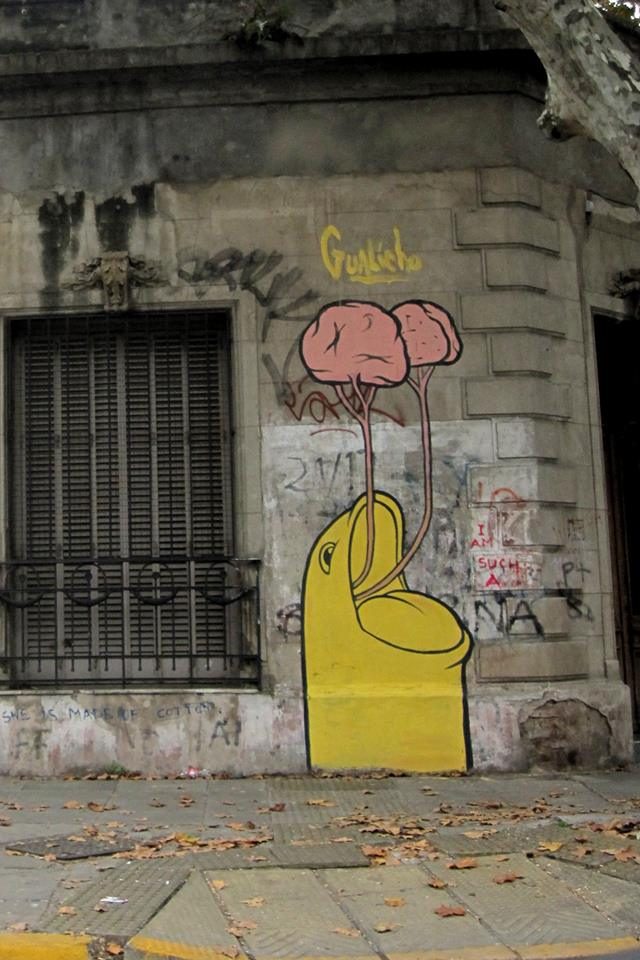
Two things made this city a mural magnet. After the 2001 economic crash, walls were cheap, paint was a release valve, and there was almost no anti-graffiti enforcement — so artists simply painted. And under Argentine law, painting a wall with the owner’s permission is legal, which is why so many murals are huge, ambitious and finished in daylight rather than rushed at 3am. Collectives and shops actively invite artists to transform their facades.
The result is a scene that international names fly in for, painted shoulder-to-shoulder with locals. Martin Ron — ranked among the world’s top muralists by the magazine Art Democracy — is the name you will hear most, alongside Alfredo “El Pelado” Segatori, whose El Regreso de Quinquela in Barracas is often cited as the longest mural in the world by a single artist, a roughly 2,000-square-metre tribute to painter Benito Quinquela Martin. You do not need to memorise names, but knowing the scene has stars makes the walk click.
Guided tour vs self-guided: at a glance
| Guided tour | Self-guided walk | |
|---|---|---|
| Best for | Context, history, hidden pieces | Flexibility, photography, budget |
| Typical cost | Around USD 10–30 (some tip-based) | Free |
| Duration | About 2–4 hours | However long you like |
| You get | Stories, artist intros, sometimes a workshop | Your own pace, no schedule |
| You miss | Spontaneity | The meaning behind the walls |
Prices and times shift constantly in Argentina — treat these as ballpark and confirm when you book.
The best neighbourhoods for street art
You could, in theory, find a mural in almost any barrio. But these are the ones I send everyone to, roughly in order of how easy they are to fold into a normal day of sightseeing.
Palermo: the obvious (and still excellent) start
Most people’s first taste of palermo street art happens by accident, wandering Palermo Soho’s cobbled blocks between a coffee and a leather shop. Calle Serrano (Borges), Honduras, Gurruchaga and Santa Rosa are thick with murals, stencils and paste-ups, and the density means you barely have to try. Palermo Hollywood, just across the railway tracks, is quieter and often has larger commissioned walls. Come mid-to-late afternoon for the best light, then let the walk dissolve into dinner — Palermo is also the heart of the city’s dining scene, which our guide to Buenos Aires restaurants covers in detail.

Colegiales, Chacarita and Villa Crespo: where guides take you
This is the corridor most serious tours actually walk. Colegiales and Chacarita feel residential and unhurried, with bigger, more recent commissioned murals and far fewer tourists than Palermo. The Mercado de las Pulgas (flea market) area in Colegiales is practically an outdoor gallery in itself. Cross Avenida Cordoba from Palermo Soho into Villa Crespo and you stumble onto serious work without any effort. If you only do one guided walk, this is the route I would pick — it is where the city’s living mural scene feels most current.
La Boca and Barracas: colour, football and the longest mural
The south of the city tells a different story. La Boca is famous for the painted tin houses of Caminito and La Boca, but step a few blocks off the tourist strip and you find raw, large-scale murals tied to football, immigration and working-class history. Neighbouring Barracas is home to Segatori’s epic Quinquela tribute and a growing open-air collection. These barrios reward a guide or a bike tour — some pockets are best not wandered alone after dark, so check current advice in our Buenos Aires travel tips.
Coghlan and Villa Urquiza: the muralists’ big canvases
Further out, quiet northern barrios like Coghlan and Villa Urquiza hold some of the city’s most jaw-dropping single works — including Martin Ron’s giant pieces. There is less to fill the gaps between murals here, so it is the one zone where a guide (or a clear map) genuinely pays off. To understand how all these barrios fit together geographically, our Buenos Aires neighbourhoods guide is worth a read before you set out.

Choosing a tour: guided, free or self-guided
There is no single “right” way to see the walls. Here is how I would choose.
Specialist guided tours
Operators like Graffitimundo (a non-profit that works directly with artists) and Buenos Aires Street Art run paid walks that go deep on the artists and the politics. Expect roughly USD 30 per person for a two-hour-plus walk, often through the Colegiales–Chacarita corridor, sometimes with the option to add a stencil or aerosol workshop led by a local artist. This is the choice if you want the story, not just the sight.
Free (tip-based) walking tours
Several companies run “free” graffiti walks in Palermo — you pay what you feel it was worth at the end, typically the equivalent of USD 5–15 per person. They usually meet at Plaza Serrano in the afternoon and run rain or shine. The guides are young, knowledgeable locals, and the value is genuinely high. If you like the format, these pair naturally with the city’s other walking tours of the historic centre.
Going it alone
Self-guiding is completely viable in Palermo, where murals are dense and the area is safe and walkable by day. Save a few pins, start around Plaza Serrano, and simply drift. You will miss the backstories, but you gain total freedom to photograph and linger. A street art afternoon also slots neatly into a wider plan — see how we sequence it in our Buenos Aires itinerary.

Practical tips for your street art walk
- Go in the afternoon. The light is kinder for photos and tours tend to start around 3pm.
- Wear real shoes. You will cover a few kilometres on uneven pavement; this is a walking city, and our getting around Buenos Aires guide explains the Subte and bus options for stitching barrios together.
- Carry some cash. Tip-based tours and neighbourhood cafes often prefer pesos; card is not universal.
- Ask before photographing artists at work. You will sometimes catch a mural mid-creation — a quick nod is polite.
- Pair it with a museum. If the murals leave you wanting more context, the city’s museums and art spaces trace the line from gallery art to the street.
However you do it, street art is one of the great free-or-cheap pleasures here, and it sits right at the top of any list of things to do in Buenos Aires for curious travellers.
Frequently asked questions
Is a Buenos Aires street art tour worth it?
Yes, if you want context. The murals are free to see on your own, but a good guide explains the politics, the artists and the stories you would never guess from the paint alone. For two hours and a modest cost or tip, most travellers find it one of the more memorable, genuinely local things they do in the city.
How much does a graffiti tour in Buenos Aires cost?
It varies. Specialist guided walks run around USD 30 per person, while “free” tip-based graffiti tours in Palermo typically draw the equivalent of USD 5–15 per person at the end. Bike tours and private tours cost more. Prices move with Argentina’s exchange rate, so always confirm the current figure when you book.
Where is the best street art in Buenos Aires?
Palermo (Soho and Hollywood) is the easiest and densest area for first-timers. For bigger, more current commissioned murals, head to Colegiales, Chacarita and Villa Crespo. La Boca, Barracas and the northern barrios of Coghlan and Villa Urquiza hold some of the most ambitious single works, including the city’s longest mural.
Can I see Palermo street art without a tour?
Absolutely. Palermo is safe and walkable by day, and the murals around Plaza Serrano, Calle Serrano, Honduras and Santa Rosa are so dense you will find plenty just by wandering. Save a few map pins, go in the afternoon for the light, and end with a coffee. You only really miss the backstories a guide provides.
Is street art legal in Buenos Aires?
Largely, yes. Argentine law permits painting a wall when the owner gives permission, and enforcement against unsanctioned graffiti is light. That permissive culture is exactly why the murals here are so large, detailed and finished in daylight — artists are not racing to avoid being caught, so they can take their time.
Final thoughts
Of everything I have done in this city, the street art walks are what I recommend first to friends who think they have “seen enough cities”. The murals turn an ordinary block into a conversation, and whether you splurge on a specialist guide, join a tip-based walk, or just drift through Palermo with your phone out, you come away seeing Buenos Aires differently. Do it early in your trip — you will start spotting paint everywhere for the rest of your stay. For more ways to fill your days, circle back to our full guide on things to do in Buenos Aires.
Photo credits
- Colorful mural on a building wall during a buenos aires street art tour in Palermo — photo by Nicolas cueva, CC BY-SA 4.0, via Wikimedia Commons.
- Large graffiti mural covering a street wall in Buenos Aires — photo by Juan Cruz Feres, CC BY 3.0, via Wikimedia Commons.
- Painted mural on a residential facade in a Buenos Aires neighbourhood — photo by Guache Street Art, CC BY 2.0, via Wikimedia Commons.
- Brightly painted street art on a corner building in La Boca, Buenos Aires — photo by Aleksandrs Timofejevs, CC BY 3.0, via Wikimedia Commons.