The good news about getting around Buenos Aires is that it is genuinely easy, cheap, and — once you grasp a couple of basics — a small adventure in itself. The slightly less good news is that this is a big city, sprawled across nearly fifty neighborhoods, so you cannot simply walk everywhere the way you might in a compact European capital. The trick is knowing which of the city’s excellent transport options to reach for in which situation, and I am going to make that simple.
Getting around Buenos Aires comes down to a few tools: a SUBE card (the rechargeable card you tap for everything), the fast and dirt-cheap Subte (metro), the vast network of colectivos (buses), and a ride-hailing app like Cabify for door-to-door trips. Master those, walk within each neighborhood, and you will move around the city like a local for a handful of dollars a day.
This guide walks through every option — how to use it, what it costs, and when to choose it — plus the two things visitors most need to nail: getting in from the airport, and crossing the river to Uruguay. I have ordered it the way you will actually need it, starting with the one thing to sort before you do anything else. For where these journeys are taking you, pair this with our things to do and neighborhoods guides.

The Best Ways of Getting Around Buenos Aires: At a Glance
Here is the whole toolkit in one view — what each mode is best for, the rough cost, and how you pay. Fares are in flux given inflation, so treat the costs as relative guidance and check current prices.
| Mode | Best for | Rough cost | How to pay |
|---|---|---|---|
| Subte (metro) | Fast trips across the center & north | Cheapest | SUBE card |
| Colectivo (bus) | Everywhere the Subte doesn’t reach | Cheapest | SUBE card |
| Cabify / Uber / inDriver | Door-to-door, nights, groups, luggage | Low | App (card) |
| Taxi | Hailing on the street, no app | Low–medium | Cash or card |
| Walking | Within a neighborhood | Free | — |
| EcoBici (bikes) | Parks, short hops, the eco reserve | Free / low | App |
| Train | Day trips (Tigre, La Plata) | Cheapest | SUBE card |
| Ferry | Crossing to Uruguay | Medium | Online booking |
First Things First: Get a SUBE Card
Before anything else, get a SUBE card. This single rechargeable smartcard is the key to almost all public transport in Buenos Aires — the Subte, every colectivo, and the suburban trains all run on it, and you cannot pay cash on the buses, so without one you are stuck. It is the first thing I tell anyone to do on arrival.
Getting one is easy: buy a SUBE card at any Subte station ticket booth, at the airports, or at one of the thousands of kioscos (corner kiosks) and lottery shops displaying the SUBE logo, for a small one-off cost. Then load it with credit (cargar la SUBE) at station machines, kiosks, or pharmacies — top up more than you think you need, since fares are tiny. To use it, simply tap the card on the reader as you enter the Subte or board a bus (on buses, tell the driver your destination or tap for the default fare). One card can pay for a whole group by tapping multiple times. It is contactless, refundable, and works for your entire stay. Our SUBE card guide covers every detail, including how to get the cheaper resident-style fares.

The Subte: Buenos Aires’ Metro
The Subte (short for subterráneo) is the fastest way to cross the city, and at rush hour it is far quicker than any taxi crawling through traffic. Opened in 1913, it was the first metro in the Southern Hemisphere, and some of its old wooden carriages and tiled stations are sights in their own right. There are six lines, named by letter — A, B, C, D, E, and H — that mostly run from the downtown core outward, with Line C linking the two big train terminals (Retiro and Constitución) and the others fanning out. For visitors, Line D is the workhorse, running from downtown up through Barrio Norte, Palermo, and Belgrano.
Riding it is simple: tap your SUBE on the turnstile, follow signs to your line and direction (the direction is named after the end-of-line station), and go. It runs roughly from 5am to around 11pm (a bit later on weekends, with reduced Sunday hours), and the flat fare is the same no matter how far you travel. Two honest caveats: it gets seriously packed during weekday rush hours (around 8–9am and 6–7pm), when you will want to keep your bag in front of you; and the network does not reach everywhere — notably, neither La Boca nor Puerto Madero has a Subte stop. For those, you will take a bus or a ride-hail. Full line-by-line detail is in our Buenos Aires Subte guide.

Colectivos: The City Buses
If the Subte is the spine of the city, the colectivos (buses) are its bloodstream — an enormous network of more than a hundred and fifty lines that reach absolutely everywhere, run 24 hours a day, and cost the same tiny fare as the Subte. They are how most porteños actually get around, and once you crack them they are wonderfully useful, especially for the many places the Subte misses.
The catch is that the network is dense and not intuitive, so do not try to memorize routes — let an app do the work. Google Maps gives reliable bus directions, and the city’s own BA Cómo Llego app (and website) is excellent for door-to-door public-transport routing. To ride: flag the bus down at the stop (raise your hand, or it may not stop), board at the front, tell the driver your destination or simply tap your SUBE for the standard fare, and press the button to request your stop. Have your destination on your phone to show the driver if your Spanish is shaky. It is the most local way to travel, and genuinely part of the fun. More in our colectivo guide.

Taxis, Cabify, Uber & inDriver
For door-to-door trips — with luggage, at night, in a group, or when you simply cannot face the bus — you have two routes: the apps and the street taxi.
The ride-hailing apps are my default. Cabify is the most established and popular in Buenos Aires, fully app-based with the fare agreed up front and paid by card, which removes any worry about being overcharged or fumbling with cash. inDriver (where you can negotiate the fare) and Uber also operate. A quick, honest note on Uber: its legal status in the city has been contested for years, caught in an ongoing tug-of-war with the taxi industry, so while it works in practice, you may occasionally find drivers ask you to sit in the front to keep a low profile. Because of that grey area, I lean on Cabify, which is uncontroversial and just as cheap. Verify the current situation when you arrive, as it shifts.
Street taxis — the distinctive black-and-yellow cars — are plentiful, metered, and fine for hailing when you do not have signal or patience for an app. To stay safe and fair: hail one from a busy street or use a radio taxi booked by phone or app rather than an unmarked car, make sure the meter (reloj) is running, and have small bills, as drivers rarely have change for large notes. Avoid the unofficial cabs that tout at the airport. The full comparison — apps versus taxis, costs, and safety — is in our Uber, Cabify and taxis guide.
Walking the City
For all its size, Buenos Aires is a wonderful walking city — within a neighborhood. The barrios are flat, leafy, and made for strolling, and you will see far more on foot than from underground. Spend your days walking around whichever area you are exploring — the cobblestones of San Telmo, the boulevards of Recoleta, the parks and pasajes of Palermo — and use the Subte, a bus, or a ride-hail only to jump between neighborhoods. That hybrid — ride across, walk within — is how I get around, and it is the best of both worlds.
A few walking realities: the pavements can be cracked and uneven (watch your step, and your shoes), street crossings can be chaotic (cars do not always yield, so cross with purpose at corners), and you should keep your phone away and your wits about you on busier streets, as petty theft is the main risk. None of that should stop you — just walk like a switched-on local. Our travel tips cover street smarts in full.

Cycling & EcoBici
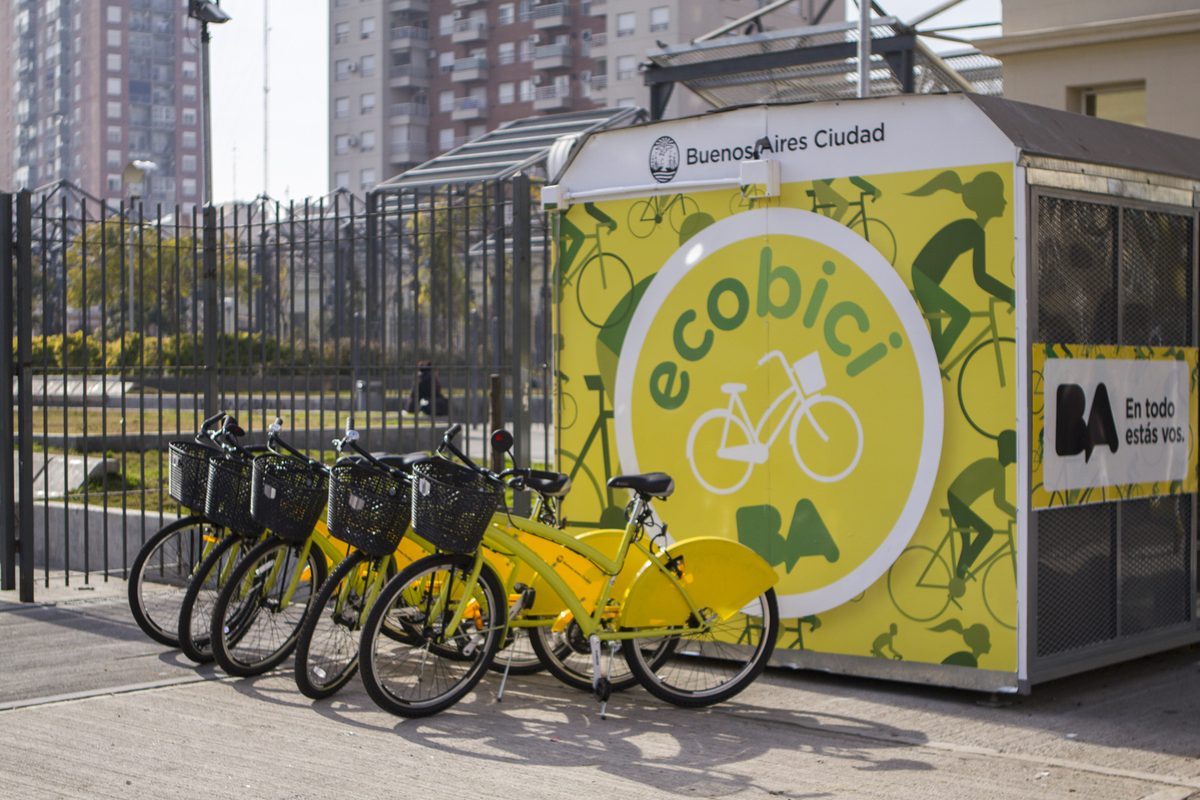
Buenos Aires has quietly become a decent cycling city, with hundreds of kilometers of protected bike lanes (bicisendas) threading the barrios and the parks. The city runs a public bike-share scheme, EcoBici, with stations dotted across town; you sign up through the BA EcoBici app and grab a bike for short trips, with the first stretch typically free or very cheap. It is a lovely way to explore the flat, green expanses — the Bosques de Palermo, the Reserva Ecológica, the Puerto Madero waterfront — where cycling genuinely beats walking or driving.
I would be more cautious about cycling in the dense downtown traffic, where the lanes thin out and the driving is assertive, but for parks and the riverside it is a joy. Plenty of operators also run guided bike tours if you would rather follow a local. More in our walking and cycling guide.

Trains: Getting Out of the City
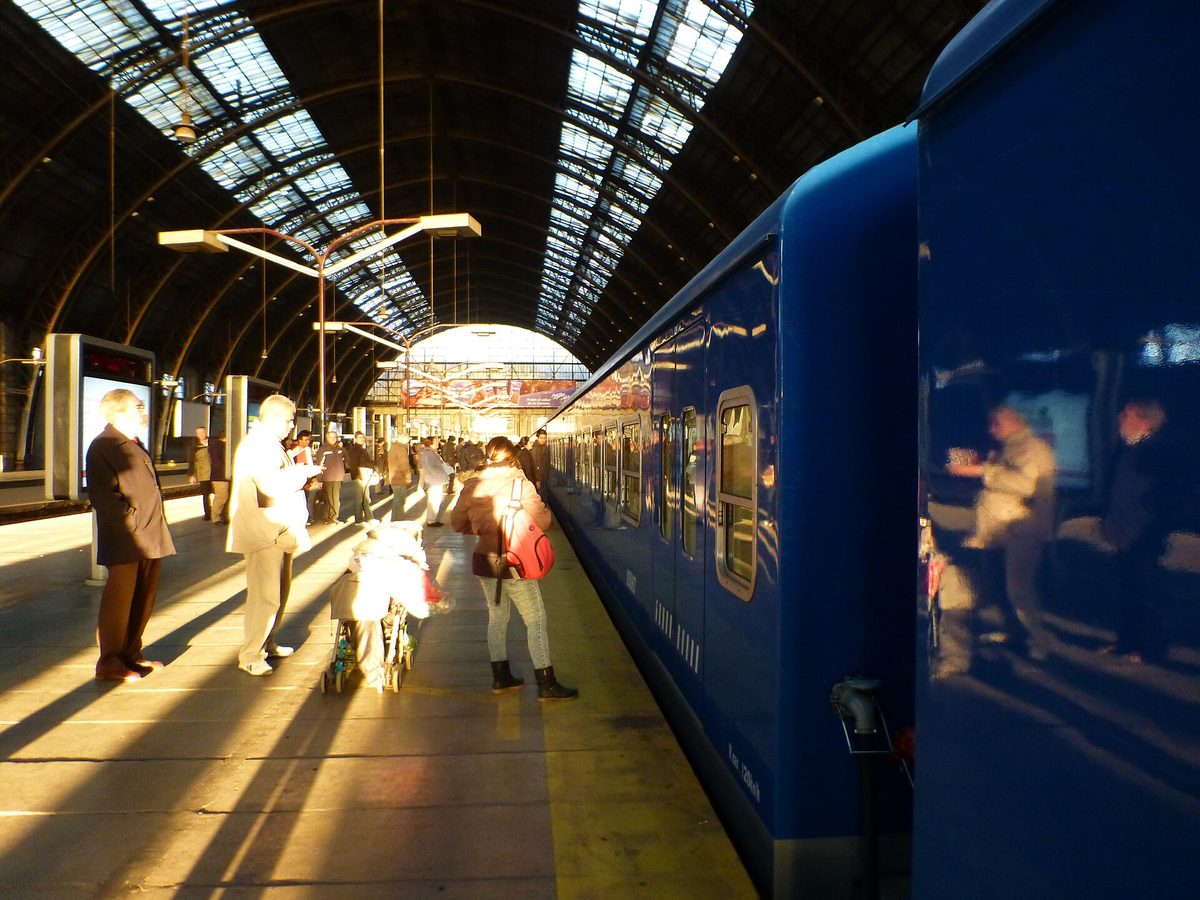
You probably will not use the suburban trains to get around central Buenos Aires — the Subte and buses do that better — but they are the key to several of the best day trips, and they run on the same SUBE card for a pittance. The network radiates from two grand old terminals: Retiro, in the north of downtown, and Constitución, in the south.
The one every visitor wants is the Mitre line from Retiro to Tigre, the gateway to the delta — about an hour, scenic, and absurdly cheap (you can also take the charming tourist-oriented Tren de la Costa for part of the way). The Roca line from Constitución heads to La Plata. A safety note worth heeding: the area immediately around the Constitución terminal can feel edgy, so keep your bag close and do not linger. For the routes and how to ride them, see our trains guide.

Getting To Buenos Aires: The Airports
Buenos Aires has two airports, and which one you land at changes your arrival completely.
Ezeiza (EZE), officially Ministro Pistarini, is the main international gateway, about 35 km south of the center — a 45-to-60-minute drive depending on traffic. Aeroparque (AEP), Jorge Newbery, handles most domestic flights and some regional ones, and sits right in the city by the river near Palermo, just 15–20 minutes from the northern barrios. Lucky you if you fly into Aeroparque; the transfer is quick and cheap.
| Airport | Distance to center | Drive time | Best transfer | Rough cost |
|---|---|---|---|---|
| Ezeiza (EZE) | ~35 km / south | 45–60 min | Pre-booked transfer or official taxi | Medium |
| Aeroparque (AEP) | ~3 km / central | 15–20 min | Cabify or taxi | Low |
From Ezeiza, your best options are a pre-booked private transfer (a driver waiting with your name — the easiest after a long flight), the official airport taxi or remís at the regulated counters inside the terminal (fixed price, avoid the touts outside), the Tienda León shuttle bus to its downtown terminal (cheaper, then a short taxi to your hotel), or a ride-hailing app, though airport pickup rules for apps can be fiddly. From Aeroparque, just grab a Cabify or a taxi from the rank — it is cheap and fast. Sort some pesos or a card for the ride before you leave the terminal. Our detailed guides cover Ezeiza to the city and Aeroparque to the city option by option, and your choice of where to stay affects how long that transfer takes.

Crossing to Uruguay by Ferry
One of the great easy escapes from Buenos Aires is the ferry across the Río de la Plata to Uruguay — close enough that you can see the far shore on a clear day, and a wonderful day trip or short getaway. As the satellite view above shows, Colonia sits just across the water, with Montevideo further along the coast.
Three companies run the crossings — Buquebus (the biggest), Colonia Express, and Seacat — from the terminals in Puerto Madero. The fast ferry to the pretty colonial town of Colonia del Sacramento takes about an hour to an hour and a quarter; Montevideo is reachable directly (around two and a quarter hours) or via Colonia plus a connecting bus. Book online in advance for the best fares and to choose your time, bring your passport (this is an international border, with immigration handled at the terminal), and arrive early like you would for a flight. It is a smooth, civilized crossing. The full how-to is in our Buenos Aires to Uruguay ferry guide, and the destination itself in our Colonia day trip guide.
Driving & Car Rental: Do You Need a Car?
For a city trip, the short answer is no — do not rent a car in Buenos Aires. The public transport and cheap ride-hailing cover everything, traffic is heavy and assertive, porteño driving is not for the faint-hearted, and parking is a genuine headache. A car in the city is a liability, not a convenience.
The exception is if you are planning a road trip beyond the city — touring the wine country, the pampas estancias, or the Atlantic coast under your own steam. For that, renting makes sense; you will want your passport, a credit card, and your home driving license (an International Driving Permit is a sensible addition), and you should budget for tolls on the highways. Even then, many travelers find a booked tour or a remís with a driver easier for a single day trip. The details are in our car rental guide.
Getting Around Buenos Aires by Scenario
To pull it together, here is what I would actually do in the situations you will face most.
- Airport to your hotel: from Ezeiza, a pre-booked transfer or the official airport taxi; from Aeroparque, just a Cabify or taxi from the rank.
- Daily sightseeing: walk within the neighborhood you are exploring, and use the Subte (or a bus) to hop between barrios. This ride-across-walk-within rhythm is the key to the whole city.
- Reaching La Boca or Puerto Madero: there is no Subte, so take a Cabify or taxi (and to La Boca, taxi both ways and stay in the tourist core).
- A night out: Cabify or a taxi door-to-door, especially late — cheap, safe, and far easier than figuring out night buses after a long dinner.
- Day trips: the train from Retiro to Tigre, or the ferry from Puerto Madero to Colonia — both cheap and scenic.
- With luggage, a group, or kids: a ride-hailing app every time — the small extra cost is well worth skipping the crowded Subte with bags.
How Much Does Getting Around Cost?
Wonderfully little. Public transport — the Subte, buses, and trains — costs only a few cents to a dollar a ride, so even with several journeys a day you will spend very little. Ride-hailing and taxis are cheap by international standards too: most cross-town trips run just a few dollars, and even a long ride rarely stings. The one bigger-ticket items are the airport transfer from Ezeiza and the ferry to Uruguay, both in the moderate range.
The wider context is that, thanks to Argentina’s exchange-rate situation, everything here is excellent value for foreign visitors right now — transport included. A realistic daily transport budget for someone mixing the Subte, the odd bus, and a couple of ride-hails is just a handful of dollars. Pay public transport with your SUBE and ride-hails by card, keeping a little cash for street taxis and tips. For the full money picture, see our travel cost and blue dollar guides.
Is Public Transport Safe in Buenos Aires?
Broadly, yes — millions of porteños use it safely every day, and as a visitor you will too. The real risk is not danger but petty theft: pickpocketing and phone-snatching on the crowded Subte and buses, particularly at rush hour and in tourist-heavy spots. The defenses are simple and the same ones locals use: keep your bag in front of you and zipped, keep your phone in your pocket rather than out and visible, do not flash valuables, and stay alert in crush-load carriages.
A few situational notes: take a ride-hail rather than public transport late at night; be extra aware around the Constitución and Retiro terminals; and on street taxis, use marked radio taxis and watch the meter. None of this should make you anxious — getting around Buenos Aires is genuinely easy and safe with everyday city sense. Our is Buenos Aires safe guide has the complete picture.
Accessibility & Getting Around with Reduced Mobility
An honest word for travelers with reduced mobility: Buenos Aires is improving but still imperfect. The newer Subte lines (notably H) and many stations have elevators, but older stations often do not, and the pavements can be uneven and crowded. Many buses are now low-floor and accessible, but not all. For the smoothest experience, lean on ride-hailing and remís services door-to-door, choose central, flat neighborhoods like Recoleta and Puerto Madero as your base, and check accessibility with specific sights and hotels in advance. It is a very walkable city for those who can walk, and a manageable one with planning for those who need step-free routes.
Common Mistakes to Avoid When Getting Around Buenos Aires
Sidestep these and your transport will be friction-free from the start.
- Not getting a SUBE card right away. Without one you cannot board a bus at all and cannot use the Subte. Make it your first errand on arrival — the airport sells them.
- Trying to pay cash on the bus. Colectivos take only the SUBE card, full stop. Travelers are caught out by this constantly.
- Taking unmarked “taxis” at the airport. Ignore the touts inside the arrivals hall and use the official taxi/remís counter or a pre-booked transfer instead.
- Renting a car for a city stay. You will spend your trip stuck in traffic and hunting for parking. Use transport and ride-hailing, and rent only for trips out of town.
- Assuming the Subte goes everywhere. It misses La Boca and Puerto Madero entirely, among others — check before you rely on it, and have a ride-hail ready for the gaps.
- Arriving with no pesos. You will want a little local cash for a street taxi, a tip, or a top-up; do not count on cards for absolutely everything, especially on arrival.
A Few Local Tips for Smoother Travel
Small things that make a real difference:
- Download the apps before you fly: BA Cómo Llego (public-transport routing), Cabify (rides), Google Maps, and BA EcoBici (bikes). They all work better set up in advance.
- Dodge the rush. The Subte is genuinely crushed around 8–9am and 6–7pm on weekdays; shift your cross-town trips outside those windows if you can.
- Mind the bus branch. Many colectivo lines split into branches (ramales) with the same number but different routes — check the destination sign in the window, not just the number, and your routing app will tell you which to take.
- Keep small change. Street-taxi drivers rarely have change for big notes, so hold on to your coins and small bills.
- Be aware of strikes. Argentina has the occasional transport strike (paro), which can halt the Subte or buses for a day; if one lands during your trip, lean on walking and ride-hailing.
- Top up your SUBE generously. Fares are tiny, so a single load goes a long way and saves you hunting for a top-up point mid-trip.
Getting Around Buenos Aires at Night
Buenos Aires is a famously nocturnal city — dinner at 10pm, bars filling after midnight, clubs that do not peak until 3am — so getting home late is a normal part of any trip. The Subte stops running around 11pm, which is well before the night is over, but the city does not leave you stranded: the colectivos run 24 hours, with night services on the major lines. That said, my honest advice for visitors after dark is to use a ride-hailing app or a taxi door-to-door. After a long dinner or a night out, a Cabify is cheap, drops you exactly where you are going, and spares you working out night-bus routes in a second language. It is also the safer choice late at night, particularly if you have had a few Malbecs.
A few night habits: keep your phone tucked away while you wait, share your ride details with someone if you are solo, have your destination saved in the app, and avoid walking alone through quiet or unfamiliar streets in the small hours — stick to busy, well-lit areas or just take the car. Done sensibly, the city’s legendary nightlife is yours without a worry; plan it with our nightlife guide.
Frequently Asked Questions
How do you get around Buenos Aires?
Most visitors use a mix: a SUBE card for the cheap, fast Subte (metro) and the buses, walking within each neighborhood, and a ride-hailing app like Cabify for door-to-door trips, nights out, and places the Subte doesn’t reach. It is an easy, affordable city to move around once you have a SUBE card.
Do I need a SUBE card in Buenos Aires?
Yes — it is essential. The SUBE card is the only way to pay for the Subte, the buses (which take no cash at all), and the suburban trains. Buy one on arrival at a station, kiosk, or the airport, load it with credit, and tap as you board. One card can pay for a group.
Is the Buenos Aires Subte easy to use?
Very. There are six clearly lettered lines, you tap your SUBE to enter, and signs point you to your line and direction (named after the final station). It is fast and dirt cheap. Just avoid the worst of the weekday rush-hour crush, and keep your bag in front of you when it is packed.
Is Uber available and legal in Buenos Aires?
Uber operates in the city, but its legal status has long been disputed with the taxi industry, so it sits in a grey area — drivers sometimes ask passengers to ride up front. It works in practice, but many locals and visitors prefer Cabify, which is fully established, equally cheap, and uncontroversial. Check the current situation on arrival.
How do I get from Ezeiza airport to the city?
The easiest options are a pre-booked private transfer or the official airport taxi/remís from the regulated counters inside the terminal (avoid the touts). The Tienda León shuttle bus to downtown is a cheaper alternative. The drive takes 45–60 minutes. From Aeroparque, the in-city domestic airport, just take a Cabify or taxi.
How much does public transport cost in Buenos Aires?
Very little — a Subte, bus, or train ride costs only a few cents to about a dollar, and ride-hailing trips across town are usually just a few dollars. Combined with the favorable exchange rate, getting around is one of the cheapest parts of a Buenos Aires trip.
Can you pay cash on Buenos Aires buses?
No — the colectivos (buses) do not accept cash at all; you must tap a SUBE card. This is exactly why getting a SUBE card on arrival is the single most important transport task. The Subte and trains also run on the SUBE; only street taxis take cash.
Is Buenos Aires a walkable city?
Within a neighborhood, very — the barrios are flat, leafy, and made for strolling. Between neighborhoods it is genuinely large, so you will combine walking with the Subte, buses, and ride-hailing. The winning strategy is to ride across the city and then walk within whichever area you are exploring.
Do I need to rent a car in Buenos Aires?
No — for a city visit, a car is more hassle than help, with heavy traffic, assertive driving, and difficult parking. Public transport and cheap ride-hailing cover everything. Only consider renting if you are taking a road trip beyond the city, to the wine country, estancias, or coast.
What is the best app for getting around Buenos Aires?
For routing, Google Maps and the city’s own BA Cómo Llego app give reliable public-transport directions. For rides, Cabify is the go-to ride-hailing app, with inDriver and Uber also available. The official BA EcoBici app handles the public bikes. A couple of downloads before you arrive makes everything easier.
Are taxis safe in Buenos Aires?
Generally yes, with sensible habits. Use the marked black-and-yellow radio taxis, hail from busy streets rather than taking unmarked cars, make sure the meter is running, and carry small bills for change. For extra peace of mind — and a fixed, prepaid fare — many visitors simply use Cabify instead.
How do I get to Tigre and the day-trip spots?
Take the Mitre line train from Retiro station to Tigre — about an hour, scenic, and very cheap on your SUBE card. For Colonia and Montevideo in Uruguay, take a ferry from the Puerto Madero terminals (bring your passport). Both are easy, well-trodden routes covered in our day-trips guides.
How late does the Subte run?
The Subte runs roughly from 5am to around 11pm, a little later on weekends and with reduced hours on Sundays. After it closes, the 24-hour buses keep running, but for a late night out a Cabify or taxi door-to-door is the easiest and safest way home.
Is the ferry to Uruguay worth it?
Absolutely — the crossing to Colonia del Sacramento (about an hour by fast ferry) makes one of the best day trips from Buenos Aires, swapping the big city for a dreamy colonial town across the river. Book online ahead, bring your passport, and treat it like a short international hop.
How do I get around Buenos Aires at night?
The Subte stops around 11pm, but the buses run 24 hours. For most visitors, though, a ride-hailing app like Cabify or a taxi is the best way home after dark — cheap, door-to-door, and safer than figuring out night buses late. Keep your phone away while you wait and stick to busy, well-lit streets.
Is the Subte or the bus better for tourists?
The Subte is faster, simpler, and easier for first-timers, so start there for trips across the center and north. The buses reach far more of the city — including spots the Subte misses — but the network is harder to learn, so lean on a routing app. Both cost the same tiny fare on your SUBE card.
Do I need cash to get around Buenos Aires, or can I use a card?
Public transport runs on the SUBE card (which you load with credit), and ride-hailing apps charge your card, so you can do most journeys cashless. The exceptions are street taxis and tips, where a little cash is handy. Carry a modest amount of pesos alongside your card, especially on arrival.
How do I get to La Boca and Caminito?
La Boca has no Subte station, so the simplest way is a taxi or a ride-hailing app like Cabify straight to Caminito — take one both ways, visit in daylight, and stay in the tourist core. Some buses serve the area, and many people combine it with San Telmo, taking a short taxi between the two. Avoid walking in from surrounding streets.
Final Thoughts
Getting around Buenos Aires is far easier than its size first suggests — and honestly, half the fun. Sort a SUBE card on day one, learn to love the rattling old Subte and the ever-present colectivos, keep Cabify in your pocket for the nights and the gaps, and walk every neighborhood you can. Do that and the whole city opens up to you for a few dollars a day, with the airport and even another country an easy hop away. Do not overthink it: tap, ride, walk, repeat. Once you can move around with confidence, our guides to things to do, the neighborhoods, and day trips will show you where to point all that mobility — and if you would rather have it all sequenced day by day, our Buenos Aires itinerary does the routing for you.
Photo Credits
Every image is used under its respective Creative Commons or public-domain license, sourced from Wikimedia Commons:
- The Subte (metro). Photo by Gastón Cuello, CC BY-SA 4.0 — via Wikimedia Commons.
- A colectivo city bus. Photo by Barcex, CC BY-SA 3.0 — via Wikimedia Commons.
- A Buenos Aires taxi. Photo by Aleposta, Public domain — via Wikimedia Commons.
- Retiro railway station. Photo by Unknown authorUnknown author, Public domain — via Wikimedia Commons.
- Ezeiza international airport. Photo by Lcachero, CC BY 3.0 — via Wikimedia Commons.
- The Rio de la Plata crossing to Uruguay. Photo by Earth Sciences and Image Analysis Laboratory, NASA Johnson Space Center, Public domain — via Wikimedia Commons.
- EcoBici public bikes. Photo by Fotos: M. Inés Ghiglione-gv/GCBA. – Gobierno de la Ciudad de Buenos Aires from C, CC BY 2.0 — via Wikimedia Commons.
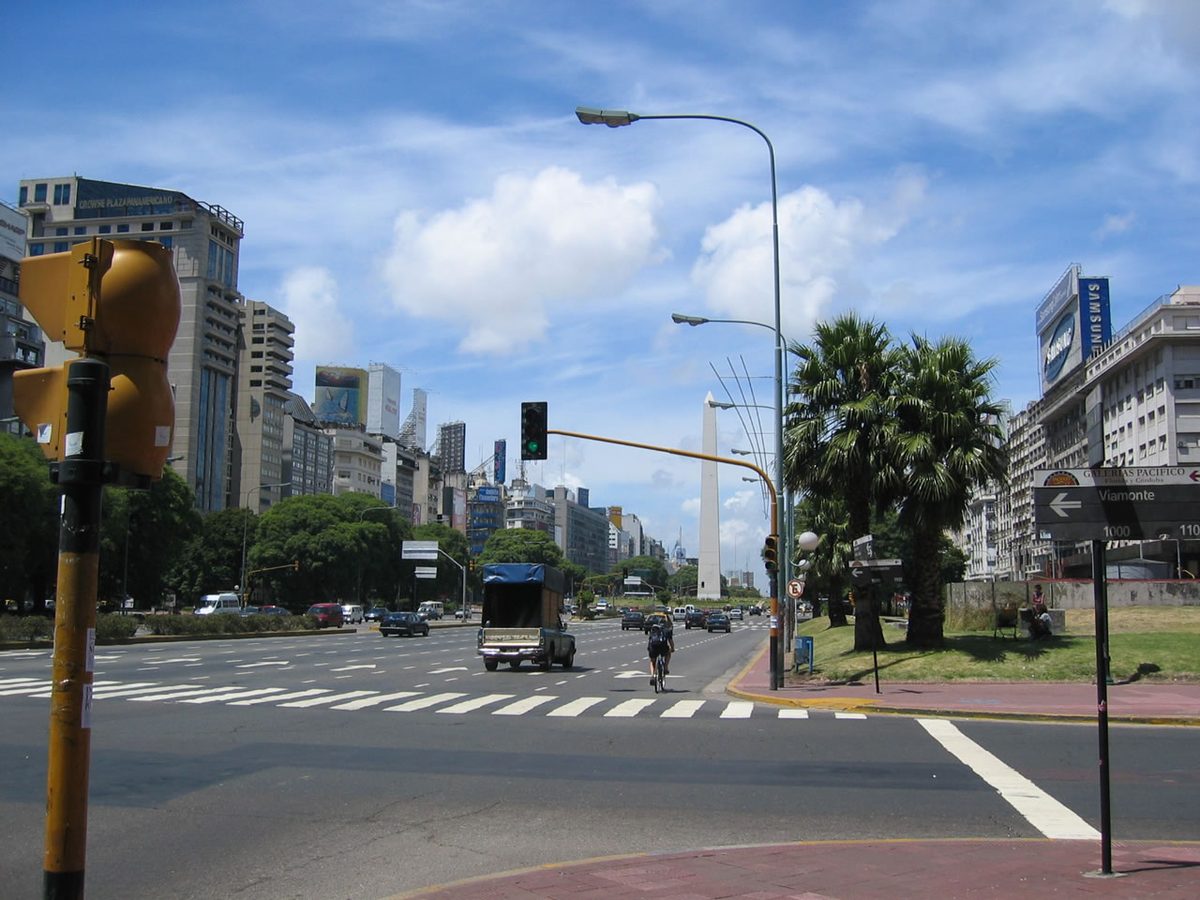
- Avenida 9 de Julio traffic. Photo by Facumissing, Public domain — via Wikimedia Commons.
6 comments